Tag Archives: 9/11

Iran and Global Terror: From Argentina to the Fertile Crescent

By Kyle Orton (@KyleWOrton) on February 27, 2015

Khobar Towers, which Iran jointly bombed with al-Qaeda

Khobar Towers, which Iran jointly bombed with al-Qaeda

Argentina’s government yesterday announced it was dissolving the Secretariat of Intelligence (S.I.), an intelligence agency tainted by the “Dirty War” regimes (1974-83), and more recent abuses as President Cristina Kirchner has taken Argentina back toward autocracy, and replacing it with a Federal agency. Just two days before, charges of corruption were levelled against Antonio Stiusso, S.I.’s director until Kirchner fired him in December. At the beginning of this month, Stiusso went missing. It now seems Stiusso has taken shelter in a neighbouring State.

These events are the latest twist in an extraordinary saga that has followed the discovery of the body of Alberto Nisman on Jan. 18 in his apartment in Buenos Aires, shot in the head in an apparent suicide. Nisman was a prosecutor investigating the July 18, 1994, bombing of the Argentine Israelite Mutual Association (AMIA) building in Argentina’s capital. All the evidence that Nisman had gathered pointed to Iran as the perpetrator. Few believe Nisman committed suicide, and—the history of Argentines being “suicided” considered—most fingers are pointing at Iran. Continue reading
The Other Side of the “Torture” Debate

By Kyle Orton (@KyleWOrton) on December 11, 2014

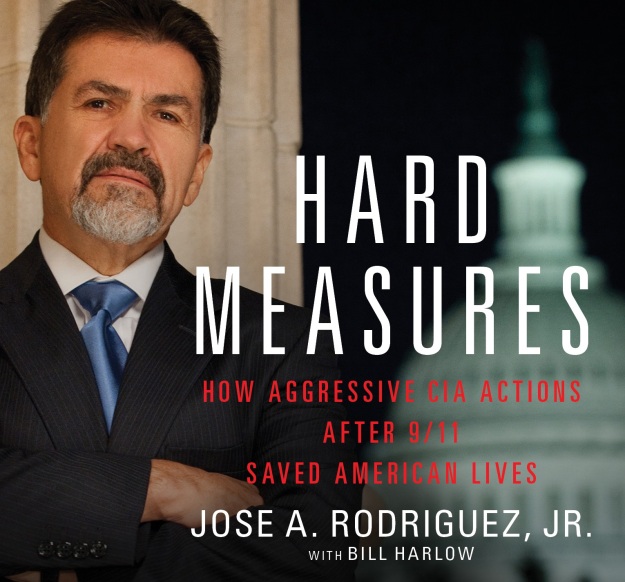
As a final act while the Democrats hold their majorities in Congress, the United States Senate Select Committee on Intelligence (SSCI) released a report on December 9, the “Committee Study of the Central Intelligence Agency’s Detention and Interrogation Program”, known to the Twitterverse as the “Torture Report”. This has reignited the debate about America’s use of harsh interrogation methods, the so-called “enhanced interrogation techniques” (EITs), against al-Qaeda operatives in the shadow of the 9/11 massacre. The politics surrounding this matter—even on basic questions, such as whether discomfort works to induce cooperation in detainees—are poisonous, and the publication of this partisan Committee Study has done nothing to assist this environment. One means of trying to get at the truth is to examine a counterpoint, the 2012 book, Hard Measures: How Aggressive CIA Actions After 9/11 Saved American Lives, a memoir by Jose Rodriguez, the man who oversaw the Central Intelligence Agency’s Counterterrorism Centre from 2001 to 2004. Continue reading

There Have Been Real Achievements In Afghanistan, But Leaving Puts Them At Risk

By Kyle Orton (@KyleWOrton) on November 22, 2014

1

Since President Obama’s 2009 announcement of a ‘surge’ in Afghanistan that simultaneously announced the date of withdrawal, the western focus in Afghanistan has shifted to the exits.

The steady drizzle of bad news since then has reinforced this sense that it’s over, we’ve had enough and we’re leaving.

American and British troops quit Helmand in late October, basically ceding it to Taliban control. On Tuesday John Sopko, the head of the American auditor mechanism (SIGAR) said that efforts to promote economic growth in Afghanistan have ‘accomplished nothing.’ Continue reading

Indonesia: Islam, Terrorism, and Democracy

By Kyle Orton (@KyleWOrton) on September 1, 2014

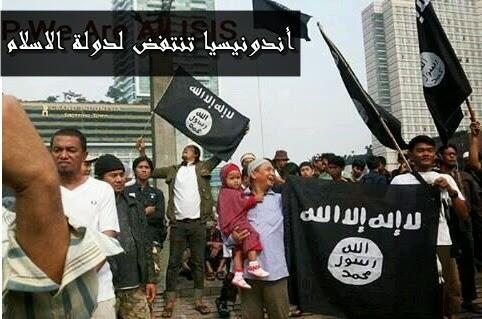
Pro-ISIS demonstration in Indonesia, March 16, 2014

Pro-ISIS demonstration in Indonesia, March 16, 2014

Early last month, Indonesia announced:

The government rejects and bans the teachings of [the Islamic State] from growing in Indonesia. It is not in line with State ideology, Pancasila, or the philosophy of kebhinekaan [diversity] under the unitary State of the Republic of Indonesia.”

This was a welcome change of tune. Continue reading

Iran Is Supporting al-Qaeda In Syria

By Kyle Orton (@KyleWOrton) on March 24, 2014

1

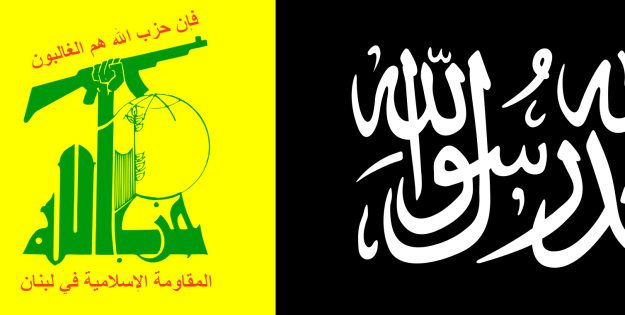
Given the increasing power of the Iranian theocracy in Syria on the Assad regime’s side, and the evidence of an overlap between the Assad regime and the Sunni jihadists who have descended on Syria, it is important to assess Tehran’s relationship with Salafi-jihadism.

Continue reading