Tag Archives: Abd al-Rahim al-Nashiri

Examining Iran’s Long Relationship with Al-Qaeda

This article was originally published at The Brief

By Kyle Orton (@KyleWOrton) on 26 October 2018

At the beginning of September, New America published a paper, based on recovered al-Qaeda documents, which concluded that there was “no evidence of cooperation” between the terrorist group and the Islamic Republic of Iran. New America’s study lauds itself for taking an approach that “avoids much of the challenge of politicization” in the discussion of Iran’s relationship with al-Qaeda. This is, to put it mildly, questionable.

A narrative gained currency in certain parts of the foreign policy community during the days of the Iraq war, and gained traction since the rise of the Islamic State (IS) in 2014, that Iran can be a partner in the region, at least against (Sunni) terrorism, since Tehran shares this goal with the West. Under President Barack Obama, this notion became policy: the US moved to bring Iran’s revolutionary government in from the cold, to integrate it into the international system. Continue reading

Profile of a 9/11 Planner: Muhammad Atef

By Kyle Orton (@KyleWOrton) on 5 February 2018

Al-Qaeda’s military leader Muhammad Atef at a press conference in Afghanistan, 26 May 1998 (image source: CNN)

Muhammad Atef, best-known as Abu Hafs al-Masri, but who also went by the names Taseer Abdullah or Taysir Abdullah and Subhi Abu Sitta, was al-Qaeda’s military leader between 1996 and 2001, and one of the three people most responsible for the terrorist attack in the United States on 11 September 2001. Continue reading

Martyr for the Cause

By Kyle Orton (@KyleWOrton) on October 20, 2016

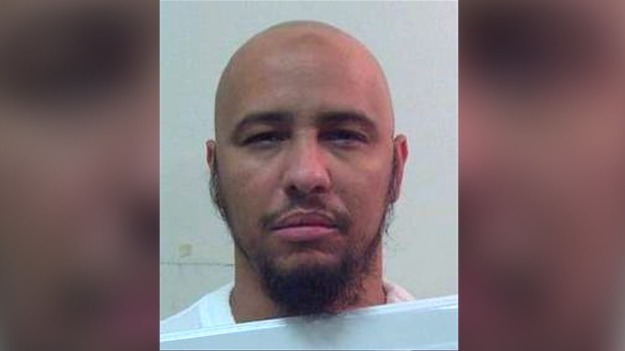
Mohamedou Ould Salahi

Mohamedou Ould Salahi, a Mauritanian, was released from Guantanamo Bay back to his home country on Monday. This comes as part of Barack Obama’s effort to drive the number of inmates at the detention centre down as far as possible before his Presidency ends. Salahi is the first detainee transferred since the mass-exodus in August, leaving sixty men at Guantanamo, nineteen of them already approved for transfer. Salahi is among the many detainees who claims he is innocent and that he has been maltreated in custody, and he has written a book, Guantánamo Diary, to that effect. The known facts about Salahi’s pre-detainment behaviour suggest caution should be exercised in accepting his version of events. Continue reading

The Dangers of Emptying Guantanamo

By Kyle Orton (@KyleWOrton) on August 17, 2016

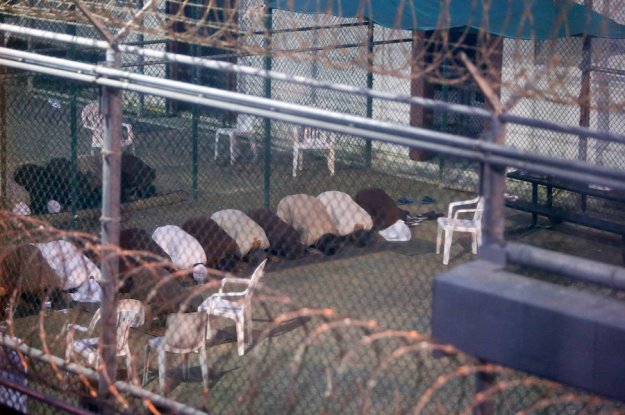
It was announced on 15 August that fifteen more inmates from the Guantanamo Bay detention facility have transferred, twelve Yemenis and three Afghans, to the United Arab Emirates, the largest individual release of the Obama administration. The U.A.E. also took in five “lower-level” Yemeni detainees in November. The Emirates had previously taken in just one—Abdullah al-Hamiri, in 2008—but President Obama leveraged this deal with the Gulf states at the May 2015 meeting when the Khaleejis were deeply concerned about the then-impending Iran nuclear deal, and in exchange for security reassurances, Obama extracted further concessions.

One reason why so many jihadists have been released to the U.A.E., other than having a similar language and culture, is because the U.A.E. has a competent security apparatus to monitor these people. Those released last November were kept in “a custodial rehabilitation program“—a version of house-arrest, basically. The conditions this time around are less clear.

What is clear is just how dangerous the operatives who are being let out of the Guantanamo detention facility are. Every single one of them has been assessed as posing a “high” risk to America, her interests, and her allies. Continue reading

The Other Side of the “Torture” Debate

By Kyle Orton (@KyleWOrton) on December 11, 2014

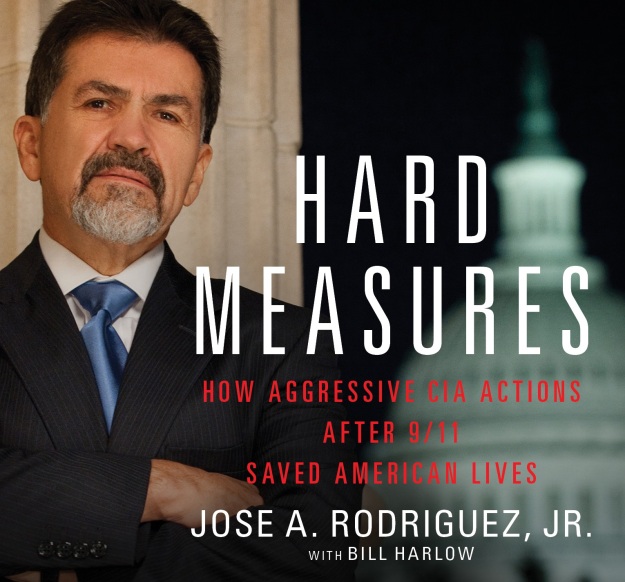
As a final act while the Democrats hold their majorities in Congress, the United States Senate Select Committee on Intelligence (SSCI) released a report on December 9, the “Committee Study of the Central Intelligence Agency’s Detention and Interrogation Program”, known to the Twitterverse as the “Torture Report”. This has reignited the debate about America’s use of harsh interrogation methods, the so-called “enhanced interrogation techniques” (EITs), against al-Qaeda operatives in the shadow of the 9/11 massacre. The politics surrounding this matter—even on basic questions, such as whether discomfort works to induce cooperation in detainees—are poisonous, and the publication of this partisan Committee Study has done nothing to assist this environment. One means of trying to get at the truth is to examine a counterpoint, the 2012 book, Hard Measures: How Aggressive CIA Actions After 9/11 Saved American Lives, a memoir by Jose Rodriguez, the man who oversaw the Central Intelligence Agency’s Counterterrorism Centre from 2001 to 2004. Continue reading