By Kyle Orton (@KyleWOrton) on 28 February 2018
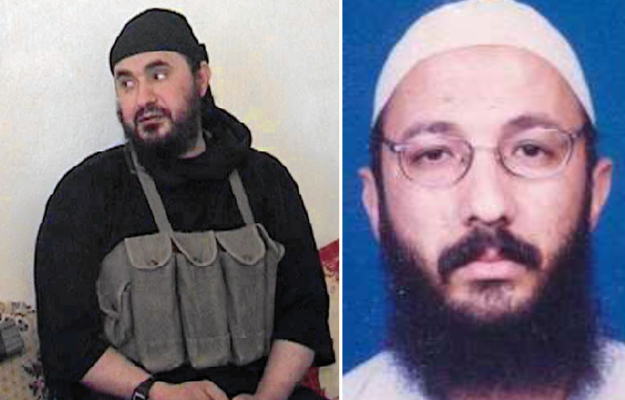
Ahmad al-Khalayleh (Abu Musab al-Zarqawi) [picture via Getty], Muhammad Zaydan (Sayf al-Adel) [picture via Kronos Advisory LLC]
By Kyle Orton (@KyleWOrton) on 28 February 2018
Ahmad al-Khalayleh (Abu Musab al-Zarqawi) [picture via Getty], Muhammad Zaydan (Sayf al-Adel) [picture via Kronos Advisory LLC]
By Kyle Orton (@KyleWOrton) on November 8, 2014
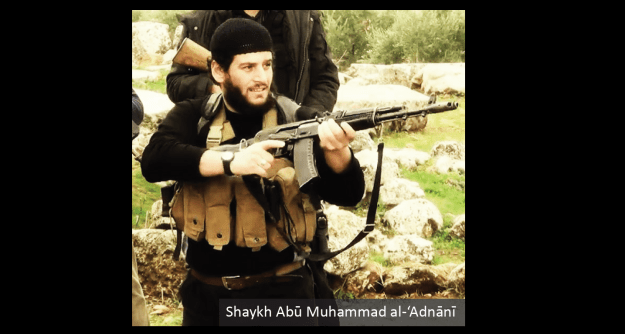
Picture of Abu Muhammad al-Adnani from the second edition of Dabiq magazine (July 27, 2014)
A Bahraini jihadist ideologue, Turki al-Binali, who has become a cleric in the Islamic State, put out a profile of the Islamic State’s official spokesman, Abu Muhammad al-Adnani, on November 1. By this account, al-Adnani took up jihadism in 2000 and was among a small cadre of people who joined the Islamic State’s founder, Ahmad al-Khalayleh, the infamous Abu Musab al-Zarqawi, when he journeyed through Syria on a recruitment-drive in 2002. Learned in Islamic jurisprudence and rigid in doctrinal literalness, al-Adnani was associated with some of the titans of the Islamic State’s legend like Abu Muhammad al-Lubnani and Abu Anas al-Shami. Appointed as emir of a small town in Anbar, Haditha, the first leader after the declaration of “the State” in 2006, Hamid al-Zawi (Abu Umar al-Baghdadi), worked under al-Adnani’s command. Al-Adnani then moved on to be an ideological instructor. Such was al-Adnani’s status, he did not have to consult al-Zarqawi before ordering operations; he only had to brief al-Zarqawi afterwards. Al-Adnani was arrested by the Americans in Iraq in May 2005, thereafter spending six years behind the wire, though never giving up his missionary activity. Indeed, the profile says al-Adnani developed the first full training program, academic and physical, for jihadi inmates. Upon release, al-Adnani took the post of official spokesman and has maintained it ever since. This profile is reproduced below with some minor editions for transliteration, syntax, and spelling. Continue reading
By Kyle Orton (@KyleWOrton) on March 24, 2014
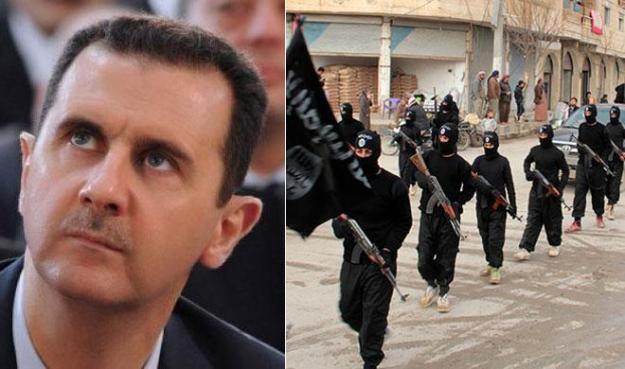
There has long been speculation in Syrian oppositionist circles that the regime was colluding with the Qaeda-type forces in the insurgency, to shore-up its own base by frightening the minorities and to ward off external help to the rebellion from the West. Continue reading
 Kyle Orton's Blog