Tag Archives: Abu Muhammad al-Jolani

Defeating the Islamic State for Good

Originally published at The Henry Jackson Society

By Kyle Orton (@KyleWOrton) on December 2, 2016

Islamic State fortifications in Deir Ezzor (from an IS video, 11 July 2016)

The Islamic State (IS) is nominally under attack now in its twin capitals, Mosul in Iraq and Raqqa in Syria. This is necessary task, of course, but, as I’ve written repeatedly over the last few months, clearing IS from its urban centres is not sufficient. IS lost its overt urban holdings once before and nonetheless rebuilt in the deserts between 2008 and 2013, rising again to seize increasingly-large tracts of territory that were eventually declared a caliphate. IS was able to do this because of the success of its long-term method of war-making, and political changes in Baghdad—toward greater sectarianism and authoritarianism—that gave it more space to manoeuvre. The flaws in the strategy and partners the U.S.-led international Coalition have chosen to eliminate IS are creating a situation in which what will be called “victory” is really the resetting of the cycle. More evidence of this has recently come to the fore. Continue reading

The Demise of Ahmad Mabruk: Al-Qaeda in Syria and American Policy

By Kyle Orton (@KyleWOrton) on October 4, 2016

Ahmad Mabruk in Jabhat al-Nusra's "Heirs of Glory" video, March 2016. (Source: The Long War Journal)

Ahmad Mabruk in Jabhat al-Nusra’s “Heirs of Glory” video, March 2016. (Source: The Long War Journal)

Ahmad Salama Mabruk (Abu Faraj al-Masri) was an al-Qaeda veteran, close to the organization’s leadership. The United States killed Mabruk in Syria on 3 October 2016 in a drone strike near Jisr al-Shughour in northern Syria. This is the second time in a month the U.S. has killed off a senior al-Qaeda jihadist, and sheds some light on the strength of the U.S. policy in Syria. Continue reading

The Structure of Al-Qaeda

By Kyle Orton (@KyleWOrton) on August 14, 2016
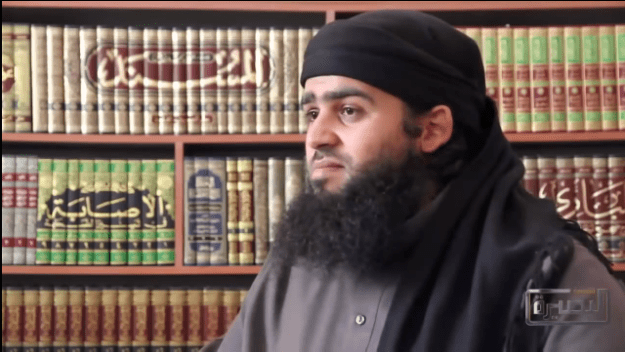
Screenshot of Mostafa Mahamed (Abu Sulayman al-Muhajir) during a video interview, 12 April 2014

Screenshot of Mostafa Mahamed (Abu Sulayman al-Muhajir) during a video interview, 12 April 2014

Mostafa Mahamed (Abu Sulayman al-Muhajir) is an Australian citizen who was born on 14 February 1984 in Port Said, Egypt. Mahamed currently occupies a “senior leadership position” within al-Qaeda in Syria—formerly Jabhat al-Nusra, now Jabhat Fatah al-Sham (JFS)—according to the sanctions levied against him in May by the U.S. Treasury. In an indication of Mahamed’s seniority, he moved from Australia to Syria in late 2012 and within a few months led the mediation efforts between al-Nusra and the then-Islamic State of Iraq and Syria (ISIS), now the Islamic State (IS), that began with a breach in April 2013 and ended with al-Qaeda expelling ISIS from its command structure in February 2014. Mahamed is also one of the public faces of al-Qaeda in Syria, now calling himself the “Director of Foreign Media Relations of JFS”. In this capacity, Mahamed has inter alia recently communicated with CNN to further the narrative that al-Nusra/JFS has “split” with al-Qaeda—something, let it be noted, neither the leader of al-Nusra/JFS nor Mahamed have actually said.

With regard to both the ongoing narrative war between IS and al-Qaeda over what their actual relationship was in the lead-up to the schism and al-Qaeda’s structure—the two things very much interlinked—Mahamed gave a very useful interview on 12 April 2014, about ten weeks before ISIS became IS when it declared its caliphate. Mahamed also touches on other interesting matters, such as those jihadi ideologues al-Nusra/JFS regards as guides, and—small point—al-Qaeda’s continuing claim that IS’s founder, Abu Musab al-Zarqawi would have sided with them. (This is matched on the other side by IS continuing to feature Usama bin Ladin in their propaganda as one of their forebears, while regarding Ayman al-Zawahiri as deviant.)

In watching the video back, I ended up taking notes, which turned into a partial (though fairly substantial) transcript that will perhaps be of use to others as well, so it’s posted below. Continue reading

Ahrar al-Sham and Al-Qaeda

By Kyle Orton (@KyleWOrton) on August 12, 2016

The Islamic State’s (IS) weekly newsletter, al-Naba, interviewed a high-ranking al-Qaeda defector, Abu Ubayda al-Lubnani, across two issues in February and March 2016. Abu Ubayda announced his defection from al-Qaeda to IS in April 2014 via al-Battar and Abu Ubayda’s name appeared on a list of prominent clerics supporting IS’s caliphate declaration that was circulated not long after the declaration. Abu Ubayda is described by al-Naba—as best as can be told accurately—as having been a member of al-Qaeda’s Shura or Consultation Council, a training officer in its Military Committee, and a counter-intelligence officer. Abu Ubayda is advertised as speaking about many secret aspects of al-Qaeda.

Among the topics Abu Ubayda covers is the alleged infiltration and manipulation of al-Qaeda by foreign intelligence services, specifically Pakistan’s Inter-Services Intelligence (ISI), which is not only a violation of jihadist doctrine by collaborating with an “infidel” and illegitimate state but led to the deaths of a number of senior al-Qaeda leaders.

Perhaps the most intriguing aspect of what Abu Ubayda has to say relates to al-Qaeda’s attempt to take advantage of the Syrian revolution. This persistent campaign has followed a pattern of disguising al-Qaeda’s presence and attempting to influence and eventually co-opt the rebellion against Bashar al-Assad’s regime. One lever al-Qaeda relied upon, according to Abu Ubayda, was Ahrar al-Sham, an organization that disclaims all connections to al-Qaeda and dissimulates about its ideology. Whatever Ahrar’s dominant ideology, it is simply a fact that it has served as the bridge between the foreign-led jihadists and Syrian Islamists, and its connections to al-Qaeda are evident enough. Abu Ubayda suggests Ahrar’s connections to al-Qaeda are even deeper than they appear. Continue reading

Did Assad Recruit the Leader of Al-Qaeda in Syria?

By Kyle Orton (@KyleWOrton) on August 11, 2016

1

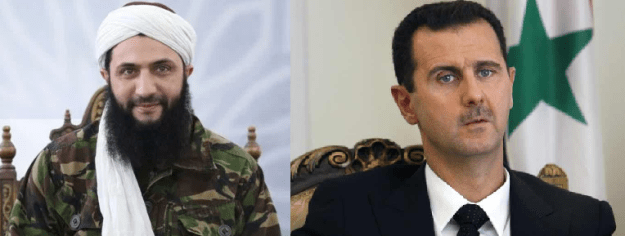
In the course of al-Qaeda’s rebranding operation in Syria two weeks ago—the full implications of which are discussed here—the organization showed the face of its leader, Abu Muhammad al-Jolani, for the first time. Soon afterward it was revealed that al-Jolani’s real name was Ahmad al-Shara, originally from Deraa in southern Syria, who had lived in Damascus. A report in Al-Monitor has now added details that purportedly show the hand of Bashar al-Assad’s regime in al-Shara’s path to joining the predecessor organization of the Islamic State (IS), from which he eventually split, and underlines the role the Assad regime has played in fostering the terrorism it now claims to be defending the Syrian population and the world from. Continue reading

Al-Qaeda Rebrands, Marches on in Syria

By Kyle Orton (@KyleWOrton) on August 2, 2016

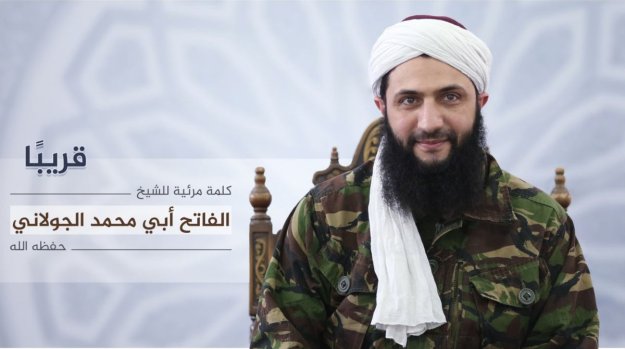
First ever picture of the leader of Jabhat al-Nusra (al-Qaeda in Syria), Ahmad al-Shara (Abu Muhammad al-Jolani), 28 July 2016

First ever picture of the leader of Jabhat al-Nusra (al-Qaeda in Syria), Ahmad al-Shara (Abu Muhammad al-Jolani), 28 July 2016

The leader of Jabhat al-Nusra (al-Qaeda in Syria), Abu Muhammad al-Jolani, whose real name is Ahmad al-Shara, ostensibly broke the link between his organization and al-Qaeda last week. This is another stage in al-Qaeda’s long-term strategy of embedding itself into local societies so that it can more effectively reshape the faith and shield itself from the international community. Continue reading

Jabhat al-Nusra Claims to Dissociate From Al-Qaeda

By Kyle Orton (@KyleWOrton) on July 28, 2016

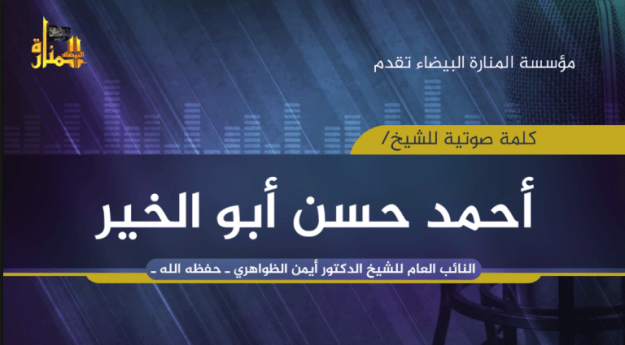
Graphic released with the speech of Ahmad Hassan (Abu Khayr al-Masri) about Jabhat al-Nusra and relations with al-Qaeda

Graphic released with the speech of Ahmad Hassan (Abu Khayr al-Masri) about Jabhat al-Nusra and relations with al-Qaeda

In advance of Jabhat al-Nusra rebranding as Jabhat Fatah al-Sham (JFS) on 28 July 2016, there were carefully coordinated media releases between al-Qaeda “central” (AQC) and al-Nusra. First, al-Manara al-Bayda (The White Minaret), al-Nusra’s media arm, released a six-minute audio speech by Abdullah Muhammad Rajab Abd al-Rahman (Abu Khayr al-Masri),[1] identified as the deputy to al-Qaeda’s leader Ayman al-Zawahiri; then there was the first ever picture of al-Nusra’s leader, Abu Muhammad al-Jolani, whose real name is Ahmad Husayn al-Shara, and shortly thereafter a video of al-Shara ostensibly severing ties with al-Qaeda; and finally the founding document for JFS was published. Continue reading

Saddam Hussein Prepared the Ground for the Islamic State

By Kyle Orton (@KyleWOrton) on April 26, 2016

This essay, written to tie together my work on the relationship between the Saddam Hussein regime and the Islamic State, was completed last summer and submitted to an outlet, where it entered a form of development hell. After giving up on that option late last year, the opportunity arose to get a shorter version published in The New York Times in December. But I procrastinated too long over what to do with the full essay and a recent change in my work situation means I no longer have the bandwidth to go through the process of finding it a new home, so here it is.

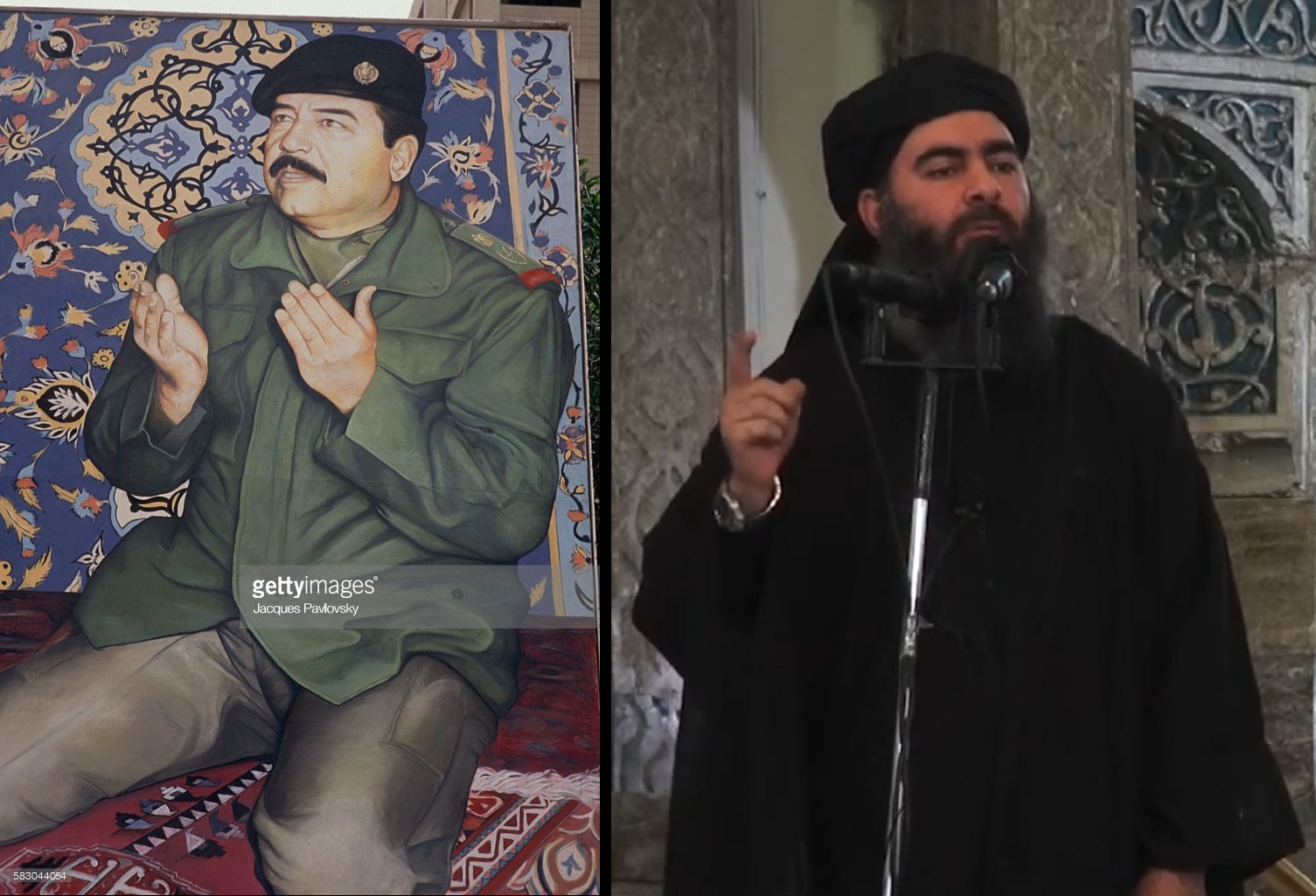
“Abu-Bakr al Baghdadi is a product of the last decade of Saddam’s reign,” argues Amatzia Baram, a scholar of Iraq. He is correct in at least three ways. First, in its last decade in power, the Iraqi Ba’ath regime transformed into an Islamist government, cultivating a more religious, sectarian population on which the Islamic State (ISIS) could draw. Part of Saddam Hussein’s “Faith Campaign” also involved outreach to Islamist terrorists, including al-Qaeda, which meant that the synthesis of Ba’athism and Salafism that fused into the Iraqi insurgency after the fall of Saddam was already well advanced by the time the Anglo-American forces arrived in Baghdad in 2003. Second, the ISIS leadership and military planning and logistics is substantially reliant on the intellectual capital grown in the military and intelligence services of the Saddam regime. And finally, the smuggling networks on which ISIS relies, among the tribes and across the borders of Iraq’s neighbours, for the movement of men and materiel, are directly inherited from the networks erected by the Saddam regime in its closing decade to evade the sanctions. The advantages of being the successor to the Saddam regime make ISIS a more formidable challenge than previous Salafi-jihadist groups, and one that is likely to be with us for some time.

Continue reading

Death of a Caliphate Founder and the Role of Assad

By Kyle Orton (@KyleWOrton) on March 10, 2016

Published at Middle East Eye.

Amr al-Absi on the left

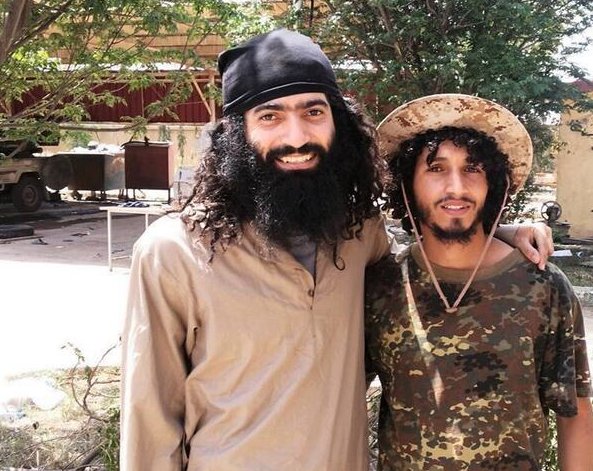
Amr al-Absi on the left

Amr al-Absi, one of the most senior Islamic State (IS) leaders, was killed in an airstrike on 3 March, according to reports on social media and by the SITE Intelligence Group. Al-Absi—better known as Abu Atheer al-Absi or just Abu al-Atheer—exemplified several key dynamics at work in Syria.

Atheer was among the jihadi-Salafists released by the regime of Bashar al-Assad at the beginning of Syria’s uprising in an attempt to make self-fulfilling the regime’s claim that the opposition were terrorists, and was also a seminal figure in making Syria so dangerous for journalists that it allowed Assad and IS to shape the coverage as if Syria was a binary choice between them.

Atheer is among the longstanding ultra-extremists who shape and define IS spiritually, and he was crucial in more concrete terms in IS infiltrating and expanding in Syria, particularly by bringing in foreigners who are among the most ideologically driven category of IS members. Continue reading

The Islamic State: Between Al-Qaeda and Saddam Hussein

By Kyle Orton (@KyleWOrton) on September 22, 2015

Abu Musab az-Zarqawi

Abu Musab al-Zarqawi

In August 2015’s Perspectives on Terrorism, Truls Tønnessen writes about the evolution of the leadership of what is now the Islamic State (I.S.) from its origins in al-Qaeda in Iraq (AQI) under the heading, “Heirs of Zarqawi or Saddam?” Tonnessen makes the obvious point that AQI’s leadership was largely comprised of foreign Salafi-jihadists with al-Qaeda histories, while I.S. is led by Iraqis, most of them former (Saddam) regime elements (FREs). But Tonnessen’s argument that I.S.’s leaders had not been AQI members is mistaken (they had), which erodes his arguments that AQI’s influence diminished over time as I.S. formed from various mergers, and that this diminution of influence came about because I.S.’s post-2010 leadership purged the veteran AQI elements within I.S. (I.S.’s leaders are veteran AQI elements.) The main difference between AQI’s leaders and I.S.’s is that AQI’s leaders had background connections to al-Qaeda Central (AQC) networks, and I.S.’s largely do not. While Tonnessen sees Jabhat al-Nusra as linked to these shifting dynamics, this argument does not stack up. Ultimately, Tonnessen’s contention that I.S.’s leaders are more heirs of Saddam than Zarqawi fails in the terms Tonnessen presents it. Continue reading