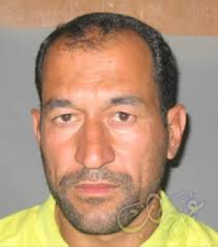
Adnan Ismail Najem al-Bilawi al-Dulaymi (Abu Abdulrahman al-Bilawi), the leader of the Islamic State’s Military Council when he was killed on the eve of the Mosul offensive that he had planned in June 2014, was eulogized by IS’s official spokesman, Taha Falaha (Abu Muhammad al-Adnani), explaining his importance to the organization. Below is a profile of al-Bilawi and the section of Falaha’s speech dedicated to al-Bilawi. Continue reading →
This post is drawn from a recent report I published profiling the leadership of the Islamic State.
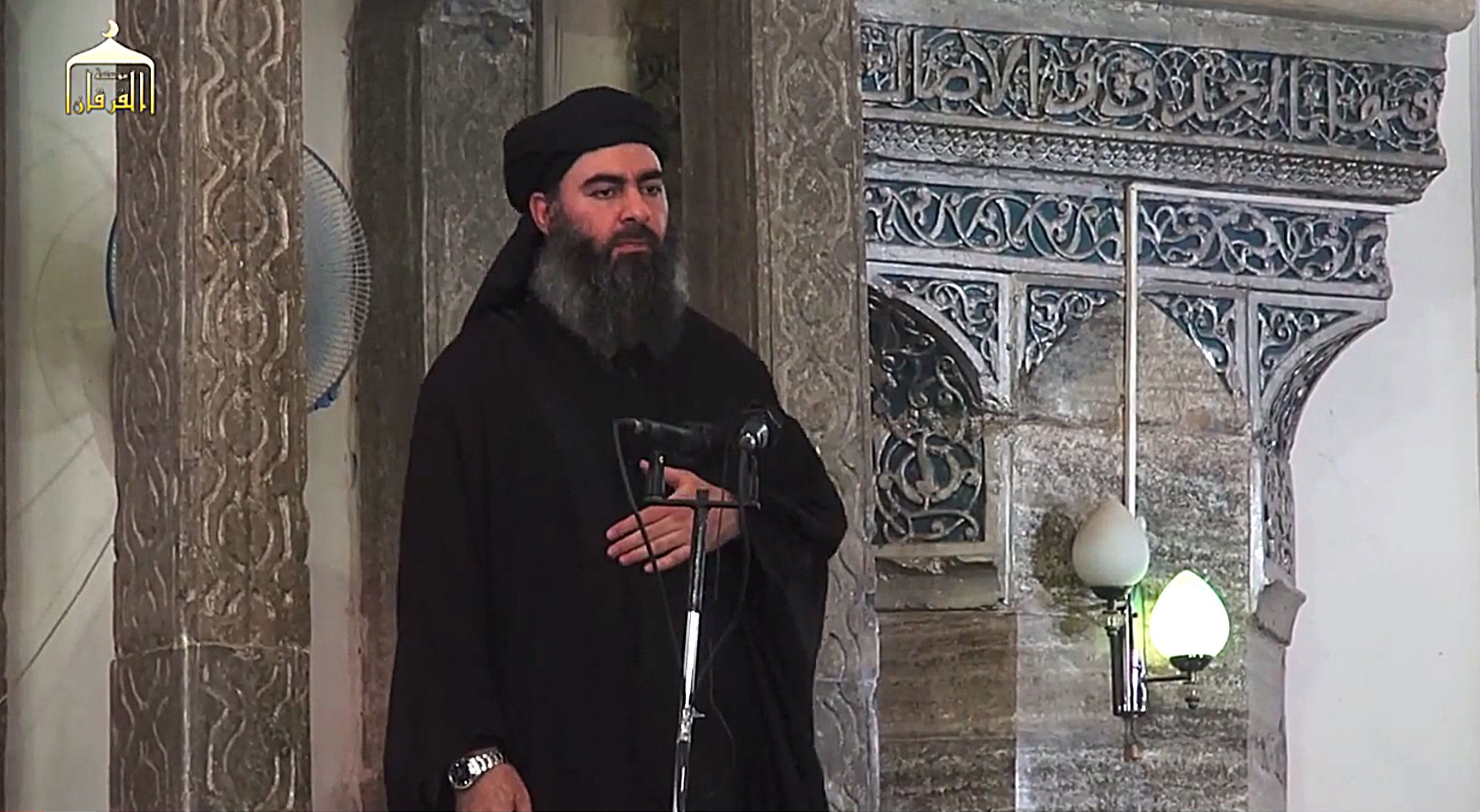
The leader of the Islamic State (IS) since 2010 has been Abu Bakr al-Baghdadi, previously known as Abu Dua or Abu Awad, and his real name—acknowledged by IS itself since the declaration of the so-called Caliphate in 2014—is Ibrahim Awwad Ibrahim Ali Muhammad al-Badri al-Samarrai.
This essay, written to tie together my work on the relationship between the Saddam Hussein regime and the Islamic State, was completed last summer and submitted to an outlet, where it entered a form of development hell. After giving up on that option late last year, the opportunity arose to get a shorter version published in The New York Times in December. But I procrastinated too long over what to do with the full essay and a recent change in my work situation means I no longer have the bandwidth to go through the process of finding it a new home, so here it is.
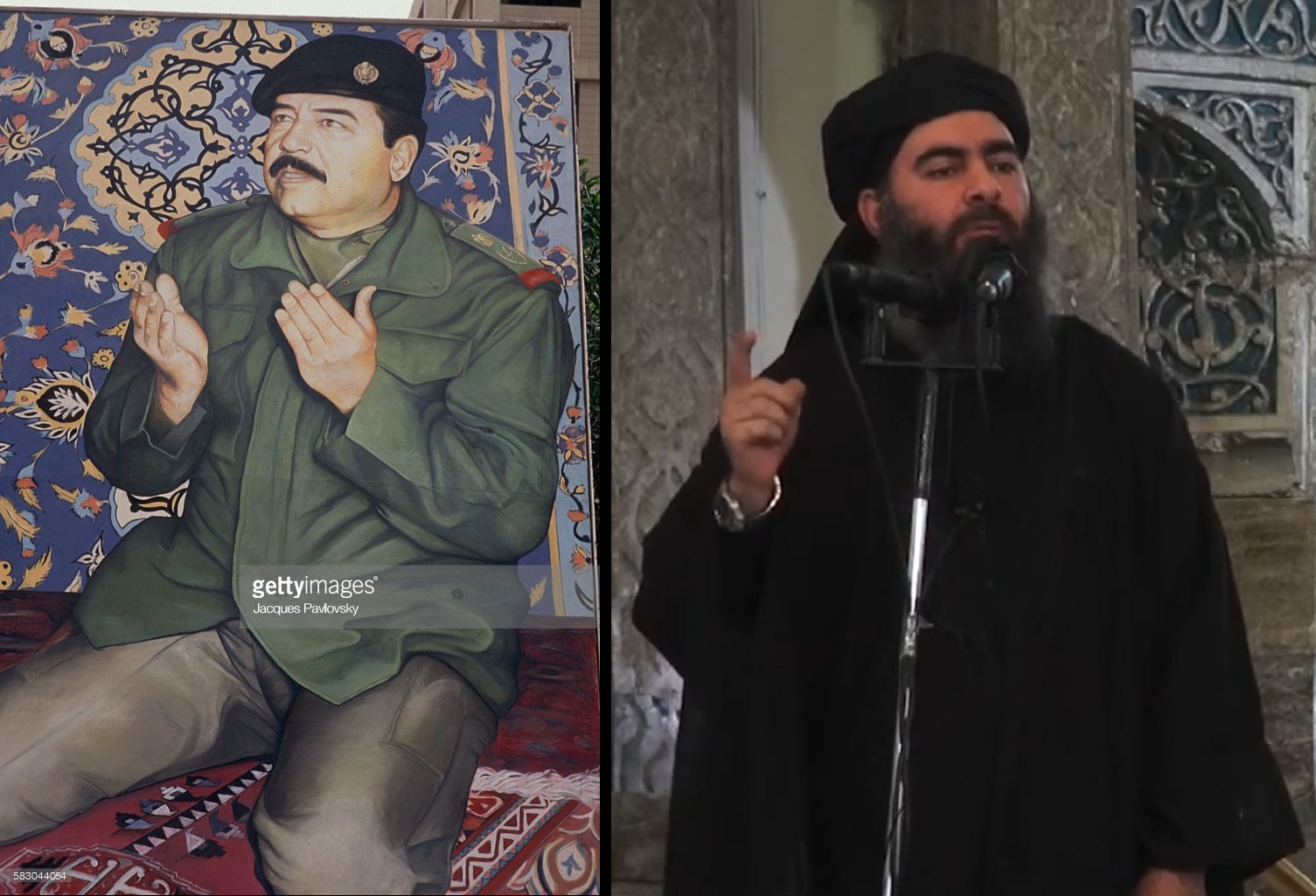
“Abu-Bakr al Baghdadi is a product of the last decade of Saddam’s reign,” argues Amatzia Baram, a scholar of Iraq. He is correct in at least three ways. First, in its last decade in power, the Iraqi Ba’ath regime transformed into an Islamist government, cultivating a more religious, sectarian population on which the Islamic State (ISIS) could draw. Part of Saddam Hussein’s “Faith Campaign” also involved outreach to Islamist terrorists, including al-Qaeda, which meant that the synthesis of Ba’athism and Salafism that fused into the Iraqi insurgency after the fall of Saddam was already well advanced by the time the Anglo-American forces arrived in Baghdad in 2003. Second, the ISIS leadership and military planning and logistics is substantially reliant on the intellectual capital grown in the military and intelligence services of the Saddam regime. And finally, the smuggling networks on which ISIS relies, among the tribes and across the borders of Iraq’s neighbours, for the movement of men and materiel, are directly inherited from the networks erected by the Saddam regime in its closing decade to evade the sanctions. The advantages of being the successor to the Saddam regime make ISIS a more formidable challenge than previous Salafi-jihadist groups, and one that is likely to be with us for some time.
The long arm of the Islamic State (ISIS) has struck again. Tuesday morning, Zaventem airport in Brussels was hit by two suicide bombers and soon after a third man detonated at Maelbeek metro station, not far from the headquarters of the European Union. At least 31 people were slaughtered and around 270 were injured. Belgium has a long history as a hub of global jihadism and some of its citizens were key in forming ISIS’s statelet. In the wake of the attack, as Western governments look for ways to hasten the demise of ISIS, it will likely be said—again—that the quickest way to do that is by striking a devil’s bargain with the regime of Bashar al-Assad in Syria. From Assad’s role in helping ISIS lay its groundwork in Iraq even before the U.S. invasion to Assad’s help, by omission and commission, in nurturing ISIS in the years since the uprising against him began as a means of defeating the opposition to Assad’s deliberate incitement of a sectarian war, there is nothing that could be further from the truth. While Assad remains in power, ISIS will remain alive. Continue reading →
In August 2015’s Perspectives on Terrorism, Truls Tønnessenwrites about the evolution of the leadership of what is now the Islamic State (I.S.) from its origins in al-Qaeda in Iraq (AQI) under the heading, “Heirs of Zarqawi or Saddam?” Tonnessen makes the obvious point that AQI’s leadership was largely comprised of foreign Salafi-jihadists with al-Qaeda histories, while I.S. is led by Iraqis, most of them former (Saddam) regime elements (FREs). But Tonnessen’s argument that I.S.’s leaders had not been AQI members is mistaken (they had), which erodes his arguments that AQI’s influence diminished over time as I.S. formed from various mergers, and that this diminution of influence came about because I.S.’s post-2010 leadership purged the veteran AQI elements within I.S. (I.S.’s leaders are veteran AQI elements.) The main difference between AQI’s leaders and I.S.’s is that AQI’s leaders had background connections to al-Qaeda Central (AQC) networks, and I.S.’s largely do not. While Tonnessen sees Jabhat al-Nusra as linked to these shifting dynamics, this argument does not stack up. Ultimately, Tonnessen’s contention that I.S.’s leaders are more heirs of Saddam than Zarqawi fails in the terms Tonnessen presents it. Continue reading →
Fadel Ahmad Abdullah al-Hiyali (a.k.a. Abu Muslim al-Turkmani a.k.a. Haji Mutazz)
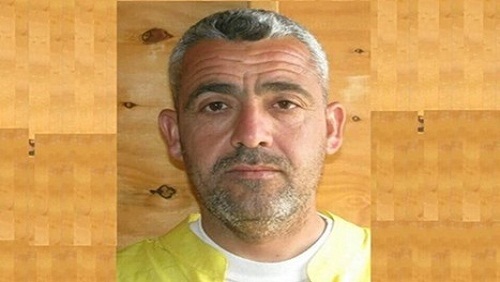
Fadel Ahmad Abdullah al-Hiyali, the overall deputy to the “caliph” Abu Bakr al-Baghdadi, who heads the Military Council of the Islamic State (ISIS) and is the direct commander of ISIS’s forces in Iraq, was killed in a drone strike in Mosul on August 18, according to a U.S. spokesman for the National Security Council yesterday. Al-Hiyali, who also goes by the pseudonyms Abu Muslim al-Turkmani, Abu Mutaz al-Qurayshi, and Haji Mutaz, was reported to have been travelling in a car with a media operative named Abu Abdullah when he was killed. Continue reading →
Before the account, first published in April 2014, by an ostensible Islamic State (IS) defector, “Abu Ahmad”, there was the Twitter account @WikiBaghdady, which released a lot of information in the same vein about the alleged impiousness of the jihadist organization. @WikiBaghdady’s testimony, as collected by Yousef Bin Tashfin, is republished below, with some editions for transliteration and syntax, to ensure its preservation. Continue reading →
A purported defector from the Islamic State, known only as “Abu Ahmad,” released testimony online on 5 April 2014 via the Syrian opposition news site al-Durar al-Shamiya under the heading, “The Concealed Truths About al-Baghdadi’s State”. Abu Ahmad describes himself as “one of the mujahideen in Khorasan [Afghanistan-Pakistan] and Iraq, and now in al-Sham [Syria],” and it is quite clear that Abu Ahmad has defected to al-Qaeda. On 25 September 2014, an English version of this testimony was posted on the Fund for Fallen Allies website. It has been reposted below—with some editions to transliteration and syntax—to avoid it being lost.Continue reading →


 Kyle Orton's Blog