Tag Archives: Abu Musab al-Suri

A Myth Revisited: “Saddam Hussein Had No Connection To Al-Qaeda”

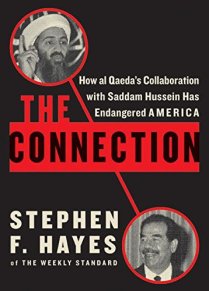
Book Review: The Connection: How al-Qaeda’s Collaboration With Saddam Hussein Has Endangered America (2004) by Stephen Hayes

By Kyle Orton(@KyleWOrton) on June 21, 2015


More than twelve years after the fall of Saddam Hussein, the conventional wisdom is that Saddam’s regime had no connection with al-Qaeda, and such “evidence” as was adduced was tortured out of Ibn al-Shaykh al-Libi in the Bush administration’s desperation to cobble together a casus belli. But if one puts ideology on hold, and considers the evidence of Stephen Hayes’ The Connection, a rather different picture emerges. Continue reading


Defeat Jihadists in Syria by Being a Better Ally to the Opposition

By Kyle Orton (@KyleWOrton) on March 25, 2015

A still  from the video announcing the Ahrar a-Sham-Suqour a-Sham merger

A still from the video announcing the Ahrar a-Sham-Suqour a-Sham merger

Ahrar a-Sham “merged with“—in reality annexed—Suqour a-Sham on March 22. Ahrar’s leader, Hashem al-Sheikh (a.k.a. Abu Jabbar), is the leader of the Ahrar-Suqour formation, and Suqour’s leader, Ahmed Issa al-Sheikh (a.k.a. Abu Issa) is his deputy. Ahrar is the largest and most hardline Syrian insurgent group in Syria, and Suqour has a fairly stern Salafi-nationalist ideology—at least at its leadership level—and was once the largest rebel group in Idlib Province.

The first thing this brought to mind was Sam Heller’s witticism late last year: “the most successful, lasting approach to rebel unification so far has basically been ‘Ahrar al-Sham absorbs you’.” Continue reading

How Dictators Manipulate Jihadists To Defeat The Opposition

By Kyle Orton (@KyleWOrton) on November 9, 2014

Smain Lamari (1941-2007)

Smain Lamari (1941-2007)

This Arab regime claims to be a one-party system but in reality a small Mafia-like cabal of military and intelligence officers have dispensed power for decades. Finally a democratic challenge erupts; people take to the streets demanding first reforms and, when the regime responds with pseudo-reforms and lethal violence, the fall of the government. Eventually the people fight back and an armed struggle breaks out. The regime builds its strategy around provocation, arresting and killing the liberals and democrats, infiltrating the insurgent groups and having the extremists attack the moderates, directing infiltrated groups to commit atrocities that discredit the whole insurgency, and using Iran’s international terrorist networks to lure Salafi-jihadists into the country who can help discredit the opposition’s cause in the eyes of the world. By presenting a binary picture—the regime or a terrorist takeover—the state tries to secure at least tacit support, if not direct intervention, from the West to defeat the insurgency.

No I’m not talking about Syria. This is Algeria. Continue reading

Are There Any Good Guys Left In Syria?

By Kyle Orton (@KyleWOrton) on May 30, 2014

3

The short answer is “yes”. The longer answer is, “It depends on how good you want,” and discovering the answer to that relies on having a strategic vision of what you want from Syria. Continue reading

Algeria’s ‘Years of Blood’: Not Quite What They Seem

By Kyle Orton (@KyleWOrton) on March 21, 2014

1

Antar Zouabri, who became leader of the GIA in the summer of 1996

In December 1991, the Algerian government—the military regime in power since the French were expelled—gave in to public pressure, which had already turned sanguinary, and allowed an election. It was quite clear that the Islamic Salvation Front (FIS), a fundamentalist party, would emerge victorious. To forestall the institution of a theocracy, in January 1992, the military launched a coup and shut down the final rounds of the election. A civil war erupted in which the jihadists sought to overpower the secular, if dictatorial, government. By the late 1990s, the jihadists’ savagery had meant their campaign had run aground; the vital centre in Algeria swallowed its misgivings and sought shelter behind the State. By 2002, the civil war was declared over: the jihadist revolt had been beaten.

That is the official story.

Continue reading

Al-Qaeda Disowns ISIS

By Kyle Orton (@KyleWOrton) on March 21, 2014

On February 3, 2014, Tanzim Qaedat al-Jihad (The Base of Holy War Organisation)—al-Qaeda—disowned ad-Dawla al-Islamiya fil-Iraq wa-Sham (the Islamic State of Iraq and Syria, ISIS), finally resolving the tortured question of the group’s “affiliation” with the terror network. Continue reading