Tag Archives: Abu Musab al-Zarqawi

The Formation of Hilf al-Mutayibeen

By Kyle Orton (@KyleWOrton) on 17 March 2018
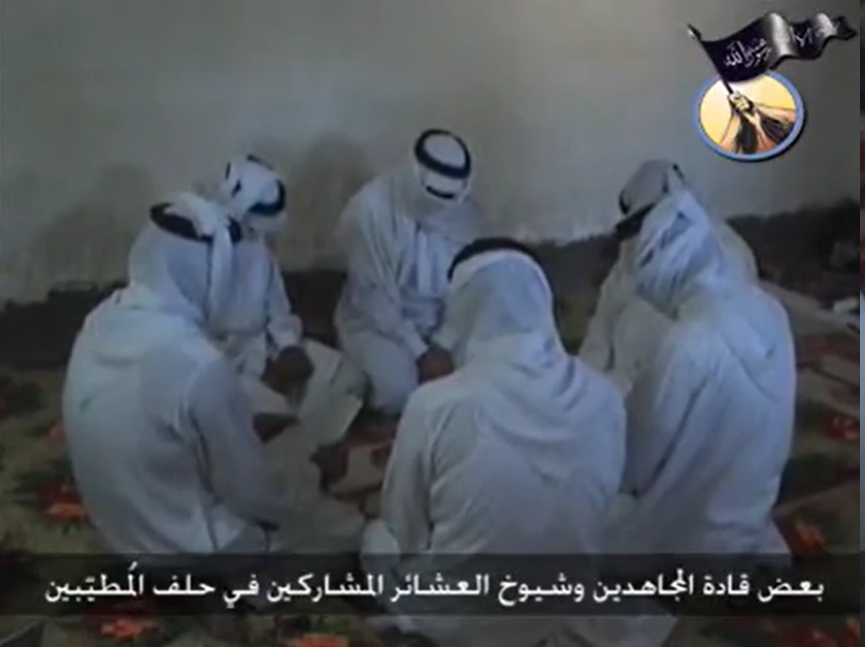
The Mujahideen Shura Council (al-Majlis Shura al-Mujahideen, MSC or MSM), the umbrella organisation that in January 2006 had nominally subsumed Al-Qaeda in Iraq (AQI) as the Islamic State movement was known at the time, put out a video on 12 October 2006 showing MSM being joined in an oath with tribal and insurgent groups to create Hilf al-Mutayibeen (the Alliance of the Scented Ones),[1] named after a pact reported in the Tradition to have been made by the Prophet Muhammad in Mecca, intended to uphold justice for the fledging community as it endured persecution, which was sealed in the home of Abdullah bin Jud’an by dipping their hands in perfume (al-teeb).

Continue reading

Profile: First Spokesman of the Islamic State Movement

By Kyle Orton (@KyleWOrton) on 16 March 2018

The predecessor organization to the Islamic State (IS), the Islamic State in Iraq (ISI), used to run a “Prominent Martyrs” or “Distinguished Martyrs” series: essentially obituaries for important members of the IS movement. In the forty-sixth edition, on 18 August 2010, ISI profiled Abu Maysara al-Iraqi, the first official spokesman and the deputy of the Media Department until he was killed in 2006. A translation of Abu Maysara’s biography was issued by Ansar al-Mujahideen forum and is reproduced below with some minor editions for transliteration and some interesting points highlighted in bold. Continue reading

Al-Qaeda Leader Profiles the Founder of the Islamic State

By Kyle Orton (@KyleWOrton) on 28 February 2018

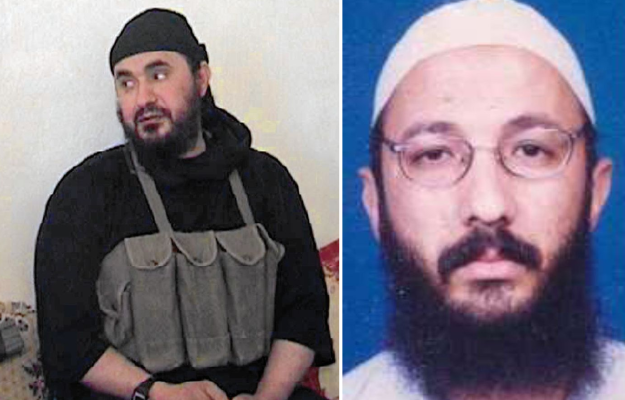
Ahmad al-Khalayleh (Abu Musab al-Zarqawi) [picture via Getty], Muhammad Zaydan (Sayf al-Adel) [picture via Kronos Advisory LLC]

The military leader of al-Qaeda, Muhammad Saladin Zaydan (Sayf al-Adel), wrote a biography for Ahmad al-Khalayleh (Abu Musab al-Zarqawi), the Jordanian jihadist who founded what is now the Islamic State in Taliban Afghanistan in 1999. Zaydan wrote the biography in 2005 while in Iran, under the protection of the Islamic Republic, where he still is. The biography is reproduced below with some interesting and important sections highlighted in bold. Continue reading

When Al-Qaeda’s Military Leader Asked The Architect of 9/11 to Resign

By Kyle Orton (@KyleWOrton) on 9 February 2018

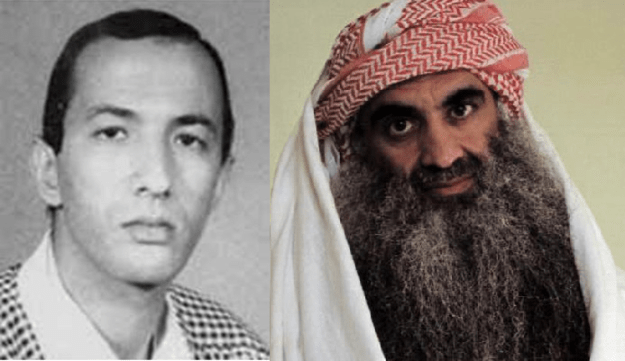
Sayf al-Adel (image source), Khalid Shaykh Muhammad (image source)

Muhammad Saladin Abd al-Halim Zaydan (Sayf al-Adel) wrote a letter on 13 June 2002 to Khalid Shaykh Muhammad (KSM or Mukhtar), the operational planner of the 9/11 massacre. Zaydan criticises KSM’s handling of al-Qaeda in the aftermath of 9/11 and the fall of the Taliban, and calls on him to surrender control to others. At that time the latter was written, Zaydan had been the head of al-Qaeda’s military committee for about seven months, replacing Muhammad Atef (Abu Hafs al-Masri), who was killed by an American airstrike in Afghanistan in November 2001. Zaydan was based then—as he is now—in Iran, with much of al-Qaeda’s senior leadership, at the invitation of Qassem Sulaymani, the head of the Quds Force, the component of the Islamic Revolutionary Guard Corps (IRGC) tasked with exporting the Iran’s Islamist revolution. The letter is reproduced below with the key sections highlighted in bold.

Phrased with much surrounding politeness, Zaydan gets to the point: KSM has been on a spree of external operations—notably with “shoe bomber” Richard Reid and José Padilla (Abdullah al-Muhajir)—that have failed spectacularly and exposed al-Qaeda to ridicule. Instead of learning from his mistakes, KSM has heedlessly rushed to the next plot, says Zaydan. Usama bin Ladin might have signed off on these plots, Zaydan writes, but Bin Ladin is also reckless and refuses to heed advice—instead changing the advisor to get the answer he wants. (Bin Ladin had done this—or tried to—for the 9/11 attack itself, stacking the executive committee with loyalists before the key vote, which he ended up not bothering to hold anyway.) KSM should halt all plots currently underway and resign his duties to others so that stock can be taken of how these disasters have befallen the organisation, Zaydan concludes. Zaydan adds a final note demanding the removal of a post on an al-Qaeda forum that identifies his children by their real names. Continue reading

When Iran Saved Al-Qaeda

By Kyle Orton (@KyleWOrton) on 24 January 2018

The new book by the investigative journalists Adrian Levy and Catherine Scott-Clark, The Exile: The Flight of Osama bin Laden, charts the career of al-Qaeda’s founder, Osama bin Laden, up to the day he became a household name—11 September 2001—through his downfall in 2011, to the end of 2016, when al-Qaeda was more powerful than ever. It is a thoroughly absorbing account, bringing to light vast tranches of new facts, including many intricate details of how al-Qaeda operated on a human, day-to-day level, and of those states and para-states that shielded the terror network, collaborated with it, and enabled it—and still do.

The gathering of the Bin Laden network in Sudan and then in the Taliban-held areas of Afghanistan in the 1990s is a familiar story, but the splits and debates among the Arab jihadists around Bin Laden, including the opposition of significant numbers of them to the 9/11 massacre, is perhaps less well known. The authors trace out how Bin Laden manipulated his own quasi-institutions to get his way. First, Bin Laden took on the plan of a man, Khalid Shaykh Muhammad (KSM), who was not even a member of al-Qaeda, and then, ahead of the crucial vote, packed the shura (consultation) council with ultra-zealous Egyptians by engineering a merger between al-Qaeda and Islamic Jihad, led by Ayman al-Zawahiri. Continue reading

The First Islamic State Beheading Video

By Kyle Orton (@KyleWOrton) on 13 December 2017

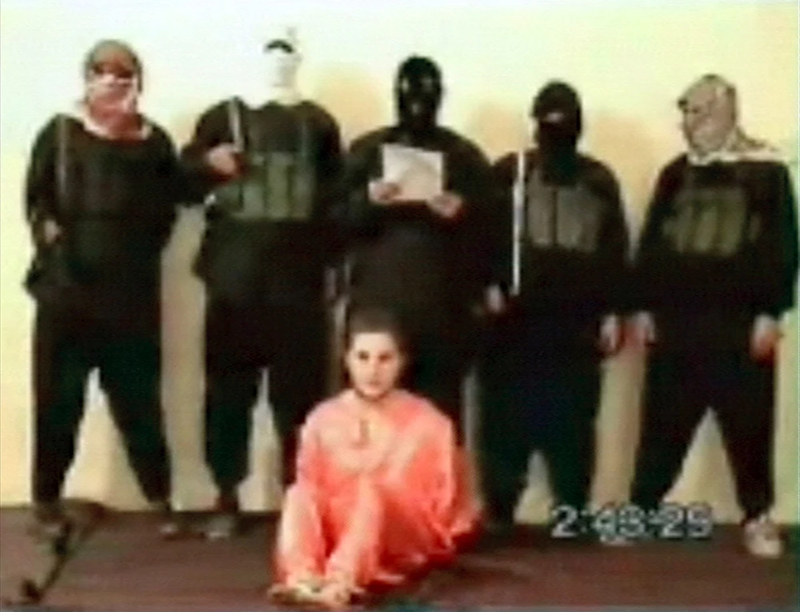
The Islamic State (IS) triggered the war against its “caliphate” by disseminating footage of its jihadists beheading an American journalist, James Foley, on 19 August 2014. Over the next three months, five more Western hostages were decapitated on video. This was shocking to many, but it should not have been. IS began producing snuff videos like this a decade earlier.

The first video beheading by the Islamic State movement—known at the time as Jamaat al-Tawhid wal-Jihad or JTJ (the Group of Monotheism and Holy War)—was released on 11 May 2004; the murderer in the video was IS’s founder, Abu Musab al-Zarqawi; and he gave a brief statement to accompany his crime, later published under the title, “A Word in the Tape of the Beheading of Nicholas Berg (Kalima fi sharit nahr Nicholas Berg)”. Berg was an American civilian who went to Iraq as a freelance engineer.

Continue reading

Islamic State Denies Targeting Jordan With Chemical Weapons (2004)

By Kyle Orton (@KyleWOrton) on 13 December 2017

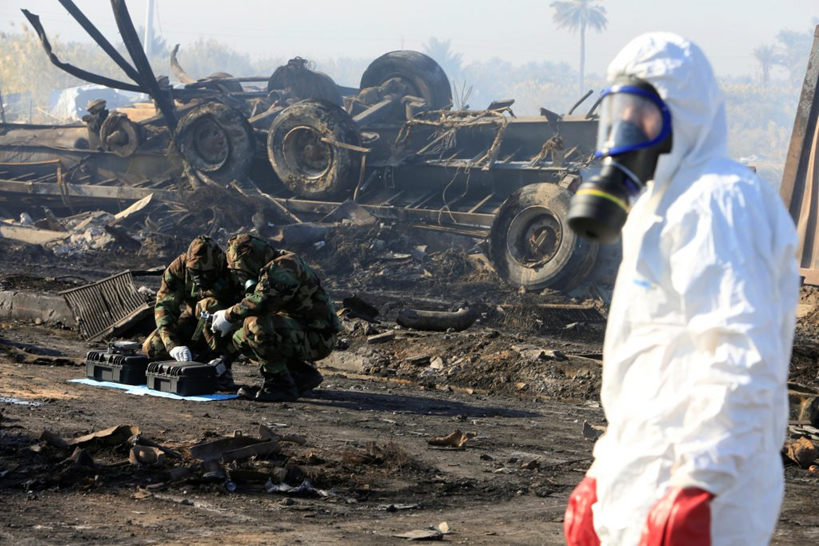
The founder of what is now the Islamic State, Abu Musab al-Zarqawi, gave a speech on 30 April 2004, entitled, “Blowing up the Intelligence Headquarters: A Response to the Lies of Jordanian Intelligence”.

Continue reading

Qatar and the Gulf Crisis

By Kyle Orton (@KyleWOrton) on 30 November 2017

I released a report today, published by the Henry Jackson Society, Qatar and the Gulf Crisis. The intent was to examine the charges made against the Qatari government by its Gulf neighbours with regard to the funding of terrorism, the hosting of extremists, the dissemination of hate speech and incitement, among other things. Having separated fact from fiction with regards to he accusations against Qatar, the report proposes how Britain might proceed in such a way as to press Doha on issues of concern, while avoiding being drawn into the middle of the Gulf dispute, and trying to foster reconciliation between allies, especially at a time when a united front is necessary to oppose the far larger challenge of the Iranian theocracy.  Continue reading

Al-Qaeda Instructs the Islamic State’s Predecessor Not to Attack Iran

By Kyle Orton (@KyleWOrton) on 21 November 2017

Usama bin Ladin, Qassem Sulaymani

Among the documents recovered from Usama bin Ladin’s compound in Abbottabad was the “Letter to Karim”, dated 18 October 2007. The letter was released in 2015 by the Office of the Director of National Intelligence (ODNI). “Karim” likely refers to Abdul Munim al-Badawi (Abu Hamza al-Muhajir), the leader of al-Qaeda in Mesopotamia (AQM), the predecessor organization to the Islamic State, after the group’s founder, Ahmad al-Khalayleh (Abu Musab al-Zarqawi), was killed in June 2006. The letter is reproduced below with some interesting details highlighted in bold. Continue reading

Profile of an Islamic State Media Emir: Abu Zahra al-Issawi

By Kyle Orton (@KyleWOrton) on 12 November 2017

The forty-fifth edition of the Islamic State’s “Distinguished Martyrs” series, published by al-Furqan Media in Rajab 1431 (June/July 2010), profiled Abu Zahra al-Issawi, the media emir or information minister of the organization between some point after July 2007, when Khalid al-Mashadani (Abu Zayd al-Mashadani) was arrested, and some point before September 2009, when Ahmad al-Ta’i was announced as holding the position. [UPDATE: Al-Ta’i turned out to be Abu Muhammad al-Furqan, and his real name was Wael al-Ta’i.] Continue reading