Tag Archives: Afghanistan

Taliban Blames the Afghan Government and America for the Lack of Peace in Afghanistan

By Kyle Orton (@KyleWOrton) on 29 September 2017

The Taliban’s Political Office put out a statement today “concerning opposition to peace process and activities”, which placed blame for the ongoing war in Afghanistan on the Afghan government and the U.S.-led coalition. The statement is reproduced below. Continue reading

Statement by Al-Qaeda Bomb-Maker Ibrahim al-Asiri on 9/11

By Kyle Orton (@KyleWOrton) on 13 September 2017

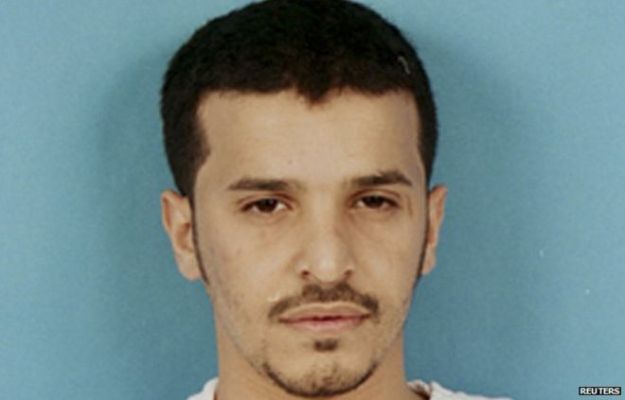
Ibrahim al-Asiri

Al-Malahim Media Institute, the affiliated media outlet for al-Qaeda in the Arabian Peninsula (AQAP), released a statement on 13 September 2017, “The March of Victory and the Defeat of America”, as part of al-Qaeda’s “In Remembrance of the Blessed September 11 Raids” series. The statement, attributed to Ibrahim Hassan bin Tali al-Asiri, the infamous AQAP bomb-maker, is reproduced below with some editions for syntax and spelling. Continue reading

Iran and Russia Are Using the Taliban Against the West

By Kyle Orton (@KyleWOrton) on 5 August 2017

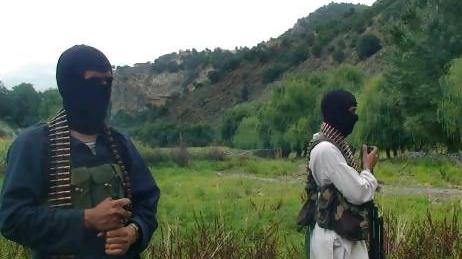
Taliban jihadists (image source)

The New York Times reported on the growing closeness of relations between the governments in Iran and Russia, and the Taliban movement in Afghanistan, something that became especially salient earlier this year and which has been visible for at least two years. Continue reading

Al-Qaeda in Syria Linked to a Terror Plot in the United States

By Kyle Orton (@KyleWOrton) on 30 June 2017

Abdirahman Sheik Mohamud (source)

In April 2015, a United State Federal Grand jury in Ohio charged Abdirahman Sheik Mohamud, also known as “Ayanle”, with three terrorism-related offences. Yesterday, court records were unsealed that revealed that Mohamud pleaded guilty to all charges, admitting to having fought with a terrorist organization in Syria and returned to the United States with the intention of carrying out an act of domestic terrorism. Mohamud was in contact with foreign terrorist operatives throughout the period he was plotting an attack within the United States. But—and this is the most significant aspect of the case—Mohamud was not in contact with one of the Islamic State’s intelligence operatives, who guide attacks in a manner now relatively well-understood. Instead, Mohamud was in contact with Jabhat al-Nusra, at that time al-Qaeda’s declared branch in Syria. Al-Nusra is now known as Hay’at Tahrir al-Sham (HTS) and claimed in July 2016 to have disaffiliated from al-Qaeda’s “central”, not that this has (nor will nor should) remove HTS from the terrorism list. Regardless of its formal status within al-Qaeda’s command structure, HTS retains significant links with al-Qaeda’s global networks, and a breakaway group from HTS in Syria has reaffirmed its loyalty to al-Qaeda. Mohamud’s case is an extremely important data point in assessing the risk these overlapping and mutually reinforcing entities pose to the West and the wider world. Continue reading

Russia and Iran Use Terrorism Against Western Interests

By Kyle Orton (@KyleWOrton) on 25 April 2017

The evidence is mounting that Vladimir Putin’s government supports the Taliban as a means of thwarting NATO interests in Afghanistan. Russia has long manipulated terrorists, internally and abroad, to suit its policy aims, but as Moscow solidifies its relationship with the Iranian revolution the Russian policy, particularly in Syria, has become something more like a conventional alliance—not least because those who run Tehran’s foreign policy and the clerical regime’s most powerful assets are themselves terrorists. Continue reading

Don’t Assume the Westminster Terrorist is a ‘Lone Wolf’

By Kyle Orton (@KyleWOrton) on 18 April 2017

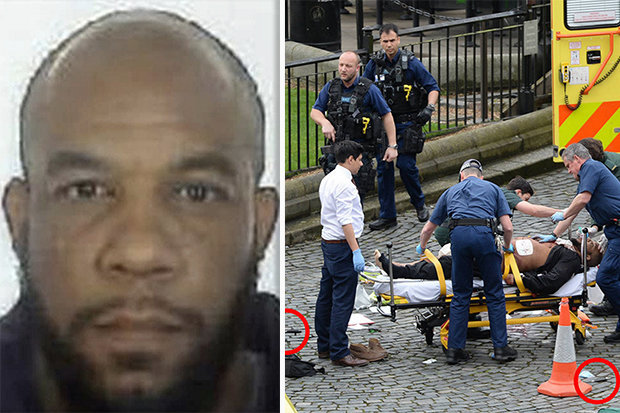
The 22 March attack outside Westminster by Khalid Masood is the most significant act of Islamist terrorism since the 7 July 2005 bombing by al-Qaeda of the London public transport system. Masood’s attack highlights a number of historic trends in British jihadism and starkly poses the question of the extent of IS’s penetration of the United Kingdom. Continue reading

Why The Islamic State Endures

By Kyle Orton (@KyleWOrton) on March 15, 2017

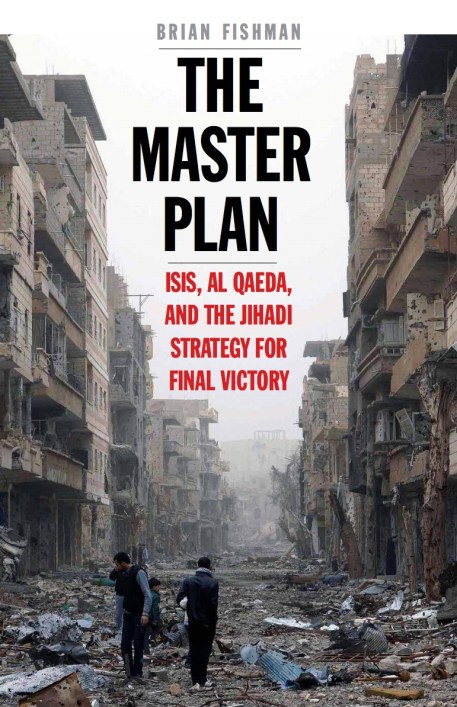
Brian Fishman’s The Master Plan provides a comprehensive history of the Islamic State’s (IS) strategic evolution, covering the personalities and events that shaped one of the most feared terrorist-insurgent groups that has ever existed. Eminently readable, in places even amusing—no small feat in a book about IS—Fishman flips with ease between the overview and the granular to demonstrate his points, using new sources that will allow as much supplementary research as a reader could wish for, and ties it together in a narrative that will be of use to both specialists and generalists. Continue reading

The Need for Caution in Releasing Guantanamo Inmates

Originally published at The Henry Jackson Society.

By Kyle Orton (@KyleWOrton) on February 21, 2017

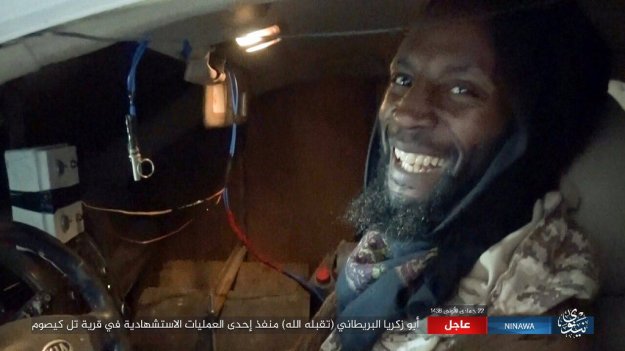
Ronald Fiddler (Abu Zakariya al-Britani)

Ronald Fiddler (Abu Zakariya al-Britani)

Since the offensive against Mosul, the Iraqi capital of the Islamic State (IS), began five months ago, IS has expended a high number of lives quite deliberately in suicide attacks. One of the suicide-attacks conducted on 20 February 2017, a car bombing against an Iraqi base, was by Abu Zakariya al-Britani, a British citizen now identified as Ronald Fiddler from Manchester. In 2002, Fiddler, then calling himself Jamal Udeen al-Harith, was sent to Guantanamo Bay, before being released in 2004 while still protesting his innocence. After suing the British government over his imprisonment, Fiddler received a substantial cash settlement in order to avoid compromising state secrets. Fiddler’s demise invites some revisiting of widely-held assumptions surrounding Guantanamo. Continue reading

A Counterterrorism Policy in Syria That Helps Terrorists

Originally published at The Henry Jackson Society

By Kyle Orton (@KyleWOrton) on January 5, 2017

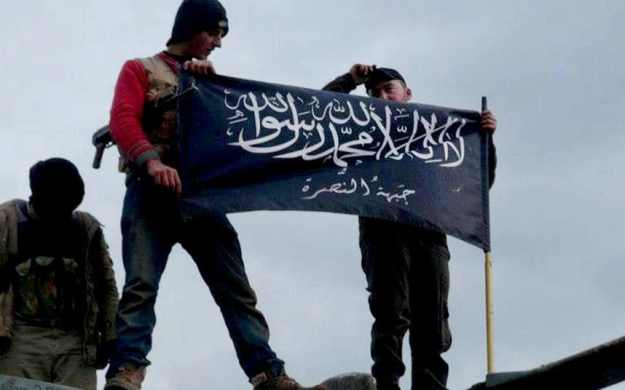
Jabhat al-Nusra jihadists wave their flag in Syria (Associated Press picture, source)

In the last week, the American-led Operation INHERENT RESOLVE, whose primary mission is to “degrade and ultimately destroy” the Islamic State (IS), has apparently conducted two airstrikes against senior members of Jabhat Fatah al-Sham (JFS), once known as Jabhat al-Nusra, al-Qaeda’s rebranded presence in Syria. In late 2016, the U.S. began an intensified targeting campaign against al-Qaeda and associated individuals; this appears to be a continuation of that policy, which provides some guidance about Western policy on Syria more broadly. Continue reading

President Obama Defends His Syria Policy to the Last

Originally published at The Henry Jackson Society

By Kyle Orton (@KyleWOrton) on December 17, 2016

At a rally in Pennsylvania as part of his “Thank You Tour” on Thursday, President-elect Donald Trump said:

We’ll build safe zones in Syria. When I look at what’s going on in Syria it’s so sad. It’s so sad, and we’ve got to help people. And we have the Gulf states; they have nothing but money. We don’t have money. We owe twenty trillion dollars. I will get the Gulf states to give us lots of money, and we’ll build and help build safe zones in Syria so people can have a chance.

Trump’s previous statements on Syria have actually demonstrated some consistency, and Trump has expressed support for safe zones before.

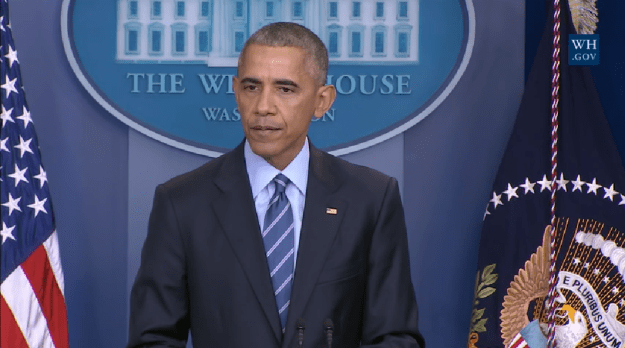
Taking Trump’s statement as a jumping-off point, the next day, at this final press conference of 2016, President Barack Obama was asked about the idea of safe zones in Syria and if he felt responsible for the horrors now unfolding in Aleppo. Obama responded: Continue reading