Tag Archives: Ahmad al-Shara

The Islamic State is Taking Advantage of the Mess in Northern Syria

By Kyle Orton (@KyleWOrton) on 22 July 2022

The United States announced on 12 July that it had killed the Islamic State’s (ISIS) governor of Syria in a drone strike in the village of Galtan in the Jinderes district of the north-western Syrian province of Efrin on the border with Turkey. The U.S. Central Command (CENTCOM) statement identified the slain man as “Maher al-Agal”, though a more precise transliteration is Maher al-Aqal (ماهر العقال). Riding on the motorcycle alongside Al-Aqal when he was killed was a “senior ISIS official” with whom he was “closely associated”. This ISIS official was “seriously injured during the strike”, CENTCOM notes, adding that the Jinderes strike caused no civilian casualties. Continue reading
The Current Condition of Al-Qaeda

By Kyle Orton (@KyleWOrton) on October 4, 2020

A chapter about Al-Qaeda I wrote for the American Foreign Policy Council’s (AFPC) ‘World Almanac of Islamism’ was published today. Do check it out, and the broader site, which is a great, accessible resource. The format of the website necessitated that the chapter as I submitted it was edited, condensed, and split up to fill out the various categories. In case it is of any interest, the original version of the chapter is reproduced below.

Continue reading

Former Head of Islamic State Executive Committee Speaks

By Kyle Orton (@KyleWOrton) on 23 May 2020

Abd al-Nasir, who claims his real name is Taha al-Ghassani (image sources 1 & 2)

There is now, with various caveats, a general agreement that the Islamic State (IS) is on the upswing—in Iraq, particularly, but also in the Badiya, the desert regions of eastern Syria, and more recently in the south of Syria around Deraa. Still, there have been some recent notable gains against the terrorist group. Continue reading

Yusuf al-Qaradawi and Terrorism

By Kyle Orton (@KyleWOrton) on 29 April 2019

This article was originally published at European Eye on Radicalization

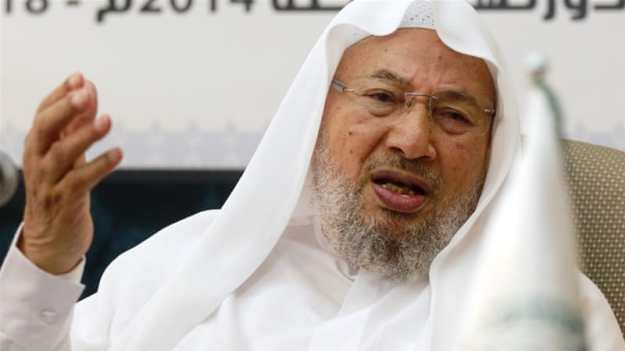
In the wake of the horrific bombings by the Islamic State (ISIS) in Sri Lanka on Eastern Sunday, which killed 250 people, an image has circulated purporting to show a terrorist connected to the attack in the company of the Qatar-based cleric of the Muslim Brotherhood, Yusuf al-Qaradawi. In fact, the image shows no such thing. But Al-Qaradawi’s influence in creating the ideology that motivates Islamist terrorists cannot be doubted. Continue reading

Al-Qaeda and Global Terror

This article was originally published at European Eye on Radicalisation

By Kyle Orton (@KyleWOrton) on 16 April 2019

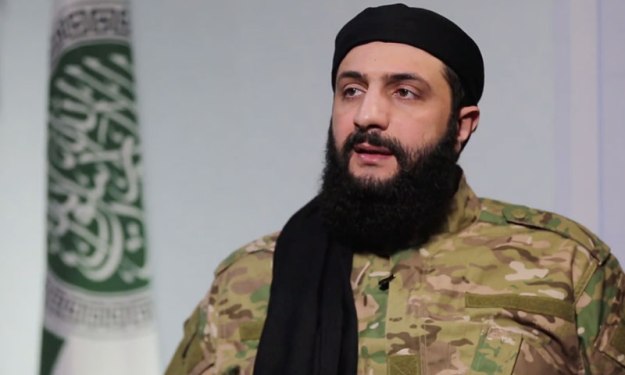
Ahmad al-Shara (Abu Muhammad al-Jolani) [image source]

Several years ago, Al-Qaeda made a strategic decision to refrain from foreign terrorist operations, refocusing away from these global spectaculars towards integrating more closely into local conflicts. The 2014 rampage across Iraq and Syria by Al-Qaeda’s rebellious former Iraqi branch, the Islamic State (ISIS), provided both the opportunity and additional incentive for a long-mediated rebranding effort. However, there have recently been signs of a shift back towards external terror operations, just as ISIS undergoes a setback and Al-Qaeda has a chance to reassert its dominance over the jihadi scene. Continue reading

Islamic State Profiles the Leadership

By Kyle Orton (@KyleWOrton) on 6 April 2019

Islamic State flag in front of the main gate of Saddam Husayn’s palace in Tikrit, 5 April 2015 // AFP PHOTO / MOHAMMED SAWAF

A lengthy document—roughly sixty pages and 12,000 words—was published online on 21 February 2019 containing biographies of twenty-seven senior Islamic State (IS) officials, past and more recent. Those bios that are dated were written between October 2018 and the time of publication, with one exception that was written in the summer of 2018. The author claims to be an IS veteran. While longevity is difficult to prove, the fact that the author provides heretofore unseen images of some of the IS leaders suggests that at a minimum he is an IS operative. Continue reading

What Are the Options in Idlib?

By Kyle Orton (@KyleWOrton) on 6 December 2018

This article was originally published at Ahval, headlined, “The Best Bad Outcome for Idlib”

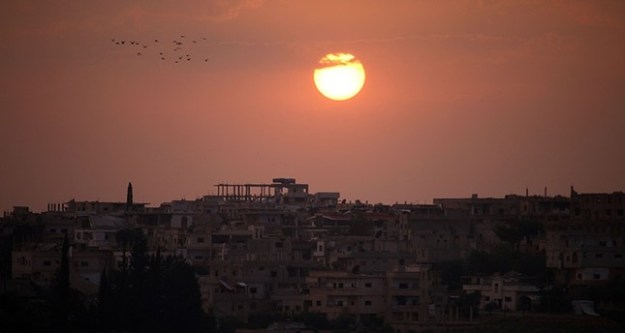
The sun setting over Deraa, in southern Syria, 28 May 2018 (image source)

The Turkey-Russia Sochi Agreement in September won Idlib a reprieve from what had seemed to be an imminent and catastrophic offensive by Syrian President Bashar Assad’s forces and his Russian and Iranian patrons against the last insurgent-held province.

The ceasefire was meant to provide space for Turkey to dismantle the radical insurgents. Instead, those radicals consolidated their dominance in Idlib and the ceasefire has been visibly fraying. How to proceed is a matter of domestic security for the West. Continue reading

Europe Tries to Re-engage in Syria

By Kyle Orton (@KyleWOrton) on 30 October 2018

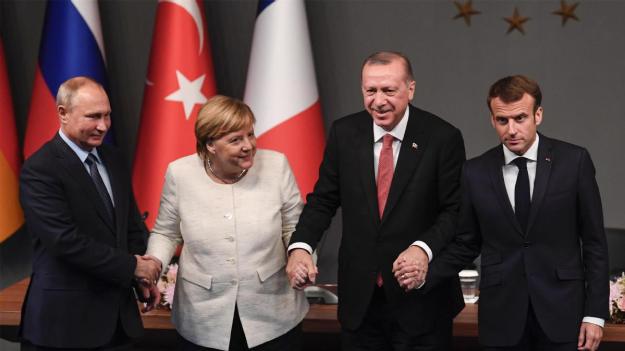
Istanbul summit, 27 October 2018 (image source)

At Saturday’s summit in Istanbul between Turkey, Russia, France and Germany, the focus was on extending the September 17 Turkey-Russia ceasefire agreement reached in Sochi that spared Idlib a full-scale offensive by Bashar al-Assad’s regime and his supporters, and to “progress” on the political track. Continue reading

Islamic State Declares Members of Al-Qaeda’s New Syrian Branch to Be Heretics

By Kyle Orton (@KyleWOrton) on 28 April 2018

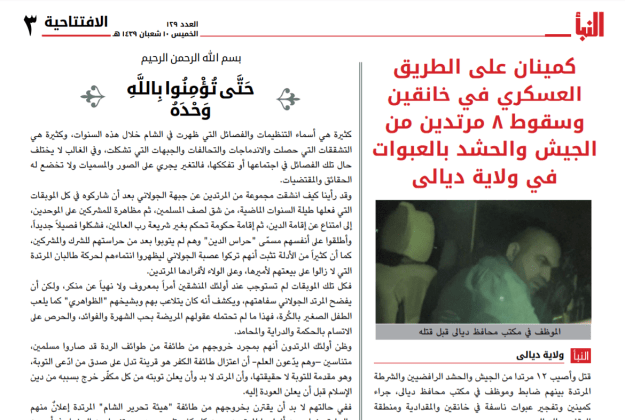
Al-Naba 129, page 3

The 129th issue of Al-Naba, the Islamic State’s newsletter, contained an article on page 3 that made takfir (excommunication) against Tandheem Hurras al-Deen (The Organization for the Guardians of the Religion or the Religious Guardians’ Organization), al-Qaeda’s new, if unofficial, branch in Syria. A rough translation of the article is reproduced below. Continue reading

Islamic State Admits to Colluding with the Syrian Regime

By Kyle Orton (@KyleWOrton) on 20 April 2018

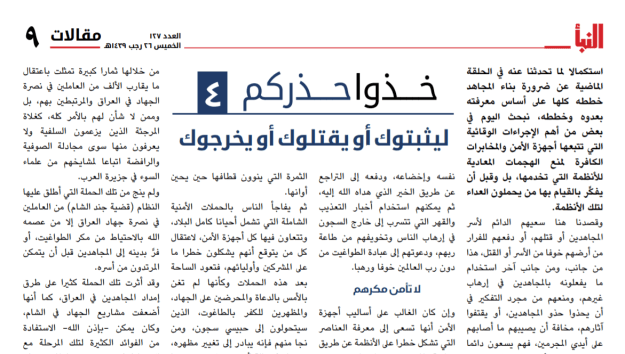
Since the uprising in Syria began in 2011, Bashar al-Asad’s regime has followed a tried and trusted script to destroy the opposition by eliminating all engageable elements, creating a binary choice for the population and the world—the despotism or a terrorist takeover.

Asad bolstered extremists within the insurgency: letting Islamists out of prison while imprisoning secular activists, pushing a peaceful protest movement into violence, heightening sectarian tensions, and financial schemes of various kinds. Asad then then left IS alone for a year to build its caliphate, while obliterating rebel-held areas that could provide an attractive alternative to the dictatorship. Continue reading