Tag Archives: Ahrar al-Sham

Ahrar al-Sham Explains It’s Position On A Merger With Al-Qaeda

By Kyle Orton (@KyleWOrton) on January 14, 2017

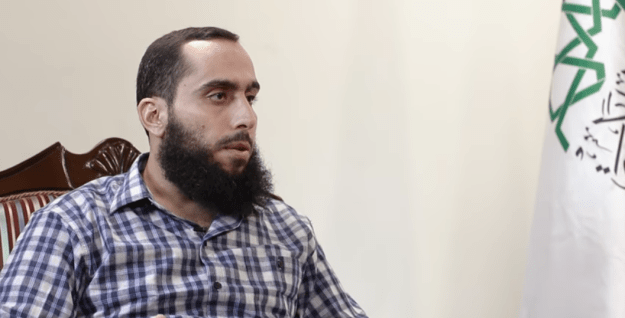
Ahrar al-Sham's leader, Ali al-Umar (Abu Ammar)

Ahrar al-Sham’s leader, Ali al-Umar (Abu Ammar)

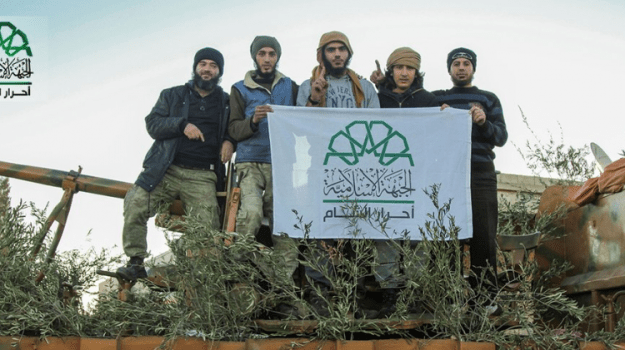
The Syrian media activist Hadi al-Abdullah interviewed Ahrar al-Sham’s leader, Ali al-Umar (Abu Ammar al-Umar), in a video released on 11 January 2017. The focus was the ongoing negotiations with Jabhat Fatah al-Sham (JFS), al-Qaeda’s rebranded Syrian branch, to create an insurgent merger. The question has caused intense turmoil within Ahrar. Continue reading

An Insurgent Perspective on the Fall of Aleppo

By Kyle Orton (@KyleWOrton) on January 11, 2017

1

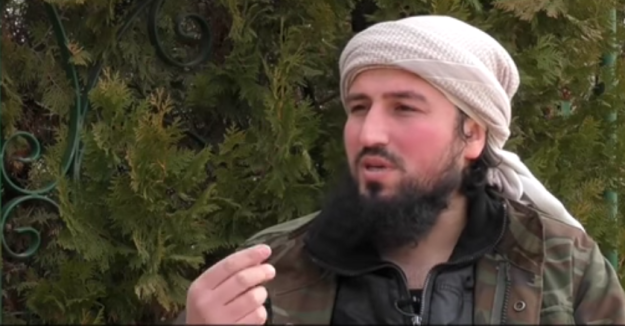
On The Ground News (OGN) interviewed Abu al-Abed Ashidaa on 10 January 2017. Abu al-Abed was appointed to lead all insurgents in the besieged areas of eastern Aleppo City on 1 December 2016. Aleppo City fell to the pro-regime coalition after a months-long campaign of siege, bombardment, and atrocity on 12 December, with the final deportation of the insurgency and tens of thousands of civilians—a  crime against humanity in itself—on 22 December.

OGN is an outlet operating inside Syria that is best known for featuring American activist, Bilal Abdul Kareem. The organization claims independence but is clearly within the milieu of the more hardline insurgent forces in northern Syria, and in fact appears to favour the political line of Jabhat Fatah al-Sham (JFS), al-Qaeda’s rebranded presence in Syria, against even other extremist Salafi groups like Ahrar al-Sham.

It was Kareem who interviewed Abu al-Abed. The transcript is below. Continue reading

Jihadi Clerics Clash Over Merger Proposals in Syria

By Kyle Orton (@KyleWOrton) on January 10, 2017

1

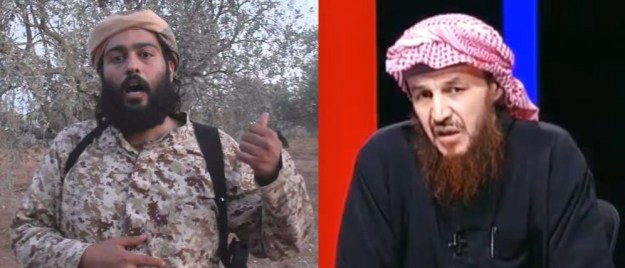
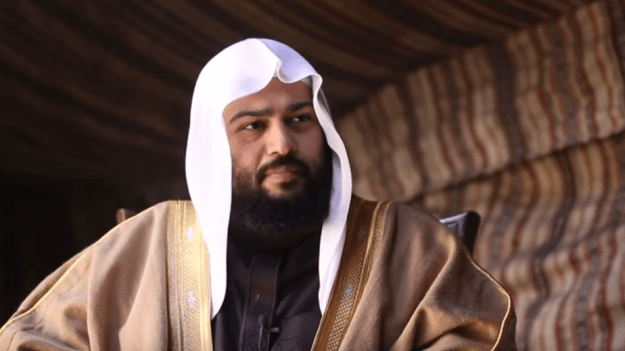
Abdallah al-Muhaysini, Issam al-Barqawi (Abu Muhammad al-Maqdisi)

In Syria, negotiations continue for a merger between Jabhat Fatah al-Sham (JFS), the rebranded al-Qaeda branch in the country, and other insurgent groups in the north, particularly Ahrar al-Sham. Two Jihadi-Salafi clerics have offered very different proposals for the way forward in the last couple of days. Continue reading

Al-Qaeda Operative Explains Failure To Merge With Syrian Rebels

By Kyle Orton (@KyleWOrton) on January 8, 2017

1

On 5 January 2016, Abdallah al-Muhaysini appeared on episode sixty of Sham Weekly, an interview series, to lament the failure of the Syrian insurrectionists to merge with Jabhat Fatah al-Sham (JFS), al-Qaeda’s rebranded presence in Syria. Al-Muhaysini places the blame for the failure to merge squarely on Ahrar al-Sham. Continue reading

Islamic State Likely To Increase Terrorism Against Turkey

By Kyle Orton (@KyleWOrton) on January 7, 2017

Abdulkadir Masharipov (source)

It was an hour into 2017 that the Islamic State (IS) carried out its first act of mass-murder: an IS jihadist attacked the Reina nightclub in Istanbul, massacring thirty-nine people. IS has been attacking Turkey with increasing frequency over the last two years and, since Turkey intervened directly in Syria in August, IS’s media output has elevated the Turks into a priority target for terrorism. The public claim of responsibility by IS for the Reina attack suggests that we are moving into a new era in terms of how IS treats Turkey. Turkey’s increasingly warm relations with Russia have angered many Muslims around the world, providing jihadists an incentive and opportunity, and providing al-Qaeda political space it seemed to have lost to co-opt the Syrian rebellion. It is therefore likely that more bloodshed is to come for Turkey. Continue reading

A Counterterrorism Policy in Syria That Helps Terrorists

Originally published at The Henry Jackson Society

By Kyle Orton (@KyleWOrton) on January 5, 2017

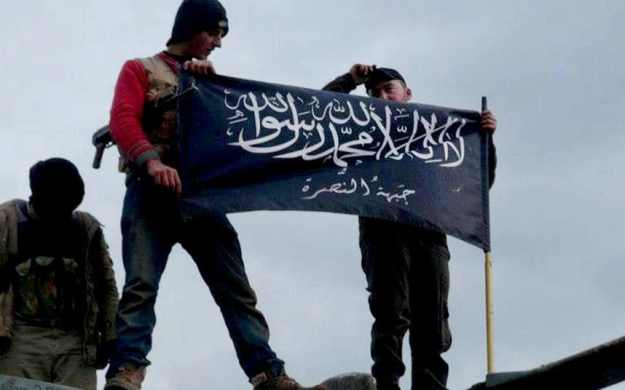
Jabhat al-Nusra jihadists wave their flag in Syria (Associated Press picture, source)

In the last week, the American-led Operation INHERENT RESOLVE, whose primary mission is to “degrade and ultimately destroy” the Islamic State (IS), has apparently conducted two airstrikes against senior members of Jabhat Fatah al-Sham (JFS), once known as Jabhat al-Nusra, al-Qaeda’s rebranded presence in Syria. In late 2016, the U.S. began an intensified targeting campaign against al-Qaeda and associated individuals; this appears to be a continuation of that policy, which provides some guidance about Western policy on Syria more broadly. Continue reading

Ahrar al-Sham Political Leader Opposes Unification With Al-Qaeda

By Kyle Orton (@KyleWOrton) on December 29, 2016

2

In the past few days, news has circulated of an impending merger between the rebranded al-Qaeda branch in Syria Jabhat Fatah al-Sham (JFS) and several rebel groups, Ahrar al-Sham and Harakat Nooradeen al-Zengi among them. Labib al-Nahhas (Abu Ezzeddine al-Ansari) is the leader of the Political and External Affairs bureau within Ahrar al-Sham. In mid-to-late 2015, al-Nahhas led an effort to recast Ahrar as a mainstream actor in the insurgency that was in any case too large to avoid engaging, a characterization of the organization that is, to say the least, open to challenge. Al-Nahhas is sincerely opposed to Ahrar merging with JFS, however, for the simple reason that he can see it is political suicide: it is the end of any degree (and there hasn’t been much as it is) of Western support for the Syrian armed opposition; once the insurgency is formally attached to al-Qaeda, the only question will be the extent of the Western support for efforts to put it down. Continue reading

Moscow Rules in Syria, Again

By Kyle Orton (@KyleWOrton) on September 11, 2016

1

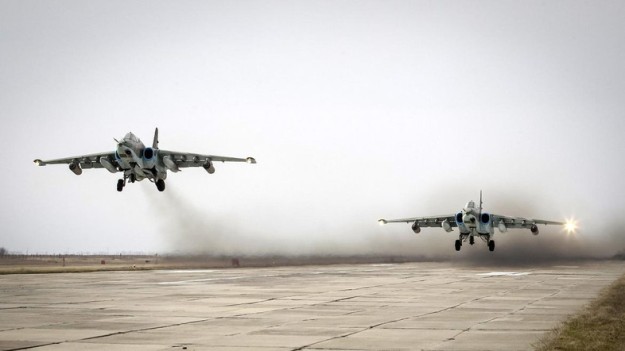
In Geneva on 9 September 2016, the United States and Russia announced an agreement to implement a ceasefire—formally a “cessation of hostilities” (CoH)—in Syria, which is intended to allow humanitarian access and restart the political process to end of the war, and then to begin jointly targeting the Islamic State (IS) and al-Qaeda’s Syrian branch, formerly Jabhat al-Nusra, recently rebranded Jabhat Fatah al-Sham (JFS).

There is reason to wonder if the deal will ever take effect and the lack of an enforcement mechanism against Bashar al-Assad’s regime leaves open the possibility that the pro-regime coalition will, as it did after the February ceasefire, abuse this process to their advantage.

Most dauntingly, if this process worked to the letter it will legitimate the gains of the regime’s aggression, carried out under the cover of the last ceasefire, and has the potential to weaken the insurgency and embolden the regime, strengthening radicalism on all sides, pushing a political settlement further away, and thus protracting the war. Continue reading

The Dangers of Emptying Guantanamo

By Kyle Orton (@KyleWOrton) on August 17, 2016

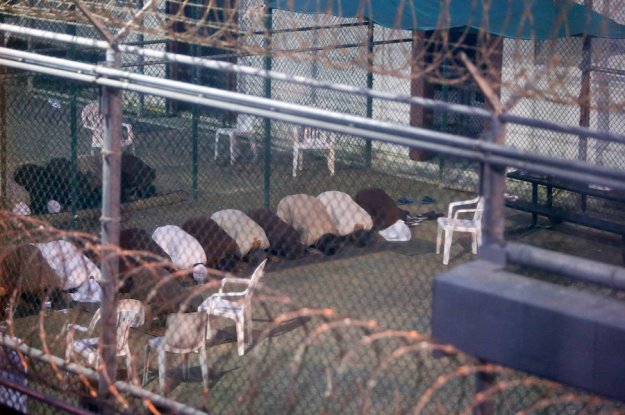
It was announced on 15 August that fifteen more inmates from the Guantanamo Bay detention facility have transferred, twelve Yemenis and three Afghans, to the United Arab Emirates, the largest individual release of the Obama administration. The U.A.E. also took in five “lower-level” Yemeni detainees in November. The Emirates had previously taken in just one—Abdullah al-Hamiri, in 2008—but President Obama leveraged this deal with the Gulf states at the May 2015 meeting when the Khaleejis were deeply concerned about the then-impending Iran nuclear deal, and in exchange for security reassurances, Obama extracted further concessions.

One reason why so many jihadists have been released to the U.A.E., other than having a similar language and culture, is because the U.A.E. has a competent security apparatus to monitor these people. Those released last November were kept in “a custodial rehabilitation program“—a version of house-arrest, basically. The conditions this time around are less clear.

What is clear is just how dangerous the operatives who are being let out of the Guantanamo detention facility are. Every single one of them has been assessed as posing a “high” risk to America, her interests, and her allies. Continue reading

Ahrar al-Sham and Al-Qaeda

By Kyle Orton (@KyleWOrton) on August 12, 2016

The Islamic State’s (IS) weekly newsletter, al-Naba, interviewed a high-ranking al-Qaeda defector, Abu Ubayda al-Lubnani, across two issues in February and March 2016. Abu Ubayda announced his defection from al-Qaeda to IS in April 2014 via al-Battar and Abu Ubayda’s name appeared on a list of prominent clerics supporting IS’s caliphate declaration that was circulated not long after the declaration. Abu Ubayda is described by al-Naba—as best as can be told accurately—as having been a member of al-Qaeda’s Shura or Consultation Council, a training officer in its Military Committee, and a counter-intelligence officer. Abu Ubayda is advertised as speaking about many secret aspects of al-Qaeda.

Among the topics Abu Ubayda covers is the alleged infiltration and manipulation of al-Qaeda by foreign intelligence services, specifically Pakistan’s Inter-Services Intelligence (ISI), which is not only a violation of jihadist doctrine by collaborating with an “infidel” and illegitimate state but led to the deaths of a number of senior al-Qaeda leaders.

Perhaps the most intriguing aspect of what Abu Ubayda has to say relates to al-Qaeda’s attempt to take advantage of the Syrian revolution. This persistent campaign has followed a pattern of disguising al-Qaeda’s presence and attempting to influence and eventually co-opt the rebellion against Bashar al-Assad’s regime. One lever al-Qaeda relied upon, according to Abu Ubayda, was Ahrar al-Sham, an organization that disclaims all connections to al-Qaeda and dissimulates about its ideology. Whatever Ahrar’s dominant ideology, it is simply a fact that it has served as the bridge between the foreign-led jihadists and Syrian Islamists, and its connections to al-Qaeda are evident enough. Abu Ubayda suggests Ahrar’s connections to al-Qaeda are even deeper than they appear. Continue reading