Tag Archives: Ahrar al-Sham

Al-Qaeda Rebrands, Marches on in Syria

By Kyle Orton (@KyleWOrton) on August 2, 2016

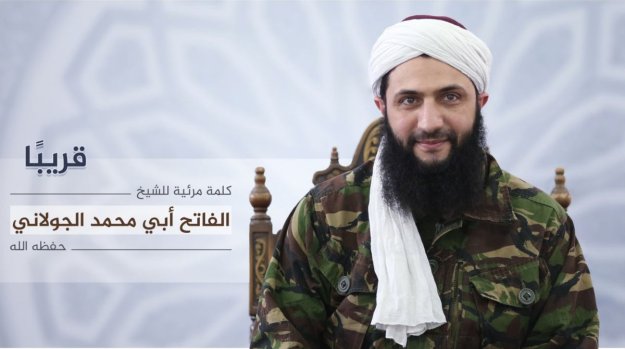
First ever picture of the leader of Jabhat al-Nusra (al-Qaeda in Syria), Ahmad al-Shara (Abu Muhammad al-Jolani), 28 July 2016

First ever picture of the leader of Jabhat al-Nusra (al-Qaeda in Syria), Ahmad al-Shara (Abu Muhammad al-Jolani), 28 July 2016

The leader of Jabhat al-Nusra (al-Qaeda in Syria), Abu Muhammad al-Jolani, whose real name is Ahmad al-Shara, ostensibly broke the link between his organization and al-Qaeda last week. This is another stage in al-Qaeda’s long-term strategy of embedding itself into local societies so that it can more effectively reshape the faith and shield itself from the international community. Continue reading

Islamic State Prepares for Retreat, Calls for Foreign Terrorism

By Kyle Orton (@KyleWOrton) on May 23, 2016

1

Taha Falaha (Abu Muhammad al-Adnani) is the governor Islamic State-held territory in Syria and oversees the foreign attacks, a roster of duties which indicates that Falaha so powerful that he is effectively the caliph’s deputy after the demise of Abd al-Rahman al-Qaduli (Abu Ali al-Anbari) in March. Falaha is also IS’s official spokesman, and on 21 May 2016 he gave a very significant speech entitled, “That They Live By Proof”. The speech, released by Al-Hayat Media Centre, is reproduced below with some minor alterations in transliteration, some important sections highlighted in bold, and some notes added for explanation.

Falaha made three major points. First, Falaha was especially adamant that territorial control by IS should not be considered a measure of IS’s success: it lost all urban holdings and went into the deserts last time, after the strategic defeat in 2008, but it held to its cause and America withdrew, and this ideological cohesiveness and determination led it to be more powerful than ever within five years. Second, Falaha made use of the savage conduct of the coalition made up of the Assad regime, Iran, and Russia—and the Western indifference to same—to argue for Sunnis to see IS as a protective barrier against such sectarian foes. And, third, Falaha called for foreign attacks by Western Muslims, saying that if IS’s loyalists were unable to journey to IS-held areas this should not be considered a problem since attacks in the West are “more beloved to [IS] than the biggest act done [within the caliphate]”. Continue reading

Whose Side is America on in Aleppo?

By Kyle Orton (@KyleWOrton) on May 6, 2016

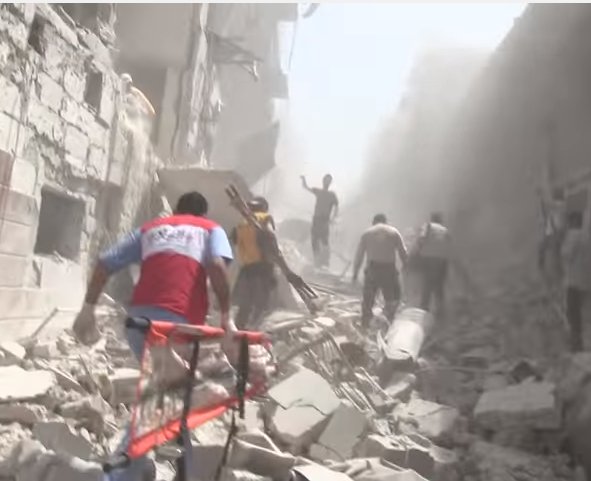
Aftermath of an airstrike by the pro-Assad coalition in Kalasa, Aleppo, 28 April 2016

Aftermath of an airstrike by the pro-Assad coalition in Kalasa, Aleppo, 28 April 2016

Whatever pretence there was left in Syria’s “cessation of hostilities” (CoH)—which was never more than a reduction in hostilities—enacted at midnight on 26/27 February is now at an end. Russia and the regime of Bashar al-Assad have never ceased attempts to militarily weaken the armed opposition and escalated with a concerted campaign of aerial bombardment against Aleppo City on 22 April. The insurgency fully mobilized in response on 5 May with a major offensive south of the city. The dynamics set in place by Russia’s intervention—the bolstering of the Assad regime and the strengthening of extremist forces in the insurgency—have been in full view with this latest crisis, as has the longer-term trend of the United States moving toward the position of Assad, Russia, and especially Iran in Syria. Continue reading

The Syrian Ceasefire Gives International Sanction to Russia’s War to Save Assad

By Kyle Orton (@KyleWOrton) on February 25, 2016

Article published at Left Foot Forward

1

At midnight on Friday a ceasefire began in Syria. It was billed as a prelude to negotiations that restart on 7 March, and which are supposed to lead to a political transition that will end Syria’s war. The chances of success on either front are slim.

This was the second February ceasefire attempt—the first, on 19 February, failed without even the pretence of starting. The pretence is still being maintained this time around, but the structural problems with the ceasefire’s design—namely that it allows the regime of Bashar al-Assad and his supporters to continue their war against the Syrian population, while restraining the opposition from defending itself—ensure that it will fail and the West’s purported allies within the opposition will be worse-off, both during the period of faux-ceasefire and afterwards.

The Geneva III peace process was a dangerously misconceived effort. After Russia’s intervention in Syria on 30 September the Assad regime was simply too strong. With no US willingness to change the balance of power inside Syria it meant that either the process was preserved and ‘peace’ was redefined as regime victory, or the process was surrendered and peace on some more humane terms was sought by empowering the rebellion to enforce such terms on the regime in future negotiations. The US chose the process.

The US’s emphasis on process over substance can be seen in all kinds of ways. Continue reading

The Sieges of Syria

By Kyle Orton (@KyleWOrton) on March 2, 2016
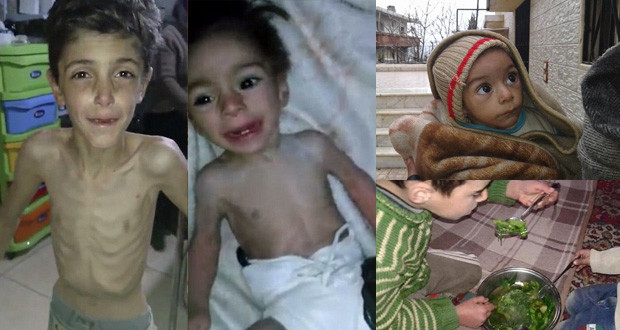
Starving children in Madaya

A website, siegewatch.org, has been set up that tracks the areas under siege in Syria. Siege Watch is a joint project of PAX, an organization that works in conflict zones to foster peace, and The Syria Institute, a non-partisan research centre directed by Valerie Szybala.

At the present time, according to Siege Watch, there are forty-six sieges operating in Syria, forty-three of them (93.5%) imposed by the Assad regime, two (4.5%) imposed by Jaysh al-Fatah, an insurgent coalition that includes Jabhat an-Nusra (al-Qaeda in Syria), and one (2%) by the Islamic State (IS).

Siege Watch also documents the severity of the sieges in three categories. Category one (C1) is the most severe: very little gets in even by smuggling and international aid deliveries are rare if at all; the risk of malnutrition is high. Category two (C2) sieges are porous enough for the black market and/or locals might have some access to locally-grown produce, but prices for basics are extremely high and residents are at “some risk of malnutrition/dehydration”. Category three (C3) sieges require smuggling to get food, but there is a consistent supply, even if home-grown. While risk of malnutrition is low in C3 zones, medical emergencies are likely because of attacks by besieging forces.

All six C1 sieges are imposed by the regime. Thirty category C2 sieges are operating: twenty-nine by the regime and one by IS. The regime is also operating eight C3 sieges and Jaysh al-Fatah is operating two C3 sieges. Continue reading

America Picked the Wrong Allies Against the Islamic State

By Kyle Orton (@KyleWOrton) on February 17, 2016

Article published at NOW Lebanon

PYD/PKK fighters after they took over the Mannagh airbase on February 10, 2016.

PYD/PKK fighters after they took over the Mannagh airbase on February 10, 2016.

Over the last six weeks the regime of Bashar al-Assad—which by this point means in most areas Iranian-run ground forces and Russian air power—have made territorial gains in northern Syria that threaten the existence of the armed opposition in the area. This threat has been compounded by the Kurdish Democratic Union Party (PYD) and allies, which have also drawn on Russian airstrikes to attack the rebellion in the same areas. The U.S.-led coalition against the Islamic State (ISIS) has made the PYD its main proxy inside Syria—the only force that can call in coalition airstrikes. This policy was obviously flawed given the view of the PYD by necessary anti-ISIS allies like Turkey and the demographic realities of ISIS, which require Sunni Arabs to be able to police their area, and ensure that ISIS begins to look like a protector of Sunnis if Kurds occupy Arab areas; the PYD now attacking the crucial anti-ISIS demographic in alliance with the regime underlines that fact. Continue reading

Is Turkey Responsible for the Islamic State?

By Kyle Orton (@KyleWOrton) on December 20, 2015

1

Turkey concluded its biggest investigation to date into Islamic State (IS) operatives on its territory on Friday, and blacklisted sixty-seven people. This provides a good moment to review what Turkey’s role has been in the rise of IS, especially amid the escalating accusations from Russia that Turkey is significantly responsible for financing IS. The reality is that while Turkish policy has, by commission and omission, made IS stronger than it would otherwise have been, so has Russia’s policy—and Russia’s policy was far more cynical than Turkey’s, deliberately intended empower extremists to discredit the rebellion against Bashar al-Assad. Turkey’s focus on bringing down Assad and Ankara’s fear of Kurdish autonomy led it into these policies and now—having seemingly found the will to act to uproot IS’s infrastructure on Turkish territory—there is the problem of actually doing so, when IS can (and has) struck inside Turkey. The concerns about these external funding mechanisms for IS, while doubtless important, obscure the larger problem: IS’s revenue is overwhelmingly drawn from the areas it controls and only removing those areas of control can deny IS its funds. Continue reading

In View of Vienna

By Kyle Orton (@KyleWOrton) on December 15, 2015

Published at NOW Lebanon.

1

So the Syrian opposition can unite. Foreign powers have been the major cause of rebel discord. Previous rebel unity initiatives like the Joint Command were pulled apart by the competition between the insurgency’s sponsors—Saudi Arabia and Qatar primarily—and the last rebel umbrella group, the Supreme Military Council, which was identified with Western power, collapsed after President Barack Obama decided not to punish Bashar al-Assad for the massive chemical weapons attack on the population of Ghouta. But under Saudi auspices, an opposition “team” was announced on December 10 after a three-day conference in Riyadh, which includes the political and military opposition and groups with varying ideologies and patrons. This is an achievement. Unfortunately, this team’s task is an impossible one: intended to partake in the Vienna process begun in October, ostensibly to negotiate an end to the war, Syria is not, at present, in a condition where a political agreement can be made and implemented, not least because the Assad regime and its supporters in Iran and Russia have doubled down, and the opposition continues to receive insufficient support to pressure the regime enough to force an agreement. Continue reading

As Syria’s Opposition Tries To Unite, Prospects For Peace Recede

By Kyle Orton (@KyleWOrton) on December 9, 2015

A version of this article was published at Middle East Eye.

A rebel fighter from the Free Syrian Army's

A rebel fighter from the Free Syrian Army’s “First Battalion” takes part in military training on May 4, 2015, in rebel-held northern Rif Aleppo. (AFP, Baraa al-Halabi)

The Syrian opposition is meeting in Saudi Arabia between December 8 and 10 in an attempt to create a unified structure that can credibly sit across the table from the Bashar al-Assad regime in the internationally-organised peace talks in Vienna, and make a binding commitment on the path forward for Syria. Continue reading

Syria’s Many Moderate Rebels

By Kyle Orton (@KyleWOrton) on November 30, 2015

A version of this article was published at NOW Lebanon.

Rebels from the Southern Front in northwest Deraa, March 2015

Rebels from the Southern Front in northwest Deraa, March 2015

In early November, the Foreign Affairs Select Committee released a report challenging the British government’s proposal to extend airstrikes from Iraq into Syria against the Islamic State (IS). Among other things, the report asked for a proposed political path to ending the Syrian civil war, a necessary prerequisite to defeating IS. On Thursday, Prime Minister David Cameron released a response, part of which said:

Military action against ISIL will also relieve the pressure on the moderate opposition, whose survival is crucial for a successful transition to a more inclusive Syrian government. Syria has not been, and should not be, reduced to a choice between Assad or ISIL. Although the situation on the ground is complex, our assessment is that there are about 70,000 Syrian opposition fighters on the ground who do not belong to extremist groups.

This number has blown up into a major political row, with many Members of Parliament and pundits taking their personal unfamiliarity with Syria’s military landscape as evidence that it cannot be so. The Labour Opposition has made the number of non-extremist rebels a focal point of their challenge to the Prime Minister’s proposal for moving forward in Syria, and one of Cameron’s own Conservative MPs referred to the number as “magical”. The challenge to the number is part of a longer-term trend, where a narrative has become prevalent that there are no moderate opposition forces left in Syria. The corollary of this view is usually the argument that the West should side with the “secular” Assad regime as the “lesser evil” to put down a radical Islamist insurrection.

Sidestepping the ignorance that goes into believing a blatantly sectarian regime propped up by an international brigade of Shi’a jihadists is secular: What of this claim that there are no moderate rebels left? It isn’t true, as I recently made clear in a paper for The Henry Jackson Society. Continue reading