Tag Archives: al-Qaeda

Moscow Rules in Syria, Again

By Kyle Orton (@KyleWOrton) on September 11, 2016
1

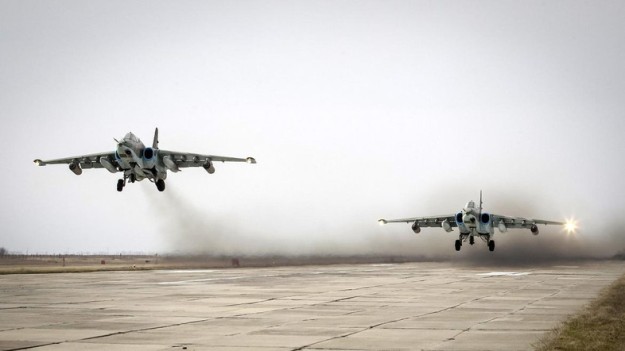
In Geneva on 9 September 2016, the United States and Russia announced an agreement to implement a ceasefire—formally a “cessation of hostilities” (CoH)—in Syria, which is intended to allow humanitarian access and restart the political process to end of the war, and then to begin jointly targeting the Islamic State (IS) and al-Qaeda’s Syrian branch, formerly Jabhat al-Nusra, recently rebranded Jabhat Fatah al-Sham (JFS).

There is reason to wonder if the deal will ever take effect and the lack of an enforcement mechanism against Bashar al-Assad’s regime leaves open the possibility that the pro-regime coalition will, as it did after the February ceasefire, abuse this process to their advantage.

Most dauntingly, if this process worked to the letter it will legitimate the gains of the regime’s aggression, carried out under the cover of the last ceasefire, and has the potential to weaken the insurgency and embolden the regime, strengthening radicalism on all sides, pushing a political settlement further away, and thus protracting the war. Continue reading
The End of the Islamic State by Christmas?

By Kyle Orton (@KyleWOrton) on September 5, 2016

1

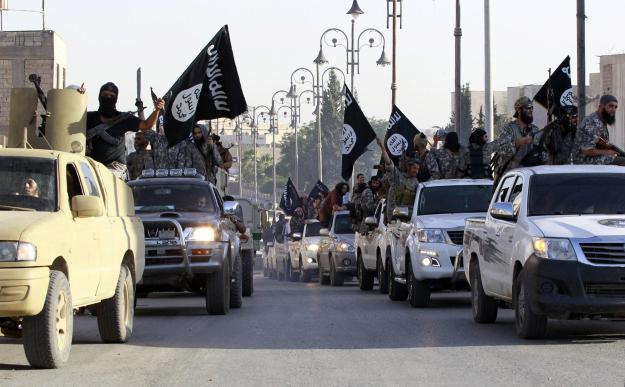
Last week it was reported by The Daily Beast that United States defence and political leaders believe they can at least begin the operation to remove the Islamic State (IS) from its Iraqi capital, Mosul, before President Barack Obama leaves office on 20 January 2017. This seems unlikely. More to the point, if it is true it is highly dangerous, both in the short-term and especially over the long-term. Continue reading

Of Kurds and Compromises in Syria

By Kyle Orton (@KyleWOrton) on September 2, 2016

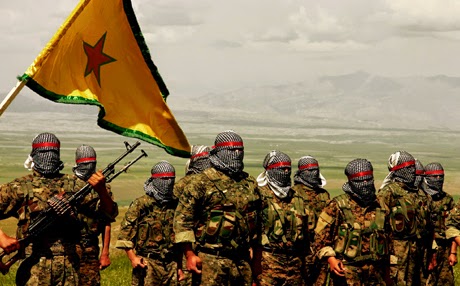
PYD/YPG soldiers

PYD/YPG soldiers

Having written extensively about the authoritarian structure in the areas run by the Democratic Union Party (PYD), the Syrian branch of the Kurdistan Workers’ Party (PKK), in northern Syria, and the problems of media, local and Western, in covering this, it was very interesting to see a report in The Wall Street Journal underlining some of these points.

The Journal notes that the PYD and its armed wing, the People’s Protection Units (YPG), have engaged in a ruthless consolidation of power within a single party, despite claims to be governing in a democratic way. This has included: heavy pressure on all non-pro-PYD media via various Soviet-style accusations of subversion; demographic engineering by a refusal to allow Arab inhabitants to return to homes or actively expelling them; forced conscription, including of children; the imposition of an ideological curriculum in schools; and the suppression and/or expulsion of all opposition. Continue reading

The Fall of the Islamic State’s Terrorism Director

By Kyle Orton (@KyleWOrton) on August 31, 2016

Taha Falaha (Abu Muhammad al-Adnani) in al-Naba

Taha Falaha (Abu Muhammad al-Adnani) in al-Naba

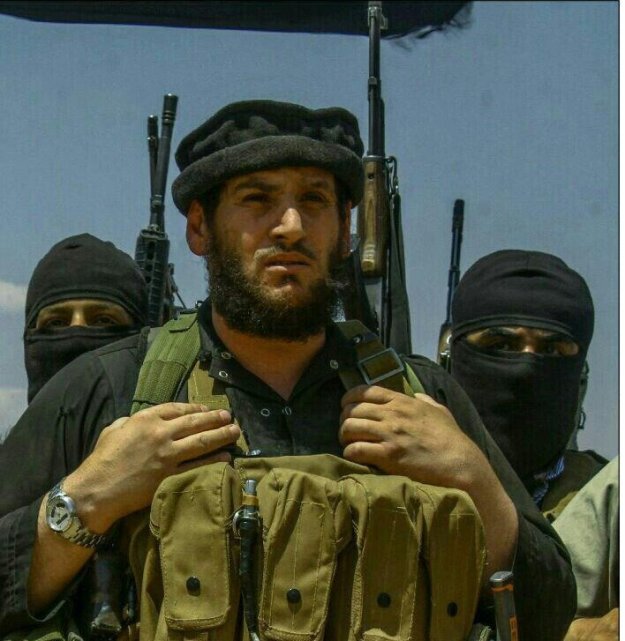
The Islamic State confirmed yesterday, via their “news” agency Amaq, that Taha Subhi Falaha had been killed in Aleppo. Falaha had gained global notoriety under his kunya, Abu Muhammad al-Adnani, after his September 2014 speech calling on Muslims in the West to “kill any disbeliever” in range, and to at least “spit in his face” if one was unable to find a knife or a car or a rock to do murder with.

Falaha was often referred to as the spokesman of IS, and so he was—the voice of the organization since 2011. He was also from the first generation of the organization, recruited before the invasion of Iraq, one of the few within the organization of that stature. But, as I explained recently in a paper for the Henry Jackson Society that compiled what is known of IS’s leadership, Falaha was much more than a figurehead.

Falaha was the governor of IS-held areas in Syria and the man who oversaw the external terrorist attacks. By now he was the caliph’s effective deputy. Heretofore, IS’s impressive bureaucracy has managed to replace individuals with minimal perturbation. IS will experience few perturbations quite like this.
Continue reading

The Islamic State’s Relationship With Al-Qaeda

By Kyle Orton (@KyleWOrton) on August 30, 2016

1

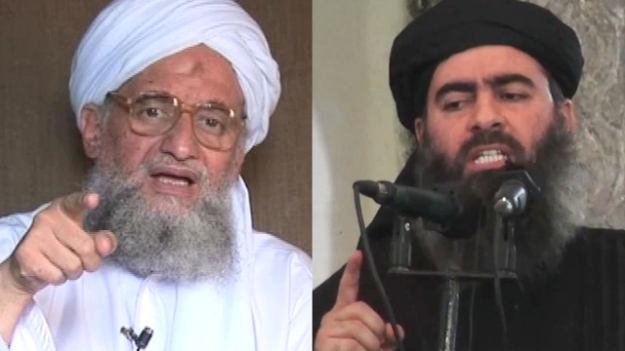
Since al-Qaeda broke ties with the Islamic State (IS), then the Islamic State of Iraq and Syria (ISIS), in 2014 there has been an ongoing war of narratives about what happened. Below is an attempt to work through this murky situation. Continue reading

Turkey’s Intervention in Syria Improves the Prospects for Peace

By Kyle Orton (@KyleWOrton) on August 25, 2016

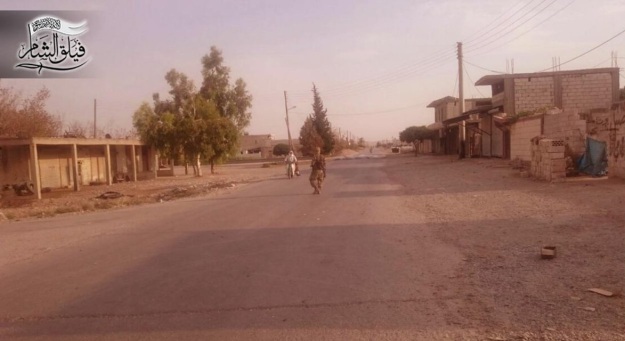
Picture put out by Faylaq al-Sham of Jarabulus soon after the Islamic State was expelled (Telegram, 24 August 2016)

Picture put out by Faylaq al-Sham of Jarabulus soon after the Islamic State was expelled (Telegram, 24 August 2016)

After a horrific suicide bombing by the Islamic State (IS) at a Kurdish wedding in eastern Turkey had slaughtered more than fifty people on Saturday, Turkey moved to expel IS from Jarabulus in eastern Aleppo Province at about 4 AM on Wednesday morning. IS was swept from this last major border town in Syria, a key gateway for resources to the outside world, around ten hours later.

Operation EUPHRATES SHIELD saw Turkey put troops and tanks over the border publicly for the first time, and allow the Free Syrian Army (FSA)-branded and other mainstream Syrian rebels who have been battling IS for years to use Turkish territory to launch the assault. It was supported by airstrikes from the international anti-IS coalition.

For Turkey, this is a strong indication of a change in her threat-perception vis-à-vis IS, but it is also about a (correctly) perceived threat of what was to follow IS. Continue reading

The Islamic State Guided the Normandy Church Attack

By Kyle Orton (@KyleWOrton) on August 22, 2016

Normandy church killers, Adel Kermiche and Abdelmalik Petitjean, swear allegiance to the Islamic State [video, 27 July 2016]

Normandy church killers, Adel Kermiche and Abdelmalik Petitjean, swear allegiance to the Islamic State [video, 27 July 2016]

In Saint-Etienne-du-Rouvray, south of Rouen in Normandy, northern France, on 26 June 2016, two men wielding knives took five hostages in a church around 10:00 local time (just a bit before).[1] Initially there were six hostages consisting of a priest, three nuns, and two worshippers, but one nun managed to escape and alerted the authorities, who surrounded the church.[2] The attackers murdered the priest, Jacques Hamel, 85 (born 30 November 1930[3]), making him kneel on the alter and slitting his throat while preaching in Arabic.[4] One of the nuns present said that while the two killers were initially nervous and aggressive, by the time of the murder they seemed content: one of them gave “a soft smile, that of someone who is happy”.[5] An elderly male worshipper was handed a mobile telephone and made to film the attackers slaughtering the priest, and was himself then slashed and grievously wounded.[6] That footage has not been released, but almost certainly will be at some point. “The two men had cried Allahu Akbar (God is Great) as they left the church with three of the hostages. One man had a fake suicide belt made of aluminium and three knives; the other was carrying a backpack made to look like a bomb and a kitchen timer.” The two attackers were shot dead by police.[7] Continue reading

Dehumanization and Murder in Assad’s Prisons

By Kyle Orton (@KyleWOrton) on August 19, 2016

1

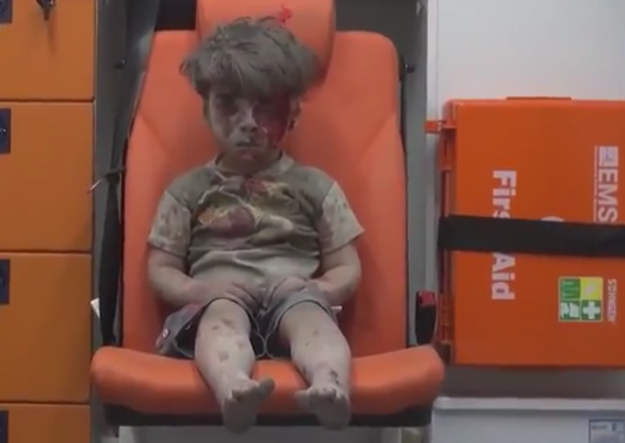
The picture above “went viral” on Thursday. The boy, five-year-old Omran Daqnees, was pulled from a building in rebel-held eastern Aleppo City after an airstrike either by the regime of Bashar al-Assad or Russia.

Like Alan Kurdi last September, Omran’s is hardly a unique case—twelve children were treated at just that one medical centre in Aleppo on Wednesday. But it seemed to capture something of the indiscriminate brutality that has been visited on the Syrian population, which rose against Assad five-and-a-half long years ago.

On the same day this shocking image came to global attention, Amnesty International released a report documenting in greater detail the monstrous scale of the cruelty and murder inflicted on Syrians who fall into the regime’s grasp. Continue reading

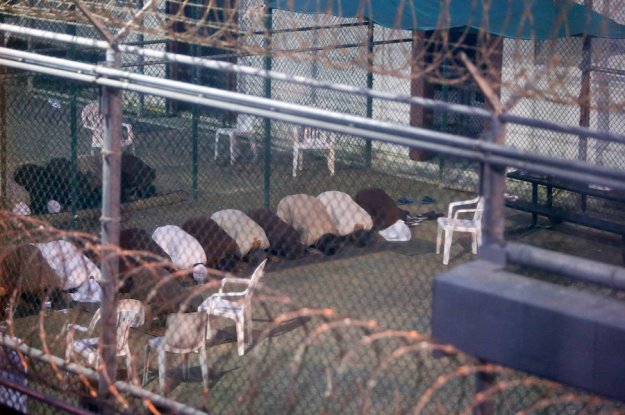
The Dangers of Emptying Guantanamo

By Kyle Orton (@KyleWOrton) on August 17, 2016

It was announced on 15 August that fifteen more inmates from the Guantanamo Bay detention facility have transferred, twelve Yemenis and three Afghans, to the United Arab Emirates, the largest individual release of the Obama administration. The U.A.E. also took in five “lower-level” Yemeni detainees in November. The Emirates had previously taken in just one—Abdullah al-Hamiri, in 2008—but President Obama leveraged this deal with the Gulf states at the May 2015 meeting when the Khaleejis were deeply concerned about the then-impending Iran nuclear deal, and in exchange for security reassurances, Obama extracted further concessions.

One reason why so many jihadists have been released to the U.A.E., other than having a similar language and culture, is because the U.A.E. has a competent security apparatus to monitor these people. Those released last November were kept in “a custodial rehabilitation program“—a version of house-arrest, basically. The conditions this time around are less clear.

What is clear is just how dangerous the operatives who are being let out of the Guantanamo detention facility are. Every single one of them has been assessed as posing a “high” risk to America, her interests, and her allies. Continue reading

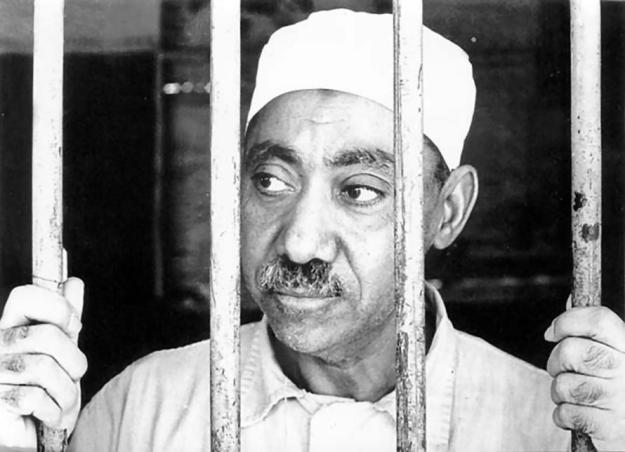
The Intellectual Roots of the Islamic State

By Kyle Orton (@KyleWOrton) on August 15, 2016

Published at The Wall Street Journal

Sayyid Qutb

Sayyid Qutb

Why did Prohibition in America fail? The Pakistani Islamic scholar Abul Ala Mawdudi argued that it was because the law “required people to accept human rather divine reasoning.” What was needed was a harsh and absolute divine mandate to root out evils like alcohol. As the Ottoman empire was being swept away and national-independence movements were about to overrun the Muslim world, men like Mawdudi began articulating a new ideology that would meld medieval and modern concepts. That ideology, Salafi-jihadism, now represents one of the West’s greatest security challenges. Continue reading