Tag Archives: Algeria

Another Product of “Londonistan”: Abdullah Ibrahim al-Faisal

By Kyle Orton (@KyleWOrton) on 8 December 2017

Abdullah al-Faisal

The U.S. Treasury Department sanctioned Abdullah Ibrahim al-Faisal (born: Trevor William Forrest), a Jamaican cleric who supports the Islamic State (IS) on 5 December. This was long overdue. Al-Faisal’s record of disseminating jihadist ideology, and influencing and/or interacting with terrorists, goes back several decades. And since 2014, al-Faisal has been one of IS’s influential English-language propagandist-recruiters. Continue reading

How Powerful is the Islamic State in Saudi Arabia?

Originally posted at The Henry Jackson Society

By Kyle Orton (@KyleWOrton) on 27 April 2017

The U.S. Department of State designated Mubarak Mohammed Alotaibi, also transliterated as Mubarak Muhammad al-Utaybi, as a Specially Designated Global Terrorist (SDGT), because he has “committed, or pose[s] a significant risk of committing, acts of terrorism that threaten the security of U.S. nationals or the national security, foreign policy, or economy of the United States.” Al-Utaybi is a citizen of Saudi Arabia and is the “Syria-based deputy leader” of the Islamic State’s (IS) branch in the Saudi Kingdom. Continue reading

Islamic State Attacks Have Sown Division in France, Marine Le Pen Would Sow More

Published at The Telegraph

By Kyle Orton (@KyleWOrton) on 21 April 2017

Security forces stand guard after attack in Paris, 20 April 2017 (CREDIT: ETIENNE LAURENT/EPA)

In Paris last night a gunman parked his car, stepped out, and opened fire on a police van outside a Marks & Spencer’s on the Champs Élysées. One policeman was murdered; two were wounded. A female tourist was also injured. The attacker was killed by police as he tried to flee and continue his rampage. Within two hours, the Islamic State (ISIL) had claimed the attack via its Amaq News Agency, and, rather unusually, had named the killer: “Abu Yusuf al-Baljiki”.

It has been widely reported that “Abu Yusuf the Belgian” is really Karim Cheurfi the Frenchman, a 39-year-old imprisoned for fifteen years after being convicted for three counts of attempted murder in 2001. Notably, two of his intended victims were police officers. French media has reported that Cheurfi was briefly arrested on 23 February after expressing an intent to kill law-enforcement officials, but released due to lack of evidence; the Interior Ministry refused to comment. Continue reading

Islamic State Newsletter Claims Algerian Suicide Bombing

By Kyle Orton (@KyleWOrton) on 9 April 2017

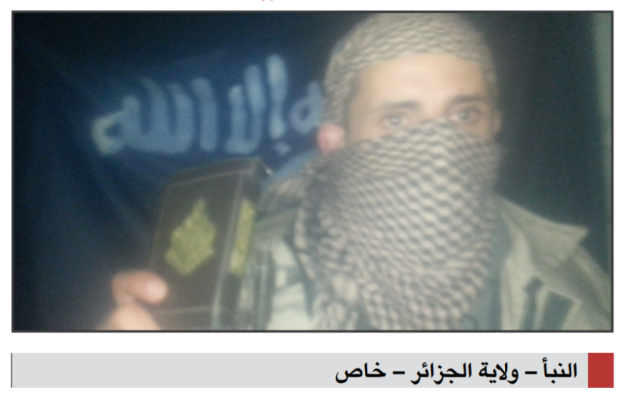
Picture published in Al-Naba 71 of Izzadeen Balqamri, the Islamic State suicide bomber in Constantine, Algeria, on 26 February 2017.

In the seventy-first edition of Al-Naba, the Islamic State’s English-language newsletter, published on 9 March 2017, the organisation claimed responsibility for the suicide bombing outside the police station in Constantine, Algeria, on 26 February. Al-Naba published a picture of the attacker and named him as Izzadeen Balqamri. Continue reading

When the Islamic State’s Founder Clashed with an Al-Qaeda Cleric

By Kyle Orton (@KyleWOrton) on February 12, 2017

Abu Musab al-Zarqawi [left] and Abu Muhammad al-Maqdisi [right]

Al-Qaeda’s expulsion of the Islamic State (IS) from its ranks three years ago did not come from nowhere. IS had always been problematic and the dispute in the months leading up to the decisive break was far from the first time that Al-Qaeda “central” had clashed with the Iraq-based group. Continue reading

The Assad Regime Admits to Manipulating the Islamic State

By Kyle Orton (@KyleWOrton) on January 6, 2017

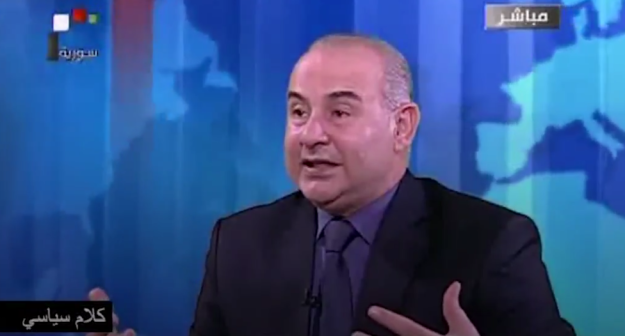
Khaled Abboud

From the beginning of the uprising in Syria in 2011, there have been accusations that Bashar al-Assad’s regime was in a de facto partnership with the Islamic State (IS) against the mainstream opposition. These accusations have a considerable basis in fact: during the entirety of the Anglo-American occupation of Iraq, Assad collaborated with IS jihadists in the destabilization of Iraq, killing thousands of Iraqi civilians and hundreds of American and British troops. Once the Syrian uprising was underway, the regime undertook various measures to bolster extremists in the insurgency. Assad and IS worked in tandem to leave Syria as a binary choice between themselves: Assad was sure this would rehabilitate him in the eyes of the world and transform his criminal regime into a partner of the international community in suppressing a terrorist insurgency, and IS wanted to rally Sunnis to its banner. The Secretary of the Syrian Parliament has now come forward to underline this. Continue reading

The End of the Beginning for the Islamic State in Libya

By Kyle Orton (@KyleWOrton) on December 7, 2016

The “capital” of the Islamic State (IS) in Libya, Sirte, has fallen to pro-government militias. “Our forces have total control of Sirte,” claimed one spokesman on Monday. “Islamic State’s rule over Sirte is now over,” said another. That was slightly premature, though it does appear that the city fell entirely around mid-afternoon yesterday. Regardless, it is clear that IS’s hold on Sirte is soon to be at an end. Positive as this development is, it is what happens after IS’s grip on urban areas is broken that will determine the durability of this victory. IS will remain a disruptive force for some time no matter what happens next, and for that reason it is important to continue military operations in pursuit of IS in its rural sanctuaries. But IS is a symptom of Libya’s political problems, not their cause. Without a government that solves some of those original problems, and has the legitimacy and capacity to keep IS out, the group will rise again. Continue reading

Russia Teams Up With Islamic State Against Syria’s Rebels

By Kyle Orton (@KyleWOrton) on October 11, 2015

Devastation of the Ibrahim al-Khalil mosque in Tareeq al Bab after Assad's barrel bombs, Aleppo, April 2015 (source)

Devastation of the Ibrahim al-Khalil mosque in Tareeq al Bab after Assad’s barrel bombs, Aleppo, April 2015 (source)

The main intention of Russia’s intervention in Syria is to prop up the dictatorship of Bashar al-Assad and to do that Russia is seeking to ensure that the Islamic State (I.S.) is the only alternative to Assad’s regime. If the conflict becomes binary—Assad or I.S.—nobody can support I.S., and by default it will be accepted that Assad has to stay; even if international help is not given to put down the insurgency at that point, tacit support and political legitimacy will be extended to Russia’s effort to keep its client regime alive. In service of this mission, Moscow has consistently targeted the moderate rebels and even some non-moderate rebels, while avoiding I.S., in the conscious hope that the rebel positions it destroys will be replaced by I.S. fighters. In northern Syria in the last few days, Russia got its wish in a major way. Continue reading

What Russia Wants in Syria

By Kyle Orton (@KyleWOrton) on October 4, 2015

US President Barack Obama (R) listens to Russian President Vladimir Putin after their bilateral meeting in Los Cabos, Mexico on June 18, 2012 on the sidelines of the G20 summit. Obama and President Vladimir Putin met Monday, for the first time since the Russian leader's return to the presidency, for talks overshadowed by a row over Syria. The closely watched meeting opened half-an-hour late on the sidelines of the G20 summit of developed and developing nations, as the US leader sought to preserve his

In the last few days I’ve written about Russia’s initial military action in Syria, which is intended to prop up the dictatorship of Bashar al-Assad, and explained (with my friend James Snell) how U.S. policy has enabled this, both by effectively outsourcing Middle East policy to Vladimir Putin over the chemical weapons “red line” debacle, and by the pro-Iran tilt that is implicit in President Obama’s nuclear deal-facilitated move toward détente with the Islamic Republic: Obama is effectively supporting Iran’s assets in Syria, and Putin is now using those same pieces to prosecute his own war in the Levant. With this in the background, this post will focus on what Putin wants in Syria.

Putin’s aims in Syria can be boiled down to two: (1) Ensure the Assad tyranny survives, which includes the building of a permanent military-colonial outpost on the Mediterranean coast and destroying all the moderate rebels so that Syria can be presented as a choice of Assad or the Islamic State (I.S.), legitimizing Russia’s support for Assad; and (2) humiliating the West on the way to constructing an alternate world order to American hegemony. Continue reading

Is Le Pouvoir Losing Its Grip on Algeria?

By Kyle Orton (@KyleWOrton) on September 15, 2015

A rare picture of DRS chief Mohamed Mediène (a.k.a. Toufik)

A rare picture of DRS chief Mohamed Mediène (a.k.a. Toufik)

Yesterday, Algeria’s elderly president, Abdelaziz Bouteflika, removed from office Mohamed Mediène (a.k.a. Toufik), the head of DRS (Le Département du Renseignement et de la Sécurité), the spy agency that is the real power behind the throne in Algeria. There is some suggestion this is Bouteflika trying to prepare the way for a civilian government as his time in office—and on the planet—draws to a close. There is little reason to believe, however, that Algeria’s government will be much reformed by Toufik’s departure.
Continue reading