Tag Archives: Ali Khamenei

The Evidence of Iran’s Responsibility for the October 7 Pogrom in Israel Keeps Piling Up

By Kyle Orton (@KyleWOrton) on 26 March 2025

Continue reading

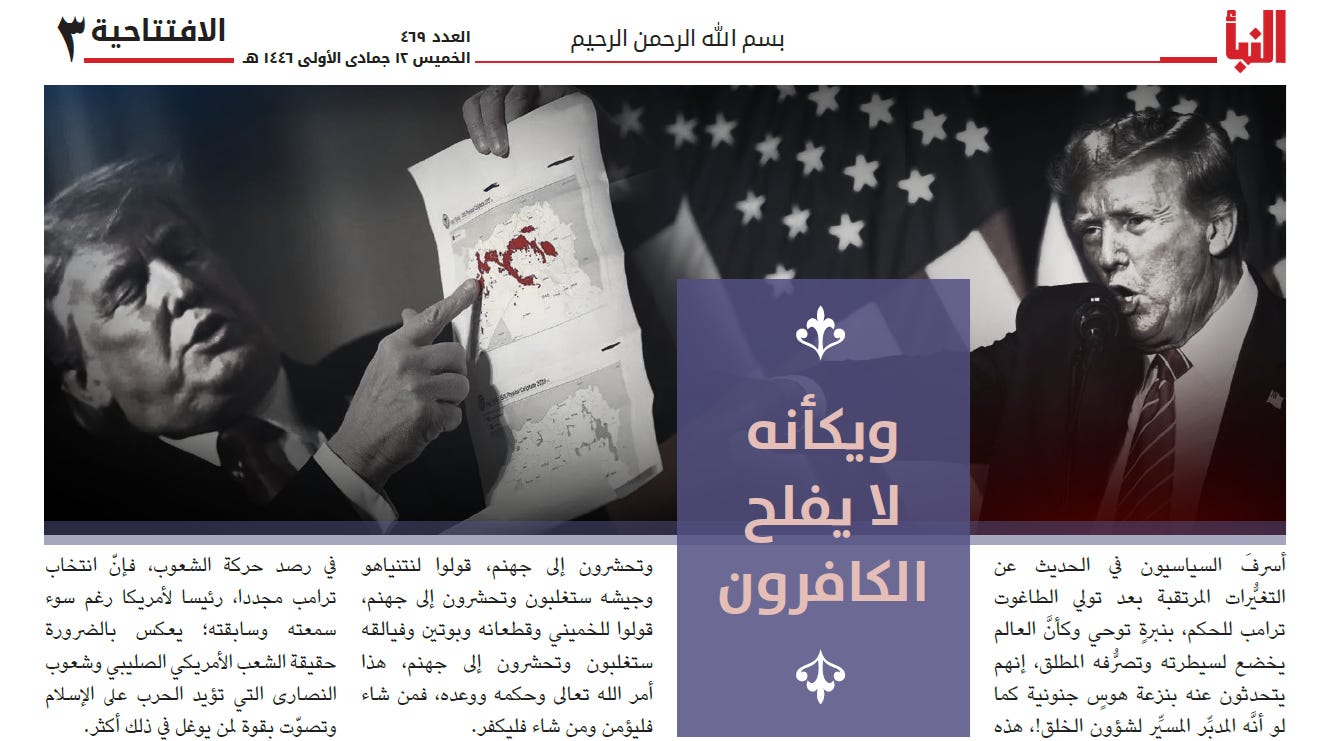
The Islamic State View of Donald Trump Being Back in the White House

By Kyle Orton (@KyleWOrton) on 18 November 2024

Continue reading

A Note on Iran’s Control of Iraq

By Kyle Orton (@KyleWOrton) on 6 October 2024
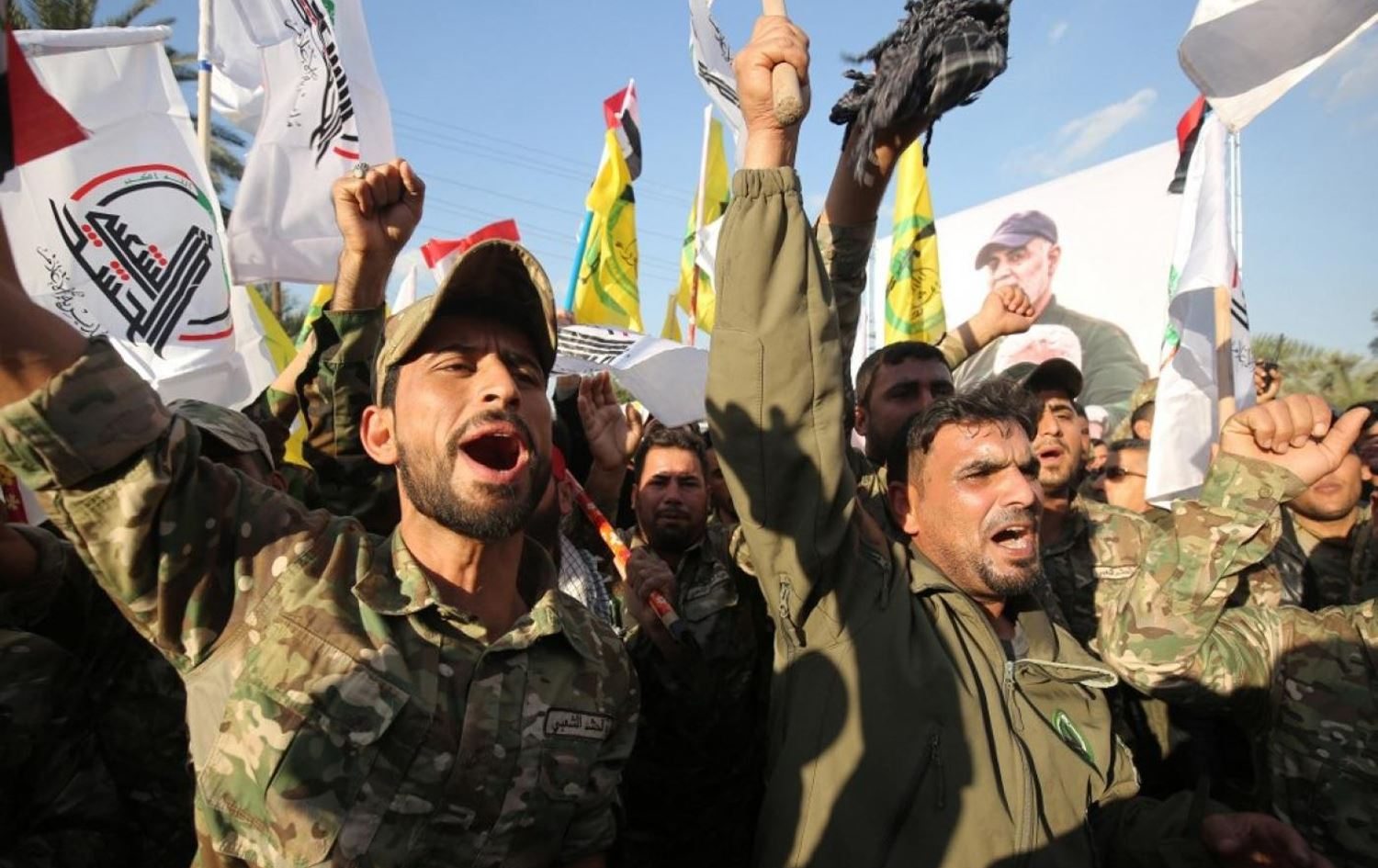
A debate has been ongoing since the emergence of al-Hashd al-Shabi in Iraq in 2014 about the extent of Iran’s control over the militia conglomerate. In truth, there was never really much doubt.
Continue reading

The Evidence is Now Clear: Iran Was Behind Every Aspect of the October 7 Pogrom in Israel

By Kyle Orton (@KyleWOrton) on 24 January 2024

Continue reading

Iran Admits Responsibility for the 1983 Marine Barracks Bombing in Beirut

By Kyle Orton (@KyleWOrton) on 4 October 2023

Continue reading

The ‘Strategic Plan’ of the Islamic State

By Kyle Orton (@KyleWOrton) on 16 August 2022

Continue reading

What Can We Learn From Iran’s Foreign Minister?

By Kyle Orton (@KyleWOrton) on 3 May 2021

Iranian Foreign Minister Muhammad Javad Zarif, December 2020, during an interview with Lotfullah Najafizada of TOLO News

Iran’s Foreign Minister, Muhammad Javad Zarif, took part in an oral history project intended for internal use by the clerical dictatorship in February and on 25 April the audio was leaked—so goes the story. There is every reason to think this is a controlled leak, which is to say an information operation or a piece of strategic messaging—more pejoratively, propaganda or disinformation: choose the terminology as you will—intended to assist the Iranian theocracy as it works through its negotiations on the nuclear file with the new American administration of President Joe Biden. Still, there are some insights from this episode, as with an interview Zarif gave—focused on Afghanistan—in December. Continue reading

Qassem Sulaymani: Life and Ambition

By Kyle Orton (@KyleWOrton) on 2 March 2021

A year ago, U.S. President Donald Trump gave the order to kill Qassem Soleimani, the de facto deputy leader of Iran. Arash Azizi’s The Shadow Commander: Soleimani, the U.S., and Iran’s Global Ambitions is an effort to explain who Soleimani was, how he rose to controlling the lives of millions of people well outside the borders of Iran, and how in the end he was brought down. Continue reading

Qassem Sulaymani and the Future of Iran’s Imperial Project

By Kyle Orton (@KyleWOrton) on 7 January 2020

This article was originally published at European Eye on Radicalization

At 1 AM on 3 January, an American drone strike killed the head of Iran’s Quds Force, the division of the Islamic Revolutionary Guards Corps (IRGC) charged with exporting the Islamic revolution, and his Iraqi deputy, Jamal al-Ibrahimi (Abu Mahdi al-Muhandis). Sulaymani was the strategic driver of Iran’s expansionist policy in the Middle East, as well as the orchestrator of its terrorism and assassinations further afield. Unlike with the killing of Al-Qaeda’s Usama bin Laden in 2011 or the Islamic State’s Ibrahim al-Badri (Abu Bakr al-Baghdadi) in October, where the dynamics shifted little, Sulaymani’s death opens up questions about the direction in which the Middle East will now move. Continue reading

When Iran Saved Al-Qaeda

By Kyle Orton (@KyleWOrton) on 24 January 2018

The new book by the investigative journalists Adrian Levy and Catherine Scott-Clark, The Exile: The Flight of Osama bin Laden, charts the career of al-Qaeda’s founder, Osama bin Laden, up to the day he became a household name—11 September 2001—through his downfall in 2011, to the end of 2016, when al-Qaeda was more powerful than ever. It is a thoroughly absorbing account, bringing to light vast tranches of new facts, including many intricate details of how al-Qaeda operated on a human, day-to-day level, and of those states and para-states that shielded the terror network, collaborated with it, and enabled it—and still do.

The gathering of the Bin Laden network in Sudan and then in the Taliban-held areas of Afghanistan in the 1990s is a familiar story, but the splits and debates among the Arab jihadists around Bin Laden, including the opposition of significant numbers of them to the 9/11 massacre, is perhaps less well known. The authors trace out how Bin Laden manipulated his own quasi-institutions to get his way. First, Bin Laden took on the plan of a man, Khalid Shaykh Muhammad (KSM), who was not even a member of al-Qaeda, and then, ahead of the crucial vote, packed the shura (consultation) council with ultra-zealous Egyptians by engineering a merger between al-Qaeda and Islamic Jihad, led by Ayman al-Zawahiri. Continue reading