By Kyle Orton (@KyleWOrton) on 30 July 2022
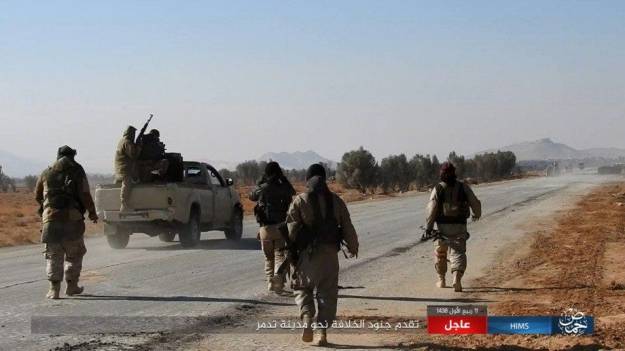
Islamic State in Palmyra, December 2016
By Kyle Orton (@KyleWOrton) on 30 July 2022
Islamic State in Palmyra, December 2016
By Kyle Orton (@KyleWOrton) on 20 June 2020
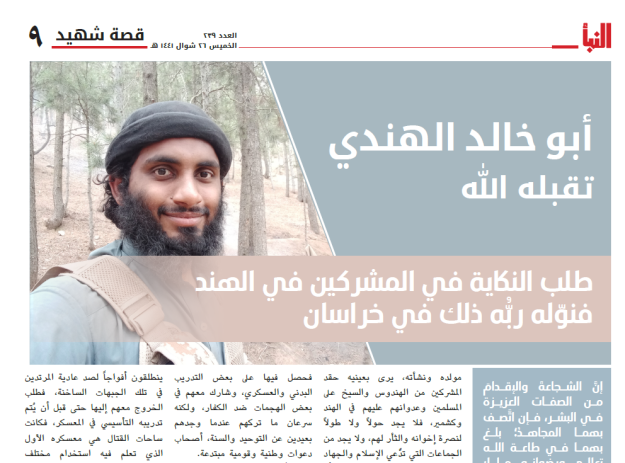
Al-Naba 239, page 9
The Islamic State (IS) released the 239th edition of its newsletter, Al-Naba, on 18 June. Pages 9 and 10 of this twelve-page document were given over to a profile of Abu Khaled al-Hindi, the jihadist elsewhere named as Mohammad Sajid Kuthirummal who massacred twenty-five worshippers at a Sikh gurdwara or temple in Kabul three months ago, on 25 March 2020, during an hours-long siege. The details of Abu Khaled’s life—finding IS after being repelled by “nationalist” jihadist groups, fighting while injured, his obedience to IS’s leaders, and thirst for “martyrdom”—are relatively standard hagiography from IS. What is really worth noting is that such an extensive focus on him, and through him on Afghanistan, underlines the importance IS has placed on its Afghan branch, Wilayat Khorasan. Continue reading
By Kyle Orton (@KyleWOrton) on 11 June 2020
France announced last Friday that its forces in Mali had killed Abd al-Malek Drukdel (Abu Musab Abd al-Wadud), the emir of Al-Qaeda in the Islamic Maghreb (AQIM), which covers the North Africa and Sahel areas. Paris has sometimes been unreliable on these matters, but the United States independently confirmed Drukdel was gone, as have sources within AQIM. The French also announced that on 19 May they had arrested Mohamed Mrabat, a veteran jihadist and member of the Islamic State in the Greater Sahara (ISGS). Continue reading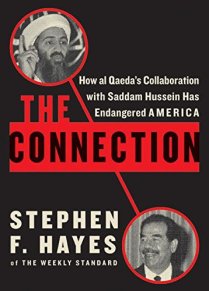 Book Review: The Connection: How al-Qaeda’s Collaboration With Saddam Hussein Has Endangered America (2004) by Stephen Hayes
By Kyle Orton(@KyleWOrton) on June 21, 2015
More than twelve years after the fall of Saddam Hussein, the conventional wisdom is that Saddam’s regime had no connection with al-Qaeda, and such “evidence” as was adduced was tortured out of Ibn al-Shaykh al-Libi in the Bush administration’s desperation to cobble together a casus belli. But if one puts ideology on hold, and considers the evidence of Stephen Hayes’ The Connection, a rather different picture emerges. Continue reading

 Kyle Orton's Blog