Tag Archives: Bashar al-Assad

Who is Trying to Destabilise Rojava?

By Kyle Orton (@KyleWOrton) on 1 May 2018
Logo of Harakat al-Qiyam from its first video, 15 October 2017

A campaign is underway to destabilise the “Rojava” area of north-eastern Syria, ruled by the Syrian Democratic Forces (SDF), a composite force wholly dominated by the Kurdistan Workers’ Party (PKK), an internationally-designated terrorist organisation whose operatives use the banner of the People’s Protection Forces (YPG) in Syria. The SDF/PKK captured a lot of Arab-majority areas as a side-effect of the American-led war against the Islamic State (IS), which deputised the SDF as its ground force in Syria. It was always clear that these inhabitants did not wish to be ruled by an authoritarian Kurdish nationalist party with Marxist inflections and a cult around its leader, Abdullah Ocalan. There was, however, a chance that the goodwill of that comes with liberation could be converted, with the right adjustments, the SDF model could become a durable settlement. It appears the trendline is now running the other way, toward a disintegration of this structure. Continue reading

The Criminality of the Syrian Regime

By Kyle Orton (@KyleWOrton) on 29 April 2018

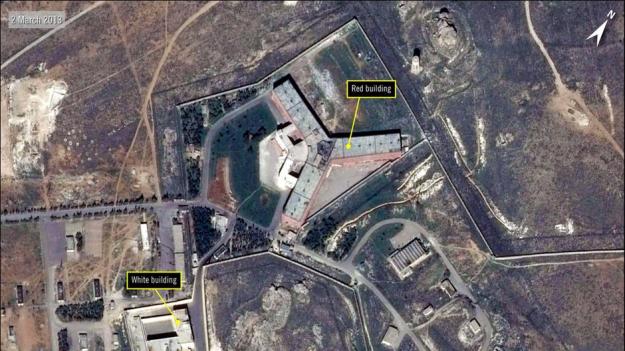
A satellite image of Sednaya prison, about 20 miles north-east of the presidential palace. CNES and ASTRIUM / Amnesty International via AFP

To accompany the release of “Syria’s Slaughterhouses”, a film by TRT World’s “Off The Grid”, I was asked to give an overview of the available evidence of the Assad regime’s crimes against humanity.

The launching of a limited punitive raid against the Syrian regime of Bashar al Assad for the use of poison gas has brought some attention to the regime’s crimes. The regime’s visible crimes are numerous and devastating.

In addition to using weapons of mass destruction, fighter jets have levelled ancient cities, sieges have starved populations into submission, and improvised explosives like barrel bombs have maimed thousands. These tactics are part of what UN investigators have called a “systematic and widespread attack against [the Syrian] civilian population”.

The UN commission recently noted that what the Assad regime has done amounts to crimes against humanity, including extermination, murder, rape, and torture.

What does not get enough attention is the part of Assad’s criminality that is most difficult to see: that which takes place in the prisons, a vast network of concentration camps where torture and murder is routine. Continue reading

The Islamic State Spokesman Directs His Fury At Regional Governments

By Kyle Orton (@KyleWOrton) on 22 April 2018

An audio statement by the official spokesman of the Islamic State (IS), Abu Hassan al-Muhajir,[1] was released today. The speech was entitled, “By their example, be guided” or “So From Their Guidance Take An Example”—drawn from Qur’an 6:30. Abu Hassan continued the themes that have been cropping up in IS messaging and propaganda for the last few months that have more firmly reoriented IS away from its foreign attacks campaign toward a more local focus in the Middle East. IS has been stressing its post-caliphate insurgency—concentrated at the present time in Iraq, but with notable operations in Syria—and its war for influence with regional rivals for Muslim loyalty, whether governments such as Egypt and particularly Saudi Arabia, or other Islamist movements like Harakat al-Muqawama al-Islamiyya (HAMAS) in Gaza. Continue reading

Islamic State Reacts to Western Strikes on the Syrian Regime

By Kyle Orton (@KyleWOrton) on 21 April 2018

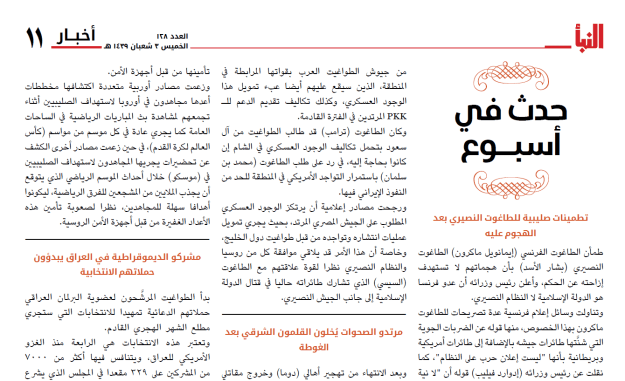
Al-Naba 128, page 11

The 128th edition of Al-Naba, the Islamic State’s (IS) weekly newsletter, released on 20 April, contained in its concluding, “Events of the Week” section, the organisation’s reaction to the 14 April military strikes by America, Britain, and France against the Bashar al-Asad regime for its use of poison gas in Duma. This short comment is reproduced below. Continue reading

Islamic State Admits to Colluding with the Syrian Regime

By Kyle Orton (@KyleWOrton) on 20 April 2018

Since the uprising in Syria began in 2011, Bashar al-Asad’s regime has followed a tried and trusted script to destroy the opposition by eliminating all engageable elements, creating a binary choice for the population and the world—the despotism or a terrorist takeover.

Asad bolstered extremists within the insurgency: letting Islamists out of prison while imprisoning secular activists, pushing a peaceful protest movement into violence, heightening sectarian tensions, and financial schemes of various kinds. Asad then then left IS alone for a year to build its caliphate, while obliterating rebel-held areas that could provide an attractive alternative to the dictatorship. Continue reading

What Is Trump Thinking About Syria?

By Kyle Orton (@KyleWOrton) on 18 April 2018

Egyptian ruler Abdelfattah al-Sisi, Saudi King Salman, and President Donald Trump in Riyadh on 22 May 2017 (image source)

Two days ago, The Wall Street Journal reported that President Donald Trump has been exploring plans to replace American troops in the areas of Syria held by the Coalition partner force, the “Syrian Democratic Forces” (SDF), with troops from the Arab states. The problems with this proposal, even in the rudimentary form it is presented, are manifold. It also feeds into the broader problem of Trump’s inconsistent messaging about Syria—or, more precisely, his failed efforts to balance domestic messaging, which calls for what was once referred to as “nation building … at home”, and his foreign messaging that needs to emphasise U.S. constancy to see through the mission to defeat the Islamic State (IS) by, among other things, stabilising and reconstructing Syria. Continue reading

Trump’s Syria Strike Upheld an Important International Norm, But Did No More

A version of this article was published at The Sunday Express

By Kyle Orton (@KyleWOrton) on 15 April 2018

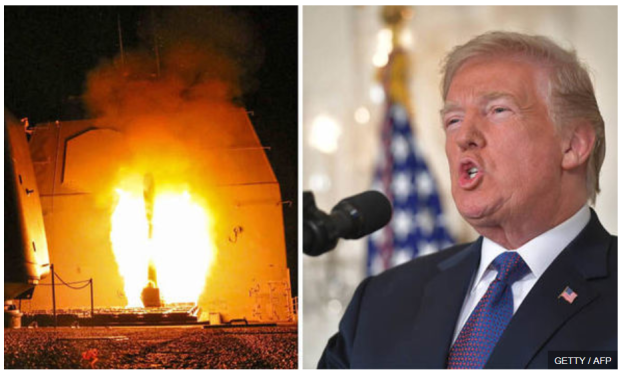
Britain joined the United States and France in a round of punitive military strikes in Syria on Friday night. The Coalition was retaliating for a poison gas attack by Bashar al-Assad’s regime in the Duma area of Damascus on 7 April. The three targets the Allies went after were related to his chemical weapons program. This was a just operation that upheld the norms of the international system, but there are disturbing signs that it will not be linked to a course correction in Syria. Continue reading

Insurgents Respond to America Declaring Syrian Taliban Unit A Terrorist Group

By Kyle Orton (@KyleWOrton) on 25 March 2018

Katibat al-Imam al-Bukhari (image source)

The United States Department of State designated Katibat al-Imam al-Bukhari (KIB), the Taliban-loyal insurgent unit in Syria, as a Specially Designated Global Terrorist (SDGT) on 22 March. Over the last few days, KIB and other insurgent groups have issued statements in response. Continue reading

The PKK and Terrorism in Europe

By Kyle Orton (@KyleWOrton) on 16 March 2018

Screenshot from video of a PKK attack on Turkish diplomats in Paris, France (13 March 2018)

A wave of politically motivated violence has swept over Europe in the last few days, carried out by an extremist group and its sympathisers, accompanied by public statements threatening further attacks.

These attacks are intended to change western policy to one more suitable to the attackers.

The conventional term for this is “terrorism”.

These assailants are not Islamist, however; they are from the Kurdish PKK, and this seems to have both reduced the amount of attention this campaign has received, and to have dulled the reaction from some who suggest that perhaps the attackers have a point. Continue reading

Syria’s Revolution Has Been Overtaken By Outside Powers

By Kyle Orton (@KyleWOrton) on 16 March 2018

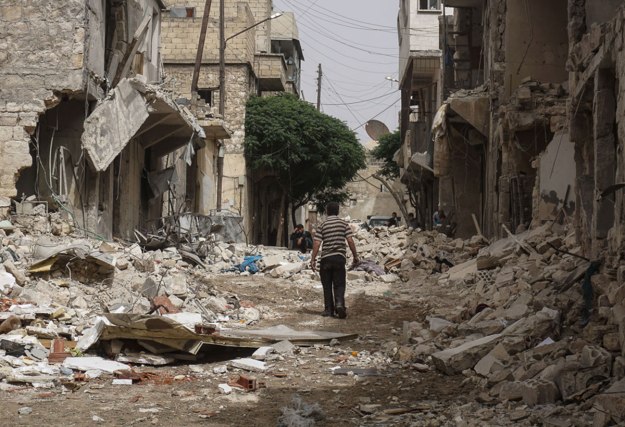
Devastation in Aleppo (image source)

This week marks the seventh anniversary of the Syrian revolution. A movement that began with peaceful street protests calling for reform and—after the government responded with lethal violence—the downfall of the dictator, descended into war that has to this point cost the lives of at least 500,000 people and displaced nearly twelve million others—more than half of Syria’s pre-war population.

In any strategic sense the rebellion has been defeated—it is not able to overthrow Bashar al-Assad by force on its own—and its political cause is increasingly strained as the remnants of the armed opposition are increasingly co-opted by external actors, state and non-state. Continue reading