Tag Archives: Bashar al-Assad

Russia Tries To Succeed Where the West Fails in Libya

By Kyle Orton (@KyleWOrton) and Lincoln Pigman on 14 September 2017

Libya, which has been wracked by instability and violence since 2011, is re-emerging as a geopolitical hotspot. With opposing forces fighting for control of the war-torn country—the main two being the U.N.-backed Government of National Accord (GNA) and the Libyan National Army (LNA)—foreign powers have begun taking sides, internationalizing the conflict. For Western observers, the growing involvement of Russia, a major ally of LNA commander Khalifa Haftar, represents a particular concern.

Coming on the heels of the Russian military intervention in Syria, Moscow’s role in Libya’s civil war may seem, at first glance, like déjà vu. Once again, it appears that the Kremlin is working to consolidate the power of a pro-Russian regional strongman and establish a “crescent of Russian influence” across the Middle East. And given the similarities between Haftar and Syrian President Bashar al-Assad, some degree of anxiety is understandable. Like Assad, who has long appealed to foreign governments by referring to Syrian rebels as terrorists, Haftar often frames himself as a bulwark against violent extremism in Libya, where the Islamic State remains active and Islamists have formed powerful militias and entered mainstream politics. Continue reading
Syria’s Regime Conducted the Khan Shaykhun Chemical Attack, United Nations Concludes

By Kyle Orton (@KyleWOrton) on 9 September 2017

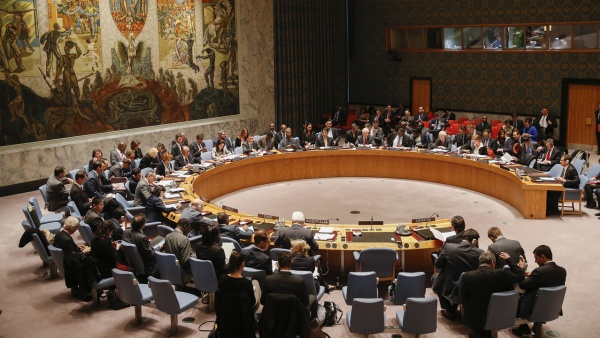
United Nations Security Council (Shannon Stapleton/Reuters)

After the use of chemical weapons of mass destruction (CWMD) in the Syrian town of Khan Shaykhun in April, American and French intelligence publicly assessed that the perpetrator was the regime of Bashar al-Asad, and President Donald Trump acted swiftly to punish the atrocity. The United Nations Independent International Commission of Inquiry on the Syrian Arab Republic released a report on 6 September that ratifies these findings, concluding that Asad attacked the population of Khan Shaykhun with chemical weapons. Continue reading

One More Time on Saddam and the Islamic State

Originally published at The Henry Jackson Society

By Kyle Orton (@KyleWOrton) on 2 September 2017

The most recent issue of Perspectives on Terrorism had a paper by Ronen Zeidel entitled, ‘The Dawa’ish: A Collective Profile of IS Commanders’, which was “the first attempt to provide a comprehensive collective profile of commanders and leaders of the Islamic State (IS)”. Based on “an inventory of over 600 names”, the paper assessed the nationality, ethnicity, and tribal origins not just of the very senior IS commanders, but those lower down, a novel and much-needed line of investigation. Zeidel found that these commanders of the IS movement are or were overwhelmingly Iraqi and Sunni Arab, with an important Turkoman contingent.

Zeidel’s findings are important for drawing attention again to the local-revolutionary character of an organisation that gets a great deal of attention for its foreign fighters and external attacks, especially in the West, but which only a recently acquired global reach—and, indeed, only recently needed to: until 2011, the West was easily reachable since it had troops on the ground in Iraq, so the incentive to invest resources in creating a foreign terrorist apparatus was minimal.

One small part of Zeidel’s work has created something of a storm, however. Zeidel gives the occupation held by these commanders and, for those where this was known, 72% of them were former regime elements (FREs) from the dictatorship of Saddam Husayn. This reignited the argument over how important the FREs have been to IS. Continue reading

A Politically Fraught Humanitarian Crisis in Eastern Syria

By Kyle Orton (@KyleWOrton) on 29 August 2017

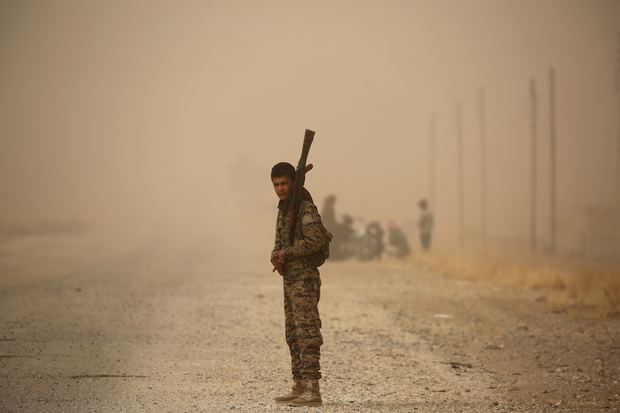
SDF/PKK fighter at a temporary refugee camp in the village of Ayn Issa, 10 Nov. 2016 / AFP PHOTO / DELIL SOULEIMAN

The local reporters at Raqqa 24 published a video yesterday containing interviews with some of the estimated 70,000 internally displaced people (IDPs) who have been trapped at the camps run by the so-called Syrian Democratic Forces (SDF), the vehicle by through which the Kurdistan Workers’ Party (PKK) operates to neutralize the political and legal obstacles to receiving Western assistance as it displaces the Islamic State (IS) across large tracts of land in eastern Syria. This has become yet another flashpoint, political and ethnic, as the SDF/PKK advances on the IS “capital” in Raqqa city. Continue reading

The Syrian Regime Helped the Islamic State Murder Americans

By Kyle Orton (@KyleWOrton) on 26 August 2017

The Asad family regime in Syria has long been known to have had a key role in the formation and sustenance of the Islamic State (IS) and its predecessors. Without the Asad regime’s assistance, the IS movement could not have hoped to pose such a challenge to the Iraqi government, regional states, and Western interests and citizens. This has been underlined in a series of Federal Court rulings in the United States that have brought together evidence on this matter. In April, another such ruling found the Asad regime liable in the murder of three more Americans. Continue reading

American Court Rulings Related to the Assad Regime’s Assistance to the Islamic State

By Kyle Orton (@KyleWOrton) on 23 August 2017

United States Federal Courts have issued a series of rulings related to the support the Syrian regime of Bashar al-Assad has given to the Islamic State (IS) movement. The rulings relate to the murder of Americans by IS, which could only be accomplished because of the Assad regime’s assistance. Continue reading

The Role of Turkey in Syria

By Kyle Orton (@KyleWOrton) on 16 August 2017

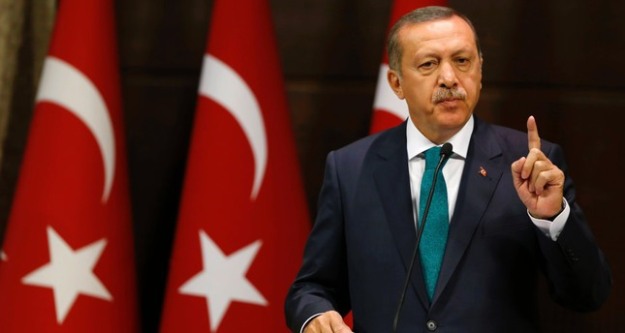
Recep Tayyip Erdogan (image source)

The Turkish government has gotten more and more deeply involved in Syria since the uprising began in 2011. But Turkey now finds its original aim, namely the overthrow of Bashar al-Assad’s regime, unattainable, creating tensions with the Syrian armed opposition, its primary lever inside Syria, and there are considerable problems stabilizing the zone of Syria that came under Turkish occupation after Ankara’s direct intervention in 2016. The defeat of Turkey’s primary objective has been accompanied by the rise of further problems, notably the exacerbation of its longest-standing internal security threat, that posed by the Kurdistan Workers’ Party (Partiya Karkerên Kurdistan – PKK), and the generation of new internal threats, from the Islamic State (IS) and potentially from al-Qaeda-linked groups. The options for solving these problems are constrained and unpalatable. Continue reading

The Horrors in Assad’s Prisons Are Beyond the Cruelty of the Islamic State

By Kyle Orton (@KyleWOrton) on 12 July 2017

In Syria, the West has been keen not to repeat the mistakes of Iraq—defined as being drawn into an open-ended ‘war of choice’ in the Middle East. This insight led to watching with folded arms as the regime of Bashar al-Assad massacred peaceful protesters and depopulated ancient cities with fighter jets and poison gas, an exodus that spread instability into Europe and allowed menacing strategic adversaries like Iran and Russia to gain footholds that Western policy had heretofore denied them. Continue reading

The Coalition’s Partner in Syria: The Syrian Democratic Forces

Originally published at The Henry Jackson Society

By Kyle Orton (@KyleWOrton) on 9 July 2017

Syrian Democratic Forces (SDF) logo

The offensive to expel the Islamic State (IS) from its primary urban stronghold in Syria, Raqqa city, began on 6 November 2016 with shaping operations and commenced in earnest on 6 June 2017. Backed by the U.S.-led Coalition, the operation, known as EUPHRATES WRATH, is being carried out on the ground by the Syrian Democratic Forces (SDF) or Quwwat Suriya al-Dimoqratiyya (QSD). The SDF is formally a coalition of Kurds and Arabs—its announcement of the Raqqa operation named eighteen distinct sub-units. But the predominant force within the SDF is the Kurdistan Workers Party (PKK), and the Arab SDF play a “secondary role of maintaining local security,” which is to say providing an acceptable face for the PKK’s administration in the Arab-majority areas it has captured. Examining the SDF’s composition, and the recent marginalization of Arab SDF groups, underscores the point. Continue reading

Viewing the Coalition’s Flawed Anti-Islamic State Strategy From Raqqa’s Frontlines

By Kyle Orton (@KyleWOrton) on 19 June 2017

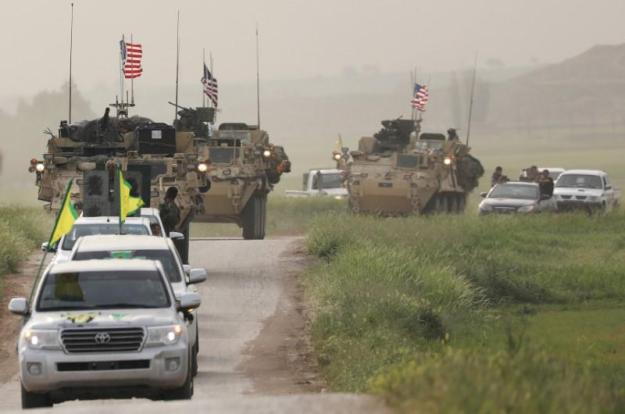
YPG and U.S military vehicles in Darbasiya, northern Syria, 28 April 2017. REUTERS/Rodi Said/File Photo

At the end of May, Christoph Reuter, a journalist with Der Spiegel, embedded with the Syrian Democratic Forces (SDF) as it made its way, supported by the U.S.-led Coalition, toward Raqqa city, the Syrian “capital” of the Islamic State’s (IS) caliphate. Reuter’s report provides snapshots of a number of important—and worrying—dynamics at play that have made the U.S. decision to back the SDF to liberate Raqqa so worrying over the long-term, even on its own terms as a means of sustainably defeating IS. Continue reading