Tag Archives: Bashar al-Assad

The Sieges of Syria

By Kyle Orton (@KyleWOrton) on March 2, 2016

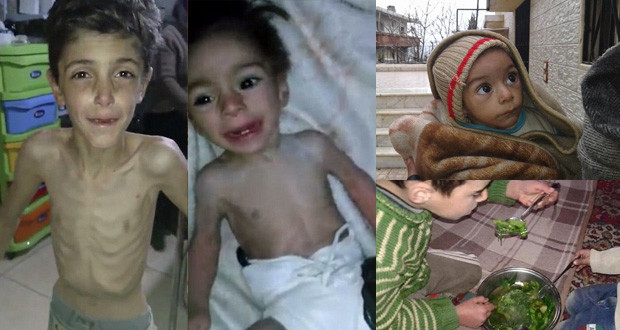
Starving children in Madaya

A website, siegewatch.org, has been set up that tracks the areas under siege in Syria. Siege Watch is a joint project of PAX, an organization that works in conflict zones to foster peace, and The Syria Institute, a non-partisan research centre directed by Valerie Szybala.

At the present time, according to Siege Watch, there are forty-six sieges operating in Syria, forty-three of them (93.5%) imposed by the Assad regime, two (4.5%) imposed by Jaysh al-Fatah, an insurgent coalition that includes Jabhat an-Nusra (al-Qaeda in Syria), and one (2%) by the Islamic State (IS).

Siege Watch also documents the severity of the sieges in three categories. Category one (C1) is the most severe: very little gets in even by smuggling and international aid deliveries are rare if at all; the risk of malnutrition is high. Category two (C2) sieges are porous enough for the black market and/or locals might have some access to locally-grown produce, but prices for basics are extremely high and residents are at “some risk of malnutrition/dehydration”. Category three (C3) sieges require smuggling to get food, but there is a consistent supply, even if home-grown. While risk of malnutrition is low in C3 zones, medical emergencies are likely because of attacks by besieging forces.

All six C1 sieges are imposed by the regime. Thirty category C2 sieges are operating: twenty-nine by the regime and one by IS. The regime is also operating eight C3 sieges and Jaysh al-Fatah is operating two C3 sieges. Continue reading

The Pretend Ceasefire in Syria

By Kyle Orton (@KyleWOrton) on February 25, 2016

This article was originally published at NOW Lebanon

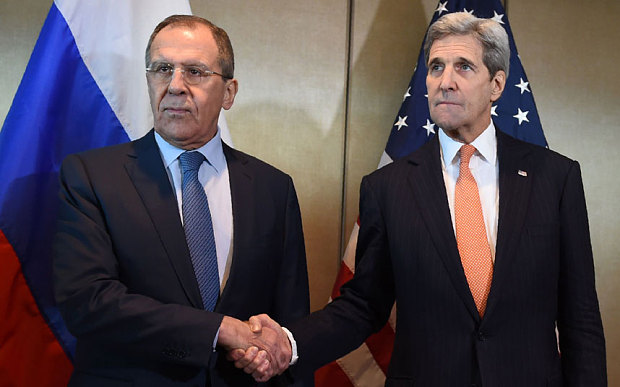
Kerry-Lavrov 'ceasefire'

The Syrian ceasefire, which the United States and Russia agreed on February 12 and which was supposed to take effect on February 19, had seemed to amount to little more than granting Russia a week of internationally-legitimated time to press its aggression against Aleppo and then blame the rebellion for breaking the ceasefire when the rebels refused to freeze the fighting on the new frontlines. Of course, it has turned out worse than that: with the agreement of another ceasefire on February 22, due to take effect on February 27 at midnight, Russia has had two weeks to make gains. Continue reading

Assad and Academics: Disinformation in the Modern Era

By Kyle Orton (@KyleWOrton) on February 22, 2016

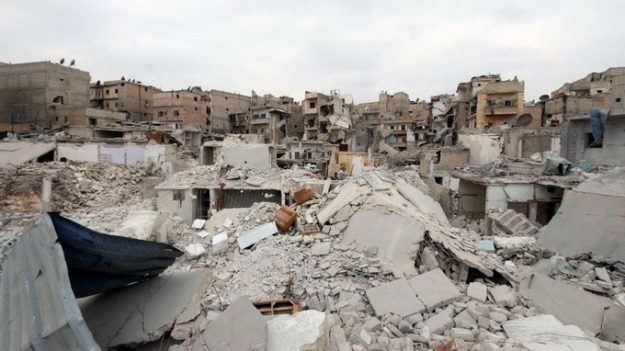
Aleppo City

Aleppo City after the destruction of the Asad regime, Iran, and Russia

Introduction

From the beginning of Syria’s war, the regime of Bashar al-Assad, enabled by Iran and Russia, has run a very elaborate media war to portray itself as the victim of an international conspiracy, wherein its only opponents are terrorists from al-Qaeda and its offshoots who are being used by foreigners—namely the Gulf States, Turkey, Israel, and the United States—to overthrow a defiant “resistance” State.

The other part of this strategic messaging is aimed at the West, which Assad otherwise accuses of supporting jihadi-Salafist terrorism against him: Assad is the only alternative to the terrorists, it says, so the West should support him. War criminal he might be, he will protect the minorities—his role in endangering them by starting a sectarian war against the Sunni majority and bolstering the takfiris within the insurgency to cannibalize all legitimate or engageable armed opposition, notwithstanding—and has no immediate plans to fly planes into Western skyscrapers. (That the leading edge of Assad’s ground forces are made up of radically sectarian, foreign Shi’a jihadists under Iran’s control, some of them Iraqis responsible for killing a quarter of the 4,000 U.S. soldiers who fell in Mesopotamia, and are integrated into a State-run terrorist network that has struck Western and Jewish targets the world over, gets left out.)

For Assad and his allies, it helps if this propaganda is not only delivered by regime spokesman but independent analysts, journalists, academics, and politicians. In the last ten days two salient examples have emerged: Stephen Kinzer, a veteran journalist, including for The New York Times, who wrote in The Boston Globe, and Jeffrey Sachs, an academic economist working at Columbia University, who wrote in The Huffington Post. Mixing together conspiracy theories, half-truths, and outright lies—disinformation, to give it an old name—both Kinzer and Sachs told a version of the regime’s narrative. Why they did this is best-known to them. Continue reading

How Russia and Iran Took Advantage of Syrian Peace Talks to Choke Aleppo

By Kyle Orton (@KyleWOrton) on February 16, 2016

Published at The Independent, submitted February 12.

Kerry-Lavrov 'ceasefire'

In the coming days and weeks many people will weep for the fate of Aleppo. Many of these people will also continue to support the nuclear deal, which has facilitated this U.S.-Iran détente and supplied Iran the resources to make war. They will still consider it a triumph of diplomacy over military action—and never be called to account for the obvious contradiction.

The Geneva III peace process is the most immediate cause for this latest offensive against Aleppo, led on the ground by Iran’s Islamic Revolutionary Guard Corps (IRGC) and its proxies, as well as Russian airstrikes. The regime and Russia have used it as a cover to gain ground. Continue reading

The Assad Regime’s War Against Syria’s People

By Kyle Orton (@KyleWOrton) on February 8, 2016

Viewing the pictures smuggled out of Syria by "Caesar" of prisoners tortured and murdered by the Assad regime (source)

Viewing the pictures smuggled out of Syria by “Caesar” of prisoners tortured and murdered by the Assad regime (source)

The Office of the United Nations High Commissioner for Human Rights (OHCHR) released a report earlier today documenting the Assad regime’s “systematic and widespread attack against [the Syrian] civilian population.” The report is meticulously compiled from reams of internal documents and the evidence of 621 witnesses who have been in Assad’s prisons, covering the period March 10, 2011, to November 30, 2015. Two-hundred of these witnesses personally saw somebody murdered. The report is focussed on the mass-murder of prisoners and the evidence leads to the conclusions that the Assad regime has committed extermination, murder, rape, torture, imprisonment, enforced disappearance, and other inhumane acts as crimes against humanity, as well as a raft of at least six separate counts of war crimes. Continue reading

Another Legacy of the Bosnian Jihad

By Kyle Orton (@KyleWOrton) on February 5, 2016

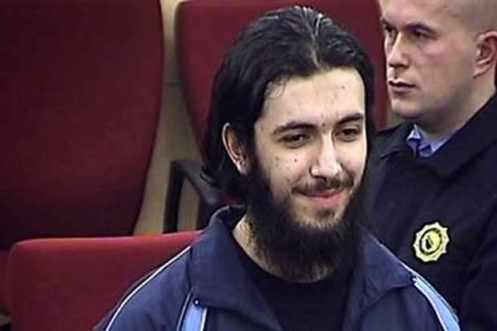
Mirsad Bektašević

Mirsad Bektašević (2005)

I recently wrote about the jihad in Bosnia. This much-neglected aspect of the war in the 1990s was crucial in shaping al-Qaeda, and global jihadism more broadly, providing this movement, and Clerical Iran, with a staging post in Europe, not least because Tehran’s spy-terrorist capabilities had been deployed to bring many of the jihadists into the country and train them in the first place. While Islamist militancy and terrorism were brought to Bosnia largely as imports, their entry was facilitated by the Party of Democratic Action (SDA), the ruling party to this day. While the war itself trained many jihadist “graduates,” almost all of whom were allowed to stay (or at least received Bosnian passports that gave them that right), the entry of extremist charities/missionaries to lead the rebuilding, many of them bankrolled by Saudi Arabia, entrenched the jihadists and spread their form of Islam in Bosnia after the war. As such, Bosnia became a hospitable operating environment for Islamist recruitment and training and both veterans of the war and people radicalized in Bosnia since have continued to show up in the ranks of international terrorism. It is of interest, therefore, to have an important old case re-emerge in a new way in the last few days, that of Mirsad Bektašević, which again highlighted Bosnia’s importance in the formulation of the infrastructure that underpins the jihadi-Salafist movement, the less-than-clear division between al-Qaeda and the Islamic State (IS) when it comes to the European facilitation networks, and the dangers of seeing Iran as a partner in stability. Continue reading

The Islamic State Murders Another Activist From Raqqa Is Being Slaughtered Silently

By Kyle Orton (@KyleWOrton) on December 17, 2015

Published at The Independent.

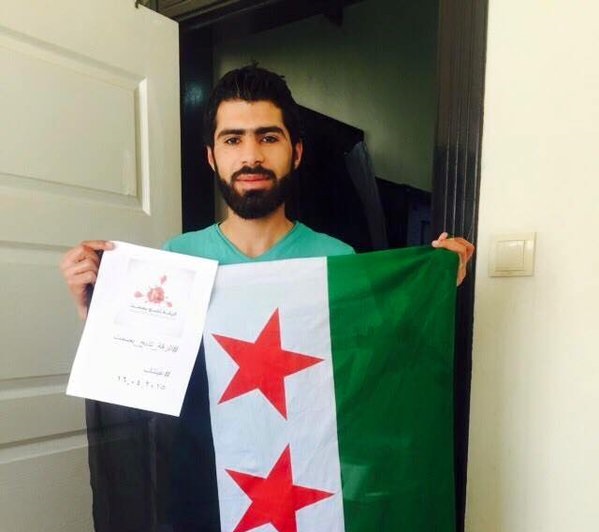
Ahmad Mohamed al-Mousa

Ahmad Mohamed al-Mousa

From the outset of the Syrian uprising, the regime of Bashar al-Assad and the ISIS have been united on their strategic goal: eliminate the moderate opposition and make Syria a binary choice between themselves. This is why on the battlefield Assad and ISIS largely leave one-another alone and the Assad regime’s propaganda—that the whole rebellion is composed of Islamist terrorists—reinforces ISIS’s propaganda claim that it is the only effective protection for Sunnis against the regime. Both ISIS and the Assad regime are led by military and intelligence officers trained in the KGB and both rely on propaganda as a means of internal control, not only of controlling their international image, which is why both so virulently repress independent media that contradicts their officially sanctioned version. Last night, ISIS again struck down a member of an activist group that has tried to bring the truth about life under its rule to the outside world. Continue reading

How Assad Funds the Islamic State

By Kyle Orton (@KyleWOrton) on November 29, 2015

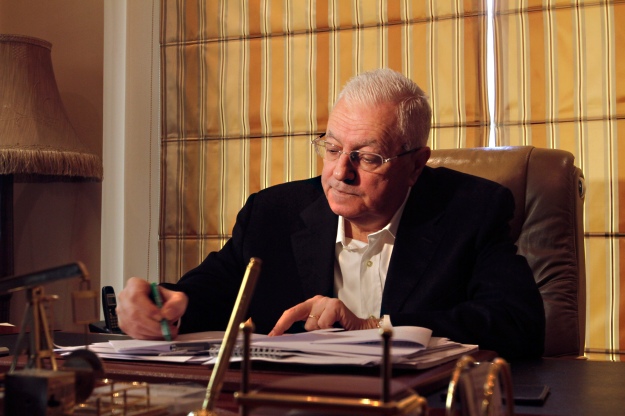
George Haswani (AP Photo)

George Haswani (AP Photo)

The United States Treasury Department’s Office of Foreign Assets Control (OFAC) sanctioned four individuals and six entities connected to the regime of Bashar al-Assad on November 25 for helping to transfer Syrian government funds to the Islamic State (IS), and for assisting in Russia-connected schemes to help the Assad regime evade the international sanctions imposed on it. While the sanctions freeze all assets of the individuals and entities that are under U.S. control and ban Americans from transactions with them, the most significant effect of these sanctions is political: the revelation of details about how Assad strengthens the Islamist terrorists he claims to oppose to discredit and destroy the rebellion against his regime. Continue reading

Destroying Islamic State, Defeating Assad: A Strategy for Syria

By Kyle Orton (@KyleWOrton) on November 25, 2015

1

Today, my first report with The Henry Jackson Society was published: “Destroying Islamic State, Defeating Assad: A Strategy for Syria“. Continue reading

Defeating the Islamic State Requires Sunni Allies

By Kyle Orton (@KyleWOrton) on November 20, 2015

Published at Left Foot Forward.

1

In the wake of the atrocity in Paris David Cameron has accelerated the push to extend British airstrikes against the Islamic State (ISIS) beyond Iraq into Syria. As Cameron put it:

It is in Syria, in Raqqa, that [ISIS] has its headquarters and it is from Raqqa that some of the main threats against this country are planned and orchestrated. Raqqa, if you like, is the head of the snake.

There is no doubt that this is so. The British government’s decision to war against ISIS—but only on the Iraqi side of an Iraq-Syria border that ISIS has abolished—makes no sense. This one-handed clapping is especially puzzling because ISIS’s most valued holdings are in Syria. From revenue streams—namely oil fields and populations that can be taxed/extorted—to ideological legitimacy and recruitment tools, such as holding the town of Dabiq where ISIS prophesises End Times will take place, drawing in a large stream of foreign fighters, ISIS’s centre of gravity is in Syria. Continue reading