Tag Archives: Bashar al-Assad

The Islamic State Can’t Be Defeated Without Fighting it in Syria

By Kyle Orton (@KyleWOrton) on November 3, 2015

Published at Left Foot Forward.

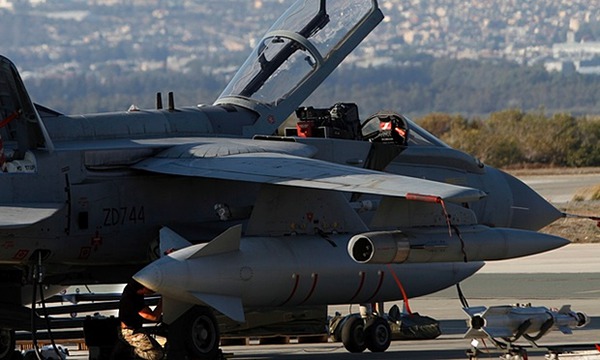
An RAF Tornado fighter jet in Cyprus

An RAF Tornado fighter jet in Cyprus

This morning the House of Commons Foreign Affairs Committee published a report recommending that the British government should not extend its airstrikes campaign against the Islamic State (ISIS) from Iraq to Syria.

The report makes little legal or military sense, but its political objection—that the government’s attempt to defeat ISIS independently of a resolution to the Syrian war is untenable—is exactly right. Unfortunately the report, while very vague, hints that a resolution involves cooperation with the Bashar al-Assad regime and Iran, which cannot work, and actually helps ISIS. Continue reading

Why Solely Backing the PYD Against the Islamic State is a Mistake

By Kyle Orton (@KyleWOrton) on October 20, 2015

Published at NOW Lebanon.

1

The Pentagon-run train-and-equip (T&E) program had intended to take Syrian rebels, stop them from being rebels by preventing them from fighting the Assad regime, and repurpose them into an American-directed strike force against the Islamic State (ISIS). Unsurprisingly, there were few takers and the program ended in disaster and humiliation. In the wake of this failure, President Barack Obama has turned away from the Arab rebels and looked to the Syrian Kurds to fight ISIS. This is a strategy that is not only doomed to fail—since Sunni Arabs taking responsibility for their local security is the only way to sustainably defeat ISIS—but would, if implemented, make the ISIS problem worse. A report from Amnesty International this week documenting crimes, including ethnic cleansing, by the armed Kurdish forces against Arabs and Turkmens in northern Syria also provides an occasion to look more closely at a force with a history of regime collaboration, political extremism, and terrorism. Continue reading

The Horrors for Women of Islamic State Rule

By Kyle Orton (@KyleWOrton) on October 12, 2015

Published at Verily 

1

I have always been interested in the Middle East, specifically the Syrian conflict. In early summer 2014, as part of my master’s dissertation, I went to Lebanon to work with the United Nations. I was still there when the Islamic State group, commonly known as ISIS, struck Iraq.  Continue reading

Russia Teams Up With Islamic State Against Syria’s Rebels

By Kyle Orton (@KyleWOrton) on October 11, 2015

Devastation of the Ibrahim al-Khalil mosque in Tareeq al Bab after Assad's barrel bombs, Aleppo, April 2015 (source)

Devastation of the Ibrahim al-Khalil mosque in Tareeq al Bab after Assad’s barrel bombs, Aleppo, April 2015 (source)

The main intention of Russia’s intervention in Syria is to prop up the dictatorship of Bashar al-Assad and to do that Russia is seeking to ensure that the Islamic State (I.S.) is the only alternative to Assad’s regime. If the conflict becomes binary—Assad or I.S.—nobody can support I.S., and by default it will be accepted that Assad has to stay; even if international help is not given to put down the insurgency at that point, tacit support and political legitimacy will be extended to Russia’s effort to keep its client regime alive. In service of this mission, Moscow has consistently targeted the moderate rebels and even some non-moderate rebels, while avoiding I.S., in the conscious hope that the rebel positions it destroys will be replaced by I.S. fighters. In northern Syria in the last few days, Russia got its wish in a major way. Continue reading

What Russia Wants in Syria

By Kyle Orton (@KyleWOrton) on October 4, 2015

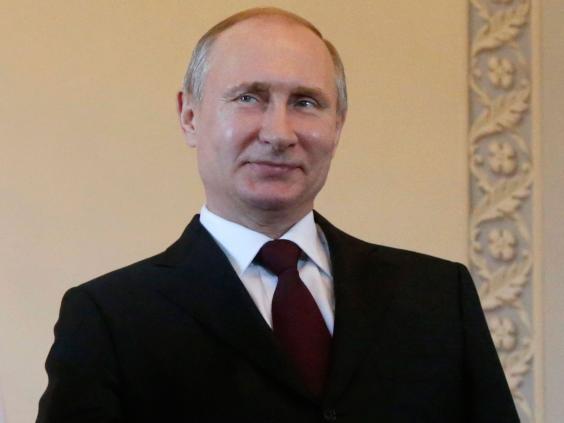
US President Barack Obama (R) listens to Russian President Vladimir Putin after their bilateral meeting in Los Cabos, Mexico on June 18, 2012 on the sidelines of the G20 summit. Obama and President Vladimir Putin met Monday, for the first time since the Russian leader's return to the presidency, for talks overshadowed by a row over Syria. The closely watched meeting opened half-an-hour late on the sidelines of the G20 summit of developed and developing nations, as the US leader sought to preserve his

In the last few days I’ve written about Russia’s initial military action in Syria, which is intended to prop up the dictatorship of Bashar al-Assad, and explained (with my friend James Snell) how U.S. policy has enabled this, both by effectively outsourcing Middle East policy to Vladimir Putin over the chemical weapons “red line” debacle, and by the pro-Iran tilt that is implicit in President Obama’s nuclear deal-facilitated move toward détente with the Islamic Republic: Obama is effectively supporting Iran’s assets in Syria, and Putin is now using those same pieces to prosecute his own war in the Levant. With this in the background, this post will focus on what Putin wants in Syria.

Putin’s aims in Syria can be boiled down to two: (1) Ensure the Assad tyranny survives, which includes the building of a permanent military-colonial outpost on the Mediterranean coast and destroying all the moderate rebels so that Syria can be presented as a choice of Assad or the Islamic State (I.S.), legitimizing Russia’s support for Assad; and (2) humiliating the West on the way to constructing an alternate world order to American hegemony. Continue reading

In Syria, Russia and Iran Reap the Harvest of Obama’s Failed Foreign Policy

By Kyle Orton (@KyleWOrton) and James Snell on October 1, 2015

Published at National Review.

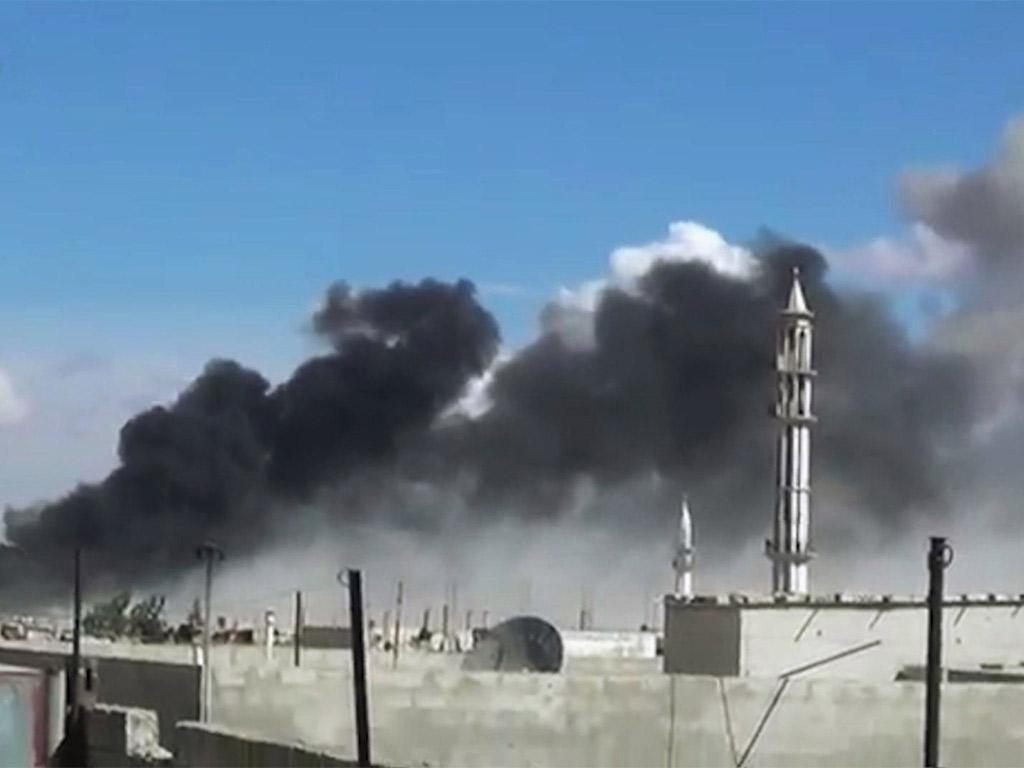
Aftermath of a Russian airstrike against U.S.-supported moderate rebels in Talbiseh, Homs (AP)

Aftermath of a Russian airstrike against U.S.-supported moderate rebels in Talbiseh, Homs (AP)

The situation in Syria could hardly get more desperate. With more than half the population displaced and 300,000 people dead, the civil war in Syria is the greatest humanitarian disaster of our time. But Syria is also a profound challenge to the American-underwritten geopolitical order that aspires toward free institutions and representative rule. As a direct consequence of policies pursued by the Obama administration, Iran and Russia, two enemies of this order, have taken their chance to assert their dominance. Continue reading

Russia’s War For Assad

By Kyle Orton (@KyleWOrton) on September 30, 2015

1

Russia began airstrikes in Syria today, ostensibly to combat the Islamic State (I.S.). In reality the strikes first hit U.S.-supported moderate rebels and the campaign is intended to buttress the dictatorship of Bashar al-Assad. Continue reading

Syrian Opposition Statement of Principles of the Revolution

By Kyle Orton (@KyleWOrton) on September 18, 2015

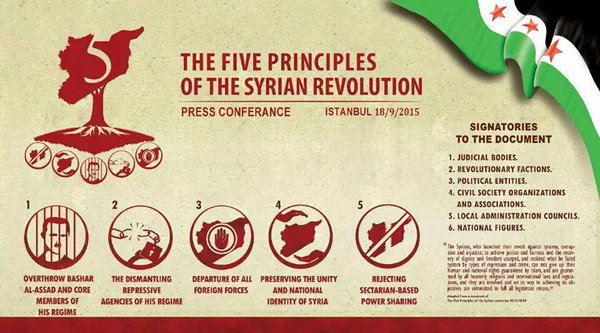
After a meeting of the Syrian Islamic Council, a statement was published today, “The Five Principles Document of the Syrian Revolution,” which explained the baseline demands of the insurrectionary forces in Syria in any process to end the war. The principles included the removal of Syrian ruler Bashar al-Assad, disbanding the intelligence apparatus that has carried out the massacres and repression, and the expulsion of all foreign terrorists, including the Islamic State and the legion of Shi’a jihadists that the Iranian government has flooded into Syria to save the Assad regime. Continue reading

Britain’s New Syria Policy Concedes to Iran and Russia—and Keeps Assad in Power

By Kyle Orton (@KyleWOrton) on September 11, 2015

Published at Left Foot Forward

1

On 9 September the British government announced a new plan for dealing with Syria and the Islamic State (ISIS):

  1. Airstrikes when necessary into Syria to destroy the leadership of ISIS;
  1. Buttressing the Iraqi government in its fight with ISIS;
  1. Dropping the demand that Syrian dictator Bashar al-Assad step aside immediately and instead allowing Assad to lead a transition, in order that Russia and Iran will agree to Assad going at all.

All three parts of this plan push in a pro-Iran direction, and strengthen Assad. Continue reading

A Case Study of the Islamic State as the Saddam Regime’s Afterlife: The Fedayeen Saddam

By Kyle Orton (@KyleWOrton) on August 31, 2015

Published at Baghdad Invest

Fedayeen Saddam

Saddam Hussein created the Fedayeen Saddam in 1994 as a paramilitary Praetorian unit. The Fedayeen were initially charged with protecting the regime from a repeat of the revolts that followed Saddam’s eviction from Kuwait by acting as a pre-emptive counter-insurgency force. Over time this internal security mission became increasingly about enforcing the Islamic law. Saddam had begun Islamizing his regime in the late 1980s, and intensified this in the early 1990s, attempting to create a synthesis of Ba’athism and Salafism to buttress his legitimacy. Saddam had begun Islamizing his foreign policy as early as 1982-83, making alliances with all manner of Islamist terrorists, thousands of whom came to Iraq for training in the 1990s, where they attended camps run by the Fedayeen. In the Fedayeen—connected to the global Islamist terrorist movement, combining elements of Ba’athism with an increasingly-stern Salafism—is a microcosm of the Saddam regime’s mutation into the Islamic State (ISIS). Continue reading