Tag Archives: chemical weapons

The Islamic State and Chemical Weapons

By Kyle Orton (@KyleWOrton) on September 30, 2016

1

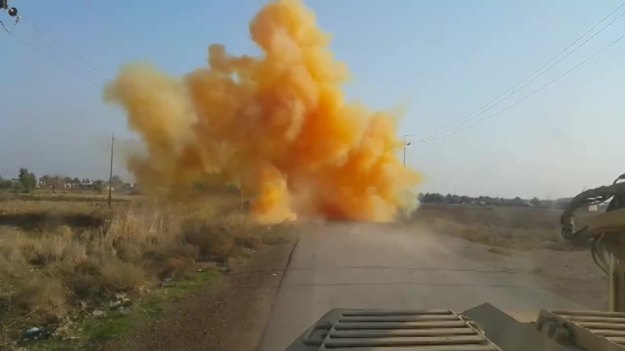
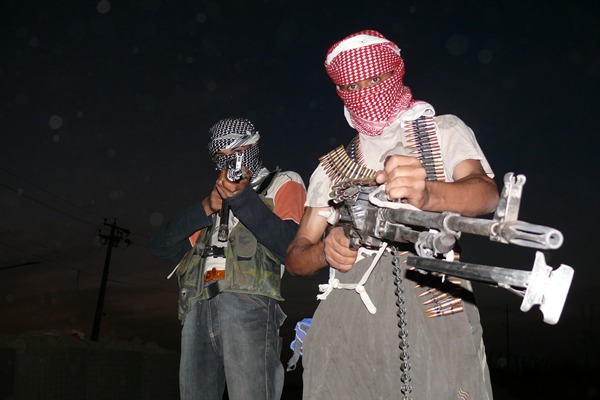
This year, the American-led anti-Islamic State (IS) Coalition has targeted members of the organization’s program to develop chemical weapons of mass destruction (CWMD). One reason for this is likely that the Coalition has been building toward—and now appears to be on the eve of—the operation to attempt to expel IS from its Iraqi capital, Mosul, and it is considered probable that IS will use CWMD on its way down. Whether that can now be prevented, and how far IS ever got with its attempt to develop CWMD, might only be known once it is too late. Continue reading

Bashar al-Assad Normalized the Use of Chemical Weapons in Syria—And We Rewarded Him

By Kyle Orton (@KyleWOrton) on August 25, 2016

Originally published at The International Business Times

This week, the Organisation for the Prohibition of Chemical Weapons (OPCW) confirmed what everyone already suspected: the Syrian regime of Bashar al-Assad had lied repeatedly about its adherence to a deal worked out in 2013, under which it would surrender its chemical weapons of mass destruction (CWMD). Continue reading

Barack Obama Comes Clean

By Kyle Orton (@KyleWOrton) on March 11, 2016
1

Yesterday, Jeffrey Goldberg’s latest interview with President Obama was published. There have been numerous worthwhile takes on what is a very revealing conversation, such as Max Boot and Nibras Kazimi, and it is very difficult to quarrel with the conclusion of David Frum that “the dominant theme of these interviews is that we, all of us, have grievously let down the president,” who has exactly one self-criticism: “Obama admits he does not make sufficient allowances for how unreasonable other people are.” What I think deserves most attention is that the President has finally aligned his rhetoric, especially on Iran, with his actual foreign policy. Continue reading

The Sieges of Syria

By Kyle Orton (@KyleWOrton) on March 2, 2016
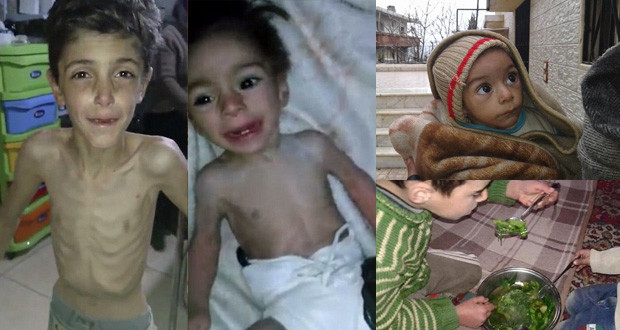
Starving children in Madaya

A website, siegewatch.org, has been set up that tracks the areas under siege in Syria. Siege Watch is a joint project of PAX, an organization that works in conflict zones to foster peace, and The Syria Institute, a non-partisan research centre directed by Valerie Szybala.

At the present time, according to Siege Watch, there are forty-six sieges operating in Syria, forty-three of them (93.5%) imposed by the Assad regime, two (4.5%) imposed by Jaysh al-Fatah, an insurgent coalition that includes Jabhat an-Nusra (al-Qaeda in Syria), and one (2%) by the Islamic State (IS).

Siege Watch also documents the severity of the sieges in three categories. Category one (C1) is the most severe: very little gets in even by smuggling and international aid deliveries are rare if at all; the risk of malnutrition is high. Category two (C2) sieges are porous enough for the black market and/or locals might have some access to locally-grown produce, but prices for basics are extremely high and residents are at “some risk of malnutrition/dehydration”. Category three (C3) sieges require smuggling to get food, but there is a consistent supply, even if home-grown. While risk of malnutrition is low in C3 zones, medical emergencies are likely because of attacks by besieging forces.

All six C1 sieges are imposed by the regime. Thirty category C2 sieges are operating: twenty-nine by the regime and one by IS. The regime is also operating eight C3 sieges and Jaysh al-Fatah is operating two C3 sieges. Continue reading

A Year Into The War Against The Islamic State, The Coalition Has Little To Show For It

By Kyle Orton (@KyleWOrton) on September 30, 2015

Published at Left Foot Forward

1

A year into the campaign against the Islamic State, the American-led coalition has precious little to show for it. Tactical victories in Kobani, Tikrit and Tel Abyad have been more than offset not only by the negative long-term side-effects of those victories but by direct I.S. military gains in the present—notably the capture of a third provincial capital in Ramadi, the capture of Palmyra and a push into Homs and southern Syria; as well as increasing I.S. infiltration of Idlib, an area cleared entirely of I.S. by a rebel offensive in early 2014. Continue reading

A Myth Revisited: “Saddam Hussein Had No Connection To Al-Qaeda”

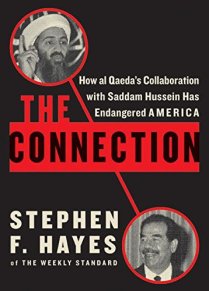
Book Review: The Connection: How al-Qaeda’s Collaboration With Saddam Hussein Has Endangered America (2004) by Stephen Hayes

By Kyle Orton(@KyleWOrton) on June 21, 2015


More than twelve years after the fall of Saddam Hussein, the conventional wisdom is that Saddam’s regime had no connection with al-Qaeda, and such “evidence” as was adduced was tortured out of Ibn al-Shaykh al-Libi in the Bush administration’s desperation to cobble together a casus belli. But if one puts ideology on hold, and considers the evidence of Stephen Hayes’ The Connection, a rather different picture emerges. Continue reading

Book Review: The Consequences of Syria (2014) by Lee Smith

By Kyle Orton (@KyleWOrton) on May 9, 2015

1

Lee Smith’s The Consequences of Syria is part of the Hoover Institution’s “The Great Unravelling” series, which also included The Struggle for Mastery in the Fertile Crescent by the late Fouad Ajami (which I reviewed here.) You can purchase a copy here.

Published in June 2014, Smith narrates Syria’s terrible war to the opening months of 2014, the innumerable excuses made by the Obama administration for letting it run, and the theoretical framework behind the administration’s decision. The book is relatively short and the prose is direct; it takes very complex discussions of ideas and puts them in easily-digestible terms—all while keeping the reader’s eye on the practical implications.

Smith starts with the 2003 invasion of Iraq, the central event in President Obama’s thinking about the Middle East. Continue reading

Why I Can’t Bring Myself To Vote On May 7

By Kyle Orton (@KyleWOrton) on April 20, 2015

1

There are few people in British public life more destructive, especially among the young, than Russell Brand, not least because of his poisonous advice that people should not vote. When I first saw him proffer this advice on Newsnight—where I could not believe he had been invited and then taken seriously—it seemed to me a form of vandalism, using his prominent and comfortable position to urge those less comfortable to throw away one of the few levers they had to make their lot better.

But now I find the only way I could cast a ballot in the upcoming Election is if there was an option for “None of the Above”. I can only differentiate myself by noting both the very considerable gulf in our audiences, and thus responsibilities, and that I do not seek to advise anybody, only explain my own personal decision. Continue reading

A Red Line For Iran’s Imperialism In Yemen

By Kyle Orton (@KyleWOrton) on March 27, 2015

1

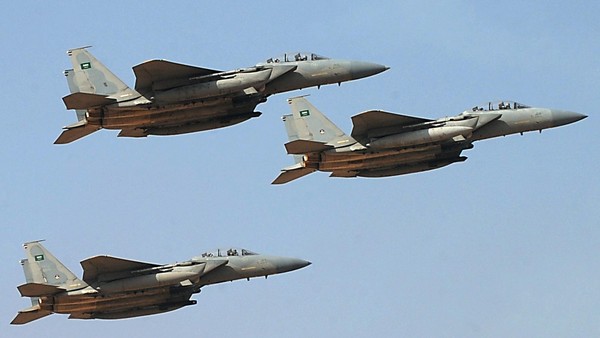
Late in the day on March 25, a Saudi-led coalition intervened in Yemen with airstrikes against the Houthis.

The Iranian-backed Houthis (a.k.a. Ansar Allah) took over Yemen’s capital, Sanaa, in September, and forced the resignation of the Saudi-backed Yemeni ruler, Abed Rabbo Mansour Hadi, in January. Hadi escaped house arrested in Sanaa and retreated to Aden with the remnants of his regime. On March 21, the Houthis had called for a “general mobilisation” and by the next day had pushed south toward Aden. The Houthis said they were combatting “terrorist forces”. As in Syria, Iran’s allied forces cast a narrative where there were no Sunni moderates, nobody with whom a deal might be struck.

Hadi’s predecessor, Ali Abdullah Saleh, whose resignation was compelled in early 2012 after the “Arab Spring,” stands accused not only by Hadi but by the United States of supporting the Houthis. Continue reading

Obama’s National Security Strategy

By Kyle Orton (@KyleWOrton) on February 14, 2015

1

The National Security Strategy is never a riveting read, and the NSS put out by the Obama administration on Feb. 6, only their second (the last in May 2010), was no exception. “Strategic patience” was the mantra with which this NSS was launched, to fairly wide derision as a rationalisation of the last six years of hesitancy and retrenchment. It was a criticism with some basis in fact. Continue reading