By Kyle Orton (@KyleWOrton) on 8 March 2026
By Kyle Orton (@KyleWOrton) on 2 August 2022

Osama bin Laden (L) sits with his adviser Ayman al-Zawahiri (R). Credit: Getty
By Kyle Orton (@KyleWOrton) on 22 July 2022
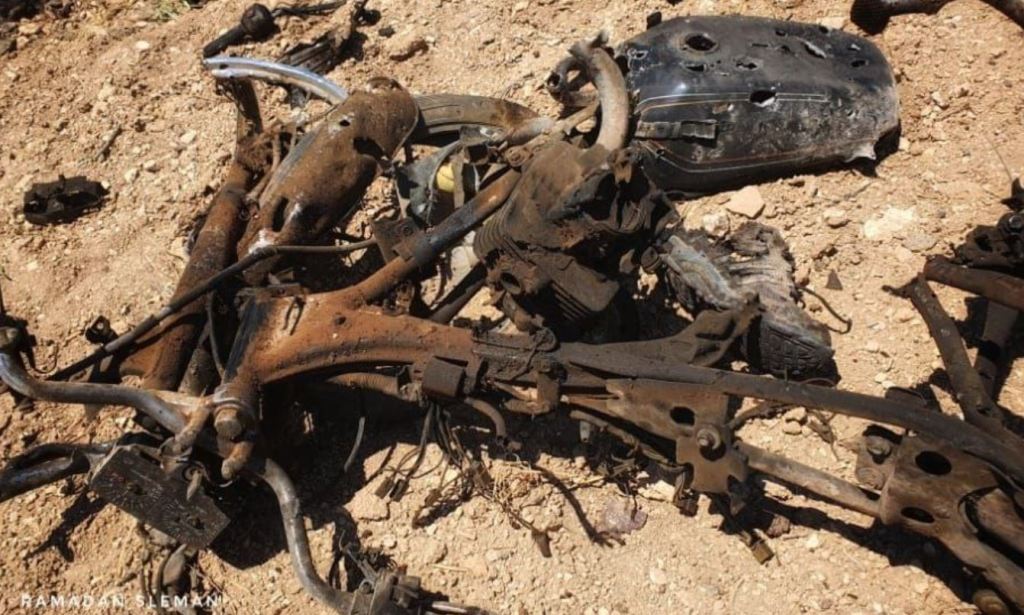
The United States announced on 12 July that it had killed the Islamic State’s (ISIS) governor of Syria in a drone strike in the village of Galtan in the Jinderes district of the north-western Syrian province of Efrin on the border with Turkey. The U.S. Central Command (CENTCOM) statement identified the slain man as “Maher al-Agal”, though a more precise transliteration is Maher al-Aqal (ماهر العقال). Riding on the motorcycle alongside Al-Aqal when he was killed was a “senior ISIS official” with whom he was “closely associated”. This ISIS official was “seriously injured during the strike”, CENTCOM notes, adding that the Jinderes strike caused no civilian casualties. Continue reading
By Kyle Orton (@KyleWOrton) on 18 June 2022

A U.S. helicopter above the American Embassy in Kabul, 15 August 2021 | AP
By Kyle Orton (@KyleWOrton) on 29 June 2021
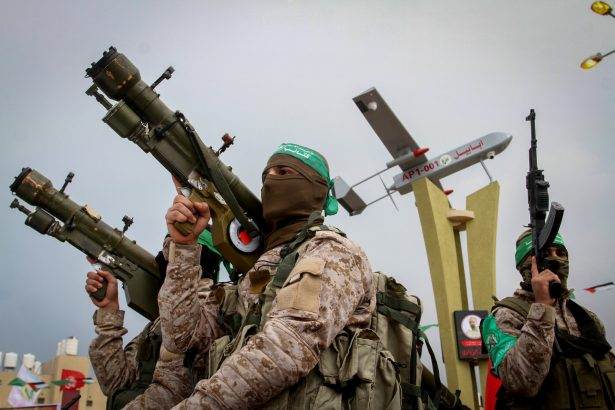
Members of the Ezzedine al-Qassam Brigades, the military wing of Hamas, at a memorial in Gaza, 31 January 2017. Photo by Abed Rahim Khatib, Flash90.
The May 2021 round of fighting in Gaza brought with it the upending of the unspoken understanding between Israel and Hamas and a level of intercommunal violence within Israel that has not been seen in quite some time. The scale of the rocket attacks on the Jewish state must also be counted among the unusual elements of this latest flare-up, with Iran clearly identifiable as the enabling state behind Hamas and Palestinian Islamic Jihad (PIJ), the two primary factions behind these attacks. Continue reading
By Kyle Orton (@KyleWOrton) on 8 June 2021

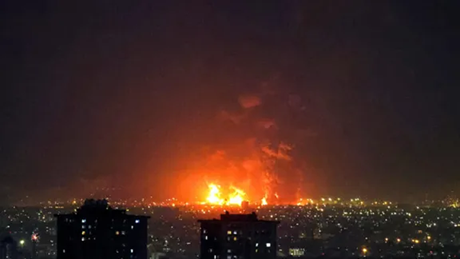
Massive explosion at Khojir in eastern Tehran lights up the night sky, 25 June 2021 [image source]
By Kyle Orton (@KyleWOrton) on 12 June 2020

Ismail Nazlikul (Kasim Engin) [image source]
By Kyle Orton (@KyleWOrton) on 6 April 2020
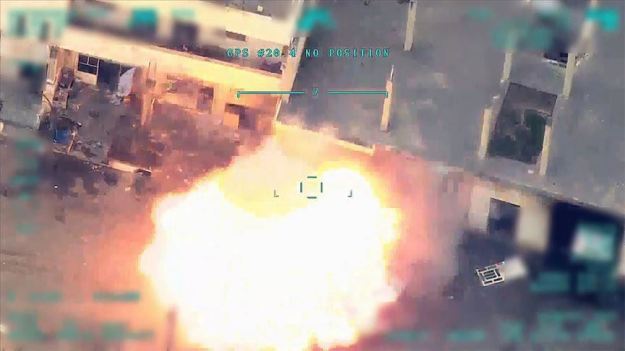
The first quarter of 2020 saw a serious escalation of combat in Syria, albeit without much alteration in the political trends, and the arrival of the novel coronavirus (COVID-19) has exacerbated a fraught situation. Continue reading
By Kyle Orton (@KyleWOrton) and Rob Clark (@RobertClark87) on 26 July 2019
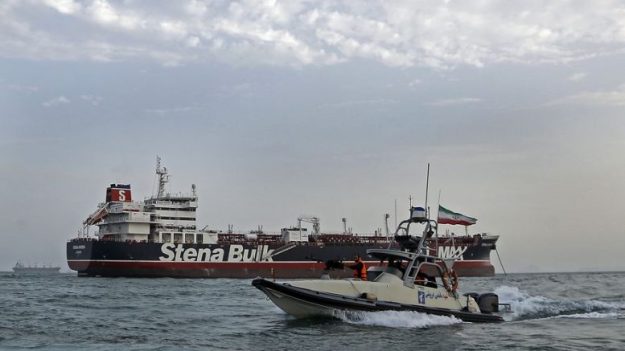
A speedboat and a helicopter of the Iran’s Islamic Revolutionary Guards Corps Navy move around a British-flagged oil tanker Stena Impero, 21 July 2019. (Hasan Shirvani/Mizan News Agency via AP)
The series of provocations in the Gulf by the Islamic Republic of Iran, beginning with the sabotage of four vessels in mid-May, culminated last Friday in the illegal seizure by the Iranian Revolutionary Guard Corps Navy (IRGCN) of the British-flagged and operated Stena Impero oil tanker, followed shortly thereafter by the seizure of the Liberian-flagged, British operated MV Mesdar in the Strait of Hormuz. Only the Mesdar has been released. This episode has served to demonstrate the serious defence issues confronting Boris Johnson, the incoming United Kingdom (UK) Prime Minister, which have to be dealt with immediately and cannot be pushed off into the future when the domestic turbulence over Brexit has abated. Continue reading

 Kyle Orton's Blog