Tag Archives: Free Syrian Army

Syria: The Revolution at Five

By Kyle Orton (@KyleWOrton) on March 15, 2016

Article published at Left Foot Forward

1

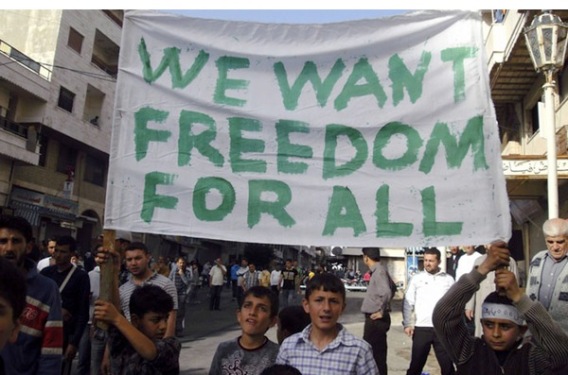
Five years ago today protests broke out in a small town in southern Syria and, carried by social media, spread throughout the country.

For about six months, the Syrian uprising would be mostly peaceful, but inevitably the population fought back as the regime of Bashar al-Assad—aided from the earliest stages by Iran and its Lebanese proxy, Hizballah—widened and intensified its violent crackdown.

In yet another unexpected turn, the last few weeks have seen the revival of this early spirit of the revolution to its strongest point in years. Continue reading

In View of Vienna

By Kyle Orton (@KyleWOrton) on December 15, 2015

Published at NOW Lebanon.

1

So the Syrian opposition can unite. Foreign powers have been the major cause of rebel discord. Previous rebel unity initiatives like the Joint Command were pulled apart by the competition between the insurgency’s sponsors—Saudi Arabia and Qatar primarily—and the last rebel umbrella group, the Supreme Military Council, which was identified with Western power, collapsed after President Barack Obama decided not to punish Bashar al-Assad for the massive chemical weapons attack on the population of Ghouta. But under Saudi auspices, an opposition “team” was announced on December 10 after a three-day conference in Riyadh, which includes the political and military opposition and groups with varying ideologies and patrons. This is an achievement. Unfortunately, this team’s task is an impossible one: intended to partake in the Vienna process begun in October, ostensibly to negotiate an end to the war, Syria is not, at present, in a condition where a political agreement can be made and implemented, not least because the Assad regime and its supporters in Iran and Russia have doubled down, and the opposition continues to receive insufficient support to pressure the regime enough to force an agreement. Continue reading

As Syria’s Opposition Tries To Unite, Prospects For Peace Recede

By Kyle Orton (@KyleWOrton) on December 9, 2015

A version of this article was published at Middle East Eye.

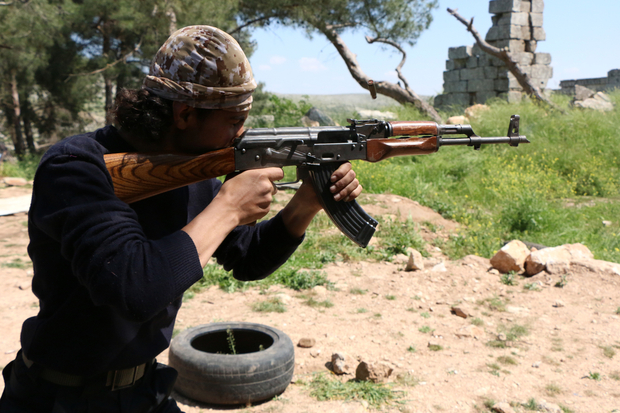
A rebel fighter from the Free Syrian Army's

A rebel fighter from the Free Syrian Army’s “First Battalion” takes part in military training on May 4, 2015, in rebel-held northern Rif Aleppo. (AFP, Baraa al-Halabi)

The Syrian opposition is meeting in Saudi Arabia between December 8 and 10 in an attempt to create a unified structure that can credibly sit across the table from the Bashar al-Assad regime in the internationally-organised peace talks in Vienna, and make a binding commitment on the path forward for Syria. Continue reading

Israel, Al-Qaeda, and The Daily Mail

By Kyle Orton (@KyleWOrton) on December 9, 2015

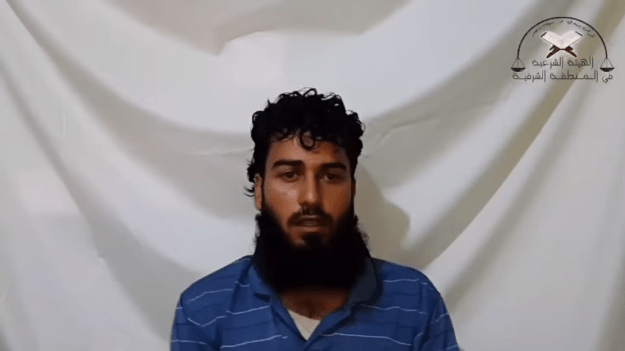
Sharif as-Safouri, a Free Syrian Army commander kidnapped by Jabhat an-Nusra and made to "confess" to receiving support, including weapons, from Israel in an August 2014 video.

Sharif as-Safouri, a Free Syrian Army commander kidnapped by Jabhat an-Nusra and made to “confess” to receiving support, including weapons, from Israel in an August 2014 video.

Last night The Daily Mail reported, after embedding with Israeli commandos, on Jerusalem’s ongoing effort to treat casualties of Syria’s horrific war. The Mail, however, put a spin on this story that not only reflected badly on the Jewish State, but feeds into a narrative cast by Iran and its allies to the effect that Israel is supporting Salafi militancy in Syria, specifically al-Qaeda, a propaganda campaign that has already had deadly consequences. Continue reading

Syria’s Many Moderate Rebels

By Kyle Orton (@KyleWOrton) on November 30, 2015

A version of this article was published at NOW Lebanon.
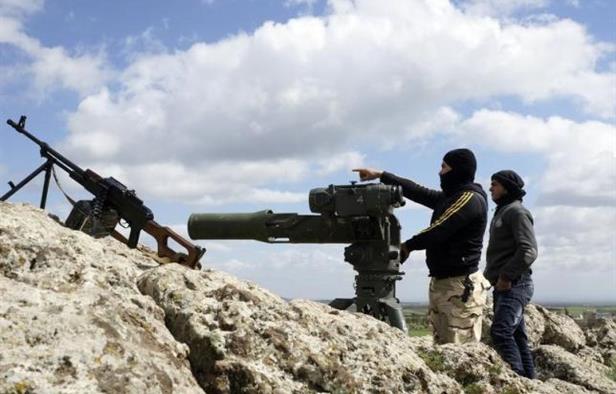
Rebels from the Southern Front in northwest Deraa, March 2015

Rebels from the Southern Front in northwest Deraa, March 2015

In early November, the Foreign Affairs Select Committee released a report challenging the British government’s proposal to extend airstrikes from Iraq into Syria against the Islamic State (IS). Among other things, the report asked for a proposed political path to ending the Syrian civil war, a necessary prerequisite to defeating IS. On Thursday, Prime Minister David Cameron released a response, part of which said:

Military action against ISIL will also relieve the pressure on the moderate opposition, whose survival is crucial for a successful transition to a more inclusive Syrian government. Syria has not been, and should not be, reduced to a choice between Assad or ISIL. Although the situation on the ground is complex, our assessment is that there are about 70,000 Syrian opposition fighters on the ground who do not belong to extremist groups.

This number has blown up into a major political row, with many Members of Parliament and pundits taking their personal unfamiliarity with Syria’s military landscape as evidence that it cannot be so. The Labour Opposition has made the number of non-extremist rebels a focal point of their challenge to the Prime Minister’s proposal for moving forward in Syria, and one of Cameron’s own Conservative MPs referred to the number as “magical”. The challenge to the number is part of a longer-term trend, where a narrative has become prevalent that there are no moderate opposition forces left in Syria. The corollary of this view is usually the argument that the West should side with the “secular” Assad regime as the “lesser evil” to put down a radical Islamist insurrection.

Sidestepping the ignorance that goes into believing a blatantly sectarian regime propped up by an international brigade of Shi’a jihadists is secular: What of this claim that there are no moderate rebels left? It isn’t true, as I recently made clear in a paper for The Henry Jackson Society. Continue reading

Why Solely Backing the PYD Against the Islamic State is a Mistake

By Kyle Orton (@KyleWOrton) on October 20, 2015

Published at NOW Lebanon.

1

The Pentagon-run train-and-equip (T&E) program had intended to take Syrian rebels, stop them from being rebels by preventing them from fighting the Assad regime, and repurpose them into an American-directed strike force against the Islamic State (ISIS). Unsurprisingly, there were few takers and the program ended in disaster and humiliation. In the wake of this failure, President Barack Obama has turned away from the Arab rebels and looked to the Syrian Kurds to fight ISIS. This is a strategy that is not only doomed to fail—since Sunni Arabs taking responsibility for their local security is the only way to sustainably defeat ISIS—but would, if implemented, make the ISIS problem worse. A report from Amnesty International this week documenting crimes, including ethnic cleansing, by the armed Kurdish forces against Arabs and Turkmens in northern Syria also provides an occasion to look more closely at a force with a history of regime collaboration, political extremism, and terrorism. Continue reading

In Syria, Russia and Iran Reap the Harvest of Obama’s Failed Foreign Policy

By Kyle Orton (@KyleWOrton) and James Snell on October 1, 2015

Published at National Review.

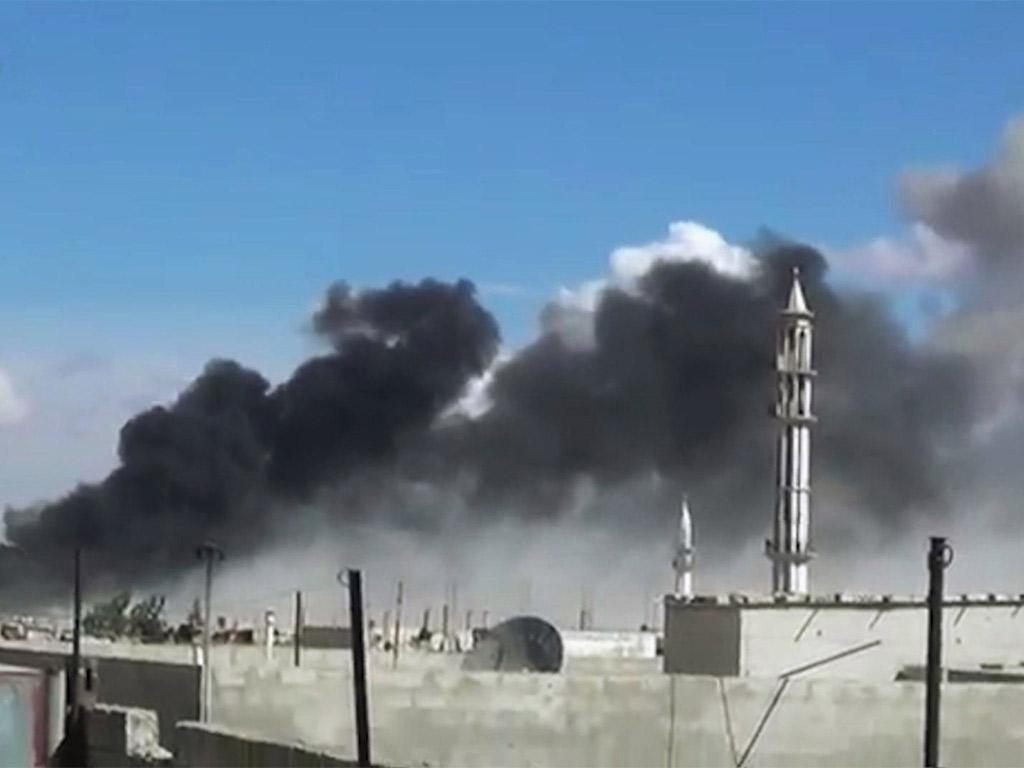
Aftermath of a Russian airstrike against U.S.-supported moderate rebels in Talbiseh, Homs (AP)

Aftermath of a Russian airstrike against U.S.-supported moderate rebels in Talbiseh, Homs (AP)

The situation in Syria could hardly get more desperate. With more than half the population displaced and 300,000 people dead, the civil war in Syria is the greatest humanitarian disaster of our time. But Syria is also a profound challenge to the American-underwritten geopolitical order that aspires toward free institutions and representative rule. As a direct consequence of policies pursued by the Obama administration, Iran and Russia, two enemies of this order, have taken their chance to assert their dominance. Continue reading

America Abandons the Syrian Revolution

By Kyle Orton (@KyleWOrton) on August 14, 2015

1

In the last week, two events have provided further evidence that the United States has effectively sided with the Assad regime in Syria, acting effectively as the regime’s air force, and that America’s alliance with Assad is part of the broader policy of détente with Iran, facilitated by the nuclear deal, which has ceded Syria to Iran as a sphere of influence. Continue reading

Is Ahrar a-Sham a “Moderate” Syrian Rebel Group?

By Kyle Orton (@KyleWOrton) on July 12, 2015

Ahrar a-Sham

To answer my headline simply: no, Ahrar a-Sham’s leadership is not what anybody in the West means by “moderate” Syrian rebels that could be supported.

The question is provoked by an op-ed in The Washington Post last night signed by Labib al-Nahhas, Ahrar’s foreign political relations officer, the culmination of a public-relations campaign by Ahrar to rebrand itself as the mainstream alternative to the Islamic State (ISIS) and the Assad tyranny we’ve all been waiting for. Continue reading

Defeat Jihadists in Syria by Being a Better Ally to the Opposition

By Kyle Orton (@KyleWOrton) on March 25, 2015

A still  from the video announcing the Ahrar a-Sham-Suqour a-Sham merger

A still from the video announcing the Ahrar a-Sham-Suqour a-Sham merger

Ahrar a-Sham “merged with“—in reality annexed—Suqour a-Sham on March 22. Ahrar’s leader, Hashem al-Sheikh (a.k.a. Abu Jabbar), is the leader of the Ahrar-Suqour formation, and Suqour’s leader, Ahmed Issa al-Sheikh (a.k.a. Abu Issa) is his deputy. Ahrar is the largest and most hardline Syrian insurgent group in Syria, and Suqour has a fairly stern Salafi-nationalist ideology—at least at its leadership level—and was once the largest rebel group in Idlib Province.

The first thing this brought to mind was Sam Heller’s witticism late last year: “the most successful, lasting approach to rebel unification so far has basically been ‘Ahrar al-Sham absorbs you’.” Continue reading