Tag Archives: Hizballah

France Presents Evidence Assad Committed Chemical Weapons Atrocity

By Kyle Orton (@KyleWOrton) on 26 April 2017

The French government has released its assessment of the 4 April chemical weapons attack in Syria, and “independently and categorically confirms that sarin was used”. France “deployed the required resources to obtain its own samples,” the report notes, and “collected biomedical and environmental samples and munitions and pieces of munitions” from this attack site and several prior. Continue reading

Russia and Iran Use Terrorism Against Western Interests

By Kyle Orton (@KyleWOrton) on 25 April 2017

The evidence is mounting that Vladimir Putin’s government supports the Taliban as a means of thwarting NATO interests in Afghanistan. Russia has long manipulated terrorists, internally and abroad, to suit its policy aims, but as Moscow solidifies its relationship with the Iranian revolution the Russian policy, particularly in Syria, has become something more like a conventional alliance—not least because those who run Tehran’s foreign policy and the clerical regime’s most powerful assets are themselves terrorists. Continue reading

Outcome Uncertain as American Involvement in Syria Deepens

By Kyle Orton (@KyleWOrton) on March 10, 2017

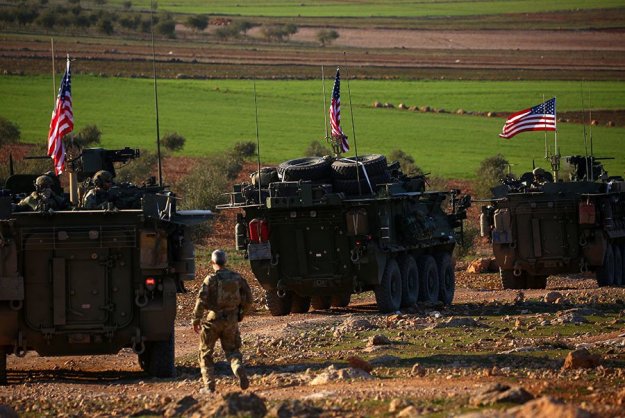
American ground forces are getting more deeply entangled in Syria as the offensive to push the Islamic State (IS) out of its de facto capital city, Raqqa, approaches. It remains unclear exactly which actors in Syria these troops will be assisting, though there are more and more indications that their mission will redound to the benefit of the regime of Bashar al-Assad and his allies, Iran and Russia. Continue reading

Islamic State Has Been Defeated in Al-Bab, But America Needs a New Direction in Syria

Published at The International Business Times and subsequently discussed on the IBTimes podcast

By Kyle Orton (@KyleWOrton) on February 27, 2017
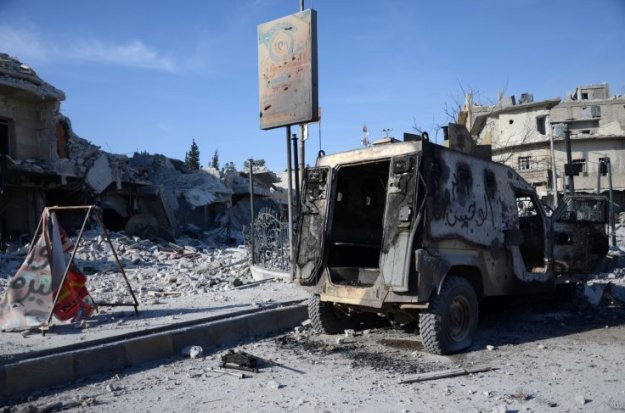
A burnt-out vehicle on a destroyed street in al-Bab on 23 February 2017 (Nazeer al-Khatib/AFP/Getty Images)

Turkey intervened in Syria in August 2016 with Operation Euphrates Shield (OES), which involved special forces, some regular troops, and the mobilisation of Syrian rebels to clear its border of terrorist threats by pushing ISIS (the Islamic State) away from the frontier and preventing the Syrian branch of the Kurdistan Workers’ Party (PKK) creating a state-let on its border that could be used as a harbour and launch-pad for attacks inside Turkey.

To secure this mission, on 13 November 2016 OES began an assault on al-Bab in the eastern countryside of Aleppo Province, just 15 miles from Turkey’s border and ISIS’ last major urban centre in Syria outside its capital, Raqqa. Some 102 days of combat later, on 23 February, al-Bab fell. What happens next could determine the course of the war as Turkey competes with the PKK to be the U.S.-led Coalition’s partner in clearing ISIS from Raqqa. Continue reading

How the Islamic State Claims Terrorist Attacks

By Kyle Orton (@KyleWOrton) on February 4, 2017

2

With the attempted terrorist attack using machetes at the Louvre museum in Paris yesterday by Abdullah Reda al-Hamamy, whose social media history shows statements at least sympathetic to the Islamic State (IS), it raises once again the question, making no assumptions about al-Hamamy’s motives, of how connected the organization headquartered in Raqqa is to the attacks taking place around the world under IS’s banner—and how we would know.

As IS’s attacks outside of the statelet it has built in Iraq and Syria increased in frequency over the last year, a rather routinized mechanism has developed for attributing blame: IS claims the atrocities—or attempted atrocities—through Amaq News Agency. Continue reading

Chelsea Manning is a Traitor, Not a Hero

Published at The International Business Times

By Kyle Orton (@KyleWOrton) on January 18, 2017

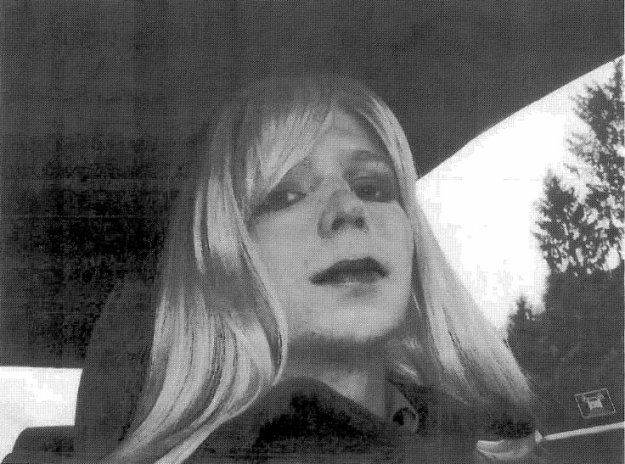
Chelsea Manning (REUTERS/U.S. Army)

It might have been thought that a consistent opposition to treason was not all that difficult. But President Barack Obama’s surprise decision last night to commute the sentence of Bradley, now Chelsea, Manning, showed how deeply political partisanship has penetrated into areas like national security, where ideally country would be put before party or ideology. Continue reading

International Taboo on Chemical Weapons Frays As U.S. Steps Back

By Kyle Orton (@KyleWOrton) on January 13, 2017

Yesterday, the United States Treasury Department imposed sanctions on eighteen senior officials in the regime of Bashar al-Assad. The sanctions come in response to reports in August and October 2016 by the Organization for the Prohibition of Chemical Weapons (OPCW), the United Nations investigative body, which found that found “the Syrian government, specifically the Syrian Arab Air Force, was responsible for three chlorine gas attacks in Talmenes on April 21, 2014, and in Qmenas and Sarmin on March 16, 2015.” This is three years after the Assad regime was spared punitive military strikes for its use of chemical weapons under a Russian-orchestrated “deal” that ostensibly disarmed Assad of such weapons. Continue reading

The Assad Regime Admits to Manipulating the Islamic State

By Kyle Orton (@KyleWOrton) on January 6, 2017

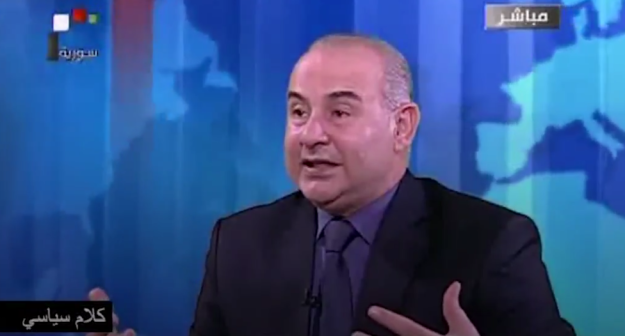
Khaled Abboud

From the beginning of the uprising in Syria in 2011, there have been accusations that Bashar al-Assad’s regime was in a de facto partnership with the Islamic State (IS) against the mainstream opposition. These accusations have a considerable basis in fact: during the entirety of the Anglo-American occupation of Iraq, Assad collaborated with IS jihadists in the destabilization of Iraq, killing thousands of Iraqi civilians and hundreds of American and British troops. Once the Syrian uprising was underway, the regime undertook various measures to bolster extremists in the insurgency. Assad and IS worked in tandem to leave Syria as a binary choice between themselves: Assad was sure this would rehabilitate him in the eyes of the world and transform his criminal regime into a partner of the international community in suppressing a terrorist insurgency, and IS wanted to rally Sunnis to its banner. The Secretary of the Syrian Parliament has now come forward to underline this. Continue reading

President Obama Defends His Syria Policy to the Last

Originally published at The Henry Jackson Society

By Kyle Orton (@KyleWOrton) on December 17, 2016

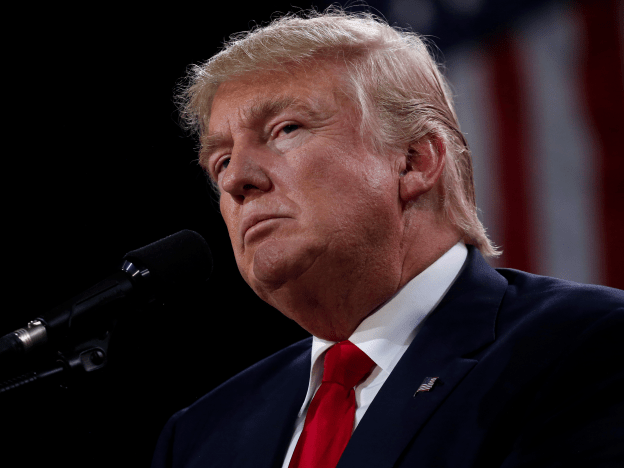
At a rally in Pennsylvania as part of his “Thank You Tour” on Thursday, President-elect Donald Trump said:

We’ll build safe zones in Syria. When I look at what’s going on in Syria it’s so sad. It’s so sad, and we’ve got to help people. And we have the Gulf states; they have nothing but money. We don’t have money. We owe twenty trillion dollars. I will get the Gulf states to give us lots of money, and we’ll build and help build safe zones in Syria so people can have a chance.

Trump’s previous statements on Syria have actually demonstrated some consistency, and Trump has expressed support for safe zones before.

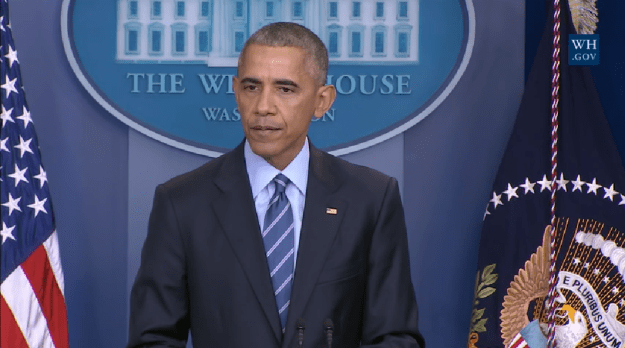
Taking Trump’s statement as a jumping-off point, the next day, at this final press conference of 2016, President Barack Obama was asked about the idea of safe zones in Syria and if he felt responsible for the horrors now unfolding in Aleppo. Obama responded: Continue reading

Trump Might Continue Obama’s Dangerous Syria Policy

Originally published at The Henry Jackson Society

By Kyle Orton (@KyleWOrton) on November 24, 2016

There is not yet any clarity with regard what Donald Trump would do about Syria once he becomes President. Virtually everything about the incoming administration is in the “wait and see” phase. Still, on the current evidence, Trump’s Syria policy would appear to be a continuation of President Barack Obama’s policy of prioritizing the threat of the Islamic State (IS) and other non-state Sunni jihadist groups, while effectively aligning with the pro-regime coalition, made up of Russian air power and a ground force led by the Islamic Republic of Iran, stitched together out of the battered remnants of Bashar al-Assad’s army and his sectarian militias, Iranian paramilitary and regular forces, and foreign Shi’a jihadist groups under Iran’s control. The only potential difference is that Trump may formally repudiate the anti-Assad forces. The effect of this would be to destroy the mainstream Syrian opposition and empower al-Qaeda, but it would not bring stability to Syria. There are hints, however, that Trump is recruiting senior officials who will alter this policy. Continue reading