Tag Archives: HTS

Insurgents Respond to America Declaring Syrian Taliban Unit A Terrorist Group

By Kyle Orton (@KyleWOrton) on 25 March 2018

Katibat al-Imam al-Bukhari (image source)

The United States Department of State designated Katibat al-Imam al-Bukhari (KIB), the Taliban-loyal insurgent unit in Syria, as a Specially Designated Global Terrorist (SDGT) on 22 March. Over the last few days, KIB and other insurgent groups have issued statements in response. Continue reading

The Role of Turkey in Syria

By Kyle Orton (@KyleWOrton) on 16 August 2017

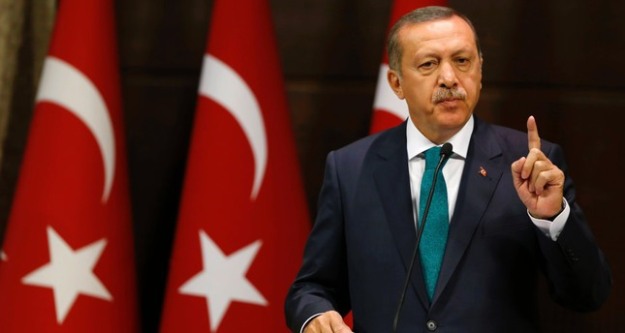
Recep Tayyip Erdogan (image source)

The Turkish government has gotten more and more deeply involved in Syria since the uprising began in 2011. But Turkey now finds its original aim, namely the overthrow of Bashar al-Assad’s regime, unattainable, creating tensions with the Syrian armed opposition, its primary lever inside Syria, and there are considerable problems stabilizing the zone of Syria that came under Turkish occupation after Ankara’s direct intervention in 2016. The defeat of Turkey’s primary objective has been accompanied by the rise of further problems, notably the exacerbation of its longest-standing internal security threat, that posed by the Kurdistan Workers’ Party (Partiya Karkerên Kurdistan – PKK), and the generation of new internal threats, from the Islamic State (IS) and potentially from al-Qaeda-linked groups. The options for solving these problems are constrained and unpalatable. Continue reading

Whither Al-Qaeda in Syria?

By Kyle Orton (@KyleWOrton) on 15 August 2017

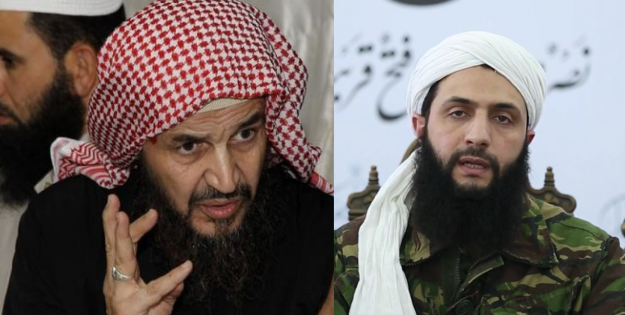
A statement from Issam al-Barqawi, far better known as Abu Muhammad al-Maqdisi, the Jordan-based Palestinian jihadi-salafist cleric, was released in English on Telegram on 15 August 2017. The statement dealt with his view of Hay’at Tahrir al-Sham (HTS), highlighting again the questions around this Syrian-based jihadi group and its relations with al-Qaeda. Continue reading

Al-Qaeda in Syria Linked to a Terror Plot in the United States

By Kyle Orton (@KyleWOrton) on 30 June 2017

Abdirahman Sheik Mohamud (source)

In April 2015, a United State Federal Grand jury in Ohio charged Abdirahman Sheik Mohamud, also known as “Ayanle”, with three terrorism-related offences. Yesterday, court records were unsealed that revealed that Mohamud pleaded guilty to all charges, admitting to having fought with a terrorist organization in Syria and returned to the United States with the intention of carrying out an act of domestic terrorism. Mohamud was in contact with foreign terrorist operatives throughout the period he was plotting an attack within the United States. But—and this is the most significant aspect of the case—Mohamud was not in contact with one of the Islamic State’s intelligence operatives, who guide attacks in a manner now relatively well-understood. Instead, Mohamud was in contact with Jabhat al-Nusra, at that time al-Qaeda’s declared branch in Syria. Al-Nusra is now known as Hay’at Tahrir al-Sham (HTS) and claimed in July 2016 to have disaffiliated from al-Qaeda’s “central”, not that this has (nor will nor should) remove HTS from the terrorism list. Regardless of its formal status within al-Qaeda’s command structure, HTS retains significant links with al-Qaeda’s global networks, and a breakaway group from HTS in Syria has reaffirmed its loyalty to al-Qaeda. Mohamud’s case is an extremely important data point in assessing the risk these overlapping and mutually reinforcing entities pose to the West and the wider world. Continue reading

Australian Jihadi Spokesman Distances Hay’at Tahrir al-Sham From Al-Qaeda, Criticises America

By Kyle Orton (@KyleWOrton) on 20 March 2017

Mostafa Mahamed on Sky News, August 2016

Mostafa Mahamed (Abu Sulayman al-Muhajir) is a U.S.-designated terrorist, an al-Qaeda operative who has formally resigned from al-Qaeda’s branch in Syria, Jabhat Fatah al-Sham (JFS), which was previously Jabhat al-Nusra and has now reorganized itself as Hay’at Tahrir al-Sham (HTS). Earlier this month, on 11 March, Michael Ratney, the U.S. special envoy to Syria, released an open letter (in Arabic) labelling all constituents of HTS as terrorists seeking to exploit the Syrian opposition, and incited divisions within the Islamist sections of the insurgency by including Ahrar al-Sham—heretofore a close HTS ally, though recently involved in clashes with the group—as part of the Syrian revolution. HTS issued a formal response on 12 March and, on 20 March, Mahamed issued his own response, which is reproduced below. The main themes were anti-Americanism and dissuading the Syrian armed opposition that the U.S. was an ally; arguing that HTS was different than JFS and unconnected to al-Qaeda; and the strong impression of a threat should the U.S. move against HTS—while explicitly denying that such a threat was being made.
Continue reading

Liberating Raqqa from the Islamic State

By Kyle Orton (@KyleWOrton) on February 17, 2017

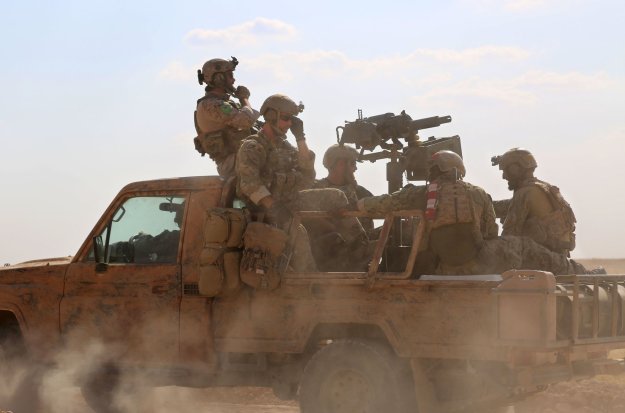
As the new administration of Donald Trump works through the United States’ options in dealing with Syria, and the Islamic State (IS) specifically, one option apparently under consideration is the use of greater numbers of combat troops to accelerate the expulsion of IS from its Syrian capital, Raqqa. While more U.S. troops would undoubtedly hasten the collapse of IS’s grip on its urban strongholds in Syria, such a policy risks continuing the failed U.S. policies of the past six years in Syria that have tackled symptoms of the conflict, rather than its causes, have tried to tackle elements in isolation from the wider conflict, and have placed too great an emphasis on military progress over politics. Continue reading

Al-Qaeda Reshapes the Insurgency in Northern Syria

By Kyle Orton (@KyleWOrton) on February 7, 2017

Hay’at Tahrir al-Sham logo

A series of clashes broke out on 19 January between al-Qaeda’s rebranded Syrian branch, Jabhat Fatah al-Sham (JFS), and its heretofore close ally and portal into the Syrian rebellion, Ahrar al-Sham. By 23 January, JFS had expanded its targets, engaging in hostilities with mainstream rebel groups in the “Greater Idlib” area, and specifically trying—and succeeding—in dismantling the positions of Jaysh al-Mujahideen, a moderate group, west of Aleppo. The crisis continued to escalate, forcing many groups to merge with Ahrar al-Sham for protection, until 28 January, when a JFS-led merger was announced under the banner of Hay’at Tahrir al-Sham (HTS), or the Syrian Liberation Committee. HTS announced a ceasefire, and since then individuals and groups—including a significant number from Ahrar—have given allegiance to HTS. This radical reshaping of revolutionary dynamics in northern Syria has undoubtedly created antibodies going forward against al-Qaeda that could be capitalized on by the international community, but the present situation is highly favourable to al-Qaeda. Continue reading