Bethlehem is one of the most compelling films I’ve seen in a long time. There are so few good spy films available that this is a welcome surprise. Unlike Burn After Reading, a genius film, the intention here is not to show things from the agency side, to demonstrate how wildly out of control things can get when you only have half-or-less of the facts. It is also not Charlie Wilson’s War, which shows the feats that intelligence agencies can accomplish when well-directed. Bethlehem is most like Breach, which showed the immense damage an individual spy can do. But instead of showing the effects the act of spying had, with the human characters secondary, Bethlehem tracks specifically the complex relationship that develops between handler and asset. Continue reading →
The Islamic State’s (IS) weekly newsletter, al-Naba, interviewed a high-ranking al-Qaeda defector, Abu Ubayda al-Lubnani, across two issues in February and March 2016. Abu Ubayda announced his defection from al-Qaeda to IS in April 2014 via al-Battar and Abu Ubayda’s name appeared on a list of prominent clerics supporting IS’s caliphate declaration that was circulated not long after the declaration. Abu Ubayda is described by al-Naba—as best as can be told accurately—as having been a member of al-Qaeda’s Shura or Consultation Council, a training officer in its Military Committee, and a counter-intelligence officer. Abu Ubayda is advertised as speaking about many secret aspects of al-Qaeda.
Among the topics Abu Ubayda covers is the alleged infiltration and manipulation of al-Qaeda by foreign intelligence services, specifically Pakistan’s Inter-Services Intelligence (ISI), which is not only a violation of jihadist doctrine by collaborating with an “infidel” and illegitimate state but led to the deaths of a number of senior al-Qaeda leaders.
Perhaps the most intriguing aspect of what Abu Ubayda has to say relates to al-Qaeda’s attempt to take advantage of the Syrian revolution. This persistent campaign has followed a pattern of disguising al-Qaeda’s presence and attempting to influence and eventually co-opt the rebellion against Bashar al-Assad’s regime. One lever al-Qaeda relied upon, according to Abu Ubayda, was Ahrar al-Sham, an organization that disclaims all connections to al-Qaeda and dissimulates about its ideology. Whatever Ahrar’s dominant ideology, it is simply a fact that it has served as the bridge between the foreign-led jihadists and Syrian Islamists, and its connections to al-Qaeda are evident enough. Abu Ubayda suggests Ahrar’s connections to al-Qaeda are even deeper than they appear. Continue reading →
This post is drawn from a recent report I published profiling the leadership of the Islamic State.
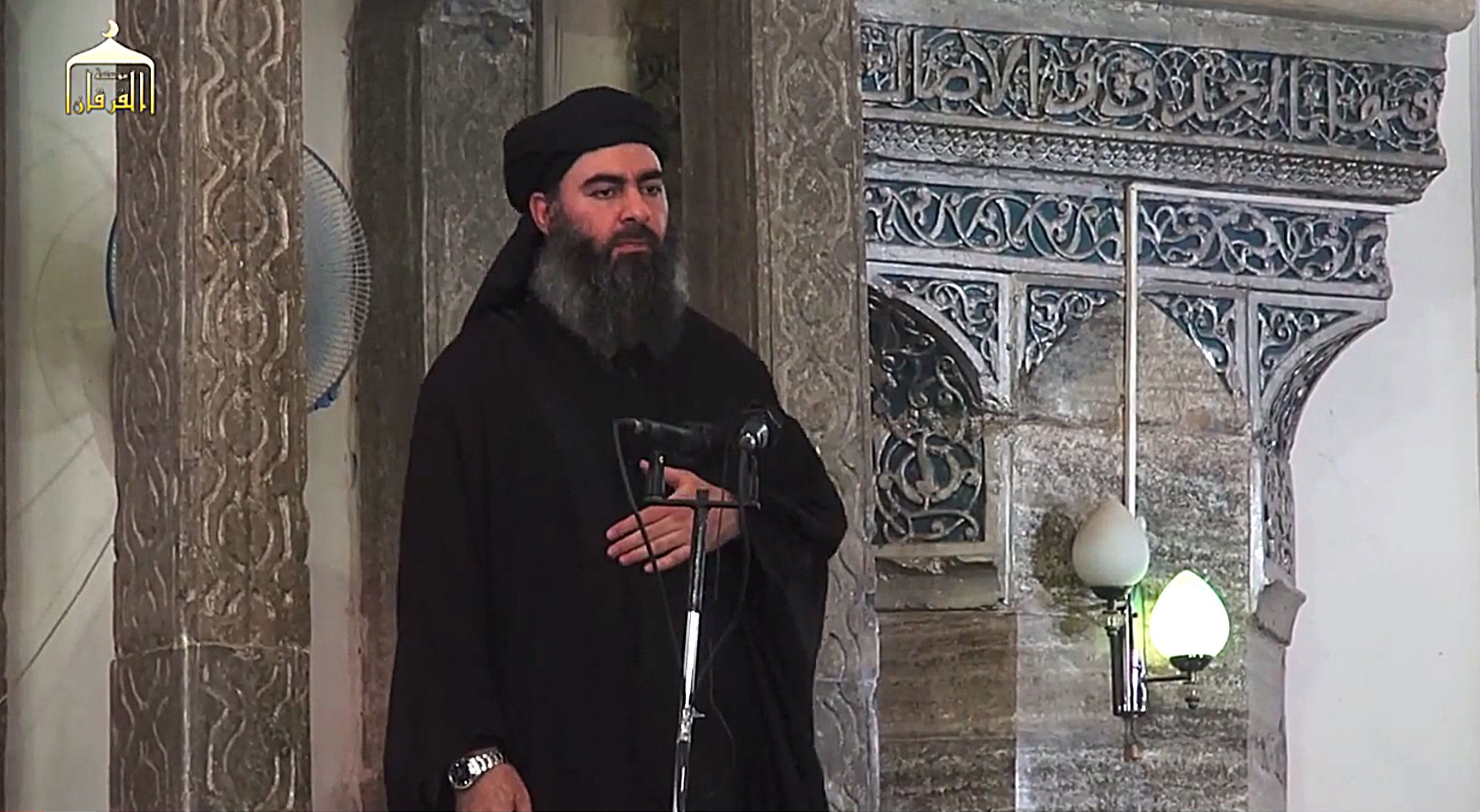
The leader of the Islamic State (IS) since 2010 has been Abu Bakr al-Baghdadi, previously known as Abu Dua or Abu Awad, and his real name—acknowledged by IS itself since the declaration of the so-called Caliphate in 2014—is Ibrahim Awwad Ibrahim Ali Muhammad al-Badri al-Samarrai.
This essay, written to tie together my work on the relationship between the Saddam Hussein regime and the Islamic State, was completed last summer and submitted to an outlet, where it entered a form of development hell. After giving up on that option late last year, the opportunity arose to get a shorter version published in The New York Times in December. But I procrastinated too long over what to do with the full essay and a recent change in my work situation means I no longer have the bandwidth to go through the process of finding it a new home, so here it is.
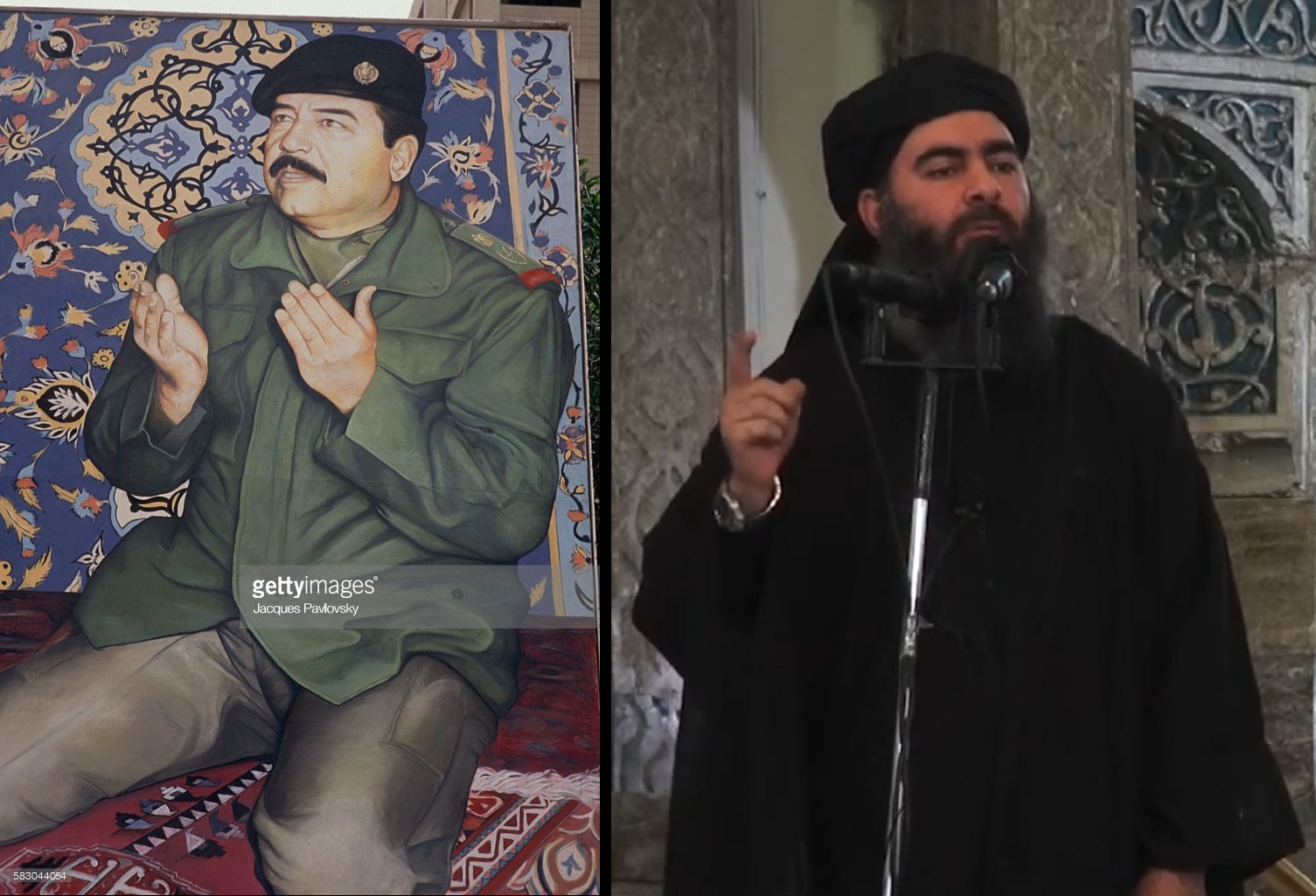
“Abu-Bakr al Baghdadi is a product of the last decade of Saddam’s reign,” argues Amatzia Baram, a scholar of Iraq. He is correct in at least three ways. First, in its last decade in power, the Iraqi Ba’ath regime transformed into an Islamist government, cultivating a more religious, sectarian population on which the Islamic State (ISIS) could draw. Part of Saddam Hussein’s “Faith Campaign” also involved outreach to Islamist terrorists, including al-Qaeda, which meant that the synthesis of Ba’athism and Salafism that fused into the Iraqi insurgency after the fall of Saddam was already well advanced by the time the Anglo-American forces arrived in Baghdad in 2003. Second, the ISIS leadership and military planning and logistics is substantially reliant on the intellectual capital grown in the military and intelligence services of the Saddam regime. And finally, the smuggling networks on which ISIS relies, among the tribes and across the borders of Iraq’s neighbours, for the movement of men and materiel, are directly inherited from the networks erected by the Saddam regime in its closing decade to evade the sanctions. The advantages of being the successor to the Saddam regime make ISIS a more formidable challenge than previous Salafi-jihadist groups, and one that is likely to be with us for some time.
The British inquiry into the death of Alexander Litvinenko concluded on Thursday, making official what everyone already knew: the Russian intelligence services, “probably” at the direct order of Russian President Vladimir Putin, murdered Litvinenko in London in November 2006.
Welcome as it is to have this on the record and to have Litvinenko’s killers named for all the world to see, it now leaves questions, primarily:
Will similar forensic scrutiny be brought to bear on several other odd instances of political and other crime in Russia?
And what does the British government intend to do now that the Kremlin is carrying out assassinations on its territory again? Continue reading →
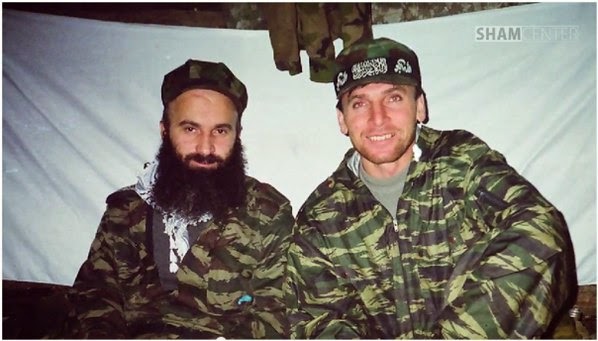
Shamil Basayev and Murad Margoshvili (a.k.a. Muslem a-Shishani)
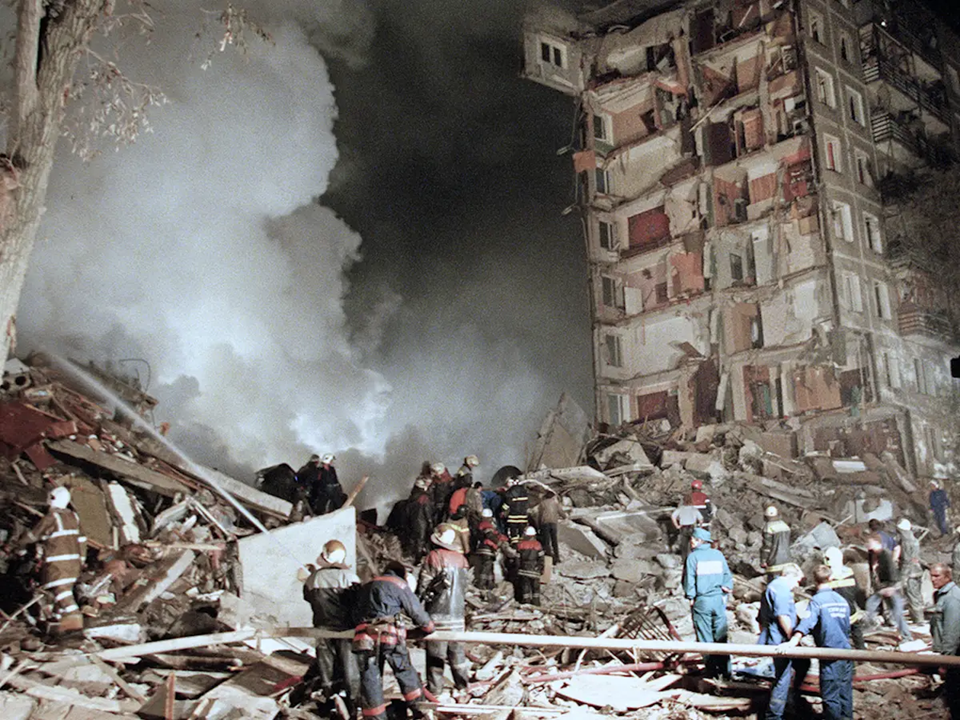
Last year I wrote about the murky role Russia was playing in the Syrian war, bolstering the Bashar al-Assad tyranny while facilitating the rise of the Islamic State (ISIS) and other Salafi-jihadists as a means of dividing and discrediting the Syrian opposition. This strategy and the associated tactics—infiltrating the insurgency, facilitating the arrival of al-Qaeda and other global jihadists to displace the nationalists, and in general driving the rebellion into the political dead-end of extremism and barbaric atrocities—has worked in other States where the intelligence services were trained by Moscow, and it worked internally to defeat the separatist movement in Chechnya. In Syria, Russia is reinforcing an old client regime, which has staked its life on the proposition that it is the last line of defence against a terrorist takeover and a genocide against the minorities, a policy now largely directed on-the-ground by Iran, to whom Assad surrendered sovereignty some time ago. New evidence has emerged to underline these points. Continue reading →
More than twelve years after the fall of Saddam Hussein, the conventional wisdom is that Saddam’s regime had no connection with al-Qaeda, and such “evidence” as was adduced was tortured out of Ibn al-Shaykh al-Libi in the Bush administration’s desperation to cobble together a casus belli. But if one puts ideology on hold, and considers the evidence of Stephen Hayes’ The Connection, a rather different picture emerges. Continue reading →
Book Review: ISIS: Inside the Army of Terror (2015) Michael Weiss and Hassan Hassan
ISIS: Inside the Army of Terror, by Michael Weiss and Hassan Hassan, is brilliantly easy to read. Concise yet thorough the book charts the history of a group, “[a]t once sensationalized and underestimated,” that is simultaneously a terrorist organisation, mafia, conventional army, sophisticated intelligence-gathering apparatus, propaganda machine and the remnants of the Saddam Hussein regime which controls an area the size of Britain in the heart of the Middle East. Continue reading →
Produced and directed by Laura Poitras, a Berlin-based, American-born producer and director, who has made numerous films attacking America’s foreign policy, Citizenfour rounds out a trilogy that started in 2006 with My Country, My Country about the U.S. regency in Iraq, and had its last instalment in 2010 with The Oath, a film that apparently follows two al-Qaeda members in Yemen and concludes they’re not such bad chaps.
The target this time for Poitras is the National Security Agency (NSA). Continue reading →



 Book Review: The Connection: How al-Qaeda’s Collaboration With Saddam Hussein Has Endangered America (2004) by Stephen Hayes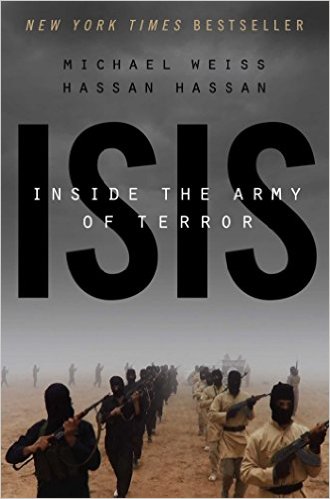

 Kyle Orton's Blog