Tag Archives: Iran

Former Al-Qaeda Group Continues Its Efforts To Annex The Syrian Revolution

By Kyle Orton (@KyleWOrton) on 17 January 2018

Ahmad al-Shara (Abu Muhammad al-Jolani), the leader of the Syrian jihadi group, Hay’at Tahrir al-Sham (HTS), released an audio speech, entitled, “Their Plot Will Not Harm You At All” or “Not The Least Harm Will Their Cunning Do To You” [Ali Imran (3): 120], on 16 January 2018. The speech is a continuation of themes HTS—even under its previous names, Jabhat al-Nusra and Jabhat Fatah al-Sham—has used, namely that it saw through the “peace processes” from the beginning as a conspiracy against the revolution, and that only it has the will and capacity to fulfil the desires of those Syrians who want to be free of Bashar al-Asad’s tyrannical regime. The recent insurgent counter-offensive in Idlib is taken by HTS as vindication, and as an opportunity to draw what’s left of the northern rebellion out of Turkey’s orbit and under its influence. A pro-HTS Telegram channel put out a transcript of the speech, which is reproduced below with some syntactical edits.
Continue reading

What The West Can Do About The Iran Protests

By Kyle Orton (@KyleWOrton) on 2 January 2018

Protests in Tehran, Iran, 30 December 2017. (Photo by Stringer/Anadolu Agency/Getty Images)

Protests broke out against the Iranian government on 27 December, and have achieved a wider geographic spread in the country than even the massive uprising of June 2009, reaching into religiously conservative, working-class towns and districts traditionally regarded as pro-regime. It is likely these demonstrations will be suppressed, but that does not obviate the need for Western policy. To the contrary, the protests exposed several flawed assumptions in recent policy-making, and a course correction is urgently necessary. Continue reading

Russia’s Plans in Syria Falter, Opening Chance for the West

By Kyle Orton (@KyleWOrton) on 29 December 2017

The Astana track of Syrian “peace” negotiations began on 23 January 2017, under Russian guidance in the Kazakh capital, with Iran and Turkey also invited as “guarantor countries” of the various sides in Syria. The process, initiated in the shadow of the savage conquest of Aleppo city in December 2016 that signalled the total strategic defeat of the insurrection against the Bashar al-Asad regime, was an attempt by Moscow to convert the military gains it had enabled by Asad and Iran on the ground into political facts that could then be imported into the internationally-recognized Geneva process. This “Astana-isation of Geneva” was Russia’s bid to take control of the political process and redefine it: rather than having Asad’s removal as its end-goal, it would set the terms of reintegration into the Asad state. Abetted by a purblind Western campaign against the Islamic State (IS) and a strategic reorientation in Turkey, the pro-Asad coalition has more or less had its way for the last year. But there are now signs that this approach is beginning to unravel. Continue reading

Syria’s Rebels Reject the Russian-Organized “Peace” Conference in Sochi

By Kyle Orton (@KyleWOrton) on 29 December 2017

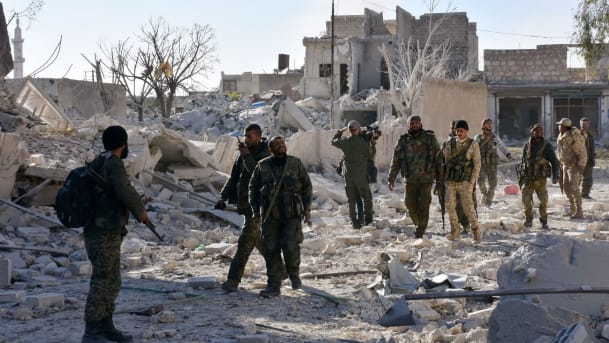
Aleppo city (source)

The Syrian opposition released a statement on 25 December 2017 making official its rejection of the upcoming Sochi conference, which, overseen by the Russian government, is intended to continue shaping the terms of a settlement in Syria. A translation of the statement was made by TNT and is reproduced below. Continue reading

Further Details Emerge of Obama’s Failed Iran Policy

Published at The New Arab.

By Kyle Orton (@KyleWOrton) on 21 December 2017

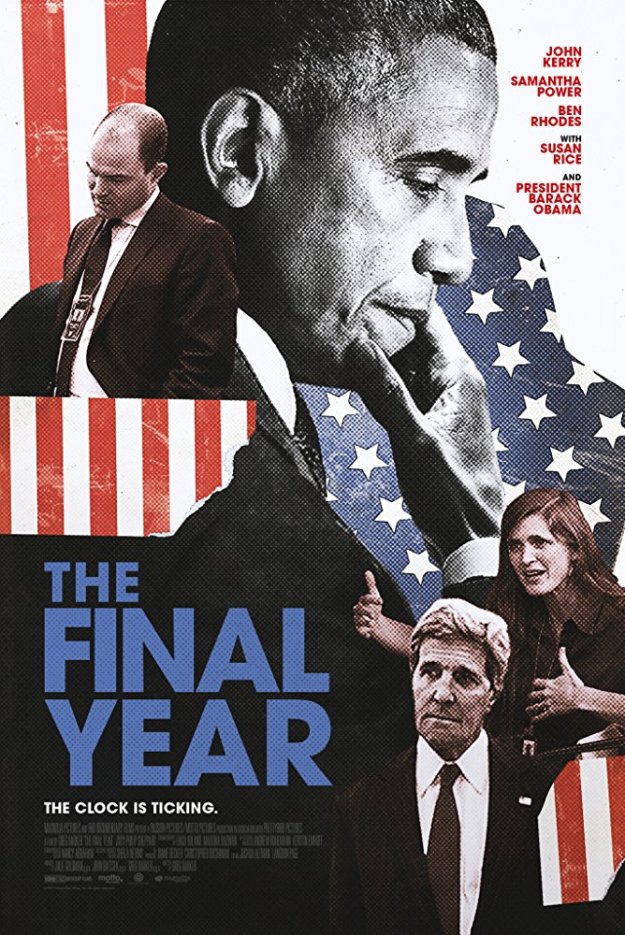
A widely reported, 15,000-word article by Josh Meyer in Politico on Sunday moves us another step closer to finding out the actual terms of President Barack Obama’s nuclear deal with the Islamic Republic of Iran.

Though the Obama administration sold the Iran deal on the narrowest possible terms as an arms control agreement, the reality was that this agreement was intended to facilitate a strategic tilt in Iran’s favour—against traditional allies—that left a regional balance requiring less American commitment.

Because the administration wanted the paper agreement, Iran had the leverage to threaten to walk away, and was therefore appeased on multiple fronts ostensibly unrelated to the nuclear issue.

Continue reading

Coalition, Hindered By the Syrian Regime, Kills Islamic State Leaders

By Kyle Orton (@KyleWOrton) on 19 December 2017

Maghaweer al-Thawra fighters next to American forces at at-Tanf. (Hammurabi’s Justice News/AP)

The U.S.-led Coalition against the Islamic State (IS) has killed several more leaders of the terrorist group, but continues to find that the campaign is hindered by the incompetence and/or complicity of the regime of Bashar al-Asad and his supporters in Iran and Russia. Continue reading

A Year In, Trump’s Syria Policy Looks A Lot Like Obama’s

Originally published at Ahval

By Kyle Orton (@KyleWOrton) on 18 December 2017

Nearly a year into Donald Trump’s administration, the president has followed the track laid down by his predecessors in Syria, accelerating it in some cases, and reinforcing the negative trends of Barack Obama’s defective policy that will undo even apparent successes, like the destruction of the Islamic State’s (ISIS) “caliphate”. Continue reading

America’s Kurdish Allies in Syria Drift Toward the Regime, Russia, and Iran

By Kyle Orton (@KyleWOrton) on 10 December 2017

Russian soldiers in Efrin, Syria, 1 May 2017 (source)

The American-led Coalition against the Islamic State (IS) partnered with the “Syrian Democratic Forces” (SDF), a political façade for the proscribed Kurdistan Workers’ Party (PKK), as the ground force in Syria. The most ventilated problems with this partnership so far have been the strain it has put on relations with NATO ally Turkey, against which the PKK has run a terrorist-insurgency for more than thirty years, and the deep local suspicion of the PKK’s governing program that might yet reverse the gains against IS and open political space for other jihadists like al-Qaeda. Another of the problems is now gaining salience: the PKK’s long-term alliance with Bashar al-Asad’s regime and the states—Russia and Iran—that keep it alive. Continue reading

Another Product of “Londonistan”: Abdullah Ibrahim al-Faisal

By Kyle Orton (@KyleWOrton) on 8 December 2017

Abdullah al-Faisal

The U.S. Treasury Department sanctioned Abdullah Ibrahim al-Faisal (born: Trevor William Forrest), a Jamaican cleric who supports the Islamic State (IS) on 5 December. This was long overdue. Al-Faisal’s record of disseminating jihadist ideology, and influencing and/or interacting with terrorists, goes back several decades. And since 2014, al-Faisal has been one of IS’s influential English-language propagandist-recruiters. Continue reading

Hay’at Tahrir al-Sham Gives Its Version of Its Own History and Ties to Al-Qaeda

By Kyle Orton (@KyleWOrton) on 5 December 2017

Abdurraheem Atun

Abd al-Rahim Atun (Abu Abdallah al-Shami), the leading cleric of Hayat Tahrir al-Sham (HTS), released a statement on 29 November 2017, dated 13 October 2017, laying out the history of HTS, its evolution from Jabhat al-Nusra to Jabhat Fatah al-Sham to HTS, and its relationship with al-Qaeda. Atun’s statement was a response to a speech a day earlier by al-Qaeda’s leader, Ayman al-Zawahiri, which said that HTS remained bound to him and al-Qaeda through a bay’a (oath of allegiance) and HTS’s attempts to get out of this were un-lawful manipulations of the kind used by the Islamic State. Atun’s statement was translated by Al-Maqalaat and an edited version is posted below. Continue reading