Tag Archives: Iran

Profile of Hudayfa al-Batawi, Former Islamic State Emir of Baghdad

By Kyle Orton (@KyleWOrton) on January 29, 2017

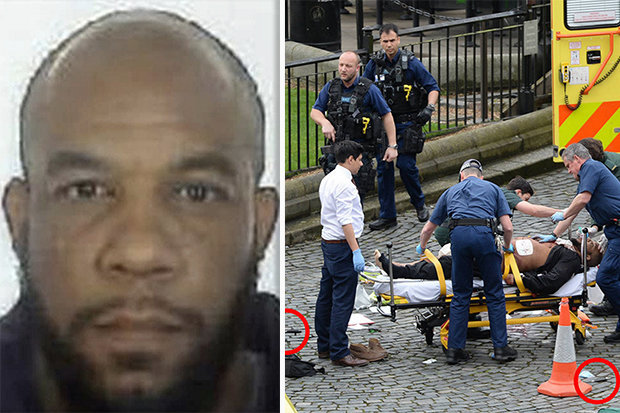
hudayfa-al-batawi-1

Hudayfa al-Batawi was among the Iraqis who joined the Islamic State (IS) movement early after the fall of Saddam Husayn, having been a long-time Salafist extremist. Al-Batawi rose through the ranks and became the emir of Baghdad, involved in some of the worst attacks in that city in 2009 and 2010. Arrested in late 2010, al-Batawi was killed in a prison riot in 2011. Continue reading

The Flag of the Islamic State

By Kyle Orton (@KyleWOrton) on January 27, 2017

The Islamic State’s June 2014 declaration that the areas it controlled were the restored “Caliphate” was seen by many as a novel development. In fact, “the State” was declared in October 2006. The next month, the predecessor of the Islamic State (IS), Al-Qaeda in Mesopotamia (AQM), dissolved itself, and a month after that the claim to statehood was expanded upon—while being wilfully ambiguous about the caliphal pretensions—in the first speech by the then-emir, Hamid al-Zawi (Abu Umar al-Baghdadi). Similarly, though confusion remains on the point, it was in this same period that the symbol of the Islamic State, its black flag, was established.

Continue reading

What to Expect in Syria in 2017

By Kyle Orton (@KyleWOrton) on January 25, 2017

Syria has broken down as a functioning entity. There were some who saw in the takeover of Aleppo City last month by the coalition of states and militias that supports Bashar al-Assad’s regime the beginning of the end of the war. The pro-Assad coalition will make further territorial gains in 2017, but peace—even the peace of the graveyard—is still a long way off, and unlikely to ever arrive while Assad remains in power. The West, unwilling and apparently unable to remove him, nonetheless has vital interests in Syria that cannot be outsourced and must be secured by navigating a fragmented state. Continue reading

Ahrar al-Sham Explains It’s Position On A Merger With Al-Qaeda

By Kyle Orton (@KyleWOrton) on January 14, 2017

Ahrar al-Sham's leader, Ali al-Umar (Abu Ammar)

Ahrar al-Sham’s leader, Ali al-Umar (Abu Ammar)

The Syrian media activist Hadi al-Abdullah interviewed Ahrar al-Sham’s leader, Ali al-Umar (Abu Ammar al-Umar), in a video released on 11 January 2017. The focus was the ongoing negotiations with Jabhat Fatah al-Sham (JFS), al-Qaeda’s rebranded Syrian branch, to create an insurgent merger. The question has caused intense turmoil within Ahrar. Continue reading

International Taboo on Chemical Weapons Frays As U.S. Steps Back

By Kyle Orton (@KyleWOrton) on January 13, 2017

Yesterday, the United States Treasury Department imposed sanctions on eighteen senior officials in the regime of Bashar al-Assad. The sanctions come in response to reports in August and October 2016 by the Organization for the Prohibition of Chemical Weapons (OPCW), the United Nations investigative body, which found that found “the Syrian government, specifically the Syrian Arab Air Force, was responsible for three chlorine gas attacks in Talmenes on April 21, 2014, and in Qmenas and Sarmin on March 16, 2015.” This is three years after the Assad regime was spared punitive military strikes for its use of chemical weapons under a Russian-orchestrated “deal” that ostensibly disarmed Assad of such weapons. Continue reading

The Assad Regime Admits to Manipulating the Islamic State

By Kyle Orton (@KyleWOrton) on January 6, 2017

Khaled Abboud

From the beginning of the uprising in Syria in 2011, there have been accusations that Bashar al-Assad’s regime was in a de facto partnership with the Islamic State (IS) against the mainstream opposition. These accusations have a considerable basis in fact: during the entirety of the Anglo-American occupation of Iraq, Assad collaborated with IS jihadists in the destabilization of Iraq, killing thousands of Iraqi civilians and hundreds of American and British troops. Once the Syrian uprising was underway, the regime undertook various measures to bolster extremists in the insurgency. Assad and IS worked in tandem to leave Syria as a binary choice between themselves: Assad was sure this would rehabilitate him in the eyes of the world and transform his criminal regime into a partner of the international community in suppressing a terrorist insurgency, and IS wanted to rally Sunnis to its banner. The Secretary of the Syrian Parliament has now come forward to underline this. Continue reading

A Counterterrorism Policy in Syria That Helps Terrorists

Originally published at The Henry Jackson Society

By Kyle Orton (@KyleWOrton) on January 5, 2017

Jabhat al-Nusra jihadists wave their flag in Syria (Associated Press picture, source)

In the last week, the American-led Operation INHERENT RESOLVE, whose primary mission is to “degrade and ultimately destroy” the Islamic State (IS), has apparently conducted two airstrikes against senior members of Jabhat Fatah al-Sham (JFS), once known as Jabhat al-Nusra, al-Qaeda’s rebranded presence in Syria. In late 2016, the U.S. began an intensified targeting campaign against al-Qaeda and associated individuals; this appears to be a continuation of that policy, which provides some guidance about Western policy on Syria more broadly. Continue reading

Insurgent Leader Explains Why Aleppo Fell to Assad

By Kyle Orton (@KyleWOrton) on December 31, 2016

Abu al-Abed Ashidaa

Abu al-Abed Ashidaa

Abu al-Abed Ashidaa was, on 1 December 2016, appointed to lead all insurgent forces, under the banner of al-Jaysh al-Halab (The Army of Aleppo), in the besieged enclave of eastern Aleppo City. The city’s defences collapsed to the coalition of forces—namely Russia and Iran—supporting the regime of Bashar al-Assad on 12 December, and on 22 December the deportation of 40,000 people from the enclave to Idlib was completed. On 29 December, Abu al-Abed gave a speech explaining the reasons as he saw them for the fall of Aleppo City. Today, insurgent channels in Syria circulated an English summary, which is reproduced below with some editions in transliterations and some interesting sections highlighted in bold. Continue reading

President Obama Defends His Syria Policy to the Last

Originally published at The Henry Jackson Society

By Kyle Orton (@KyleWOrton) on December 17, 2016

At a rally in Pennsylvania as part of his “Thank You Tour” on Thursday, President-elect Donald Trump said:

We’ll build safe zones in Syria. When I look at what’s going on in Syria it’s so sad. It’s so sad, and we’ve got to help people. And we have the Gulf states; they have nothing but money. We don’t have money. We owe twenty trillion dollars. I will get the Gulf states to give us lots of money, and we’ll build and help build safe zones in Syria so people can have a chance.

Trump’s previous statements on Syria have actually demonstrated some consistency, and Trump has expressed support for safe zones before.

Taking Trump’s statement as a jumping-off point, the next day, at this final press conference of 2016, President Barack Obama was asked about the idea of safe zones in Syria and if he felt responsible for the horrors now unfolding in Aleppo. Obama responded: Continue reading

The Islamic State’s Media Apparatus and its New Spokesman

Originally published at The Henry Jackson Society.

By Kyle Orton (@KyleWOrton) on December 16, 2016

1

The Islamic State (IS) has named a new official spokesman, Abu Hassan al-Muhajir. Abu Hassan is the fourth man to hold the position of spokesman within the IS movement, and the third since it declared statehood in 2006. Very little is known about Abu Hassan but assessing the history of IS’s media enterprise offers some hints about his profile. In this regard, a new paper by Dr. Craig Whiteside of the International Centre for Counter Terrorism Terrorism is instructive. Looking forward, examining Abu Hassan’s inaugural speech offers some clues about the direction IS’s messaging and behaviour will take now as its statelet shrinks under pressure from the U.S.-led Coalition. Continue reading