Tag Archives: Iran

The Dangers of Emptying Guantanamo

By Kyle Orton (@KyleWOrton) on August 17, 2016

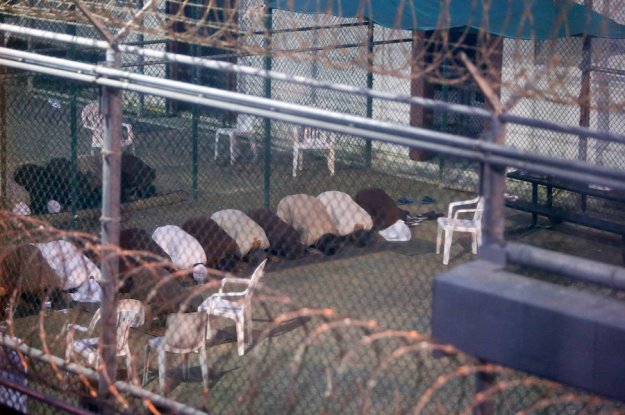
It was announced on 15 August that fifteen more inmates from the Guantanamo Bay detention facility have transferred, twelve Yemenis and three Afghans, to the United Arab Emirates, the largest individual release of the Obama administration. The U.A.E. also took in five “lower-level” Yemeni detainees in November. The Emirates had previously taken in just one—Abdullah al-Hamiri, in 2008—but President Obama leveraged this deal with the Gulf states at the May 2015 meeting when the Khaleejis were deeply concerned about the then-impending Iran nuclear deal, and in exchange for security reassurances, Obama extracted further concessions.

One reason why so many jihadists have been released to the U.A.E., other than having a similar language and culture, is because the U.A.E. has a competent security apparatus to monitor these people. Those released last November were kept in “a custodial rehabilitation program“—a version of house-arrest, basically. The conditions this time around are less clear.

What is clear is just how dangerous the operatives who are being let out of the Guantanamo detention facility are. Every single one of them has been assessed as posing a “high” risk to America, her interests, and her allies. Continue reading

The West’s Kurdish Allies in Syria Can’t Escape Their Authoritarian Legacy

By Kyle Orton (@KyleWOrton) on August 13, 2016

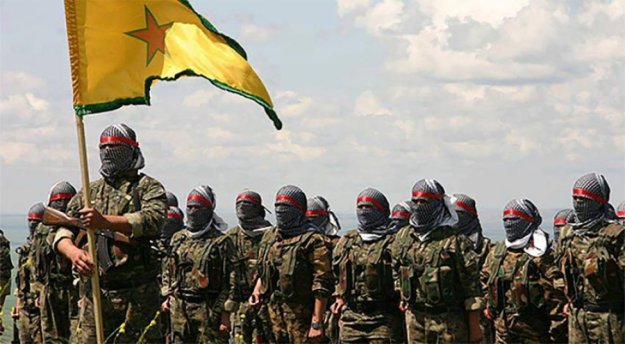
PYD/YPG fighters

PYD/YPG fighters

The Islamic State (IS) was driven from the city of Manbij yesterday, a key supply route to the Turkish border in northern Syria, the conclusion of an operation launched on 31 May by the Syrian Democratic Forces (SDF), a front-group for the Kurdistan Workers’ Party (PKK), represented in Syria by the Democratic Union Party (PYD) and its armed wing, the People’s Protection Units (YPG). The SDF was backed by U.S. airstrikes. It is difficult not to see the defeat of IS as a positive development. It is, however, worth more closely examining the forces that are being enabled by Western power to fasten their rule across northern Syria, whose vision is deeply problematic—even in narrow terms of the fight against IS. Continue reading

Ahrar al-Sham and Al-Qaeda

By Kyle Orton (@KyleWOrton) on August 12, 2016

The Islamic State’s (IS) weekly newsletter, al-Naba, interviewed a high-ranking al-Qaeda defector, Abu Ubayda al-Lubnani, across two issues in February and March 2016. Abu Ubayda announced his defection from al-Qaeda to IS in April 2014 via al-Battar and Abu Ubayda’s name appeared on a list of prominent clerics supporting IS’s caliphate declaration that was circulated not long after the declaration. Abu Ubayda is described by al-Naba—as best as can be told accurately—as having been a member of al-Qaeda’s Shura or Consultation Council, a training officer in its Military Committee, and a counter-intelligence officer. Abu Ubayda is advertised as speaking about many secret aspects of al-Qaeda.

Among the topics Abu Ubayda covers is the alleged infiltration and manipulation of al-Qaeda by foreign intelligence services, specifically Pakistan’s Inter-Services Intelligence (ISI), which is not only a violation of jihadist doctrine by collaborating with an “infidel” and illegitimate state but led to the deaths of a number of senior al-Qaeda leaders.

Perhaps the most intriguing aspect of what Abu Ubayda has to say relates to al-Qaeda’s attempt to take advantage of the Syrian revolution. This persistent campaign has followed a pattern of disguising al-Qaeda’s presence and attempting to influence and eventually co-opt the rebellion against Bashar al-Assad’s regime. One lever al-Qaeda relied upon, according to Abu Ubayda, was Ahrar al-Sham, an organization that disclaims all connections to al-Qaeda and dissimulates about its ideology. Whatever Ahrar’s dominant ideology, it is simply a fact that it has served as the bridge between the foreign-led jihadists and Syrian Islamists, and its connections to al-Qaeda are evident enough. Abu Ubayda suggests Ahrar’s connections to al-Qaeda are even deeper than they appear. Continue reading

Al-Qaeda Rebrands, Marches on in Syria

By Kyle Orton (@KyleWOrton) on August 2, 2016

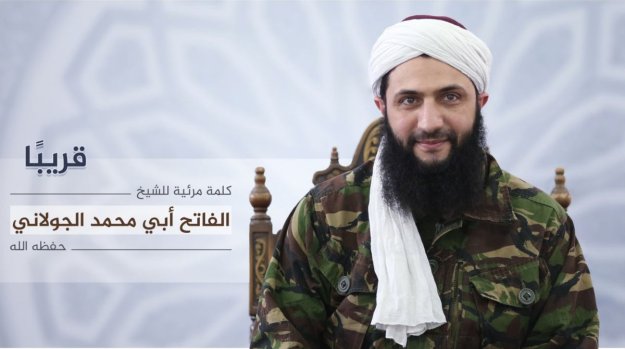
First ever picture of the leader of Jabhat al-Nusra (al-Qaeda in Syria), Ahmad al-Shara (Abu Muhammad al-Jolani), 28 July 2016

First ever picture of the leader of Jabhat al-Nusra (al-Qaeda in Syria), Ahmad al-Shara (Abu Muhammad al-Jolani), 28 July 2016

The leader of Jabhat al-Nusra (al-Qaeda in Syria), Abu Muhammad al-Jolani, whose real name is Ahmad al-Shara, ostensibly broke the link between his organization and al-Qaeda last week. This is another stage in al-Qaeda’s long-term strategy of embedding itself into local societies so that it can more effectively reshape the faith and shield itself from the international community. Continue reading

A Rebel Crime and Western Lessons in Syria

By Kyle Orton (@KyleWOrton) on July 24, 2016

Abdullah Issa on the back of a truck with Harakat Nooradeen al-Zengi fighters who will soon behead him

Abdullah Issa on the back of a truck with Harakat Nooradeen al-Zengi fighters who will soon behead him

A horrifying video emerged on Tuesday of a teenage boy being beheaded. This had occurred the day before around Handarat in Aleppo, northern Syria. The boy had been fighting for Liwa al-Quds, a militia of the regime of Bashar al-Assad, composed mostly of Palestinians from the Nayrab camp and likely also from the unofficial settlement at Ayn al-Tal near Handarat. The rebel group that took him captive and then murdered him was Harakat Nooradeen al-Zengi, which had previously received support, including TOW anti-tank missiles, from the United States’ covert program run by the Central Intelligence Agency, though that support ended nearly a year ago. The episode is important in itself, and underlines some trends, namely al-Zengi’s evolution and the dynamics underway in northern Syria, where the U.S. is preparing to intensify its de facto policy of collaborating pro-Assad coalition against Jihadi-Salafist terrorist groups, which are strengthening al-Qaeda. Continue reading

The Islamic State is Losing Militarily, Gaining Politically

By Kyle Orton (@KyleWOrton) on June 29, 2016

The New York Post had a symposium on the progress of the U.S.-led campaign against the Islamic State. This is my contribution:

The American-led effort to defeat the Islamic State is yielding significant tactical and military results. But the campaign is deeply flawed: It’s being waged as if the politics can be worked out after the fall of ISIS’s statelet, and in the process providing ISIS the conditions that will ensure its revival. Continue reading

Is the Islamic State About to Kill Itself?

By Kyle Orton (@KyleWOrton) on June 7, 2016

Abd al-Rahman al-Qaduli, Amr al-Absi, Tarkhan Batirashvili

Abd al-Rahman al-Qaduli, Amr al-Absi, Tarkhan Batirashvili

The Associated Press reported on Sunday that after a senior Islamic State (IS) commander was struck down by the international coalition in March it set off a witch-hunt inside the organization that led to the killing of thirty-eight IS jihadists at the hands of their own leaders. By AP’s account, IS is now consumed with internal suspicion. The story has some problems, however. Continue reading

Islamic State Prepares for Retreat, Calls for Foreign Terrorism

By Kyle Orton (@KyleWOrton) on May 23, 2016

1

Taha Falaha (Abu Muhammad al-Adnani) is the governor Islamic State-held territory in Syria and oversees the foreign attacks, a roster of duties which indicates that Falaha so powerful that he is effectively the caliph’s deputy after the demise of Abd al-Rahman al-Qaduli (Abu Ali al-Anbari) in March. Falaha is also IS’s official spokesman, and on 21 May 2016 he gave a very significant speech entitled, “That They Live By Proof”. The speech, released by Al-Hayat Media Centre, is reproduced below with some minor alterations in transliteration, some important sections highlighted in bold, and some notes added for explanation.

Falaha made three major points. First, Falaha was especially adamant that territorial control by IS should not be considered a measure of IS’s success: it lost all urban holdings and went into the deserts last time, after the strategic defeat in 2008, but it held to its cause and America withdrew, and this ideological cohesiveness and determination led it to be more powerful than ever within five years. Second, Falaha made use of the savage conduct of the coalition made up of the Assad regime, Iran, and Russia—and the Western indifference to same—to argue for Sunnis to see IS as a protective barrier against such sectarian foes. And, third, Falaha called for foreign attacks by Western Muslims, saying that if IS’s loyalists were unable to journey to IS-held areas this should not be considered a problem since attacks in the West are “more beloved to [IS] than the biggest act done [within the caliphate]”. Continue reading

The Passing of Hizballah’s Old Guard

By Kyle Orton (@KyleWOrton) on May 15, 2016

Hizballah's military commander (2008-2015) Mustafa Amine Badreddine

Hizballah’s military commander (2008-2015) Mustafa Amine Badreddine

Mustafa Badreddine, the military commander of Hizballah, was announced killed in Syria on 13 May. This is the third major casualty of the founding generation: Imad Mughniyeh, Badreddine’s predecessor and also his cousin and brother-in-law (Mughniyeh married Saada, Badreddine’s sister), was killed in February 2008 in Damascus in an operation led by MOSSAD and supported by the CIA, and Hassan al-Laqqis, who had become one of the Party of God’s military officials in Syria, was gunned down outside his home in Beirut in December 2013. For all the speculation about “Ahrar al-Sunna Baalbek Brigade” and its links to Kataib Abdullah Azzam and al-Qaeda—or Saudi intelligence, as Hassan Nasrallah had it—the likeliest suspect was never in doubt. Hizballah has also lost other senior and propagandistically important men like Samir Kuntar, who was killed in an explosion in Damascus in December 2015. Again, however, there seemed little doubt—even from Hizballah—that Israel had done this. Continue reading

Saddam Hussein Prepared the Ground for the Islamic State

By Kyle Orton (@KyleWOrton) on April 26, 2016

This essay, written to tie together my work on the relationship between the Saddam Hussein regime and the Islamic State, was completed last summer and submitted to an outlet, where it entered a form of development hell. After giving up on that option late last year, the opportunity arose to get a shorter version published in The New York Times in December. But I procrastinated too long over what to do with the full essay and a recent change in my work situation means I no longer have the bandwidth to go through the process of finding it a new home, so here it is.

“Abu-Bakr al Baghdadi is a product of the last decade of Saddam’s reign,” argues Amatzia Baram, a scholar of Iraq. He is correct in at least three ways. First, in its last decade in power, the Iraqi Ba’ath regime transformed into an Islamist government, cultivating a more religious, sectarian population on which the Islamic State (ISIS) could draw. Part of Saddam Hussein’s “Faith Campaign” also involved outreach to Islamist terrorists, including al-Qaeda, which meant that the synthesis of Ba’athism and Salafism that fused into the Iraqi insurgency after the fall of Saddam was already well advanced by the time the Anglo-American forces arrived in Baghdad in 2003. Second, the ISIS leadership and military planning and logistics is substantially reliant on the intellectual capital grown in the military and intelligence services of the Saddam regime. And finally, the smuggling networks on which ISIS relies, among the tribes and across the borders of Iraq’s neighbours, for the movement of men and materiel, are directly inherited from the networks erected by the Saddam regime in its closing decade to evade the sanctions. The advantages of being the successor to the Saddam regime make ISIS a more formidable challenge than previous Salafi-jihadist groups, and one that is likely to be with us for some time.

Continue reading