Tag Archives: Iraq

What The West Can Do About The Iran Protests

By Kyle Orton (@KyleWOrton) on 2 January 2018

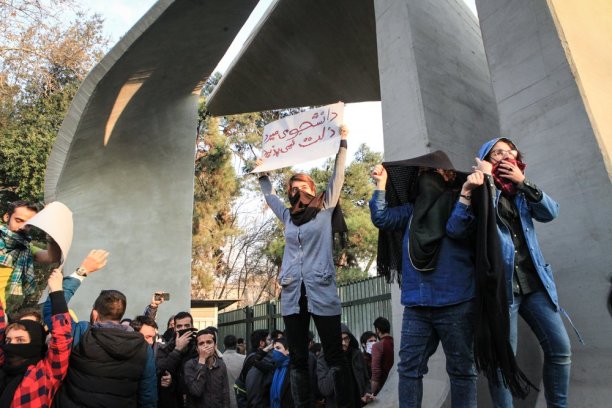
Protests in Tehran, Iran, 30 December 2017. (Photo by Stringer/Anadolu Agency/Getty Images)

Protests broke out against the Iranian government on 27 December, and have achieved a wider geographic spread in the country than even the massive uprising of June 2009, reaching into religiously conservative, working-class towns and districts traditionally regarded as pro-regime. It is likely these demonstrations will be suppressed, but that does not obviate the need for Western policy. To the contrary, the protests exposed several flawed assumptions in recent policy-making, and a course correction is urgently necessary. Continue reading

The Official Declaration that Made Abu Bakr al-Baghdadi Leader of the Islamic State

By Kyle Orton (@KyleWOrton) on 30 December 2017

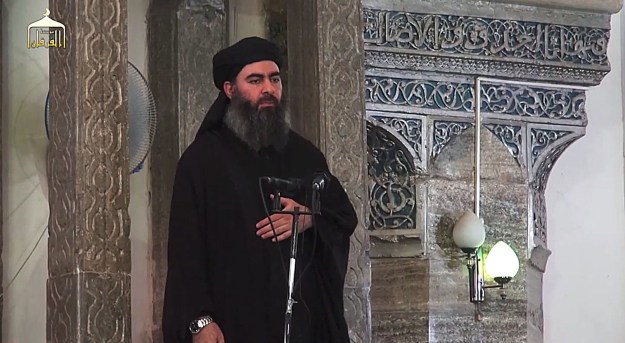
The leader of the Islamic State, Ibrahim al-Badri (Abu Bakr al-Baghdadi), speaking at the Zengi Mosque in Mosul, 4 July 2014 // AP Images

The current leader of the Islamic State (IS), Ibrahim al-Badri (Abu Bakr al-Baghdadi), was appointed as al-amir al-mu’mineen (the commander of the faithful or prince of the believers) on 16 May 2010, after his predecessor, Hamid al-Zawi (Abu Umar al-Baghdadi), was killed on 18 April 2010 in the company of his deputy and “war minister”, Abdul Munim al-Badawi (Abu Hamza al-Muhajir). The official statement appointing al-Badri is reproduced below. Continue reading
Islamic State Claims its Switch to Insurgency and Terrorism is Working

By Kyle Orton (@KyleWOrton) on 30 December 2017

Al-Naba 112, page 3

The 112th edition of the Islamic State’s newsletter, Al-Naba, released on 29 December 2017 contained an article on page 3, which reported that the reversion from statehood to insurgency was yielding results, particularly in the Diyala, Kirkuk, and Saladin provinces of Iraq. The article is reproduced below. Continue reading

The Islamic State Says the Loss of the Caliphate Does Not Mean Defeat

By Kyle Orton (@KyleWOrton) on 16 December 2017

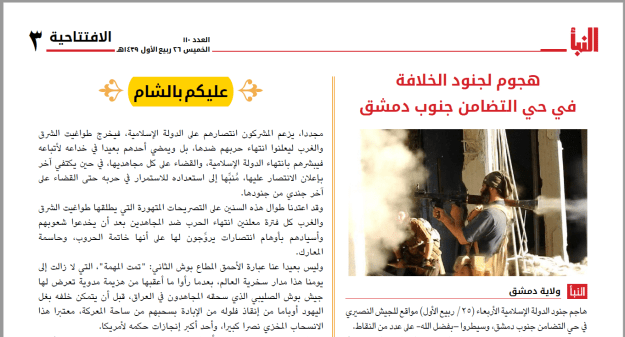
Ak-Naba 110, page 3

The Islamic State newsletter, Al-Naba, had an article on page 3 of its 110th edition, released on 15 December, which mocked those who have declared that the Islamic State is finished, pointing out that it has survived such obituaries before. A rough translation of the article is produced below. Continue reading
The First Islamic State Beheading Video

By Kyle Orton (@KyleWOrton) on 13 December 2017

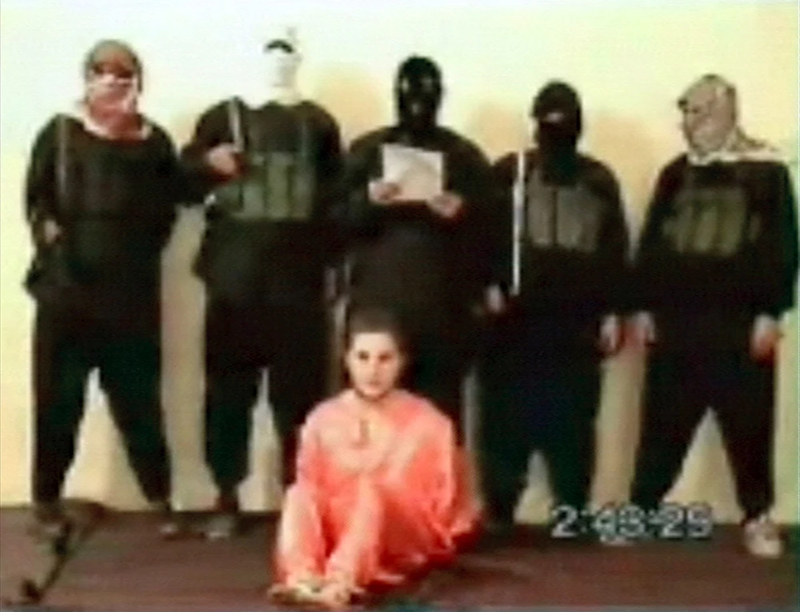
The Islamic State (IS) triggered the war against its “caliphate” by disseminating footage of its jihadists beheading an American journalist, James Foley, on 19 August 2014. Over the next three months, five more Western hostages were decapitated on video. This was shocking to many, but it should not have been. IS began producing snuff videos like this a decade earlier.

The first video beheading by the Islamic State movement—known at the time as Jamaat al-Tawhid wal-Jihad or JTJ (the Group of Monotheism and Holy War)—was released on 11 May 2004; the murderer in the video was IS’s founder, Abu Musab al-Zarqawi; and he gave a brief statement to accompany his crime, later published under the title, “A Word in the Tape of the Beheading of Nicholas Berg (Kalima fi sharit nahr Nicholas Berg)”. Berg was an American civilian who went to Iraq as a freelance engineer.

Continue reading

The Islamic State Responds to America Moving its Israeli Embassy to Jerusalem

By Kyle Orton (@KyleWOrton) on 9 December 2017

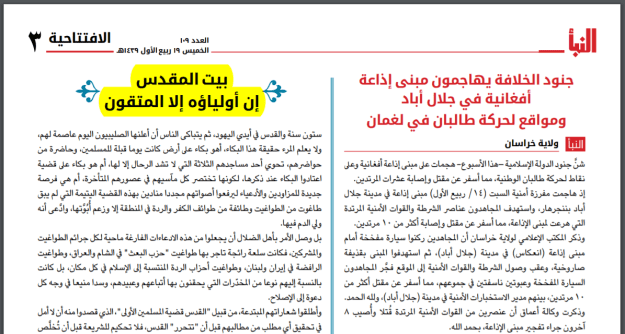
Al-Naba 109, 8 December 2017

The Islamic State responded to President Donald Trump’s announcement, on 6 December 2017, that the United States would move its Embassy in Israel from Tel Aviv and Jerusalem, with an editorial on page 3 of the 109th edition of Al-Naba on 8 December 2017. Below is a very rough translation. Continue reading

Another Product of “Londonistan”: Abdullah Ibrahim al-Faisal

By Kyle Orton (@KyleWOrton) on 8 December 2017

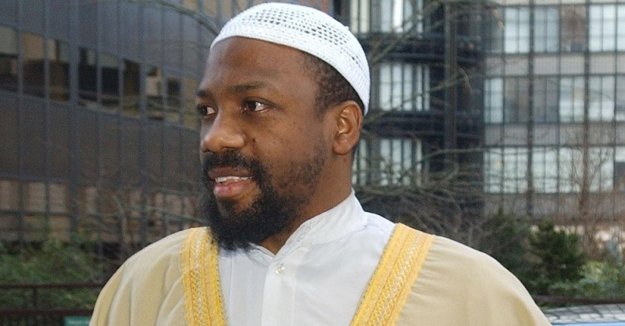
Abdullah al-Faisal

The U.S. Treasury Department sanctioned Abdullah Ibrahim al-Faisal (born: Trevor William Forrest), a Jamaican cleric who supports the Islamic State (IS) on 5 December. This was long overdue. Al-Faisal’s record of disseminating jihadist ideology, and influencing and/or interacting with terrorists, goes back several decades. And since 2014, al-Faisal has been one of IS’s influential English-language propagandist-recruiters. Continue reading

Qatar and the Gulf Crisis

By Kyle Orton (@KyleWOrton) on 30 November 2017

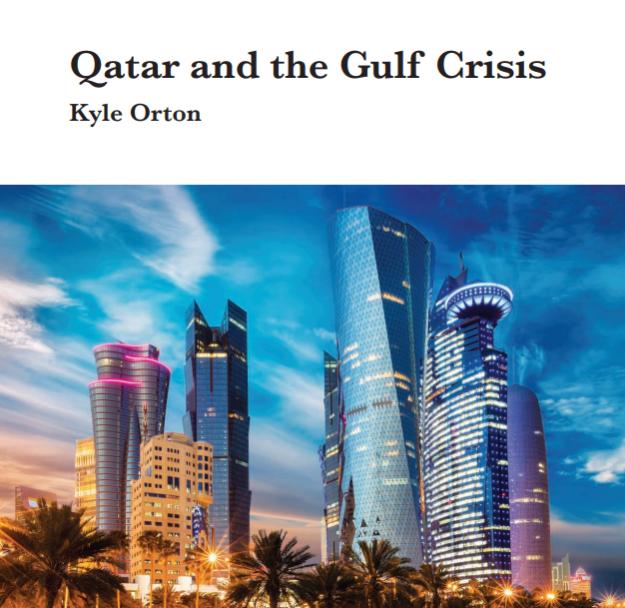
I released a report today, published by the Henry Jackson Society, Qatar and the Gulf Crisis. The intent was to examine the charges made against the Qatari government by its Gulf neighbours with regard to the funding of terrorism, the hosting of extremists, the dissemination of hate speech and incitement, among other things. Having separated fact from fiction with regards to he accusations against Qatar, the report proposes how Britain might proceed in such a way as to press Doha on issues of concern, while avoiding being drawn into the middle of the Gulf dispute, and trying to foster reconciliation between allies, especially at a time when a united front is necessary to oppose the far larger challenge of the Iranian theocracy.  Continue reading

Al-Qaeda Instructs the Islamic State’s Predecessor Not to Attack Iran

By Kyle Orton (@KyleWOrton) on 21 November 2017

Usama bin Ladin, Qassem Sulaymani

Among the documents recovered from Usama bin Ladin’s compound in Abbottabad was the “Letter to Karim”, dated 18 October 2007. The letter was released in 2015 by the Office of the Director of National Intelligence (ODNI). “Karim” likely refers to Abdul Munim al-Badawi (Abu Hamza al-Muhajir), the leader of al-Qaeda in Mesopotamia (AQM), the predecessor organization to the Islamic State, after the group’s founder, Ahmad al-Khalayleh (Abu Musab al-Zarqawi), was killed in June 2006. The letter is reproduced below with some interesting details highlighted in bold. Continue reading

Islamic State Officially Gives Up the Caliphate, Returns to Insurgency

By Kyle Orton (@KyleWOrton) on 15 November 2017

Al-Naba 101, page 8

In the 101st edition of the Islamic State’s weekly newsletter al-Naba (page 8-9), released on 12 October 2017, the organisation gave some fascinating details about how they responded to the “defeat” inflicted on them in 2007-08 by the American surge and the tribal Sahwa (Awakening) forces. The article describes how IS switched wholly to insurgent-terrorist tactics, dismantling its conventional fighting units and even its sniper teams in March 2008, and training in hit-and-run bombings. The leadership at that time, the emir Hamid al-Zawi (Abu Umar al-Baghdadi) and his deputy, the “first minister” and the “war minister” Abdul Munim al-Badawi (Abu Hamza al-Muhajir), encountered some initial scepticism, but the rank-and-file soon came on board when they saw its effectiveness. IS says that it is time to return to this form of warfare. In short, IS marked a switch in al-Naba 101 entirely from the statehood and governance phase of its revolutionary warfare, back into insurgency mode. The article is reproduced below. Continue reading