By Kyle Orton (@KyleWOrton) on 24 August 2022

Area on the banks of the Tigris where the cadets of Camp Speicher were massacred by the Islamic State || Scott Peterson/The Christian Science Monitor
By Kyle Orton (@KyleWOrton) on 24 August 2022
Area on the banks of the Tigris where the cadets of Camp Speicher were massacred by the Islamic State || Scott Peterson/The Christian Science Monitor
By Kyle Orton (@KyleWOrton) on 7 September 2021

Anti-Taliban fighters watch U.S. airstrikes at Tora Bora, 16 December 2001 || REUTERS/Erik de Castro
The State Department spokesman Ned Price said, on 27 August, “The Taliban and the Haqqani Network are separate entities”. The next day, the Pentagon Press Secretary John Kirby slightly modulated this, having first tried to dismiss the question, by conceding there was “a certain amount of … commingling … there’s a marbling … of Taliban and Haqqani”, before saying he was “pushing back … [on] the relevance of that discussion”.
What these officials were trying to do was two-fold: (1) to refute press reports that U.S. officials in Kabul had shared “a list of names of American citizens, green card holders, and Afghan allies” with the Taliban, amounting to having “put all those Afghans on a kill list”, as one “defense official” put it; and (2) to deny that the U.S. coordination with the Taliban to evacuate people the jihadists wanted to kill—a surreal enough situation—had involved the additional political and legal problems of coordinating with a formally registered Foreign Terrorist Organization (FTO), as the Haqqani Network is. Continue reading
By Kyle Orton (@KyleWOrton) on 17 August 2021
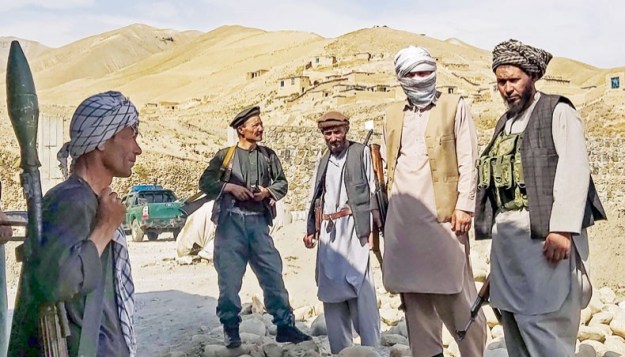
Afghan government forces guarding Taloqan, Takhar province, Afghanistan // July 2021 // AFP photo
Kabul fell to the Taliban on 15 August. There is so much more to be said about the disastrous decisions the United States that precipitated this calamity, not least the so-called peace process whose only concrete effects were to weaken and demoralise the Afghan government, while bolstering the ranks of the Taliban by forcing the release of thousands of jihadists. The chaotic Saigon scenes have testified to the incompetence of Joe Biden’s administration, even at administrative tasks, and the horrors are only just beginning.
This post has a slightly different focus, namely the role of Pakistan, specifically its military and Inter-Services Intelligence (ISI), as the author and operator of the Taliban and allied jihadists. This factor—absolutely fundamental to the conflict—has been, for twenty years, bizarrely absent in much of the coverage, and suggestions recur to this day that the Taliban is actually a problem for Pakistan. When the Pakistan dimension does come up, it will either be to note that Pakistan has some kind of role in funding or otherwise “supporting” the Taliban, and at its strongest the Taliban will be called a “proxy” of the ISI.
Even the word “proxy”, however, underplays the extent to which the Taliban is Pakistan, a wing of its (deep) state power. Continue reading
By Kyle Orton (@KyleWOrton) on 29 June 2021
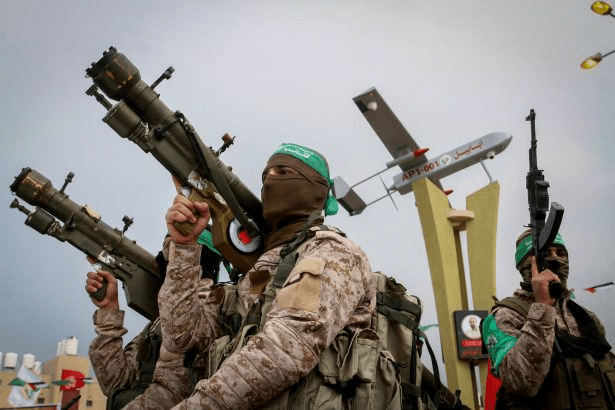
Members of the Ezzedine al-Qassam Brigades, the military wing of Hamas, at a memorial in Gaza, 31 January 2017. Photo by Abed Rahim Khatib, Flash90.
The May 2021 round of fighting in Gaza brought with it the upending of the unspoken understanding between Israel and Hamas and a level of intercommunal violence within Israel that has not been seen in quite some time. The scale of the rocket attacks on the Jewish state must also be counted among the unusual elements of this latest flare-up, with Iran clearly identifiable as the enabling state behind Hamas and Palestinian Islamic Jihad (PIJ), the two primary factions behind these attacks. Continue reading
By Kyle Orton (@KyleWOrton) on 8 June 2021
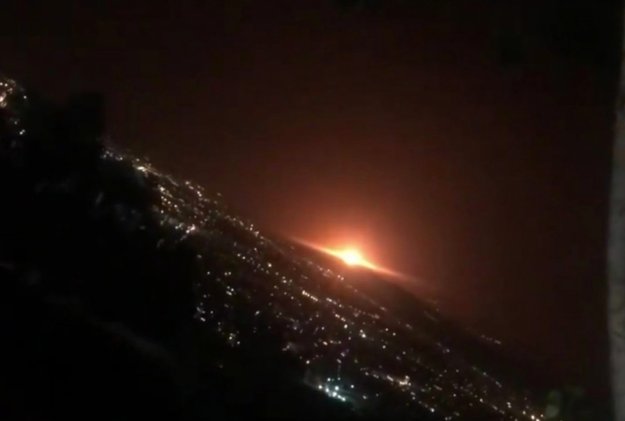
Massive explosion at Khojir in eastern Tehran lights up the night sky, 25 June 2021 [image source]
By Kyle Orton (@KyleWOrton) on 27 May 2021

Israel’s Iron Dome missile defence system [left] activates over southern Israel against incoming HAMAS rockets [right], 14 May 2021
By Kyle Orton (@KyleWOrton) on 3 May 2021
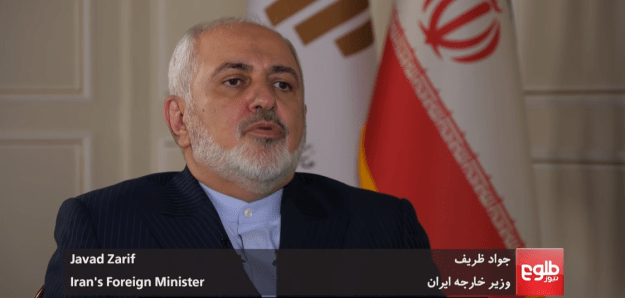
Iranian Foreign Minister Muhammad Javad Zarif, December 2020, during an interview with Lotfullah Najafizada of TOLO News
Iran’s Foreign Minister, Muhammad Javad Zarif, took part in an oral history project intended for internal use by the clerical dictatorship in February and on 25 April the audio was leaked—so goes the story. There is every reason to think this is a controlled leak, which is to say an information operation or a piece of strategic messaging—more pejoratively, propaganda or disinformation: choose the terminology as you will—intended to assist the Iranian theocracy as it works through its negotiations on the nuclear file with the new American administration of President Joe Biden. Still, there are some insights from this episode, as with an interview Zarif gave—focused on Afghanistan—in December. Continue reading
By Kyle Orton (@KyleWOrton) on 17 March 2021
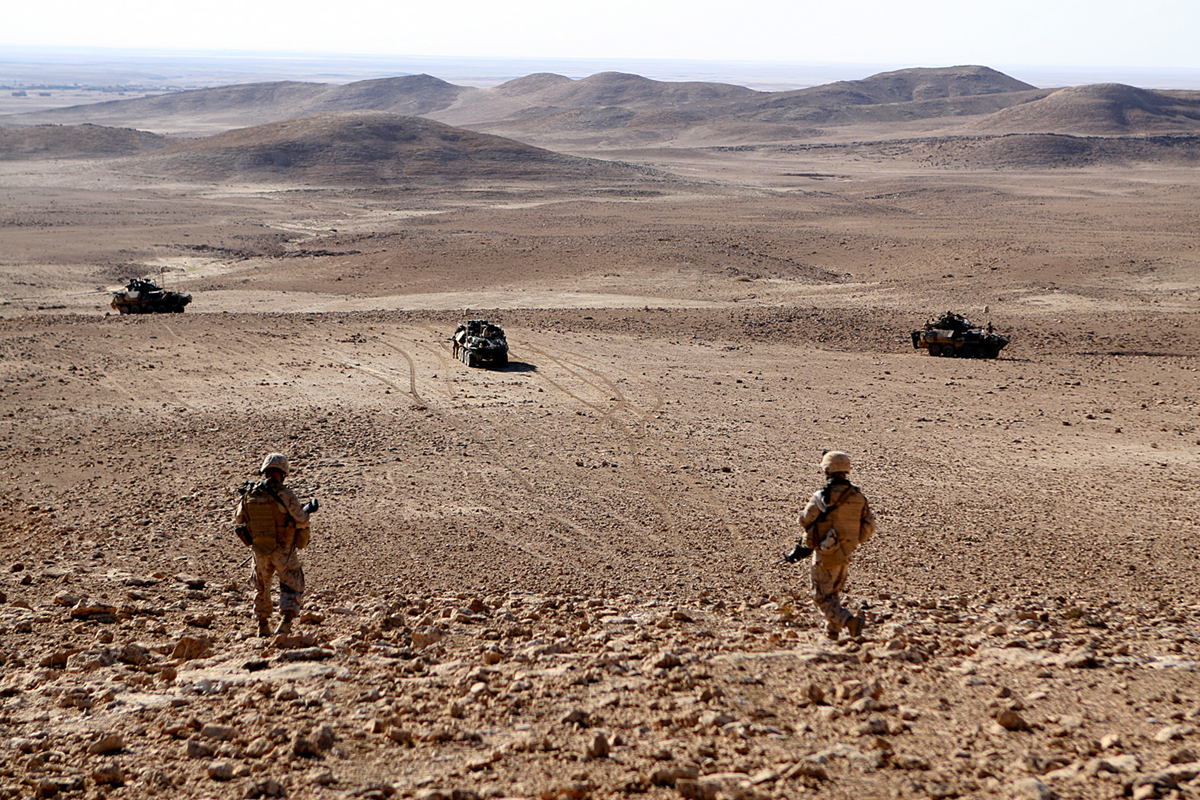
Abu Umar al-Baghdadi, the implied caliph of the Islamic State movement between 2006 and 2010, gave his sixteenth speech on 17 March 2009. The title of the speech was, “Harvest of the Good (The Gathering Will Be Defeated, and They Will Turn Their Backs and Flee)”.[1]
By Kyle Orton (@KyleWOrton) on 2 March 2021
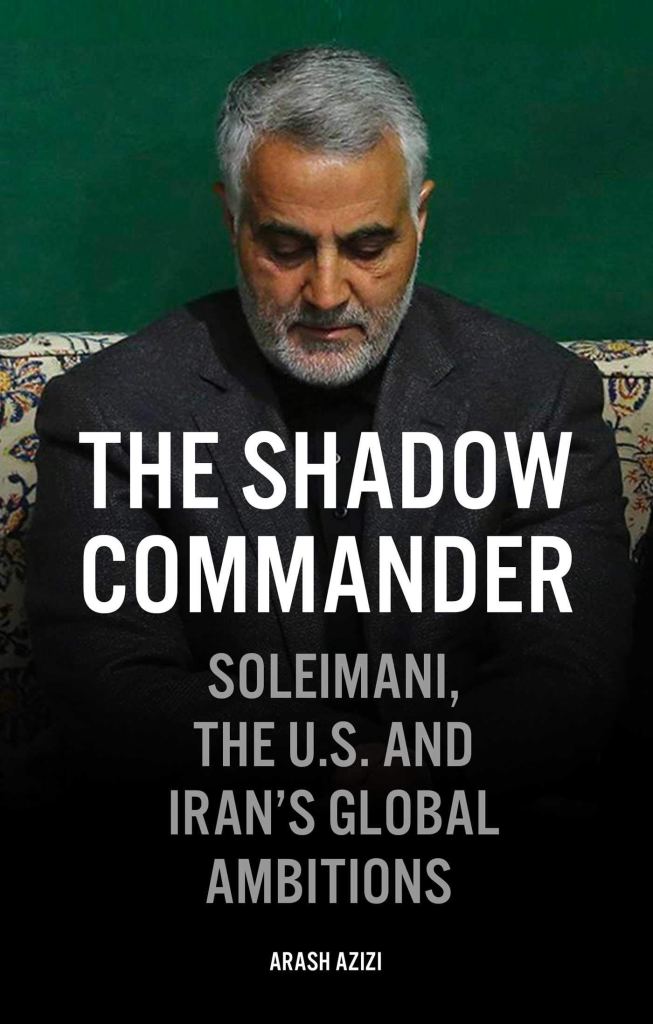
A year ago, U.S. President Donald Trump gave the order to kill Qassem Soleimani, the de facto deputy leader of Iran. Arash Azizi’s The Shadow Commander: Soleimani, the U.S., and Iran’s Global Ambitions is an effort to explain who Soleimani was, how he rose to controlling the lives of millions of people well outside the borders of Iran, and how in the end he was brought down. Continue reading
By Kyle Orton (@KyleWOrton) on 20 January 2021

Last week, as one of his last acts in office, U.S. Secretary of State Mike Pompeo gave a speech about Iran’s collaboration with Al-Qaeda. It was unfortunate that Pompeo did this at this time and in this way, with such blatant political intent, because the factual content of Pompeo’s speech was unassailable: the Islamic Republic’s long relationship with Al-Qaeda does stretch back about three decades, the killing of Al-Qaeda’s deputy Abdullah Ahmed Abdullah (Abu Muhammad al-Masri) in Tehran in August 2020 is demonstrative of a shift in the strategic positioning of the organisation away from Pakistan to Iran, and even the part of Pompeo’s speech that got the most pushback—about Tehran’s contact with the 9/11 killers—is not controversial and is not new.
Unmentioned in Pompeo’s speech was one of the crucibles that forged this relationship, and forged Al-Qaeda into something more than a regional menace, namely the Bosnian war of 1992-5. Continue reading
 Kyle Orton's Blog