Tag Archives: ISIS

The Folly of Trying to Buy Assad’s Loyalty From Iran

By Kyle Orton (@KyleWOrton) on 5 February 2019

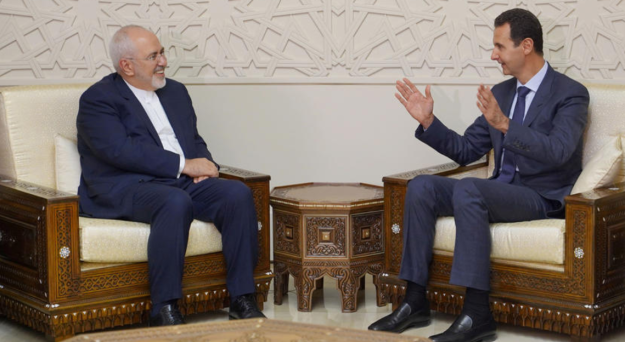
Bashar al-Assad meeting Iranian Foreign Minister Mohammad Javad Zarif, Damascus, Syria, 3 September 2018 // SANA handout to REUTERS

The Syrian regime of Bashar al Assad has nearly collapsed twice under pressure from the armed insurrection, in late 2012 and early 2015. On both occasions, Assad was rescued by outside powers, first Iran and then a joint Iranian-Russian operation. It has been a recurring illusion that there is or will be, a strategic split between Russia and Iran. This prospect has continued to tantalise the US and others, and occasional Moscow-Tehran disagreements are presented as evidence that dynamics are shifting this way. Another round of such speculation is currently underway. Continue reading

Can Russia Reconcile Turkey and Syria?

This article was published at Ahval under the headline, “Back to the Future for Turkey and Syria?”

By Kyle Orton (@KyleWOrton) on 1 February 2019

American base on the outskirts of Minbij, 26 December 2018. (Photo by Delil souleiman / AFP)

U.S. President Donald Trump’s surprise announcement that U.S. troops would be withdrawn from Syria came with many visible costs. The benefits the anti-Islamic State (ISIS) campaign has delivered to Syrian President Bashar Assad, Iran, and Russia were made permanent. There is also more space for ISIS and greater instability in northeast Syria as Turkey confronts Syrian Kurdish forces. And there is the political cost to the United States of leaving its Kurdish anti-ISIS partner to face Turkey and the pro-Assad coalition alone. Continue reading

Israel Returns to Africa

Published at The Arab Weekly

By Kyle Orton (@KyleWOrton) on 27 January 2019

Israeli Prime Minister Binyamin Netanyahu and Chadian President Idriss Deby meeting in N’Djamena, 20 January 2019 [AFP]

Diplomatic relations between Israel and Chad have been restored after a half century of separation. This was a symbolic breakthrough with a Muslim-majority African country, albeit one in the works for some time. It is an illumination of Israel’s changed geopolitical circumstances, some aspects sustainable, some more wishful and illusory.
Continue reading

The Consequences of American Withdrawal from Syria

A version of this article was published at CapX

By Kyle Orton (@KyleWOrton) on 21 December 2018

President Trump in a Twitter video saying fallen soldiers agree with his plan to withdraw from Syria, 19 December 2018 [image source]

“We have won against ISIS”, declared President Donald Trump in a Twitter video on Wednesday night. “We’ve taken back the land. And now it’s time for our troops to come back home.” After a day of reporting that the United States has decided on a rapid, total withdrawal from Syria, here was the confirmation. It is a policy course fraught with danger and very likely to lead to outcomes unfavourable to Western interests, whether defined in humanitarian or strategic terms.
Continue reading

Would Turkey Risk a Clash with America in Syria?

By Kyle Orton (@KyleWOrton) on 18 December 2018

Tel Abyad, Syria [source]

Turkish President Recep Tayyip Erdoğan has threatened a third military operation into Syria, this time in the east. The mobilisation of his proxies and other measures make clear that Erdoğan wants it to be believed he means it. The complication is that the intended target, the Syrian Democratic Forces (SDF), are the chosen partners of the United States-led coalition against Islamic State (ISIS), and U.S. soldiers are present in the area. Continue reading

Islamic State Claims the Strasbourg Christmas Market Attack

By Kyle Orton (@KyleWOrton) on 15 December 2018

Strasbourg Market, 11 December 2018 [image source]

The Islamic State (IS) has now claimed the 11 December shooting attack on the Christmas market in Strasbourg, north-east France. Continue reading

Why is Turkey Threatening a Third Incursion into Syria?

By Kyle Orton (@KyleWOrton) on 14 December 2018

The United States’ policy in Syria has been, as James Jeffrey, the Special Representative for Syria Engagement, explained recently, focused on “one mission”: the destruction of the Islamic State (Daesh).

The US attempted to pursue this counter-terrorism mission in isolation from the politics of the broader Syrian war. This failed, as it was bound to do, and it has laid the ground for a series of sub-conflicts, another of which might be about to erupt. Continue reading

The Russian Relationship with Israel: A History

By Kyle Orton (@KyleWOrton) on 12 December 2018

© AP Photo / Jim Hollander, Pool

Essay: “Zionism is Making Us Stupid”: The Russian Relationship with Israel from the Soviets to Putin Continue reading

How the Egyptian Dictatorship Helps the Islamic State

By Kyle Orton (@KyleWOrton) on 8 December 2018

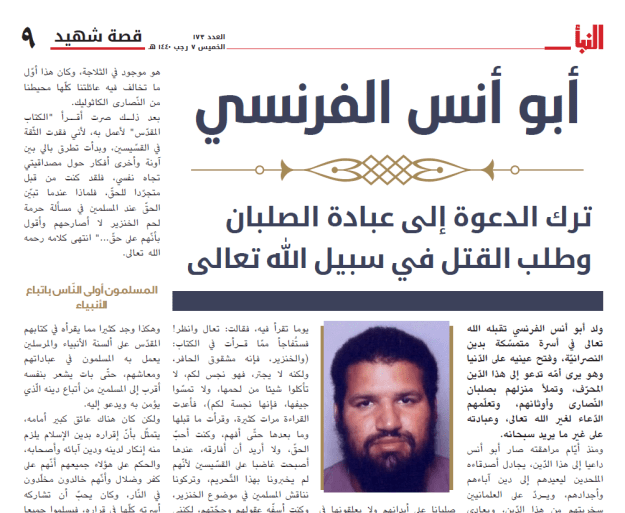
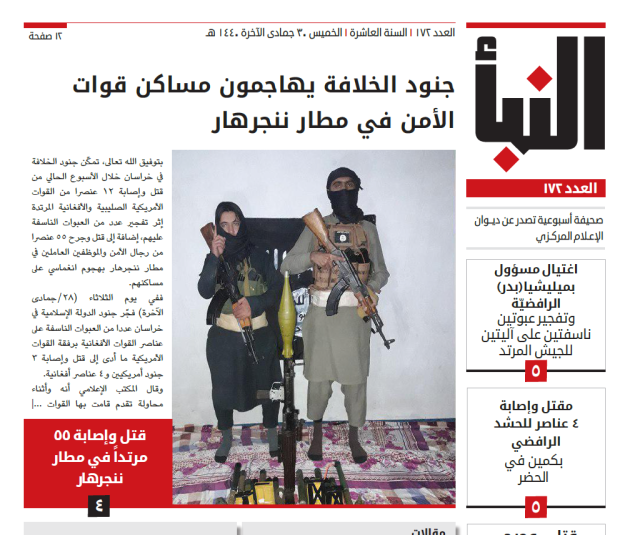
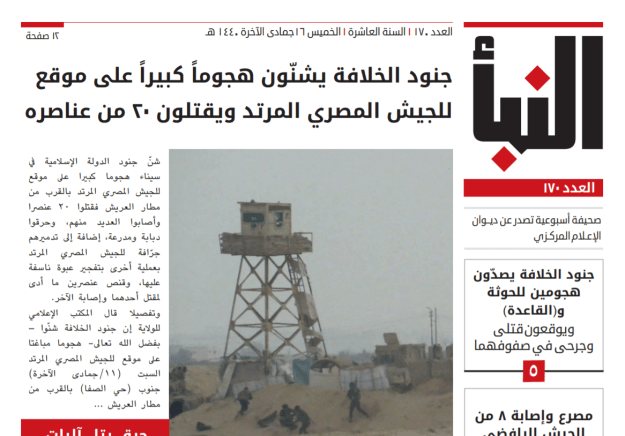
Al-Naba 159

The 159th edition of Al-Naba, the Islamic State’s (IS) newsletter, released on 6 December 2018, had a very interesting story on pages nine and ten about three “repentant officers” (dubat al-tayibeen) from Egypt who joined IS in the Sinai. The two trendlines this story highlighted were: (1) the movement of trained military cadres from the Arab states into IS’s security apparatus, as has been seen with the elements of Saddam Husayn’s fallen regime; and (2) the radicalisation of those Islamists previously prepared to work through the democratic process by the 2013 putsch in Egypt, and the violent crackdown afterwards, which shut down all peaceful paths to change. Al-Qaeda has made this point a staple of its propaganda for some time. Continue reading

What Are the Options in Idlib?

By Kyle Orton (@KyleWOrton) on 6 December 2018

This article was originally published at Ahval, headlined, “The Best Bad Outcome for Idlib”

The sun setting over Deraa, in southern Syria, 28 May 2018 (image source)

The Turkey-Russia Sochi Agreement in September won Idlib a reprieve from what had seemed to be an imminent and catastrophic offensive by Syrian President Bashar Assad’s forces and his Russian and Iranian patrons against the last insurgent-held province.

The ceasefire was meant to provide space for Turkey to dismantle the radical insurgents. Instead, those radicals consolidated their dominance in Idlib and the ceasefire has been visibly fraying. How to proceed is a matter of domestic security for the West. Continue reading