Tag Archives: ISIS

The Need for Caution in Releasing Guantanamo Inmates

Originally published at The Henry Jackson Society.

By Kyle Orton (@KyleWOrton) on February 21, 2017

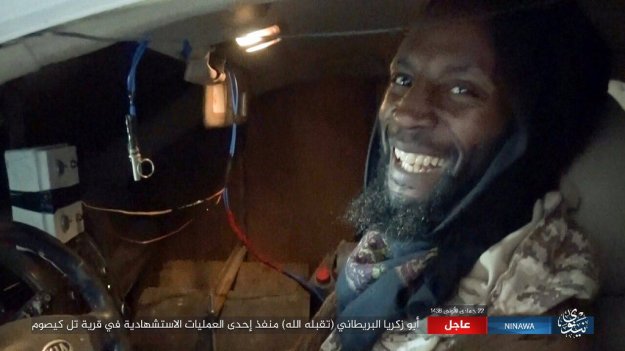
Ronald Fiddler (Abu Zakariya al-Britani)

Ronald Fiddler (Abu Zakariya al-Britani)

Since the offensive against Mosul, the Iraqi capital of the Islamic State (IS), began five months ago, IS has expended a high number of lives quite deliberately in suicide attacks. One of the suicide-attacks conducted on 20 February 2017, a car bombing against an Iraqi base, was by Abu Zakariya al-Britani, a British citizen now identified as Ronald Fiddler from Manchester. In 2002, Fiddler, then calling himself Jamal Udeen al-Harith, was sent to Guantanamo Bay, before being released in 2004 while still protesting his innocence. After suing the British government over his imprisonment, Fiddler received a substantial cash settlement in order to avoid compromising state secrets. Fiddler’s demise invites some revisiting of widely-held assumptions surrounding Guantanamo. Continue reading

Liberating Raqqa from the Islamic State

By Kyle Orton (@KyleWOrton) on February 17, 2017

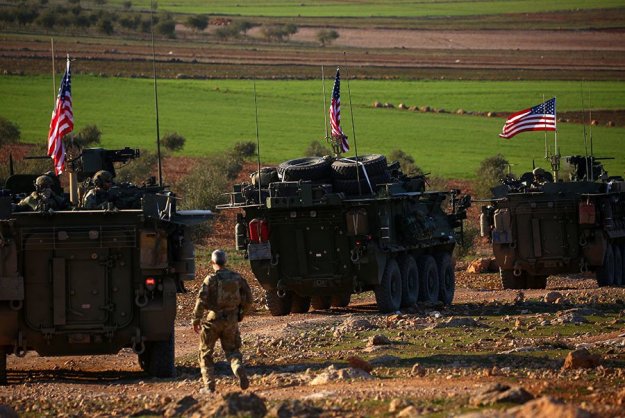
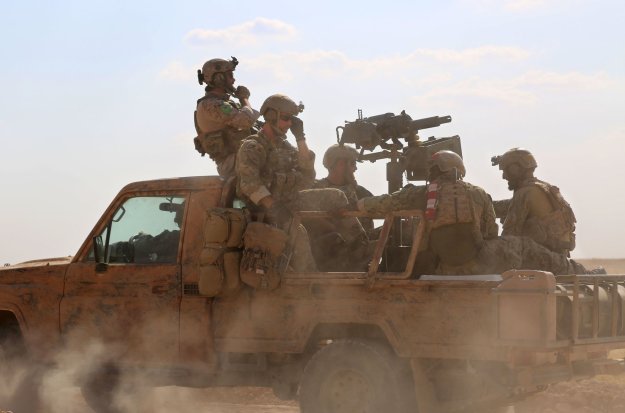
As the new administration of Donald Trump works through the United States’ options in dealing with Syria, and the Islamic State (IS) specifically, one option apparently under consideration is the use of greater numbers of combat troops to accelerate the expulsion of IS from its Syrian capital, Raqqa. While more U.S. troops would undoubtedly hasten the collapse of IS’s grip on its urban strongholds in Syria, such a policy risks continuing the failed U.S. policies of the past six years in Syria that have tackled symptoms of the conflict, rather than its causes, have tried to tackle elements in isolation from the wider conflict, and have placed too great an emphasis on military progress over politics. Continue reading

The Islamic State Explains Its Secret To Success

By Kyle Orton (@KyleWOrton) on February 11, 2017

2016-12-20-wilayat-dijla-tigris-4

On 28 September 2008, the emir of the Islamic State’s predecessor, the Islamic State of Iraq (ISI), Hamid al-Zawi (Abu Umar al-Baghdadi), released an audio statement, his twelfth such, entitled, “The Promise Of God”. An English version of al-Zawi’s speech was released by the Islamic State and is reproduced below with some interesting sections highlighted in bold. Continue reading

Al-Qaeda Reshapes the Insurgency in Northern Syria

By Kyle Orton (@KyleWOrton) on February 7, 2017

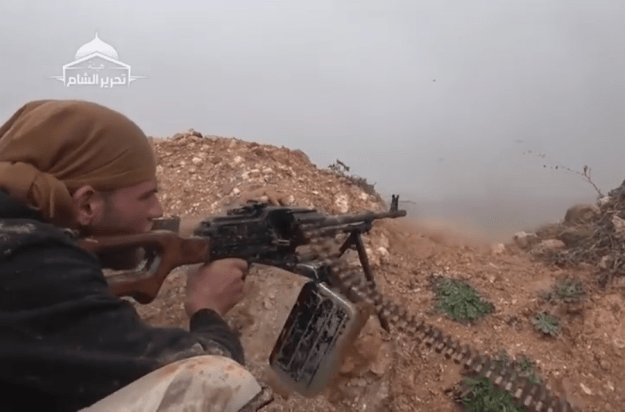
Hay’at Tahrir al-Sham logo

A series of clashes broke out on 19 January between al-Qaeda’s rebranded Syrian branch, Jabhat Fatah al-Sham (JFS), and its heretofore close ally and portal into the Syrian rebellion, Ahrar al-Sham. By 23 January, JFS had expanded its targets, engaging in hostilities with mainstream rebel groups in the “Greater Idlib” area, and specifically trying—and succeeding—in dismantling the positions of Jaysh al-Mujahideen, a moderate group, west of Aleppo. The crisis continued to escalate, forcing many groups to merge with Ahrar al-Sham for protection, until 28 January, when a JFS-led merger was announced under the banner of Hay’at Tahrir al-Sham (HTS), or the Syrian Liberation Committee. HTS announced a ceasefire, and since then individuals and groups—including a significant number from Ahrar—have given allegiance to HTS. This radical reshaping of revolutionary dynamics in northern Syria has undoubtedly created antibodies going forward against al-Qaeda that could be capitalized on by the international community, but the present situation is highly favourable to al-Qaeda. Continue reading

Assad’s Crimes Against Humanity and Trump’s Options in Syria

By Kyle Orton (@KyleWOrton) on February 7, 2017

Satellite picture of Sednaya prison, Syria (source)

Amnesty International released a report today, “Human Slaughterhouse,” documenting the conditions in Sednaya prison, run by the regime of Bashar al-Assad in Syria, which amount to extermination as a crime against humanity. In addition to the deliberately insanitary conditions, routinized torture and maltreatment, there has been—and continues to be—a systematic campaign of extra-judicial massacre in which perhaps 13,000 people have perished. These findings buttress previous findings, and come with some political implications as the new American administration seeks to chart its way forward in Syria. Continue reading

Pro-Al-Qaeda Ideologue on Merging With Non-Jihadi Groups

By Kyle Orton (@KyleWOrton) on February 5, 2017

Abdallah al-Muhaysini at a rally for Hay'at Tahrir al-Sham, 3 February 2017

Abdallah al-Muhaysini at a rally for Hay’at Tahrir al-Sham, 3 February 2017

On 28 January, as a part of its long-term strategy of integrating with, and ultimately co-opting, the Syrian rebellion, al-Qaeda shifted ground again and merged into a wider spectrum of insurgent groups, many of them jihadi in character, but many not, united under the banner of Hay’at Tahrir al-Sham (HTS). One of the non-jihadi groups to join HTS was Harakat Nooradeen al-Zengi, which became infamous in July 2016 after it beheaded one of the Bashar al-Assad regime’s child soldiers on video. This has aroused some controversy in jihadi circles, and today a statement by a jihadi ideologue, Abu Mahmud al-Filistini, who lives in London, was circulating explaining why HTS was right to take in al-Zengi. The statement was entitled, “Clearing the Doubts Regarding Nooradeen al-Zengi Uniting with Hay’at Tahrir al-Sham,” and is reproduced below. Continue reading

How the Islamic State Claims Terrorist Attacks

By Kyle Orton (@KyleWOrton) on February 4, 2017

2

With the attempted terrorist attack using machetes at the Louvre museum in Paris yesterday by Abdullah Reda al-Hamamy, whose social media history shows statements at least sympathetic to the Islamic State (IS), it raises once again the question, making no assumptions about al-Hamamy’s motives, of how connected the organization headquartered in Raqqa is to the attacks taking place around the world under IS’s banner—and how we would know.

As IS’s attacks outside of the statelet it has built in Iraq and Syria increased in frequency over the last year, a rather routinized mechanism has developed for attributing blame: IS claims the atrocities—or attempted atrocities—through Amaq News Agency. Continue reading

Kuwaiti Islamic State Military Official Killed in Syria

By Kyle Orton (@KyleWOrton) on February 1, 2017

abdul-al-taresh-abu-jandal-al-kuwaiti-2

In September 2014, Kuwait undertook a series of raids against terrorists loyal to the Islamic State (IS). It was found by authorities that one of the “great influence[s]” over the jihadi-Salafists in Kuwait was Abdulmuhsin al-Taresh (Abu Jandal al-Kuwaiti). Al-Taresh was an important propagandist-recruiter for IS at this time, and would later become a senior military official. He was killed near IS’s Syrian capital, Raqqa, by the U.S.-led Coalition at the end of December. Continue reading

Adnan al-Suwaydawi: Saddam’s Spy, Islamic State Leader

By Kyle Orton (@KyleWOrton) on January 31, 2017

Adnan al-Suwaydawi (source)

Adnan al-Suwaydawi (source)

A video from the Islamic State yesterday listed a series of prominent past leaders of the organization. One was Adnan al-Suwaydawi,[1] whose full name is Adnan Latif Hamid al-Suwaydawi al-Dulaymi, and who is known most commonly either as Abu Muhannad al-Suwaydawi or Haji Dawud. For a long time, al-Suwaydawi was also mistakenly assigned the kunya “Abu Ayman al-Iraqi”, who was in fact a different IS commander. Al-Suwaydawi was killed on 15 May 2015 by a Coalition airstrike in Anbar Province, western Iraq, but he is credited by the Islamic State with their overrunning Ramadi, the capital of Anbar Province, the next day. A biography of al-Suwaydawi was circulated by IS supporters on or around 21 May 2015; it is reproduced below.
Continue reading

The Leader of the Islamic State in the 2004 Fallujah Battles: Umar Hadid

By Kyle Orton (@KyleWOrton) on January 30, 2017

Umar Hadid [right] (source)

Umar Hadid [right] (source)

Umar Hadid was a native of Fallujah, hence his kunya, Abu Khattab al-Falluji,[1] and a part of the extremist thread of the Salafist underground in Saddam Husayn’s Iraq. Working as an electrician for a time, Hadid had gone into internal exile years before the invasion after attacking Saddam’s security forces. In the aftermath of Saddam’s toppling, Hadid quickly joined with Ahmad al-Khalayleh (Abu Musab al-Zarqawi), the Jordanian founder of the Islamic State (IS) who had been in Baghdad from May 2002. Hadid rose swiftly in the ranks of the IS movement, and led the insurgency during the two battles with American forces in Fallujah in 2004, being killed during the second of them. Continue reading