Tag Archives: ISIS

Governing the Caliphate: Profiles of Islamic State Leaders

By Kyle Orton (@KyleWOrton) on July 29, 2016

A new report by me for the Henry Jackson Society (accessible here) is out today. It looks at those governing the statelet held by the Islamic State in parts of Syria and Iraq, and those who are orchestrating IS’s foreign terrorist attacks, including in Europe. The wave of attacks over Ramadan has been described as a “lone wolf” epidemic by many, but IS is coordinating this mayhem through its Amn al-Kharji, foreign intelligence service, and the report looks at who staffs this institution and the dangers of writing-off these attacks as the work of lone radicals with no connection to each other or IS.  Continue reading

‘Lone Wolf’ Attacks in Europe Are Nothing of the Sort

By Kyle Orton (@KyleWOrton) on July 29, 2016

Published in The Telegraph

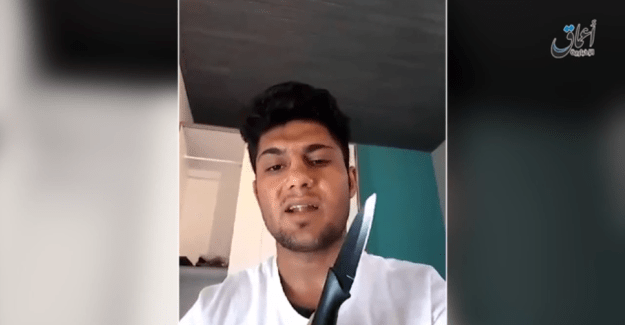
Muhammad Riyad (Wurzburg) [top left], Mohammed Daleel (Ansbach) [top right], Adel Kermiche (Normandy) [bottom left], Abdelmalik Petitjean (Normandy) [bottom right]

Since early 2014, at the latest, the Islamic State (IS) has been plotting terrorist attacks in Europe. There has been a tendency, including during the wave of attacks in the last month in Europe, to favour the “lone wolf” explanation for IS-claimed terrorist attacks, where the killer’s only connection to IS is to be “inspired” by their online propaganda, but in reality the institutions of the caliphate stand behind this campaign.

The infiltration of IS’s enemies for the purposes of espionage and terrorism, whether this is government-held areas of Iraq and Syria or Western Europe, is led by Amn al-Kharji, the foreign service within IS’s sophisticated intelligence apparatus, as explained in a new report by The Henry Jackson Society. Continue reading

Long-Term Islamic State Operative Carries Out Suicide Bombing in Ansbach

By Kyle Orton (@KyleWOrton) on July 27, 2016

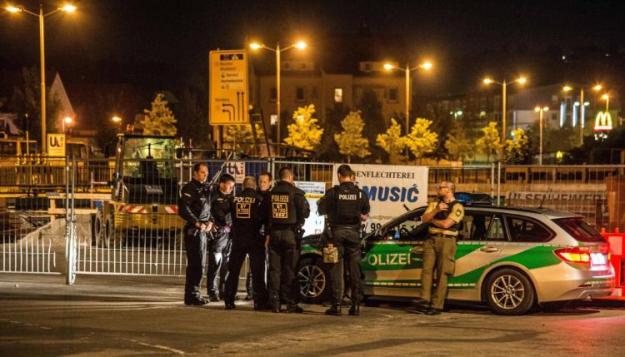
The German police secure the area surrounding the crime scene after the suicide attack in Ansbach

The German police secure the area surrounding the crime scene after the suicide attack in Ansbach

In Ansbach in Bavaria State, southern Germany, a suicide bomber blew himself up at a wine bar not far from the Ansbach Open music festival during the final concert around 22:10 on the evening of 24 July 2016. Fifteen people were injured, three gravely. The suicide-killer, who had wandered around the entranceway with a backpack, was soon identified as a twenty-seven-year-old Syrian refugee, Mohammad Daleel, who came to Germany in 2014. Daleel “lived in an old hotel that was converted into a refugee shelter”. Daleel had been rejected as an asylum seeker in Germany, where he was known to the authorities for petty criminality. Daleel was scheduled to be deported to Bulgaria within thirty days, though the deportation had been temporarily suspended while Daleel underwent a medical evaluation, and had been placed in a psychiatric clinic. Daleel had allegedly tried to commit suicide twice before the bombing. Continue reading

A Rebel Crime and Western Lessons in Syria

By Kyle Orton (@KyleWOrton) on July 24, 2016

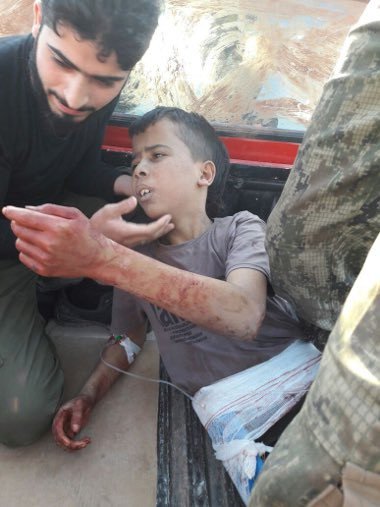
Abdullah Issa on the back of a truck with Harakat Nooradeen al-Zengi fighters who will soon behead him

Abdullah Issa on the back of a truck with Harakat Nooradeen al-Zengi fighters who will soon behead him

A horrifying video emerged on Tuesday of a teenage boy being beheaded. This had occurred the day before around Handarat in Aleppo, northern Syria. The boy had been fighting for Liwa al-Quds, a militia of the regime of Bashar al-Assad, composed mostly of Palestinians from the Nayrab camp and likely also from the unofficial settlement at Ayn al-Tal near Handarat. The rebel group that took him captive and then murdered him was Harakat Nooradeen al-Zengi, which had previously received support, including TOW anti-tank missiles, from the United States’ covert program run by the Central Intelligence Agency, though that support ended nearly a year ago. The episode is important in itself, and underlines some trends, namely al-Zengi’s evolution and the dynamics underway in northern Syria, where the U.S. is preparing to intensify its de facto policy of collaborating pro-Assad coalition against Jihadi-Salafist terrorist groups, which are strengthening al-Qaeda. Continue reading

Islamic State Intelligence Guided The Würzburg Train Attacker

By Kyle Orton (@KyleWOrton) on July 21, 2016

muhammad-riyad-2

On 18 July 2016, in the Heidingsfeld district of Würzburg of Bavaria in southern Germany, a seventeen-year-old Afghan refugee named Riaz Khan Ahmadzai (Muhammad Riyad), armed with a hatchet and a knife, wounded five civilians, two of them seriously, on a train between Treuchtlingen to Würzburg. The four people injured on the train were from the same family from Hong Kong; Ahmadzai/Riyad then wounded another civilian seriously as he jumped from the train. Ahmadzai, who had entered Germany as an unaccompanied minor and had been living in Ochsenfurt, Bavaria, was shot dead after a chase with police.  Continue reading

The Caliphate at Two

By Kyle Orton (@KyleWOrton) on July 16, 2016

A version of this article was published at Radio Free Europe/Radio Liberty, “Under the Black Flag

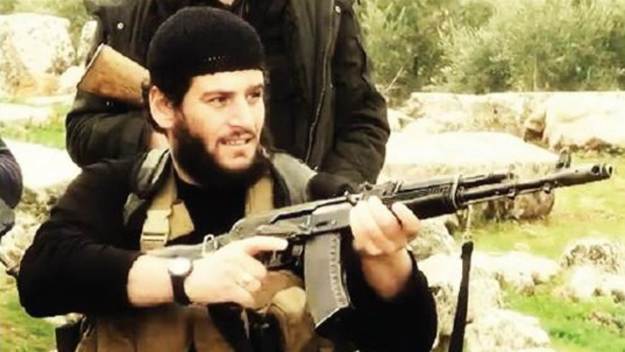
Islamic State's spokesman and Syrian governor, Taha Subhi Falaha (Abu Muhammad al-Adnani)

Islamic State’s spokesman and Syrian governor, Taha Subhi Falaha (Abu Muhammad al-Adnani)

The extremist group now known as Islamic State (IS) first claimed statehood, with clear pretentions to a new caliphate, in 2006—and eight years later made it explicit.

“Now the dream has become a reality,” Taha Falaha (Abu Muhammad al-Adnani) said in his speech on June 29, 2014, declaring that the territory IS held in Syria and Iraq constituted the rebirth of the caliphate. “The State will remain.”

Two years later, this looks like an unsafe proposition. Continue reading

Donald Trump is Wrong (Again): Saddam Hussein Supported Terrorism

By Kyle Orton (@KyleWOrton) on July 6, 2016

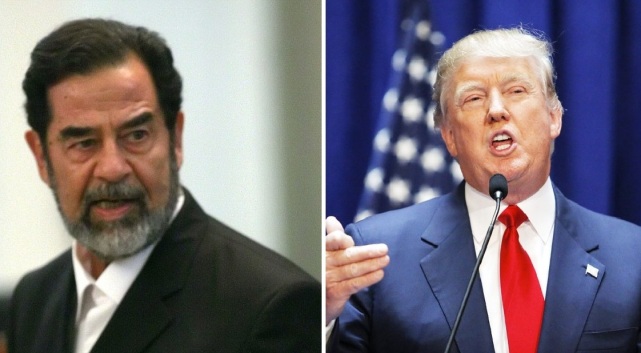
Last night Donald Trump unburdened himself of the view that Saddam Hussein was an efficient anti-terrorist operator. It is a statement Trump has made before, and it is one of such staggering ignorance—yet one which has such wide sympathy—that it seemed worth examining the multiple ways in which it was wrong. Continue reading

The Islamic State is Losing Militarily, Gaining Politically

By Kyle Orton (@KyleWOrton) on June 29, 2016

The New York Post had a symposium on the progress of the U.S.-led campaign against the Islamic State. This is my contribution:

The American-led effort to defeat the Islamic State is yielding significant tactical and military results. But the campaign is deeply flawed: It’s being waged as if the politics can be worked out after the fall of ISIS’s statelet, and in the process providing ISIS the conditions that will ensure its revival. Continue reading

Russia Needs the Islamic State to Save Assad

By Kyle Orton (@KyleWOrton) on June 20, 2016

Cross-posted at The Interpreter.

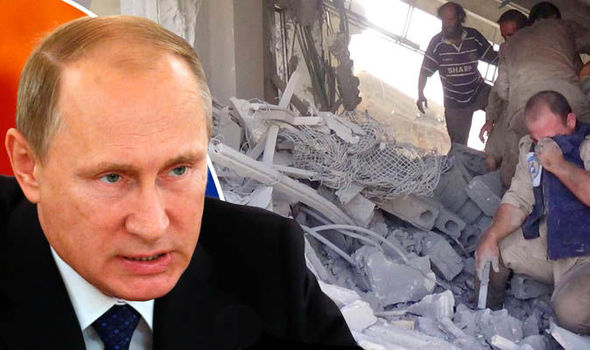
After a coalition supporting the regime of Syrian ruler Bashar al-Assad conquered the city of Palmyra from the Islamic State (IS) in late March, suggestions were made that this demonstrated the efficacy of the pro-Assad coalition in fighting IS, and doubtless the same will be said if and when the pro-regime forces conquer Tabqa. It isn’t true. From the time of Russia’s direct intervention in Syria on 30 September 2015 to Moscow’s announcement on 14 March 2016 that it was withdrawing “the main part” of its “military” from Syria, IS was almost untouched and al-Qaeda was barely damaged, while the Assad regime was bolstered and the moderate opposition, particularly those components supported by the West, were gravely weakened.

Despite Moscow’s claims that its mission was fighting IS or “terrorism,” Russia’s real goals can be summarized as three:

  1. Rescue the Assad regime, which was assessed to be in mortal peril
  2. Damage the mainstream armed opposition, especially those elements supported by the West, in order that Russia can …
  3. Rehabilitate the Assad regime internationally by inter alia leaving only extremists as its opponents, depriving the international community of credible interlocutors, and therefore strengthening the Russian hand to make peace talks an instrument for re-legitimizing Assad, rather than removing him

In recent days, this basic war strategy has been seen again in southern Syria. Continue reading

Don’t Count the Islamic State in Libya Down Yet

By Kyle Orton (@KyleWOrton) on June 13, 2016
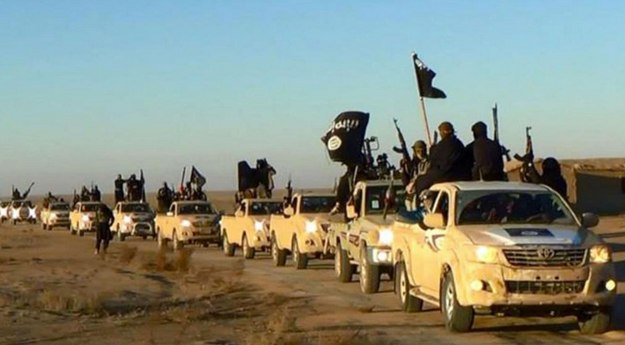
Islamic State convoy, Anbar Province, January 2014

Islamic State convoy, Anbar Province, January 2014

In Libya, the government of national accord (GNA)—in this case militias largely from western Libya, specifically Misrata, and the guards from the oil installations—claimed to have driven the Islamic State (IS) from Sirte on 11 June. Backed by artillery and airstrikes, with tanks moving in on the ground and some street clashes, the GNA-flagged troops had reached the city centre on 9 June. Expelled from Derna in the east in June 2015 and cleared from Sabratha in western Libya after a brief occupation earlier this year, this left Sirte as IS’s only major urban stronghold.

At the end of 2015, IS had controlled about 200 miles of coastline, from Abuqrayn (100 miles west of Sirte) to Nawafaliya (80 miles east of Sirte). On 12 May, an offensive began to take Sirte, coordinated through al-Bunyan al-Marsoos (The Solid Structure) Operations Room. The attack began from the Misratan militias in the west and by late May the eastern front had been opened up. At the end of May, IS lost Nawafaliya, and the collapse of territorial control has been steady since then, with IS now controlling about forty miles of coastline. A Libyan government official was quoted saying, “The battle wasn’t as difficult as we thought it would be.” While this is true—100 pro-GNA troops were killed and 500 wounded—there are reasons to be sceptical of the idea that this is the end for IS in Libya, and not just because IS still holds even areas of the Sirte.

IS had been in occupation of Sirte for almost exactly a year, meaning it has been able to accrue considerable resources, and had between 4,000 and 6,000 fighters in the city—composed of defectors from Ansar al-Shari’a (al-Qaeda), local tribes, elements of the fallen regime of Muammar al-Qaddafi, and operatives from IS core. IS has made a show of resistance, but the number of reported IS casualties is low, and the speed with which IS has fallen back makes such early reports plausible. In combination with the continued politico-military dysfunction of the ostensible governing authorities, this is very worrying.

Continue reading