Tag Archives: Islamic Revolutionary Guard Corp

The Local And Regional Implications From The Fall Of Idlib

By Kyle Orton (@KyleWOrton) on March 31, 2015
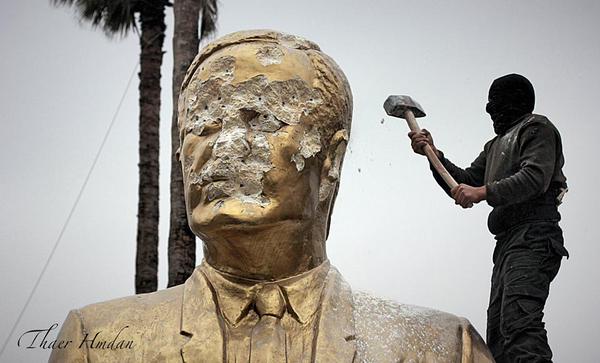
Statue of Hafez al-Assad defaced after Idlib City falls, March 29, 2015

Statue of Hafez al-Assad defaced after Idlib City falls, March 29, 2015

After an insurgent offensive began on March 24, Idlib City fell on March 29, making it only the second—of Syria’s fourteen—provincial capitals to slip from the control of Bashar al-Assad’s regime, the last one being Raqqa City on March 4, 2013. The regime has been on borrowed time in Idlib City since Wadi al-Deif to the south, near Maarat an-Numan, fell in mid-December.

In a scene reminiscent of Raqqa—and indeed the fall of Baghdad—a statue of Hafez al-Assad was destroyed. The insurgents broke open some secret prisons, while finding that in a final act of needless cruelty the regime had murdered other prisoners in the cells before retreating.

An operations room, Jaysh al-Fatah (Army of Conquest), organised this offensive, and is composed of: Faylaq a-Sham (Sham Legion), Liwa al-Haq, Ajnad a-Sham, Jaysh al-Sunna, Ahrar a-Sham, Jund al-Aqsa (JAA), and al-Qaeda’s Syrian branch, Jabhat an-Nusra. Continue reading
A Red Line For Iran’s Imperialism In Yemen

By Kyle Orton (@KyleWOrton) on March 27, 2015

1

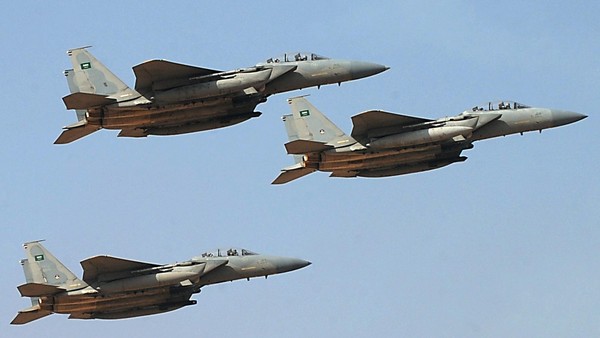
Late in the day on March 25, a Saudi-led coalition intervened in Yemen with airstrikes against the Houthis.

The Iranian-backed Houthis (a.k.a. Ansar Allah) took over Yemen’s capital, Sanaa, in September, and forced the resignation of the Saudi-backed Yemeni ruler, Abed Rabbo Mansour Hadi, in January. Hadi escaped house arrested in Sanaa and retreated to Aden with the remnants of his regime. On March 21, the Houthis had called for a “general mobilisation” and by the next day had pushed south toward Aden. The Houthis said they were combatting “terrorist forces”. As in Syria, Iran’s allied forces cast a narrative where there were no Sunni moderates, nobody with whom a deal might be struck.

Hadi’s predecessor, Ali Abdullah Saleh, whose resignation was compelled in early 2012 after the “Arab Spring,” stands accused not only by Hadi but by the United States of supporting the Houthis. Continue reading

Allowing Iran To Conquer Iraq Will Not Help Defeat The Islamic State

By Kyle Orton (@KyleWOrton) on March 15, 2015

Qassem Suleimani

Qassem Suleimani

Iraq’s Prime Minister Haider al-Abadi announced the beginning of an offensive on March 1 to dislodge the Islamic State (ISIS) from Salah ad-Din Province. Abadi announced that this would be led by the Iraqi army and Hashd al-Shabi, known in English as the Popular Mobilization Units (PMUs), the militias composed overwhelmingly of Shi’ites and directed by Iran.

While the offensive seems to be winding down, it is not over. ISIS is out of ad-Dawr/Dour and al-Awja, south of Tikrit, and Albu Ajeel to the east. Al-Alam to the north seems to still be contested. On March 10, ISIS was driven out of al-Qadissiya, a northern district of Tikrit City. On March 11, the anti-ISIS forces entered Tikrit City, “inched closer to the city center … and took up positions in a military hospital, the police academy and the traffic police headquarters … Forces in southern districts took over three palaces erected by former dictator Saddam Hussein”. Continue reading

Iran and Global Terror: From Argentina to the Fertile Crescent

By Kyle Orton (@KyleWOrton) on February 27, 2015

Khobar Towers, which Iran jointly bombed with al-Qaeda

Khobar Towers, which Iran jointly bombed with al-Qaeda

Argentina’s government yesterday announced it was dissolving the Secretariat of Intelligence (S.I.), an intelligence agency tainted by the “Dirty War” regimes (1974-83), and more recent abuses as President Cristina Kirchner has taken Argentina back toward autocracy, and replacing it with a Federal agency. Just two days before, charges of corruption were levelled against Antonio Stiusso, S.I.’s director until Kirchner fired him in December. At the beginning of this month, Stiusso went missing. It now seems Stiusso has taken shelter in a neighbouring State.

These events are the latest twist in an extraordinary saga that has followed the discovery of the body of Alberto Nisman on Jan. 18 in his apartment in Buenos Aires, shot in the head in an apparent suicide. Nisman was a prosecutor investigating the July 18, 1994, bombing of the Argentine Israelite Mutual Association (AMIA) building in Argentina’s capital. All the evidence that Nisman had gathered pointed to Iran as the perpetrator. Few believe Nisman committed suicide, and—the history of Argentines being “suicided” considered—most fingers are pointing at Iran. Continue reading

Shi’a Holy War and Iran’s Jihadist Empire

By Kyle Orton (@KyleWOrton) on February 12, 2015

1

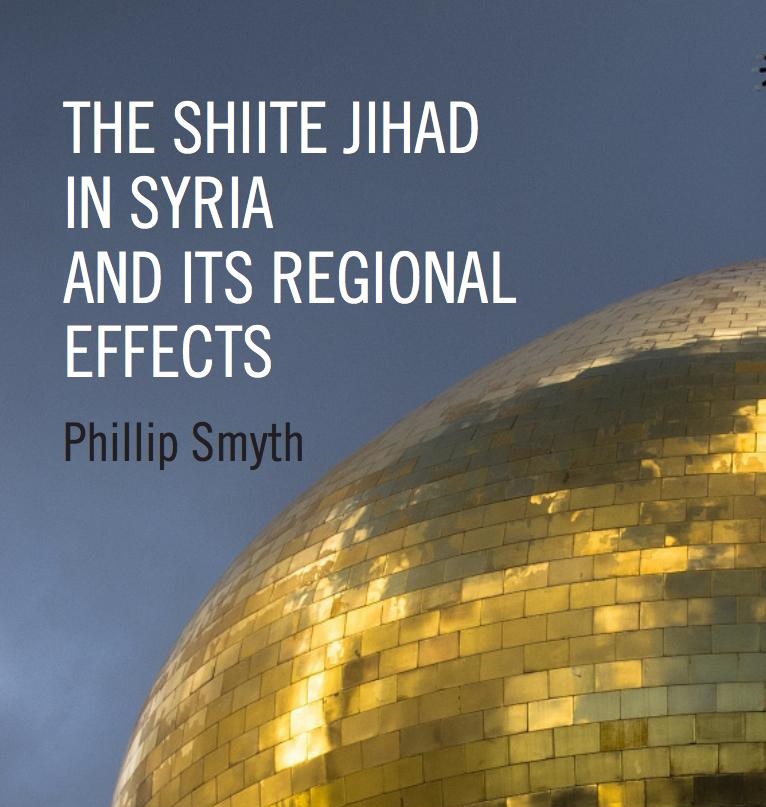
In watching the Syrian conflict, one of the most extraordinary tendencies of the reporting is the way “foreign fighter” and “jihadist” have become synonymous with the Sunni militants who have descended on that tormented country. This is one among many illusions that will hopefully be ended by Phillip Smyth’s monograph, “The Shiite Jihad in Syria and its Regional Effects“. You should read the whole thing but below are the salient points I took away. Continue reading

Israel’s Airstrikes in Syria

By Kyle Orton (@KyleWOrton) on November 12, 2014

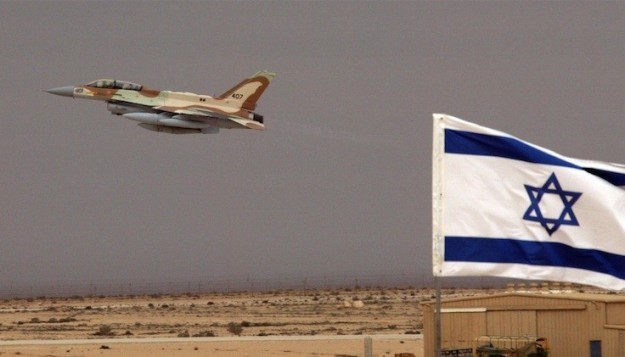
In a post yesterday I listed the operations Israel has so far carried out in Syria. Between 2007 and 2011, Israel eliminated several senior terrorists inside Syria and destroyed a nuclear-weapons facility. Since the war began in 2011, Israel has mostly carried out airstrikes in Syria to prevent Iran and its Islamic Revolutionary Guards Corps (IRGC) transferring advanced weaponry to the IRGC’s Lebanon-based branch, Hizballah. Rather than updating the prior post, which was on a slightly separate matter, this post will be kept as a rolling tally of Israeli operations in Syria, focused only on those since war broke out. Continue reading