Tag Archives: Islamic Revolutionary Guards Corps

The State of Play in Syria and Iraq on the Eve of the Idlib Offensive

By Kyle Orton (@KyleWOrton) on 29 August 2018

Two ideas that have become quite prevalent are that the Islamic State is defeated or on its way to defeat and that the Syrian war is winding down. Both are gravely mistaken. Continue reading

Turkey’s War Against the PKK on the Near Abroad

By Kyle Orton (@KyleWOrton) on 21 August 2018

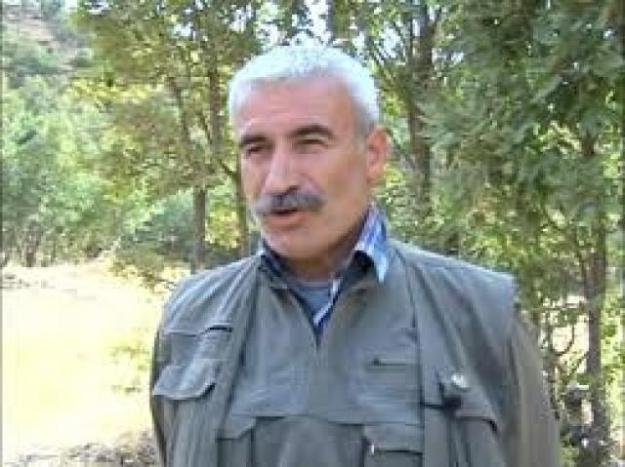
Ismail Özden (image source)

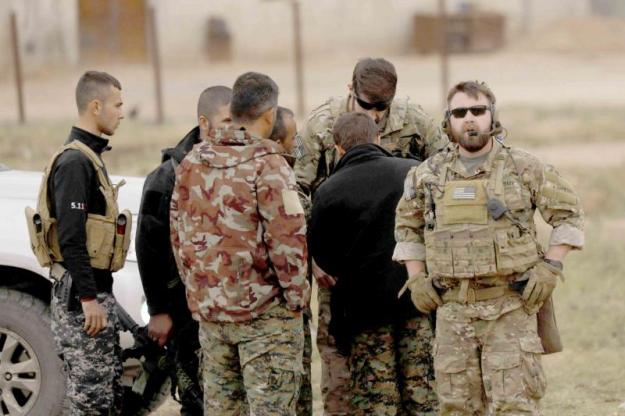
Turkey killed a senior operative of the Kurdistan Workers’ Party (PKK), the internationally-recognised terrorist organisation and narcotics trafficking entity that has been at war with the Turkish state since 1984, in Iraq last week. Turkey launched a wave of airstrikes against PKK targets in Syria and Iraq in April 2017 and for the last several months Ankara has been widening its campaign against the PKK outside Turkey’s borders, particularly in Iraq, where the PKK is not protected by the United States, as it is in eastern Syria. Having feinted in June toward an attack on the historic PKK headquarters in the Qandil Mountains—a somewhat symbolic target at this stage, with the bulk of the PKK’s leadership and resources in Syria—it appears the Turks have opted for a more targeted approach.

This operation underscores the continuance of U.S.-Turkey relations, and the mutual benefits of the relationship, even in its current damaged state, where both sides have a laundry list of legitimate grievances with the other. If a formula for normalisation can be found, the potential to contain and weaken some of the worst, most destabilising elements in the region, saliently the PKK and the Iranian regime, is within reach. Continue reading

Saddam Hussein Prepared the Ground for the Islamic State

By Kyle Orton (@KyleWOrton) on April 26, 2016

This essay, written to tie together my work on the relationship between the Saddam Hussein regime and the Islamic State, was completed last summer and submitted to an outlet, where it entered a form of development hell. After giving up on that option late last year, the opportunity arose to get a shorter version published in The New York Times in December. But I procrastinated too long over what to do with the full essay and a recent change in my work situation means I no longer have the bandwidth to go through the process of finding it a new home, so here it is.

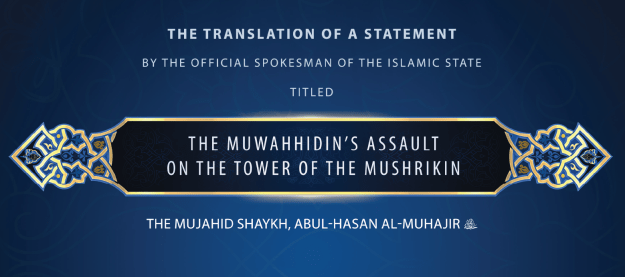
“Abu-Bakr al Baghdadi is a product of the last decade of Saddam’s reign,” argues Amatzia Baram, a scholar of Iraq. He is correct in at least three ways. First, in its last decade in power, the Iraqi Ba’ath regime transformed into an Islamist government, cultivating a more religious, sectarian population on which the Islamic State (ISIS) could draw. Part of Saddam Hussein’s “Faith Campaign” also involved outreach to Islamist terrorists, including al-Qaeda, which meant that the synthesis of Ba’athism and Salafism that fused into the Iraqi insurgency after the fall of Saddam was already well advanced by the time the Anglo-American forces arrived in Baghdad in 2003. Second, the ISIS leadership and military planning and logistics is substantially reliant on the intellectual capital grown in the military and intelligence services of the Saddam regime. And finally, the smuggling networks on which ISIS relies, among the tribes and across the borders of Iraq’s neighbours, for the movement of men and materiel, are directly inherited from the networks erected by the Saddam regime in its closing decade to evade the sanctions. The advantages of being the successor to the Saddam regime make ISIS a more formidable challenge than previous Salafi-jihadist groups, and one that is likely to be with us for some time.

Continue reading