Tag Archives: Islamic State

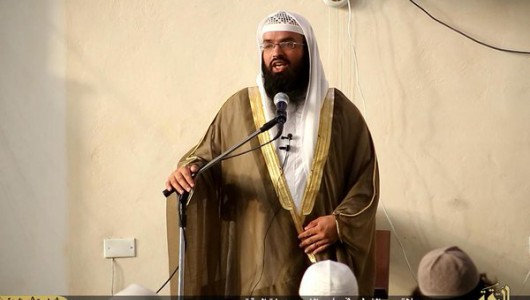
Third Speech of Islamic State Spokesman Abu Hassan al-Muhajir

By Kyle Orton (@KyleWOrton) on 29 June 2017
The spokesman of the Islamic State (IS), Abu Hassan al-Muhajir, made his third speech on 12 June 2017, entitled, “And When The Believers Saw The Companies”. Abu Hassan’s first speech was in December 2016 and his second was in April 2017. The primary message of Abu Hassan’s speech was for IS’s troops to resist to the end in what is left of the caliphate’s grip on its Iraqi capital Mosul as that offensive, begun last October, draws to a close, and to hold similarly firm as the operation to evict IS from its Syrian capital Raqqa, launched on 6 June, gets underway. The main editorial of Al-Naba 84 a few days before Abu Hassan spoke laid out IS’s intention, somewhat contrary to its general practice, to resist fiercely in Raqqa. Abu Hassan continues the messaging, consistent since the U.S.-led coalition began its countermeasures against IS, that “patience” will lead to victory. IS has not wavered from this strategy in more than ten years, and it is showing signs of bearing fruit already, a trendline likely to continue unless there is a change of Coalition strategy. In crude, practical terms, Abu Hassan means to say that the terrorism and guerrilla campaign will continue after IS is uprooted from the urban areas.
Continue reading
Islamic State Tells Its Forces To Fight To The Last Man in Raqqa

By Kyle Orton (@KyleWOrton) on 24 June 2017

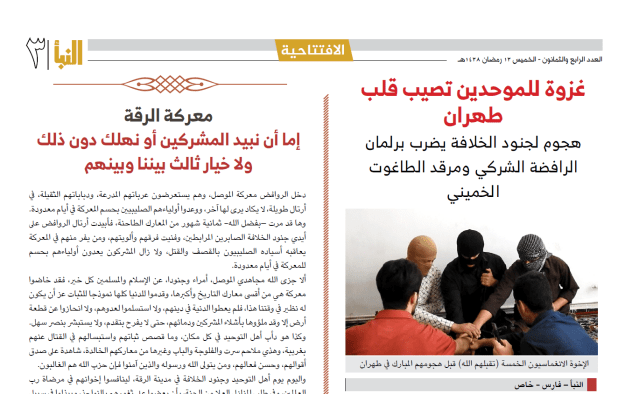
Al-Naba 84, page 3

The Islamic State (IS) has a standard strategy of withdrawing from urban areas and conserving its forces when faced with an overwhelming enemy. This strategy has been publicly spelled out by IS, more recently and a decade ago when “the State” was new. The notable exceptions to this rule, Fallujah (2004) and Kobani (2014), were driven by political considerations, and it appears that such considerations apply to Raqqa, IS’s Syrian “capital”, which came under attack from the U.S.-led Coalition’s “partner force”, the PKK front-group that calls itself the Syrian Democratic Forces (SDF), on 6 June. In the 84th edition of IS’s weekly newsletter, Al-Naba, released on 8 June, the main editorial was about the Raqqa battle and encouraged IS’s jihadists to fight to the very last, ostensibly to inflict such heavy casualties over such a protracted period that the SDF/PKK would not be able to sustain itself. Continue reading

Viewing the Coalition’s Flawed Anti-Islamic State Strategy From Raqqa’s Frontlines

By Kyle Orton (@KyleWOrton) on 19 June 2017

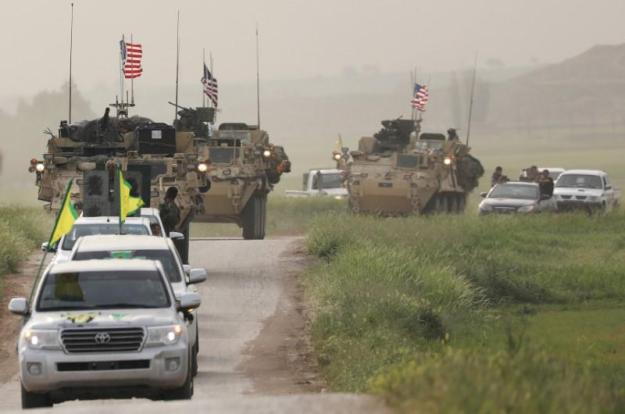
YPG and U.S military vehicles in Darbasiya, northern Syria, 28 April 2017. REUTERS/Rodi Said/File Photo

At the end of May, Christoph Reuter, a journalist with Der Spiegel, embedded with the Syrian Democratic Forces (SDF) as it made its way, supported by the U.S.-led Coalition, toward Raqqa city, the Syrian “capital” of the Islamic State’s (IS) caliphate. Reuter’s report provides snapshots of a number of important—and worrying—dynamics at play that have made the U.S. decision to back the SDF to liberate Raqqa so worrying over the long-term, even on its own terms as a means of sustainably defeating IS. Continue reading

American Sanctions Hit Islamic State’s Finances, Propaganda, and Terrorism

By Kyle Orton (@KyleWOrton) on 16 June 2017

Usama Atar, older picture and most recent (picture via CNN)

Just three days after the U.S. government sanctioned two Islamic State (IS or ISIS) operatives for their role in helping the jihadists develop chemical weapons of mass destruction, another raft of sanctions were issued on 15 June against four IS members occupying varying positions within the organization from finance to propaganda to orchestrating the foreign attacks. Continue reading

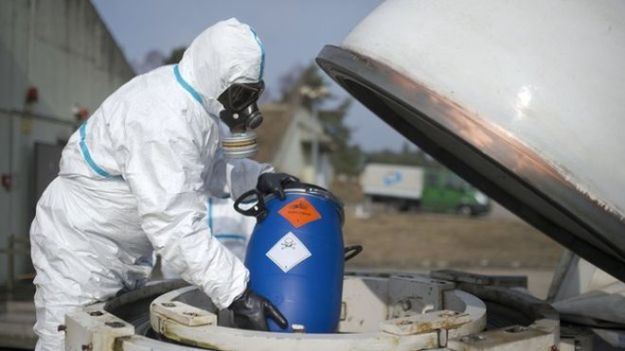
America Sanctions Operatives of the Islamic State’s Chemical Weapons Department

By Kyle Orton (@KyleWOrton) on 13 June 2017

The U.S. Treasury Department’s Office of Foreign Assets Control (OFAC) announced financial sanctions against an individual involved in the “development” of chemical weapons of mass destruction (CWMD) for the Islamic State (IS) on 12 June. Simultaneously, the State Department labelled another individual involved in the development of CWMD for IS as a Specially Designated Global Terrorist (SDGT). These are the first sanctions of their kind. Continue reading

Senior Islamic State Cleric Turki al-Binali Killed in an Airstrike

By Kyle Orton (@KyleWOrton) on 11 June 2017

Turki al-Binali at prayers in Raqqa, July 2015

It was reported on jihadist websites and by local activists that Turki al-Binali (Abu Hammam al-Athari), a senior cleric of the Islamic State (IS) and perhaps the most important public proponent of the caliphate’s formation, had been killed in Syria by an airstrike from the U.S.-led Coalition on 29 May. IS has been silent on this despite releasing their newsletter al-Naba and the tenth edition of their English-language propaganda magazine Rumiyah since then. On Tuesday, the intelligence services of the Kurdistan Regional Government (KRG) in northern Iraq confirmed that al-Binali had been killed. Continue reading

The Islamic State’s Newsletter on the London Bridge Attack and Melbourne Siege

By Kyle Orton (@KyleWOrton) on 8 June 2017

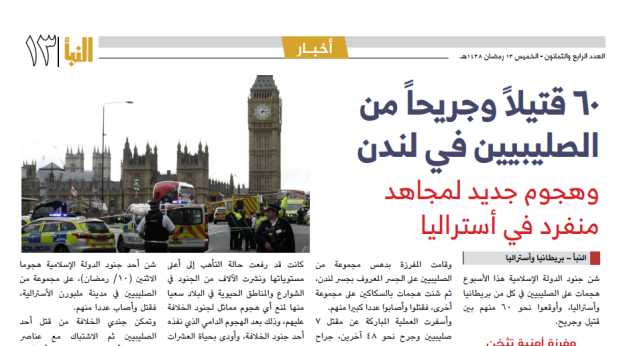
Al-Naba 84

The eighty-forth edition of Al-Naba (The News), released by the Islamic State on 8 June 2017, included a section on the terrorist attacks in Britain, on London Bridge, on 3 June, and in Australia, the siege of the apartment block in Melbourne, on 5 June. Continue reading

The West’s Partners in Syria and the Risks to Turkey

Originally published at The Henry Jackson Society

By Kyle Orton (@KyleWOrton) on 8 June 2017

Aftermath of a TAK bombing in central Istanbul, Turkey, 7 June 2016

The Kurdistan Freedom Falcons (TAK) issued a threat against Turkey on Tuesday, at the very moment the U.S.-led Coalition was announcing the commencement of the operation to evict the Islamic State (IS) from its Syrian capital, Raqqa, in alliance with the TAK’s mother organization, the Kurdistan Workers’ Party (PKK). This underlines some of the challenges confronting the Coalition as a result of a half-decade of short-sighted counter-terrorism policy in Syria and a regional posture that tilted away from traditional allies. Continue reading

Islamic State’s Attack in Iran Was a Bid For the Mantle of ‘Protector of the Sunnis’

Published at The Telegraph

By Kyle Orton (@KyleWOrton) on 7 June 2017

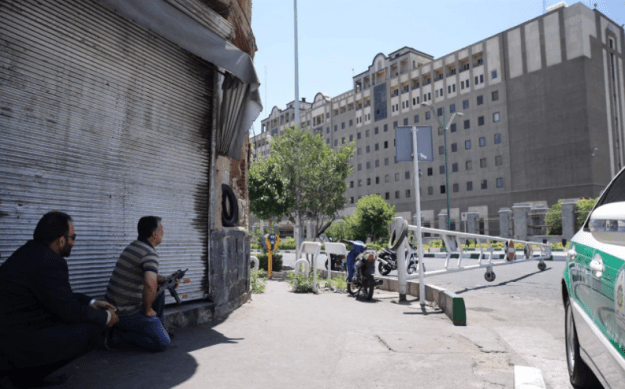
Armed terrorists stormed the Iranian parliament complex in Tehran (CREDIT: OMID VAHABZADEH/AFP/GETTY IMAGES)

In its choice of target and timing, ISIL has shown, once again, its skill in exploiting the rivalries of its enemies—setting them against one another to buy itself greater room for manoeuvre. Continue reading

The West’s Plan for Defeating the Islamic State in Syria is Fatally Flawed

By Kyle Orton (@KyleWOrton) on 6 June 2017

A member of the YPG/PKK militia, Delil Souleiman/Agence France-Presse — Getty Images

The United States recently committed itself to arming the Kurdish People’s Protection Units, known as the Y.P.G., to help evict the Islamic State from its Syrian stronghold, Raqqa. This decision is likely to prove deeply troublesome, risking the regional stability necessary for the lasting defeat of the Islamic State.

The Y.P.G. denies that it is, in effect, a wing of the Kurdistan Workers’ Party, or P.K.K., but the evidence is clear. The P.K.K., a Marxist-leaning Kurdish nationalist organization, was founded in Turkey in 1978, and took up arms against the Turkish state in 1984. The group’s leader, Abdullah Ocalan, was expelled from Syria in 1998, when his old patron, the regime of Hafez al-Assad (Bashar’s father), came under military threat from Turkey. Mr. Ocalan was soon arrested by the Turks, and the tide of war turned against the P.K.K. Continue reading