Junead Khan, 25, of Marlow Avenue, Luton, was sentenced to life imprisonment—to serve a minimum of twelve years—today for using his job as a delivery driver to scout out an attack on American troops stationed at Lakenheath in Britain. Khan had gathered materials on bomb-making and browsed Amazon for a knife like that used by Mohammed Emwazi (Abu Muharib al-Muhajir), the Islamic State’s British video butcher, widely known as “Jihadi John,” who was killed in a drone strike in November 2015. Khan, who was arrested on 14 July 2015 with his younger uncle, Shazib Khan, 23, intended to fake a road accident and then attack those who came to assist. Junead and Shazib were found guilty of terrorism offences for their plans to travel to Syria and sentenced to seven years each, with an extended period of five years on licence. Continue reading →
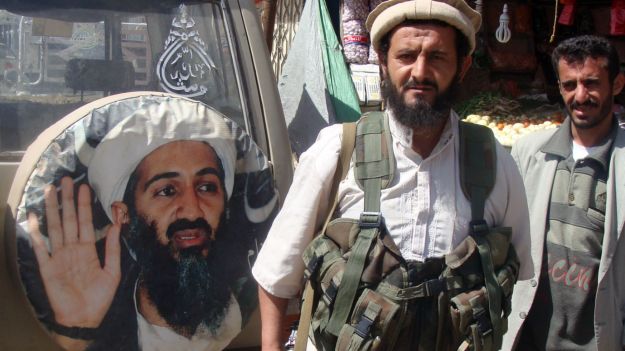
During al-Qaeda’s occupation of al-Mukalla, Yemen, April 2015 to April 2016 (source)
In Yemen, at the end of last month, al-Qaeda in the Arabian Peninsula (AQAP) was cleared from al-Mukalla, their major urban stronghold. This ends a year of occupation and brings to a close what is effectively the third emirate or statelet AQAP has either set up or attempted to set up in Yemen since 2011. These projects offer some insights into al-Qaeda’s methodology in getting to an Islamic state, including its rebranding in opposition to the Islamic State (IS). Continue reading →
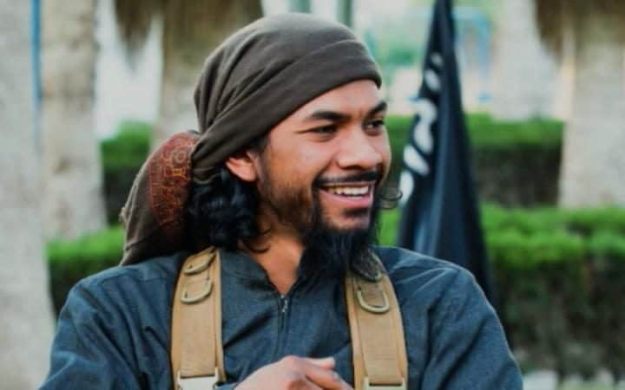
Neil Prakash has become Australia’s most visible recruiter for the Islamic State, following in the footsteps of Mohammad Ali Baryalei. Continue reading →
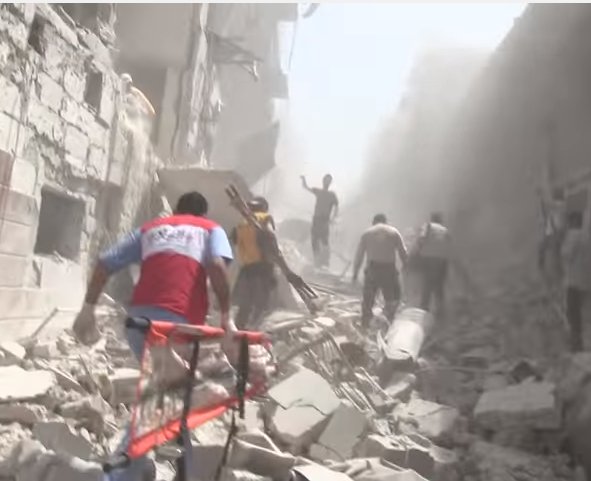
Aftermath of an airstrike by the pro-Assad coalition in Kalasa, Aleppo, 28 April 2016
Whatever pretence there was left in Syria’s “cessation of hostilities” (CoH)—which was never more than a reduction in hostilities—enacted at midnight on 26/27 February is now at an end. Russia and the regime of Bashar al-Assad have never ceased attempts to militarily weaken the armed opposition and escalated with a concerted campaign of aerial bombardment against Aleppo City on 22 April. The insurgency fully mobilized in response on 5 May with a major offensive south of the city. The dynamics set in place by Russia’s intervention—the bolstering of the Assad regime and the strengthening of extremist forces in the insurgency—have been in full view with this latest crisis, as has the longer-term trend of the United States moving toward the position of Assad, Russia, and especially Iran in Syria. Continue reading →
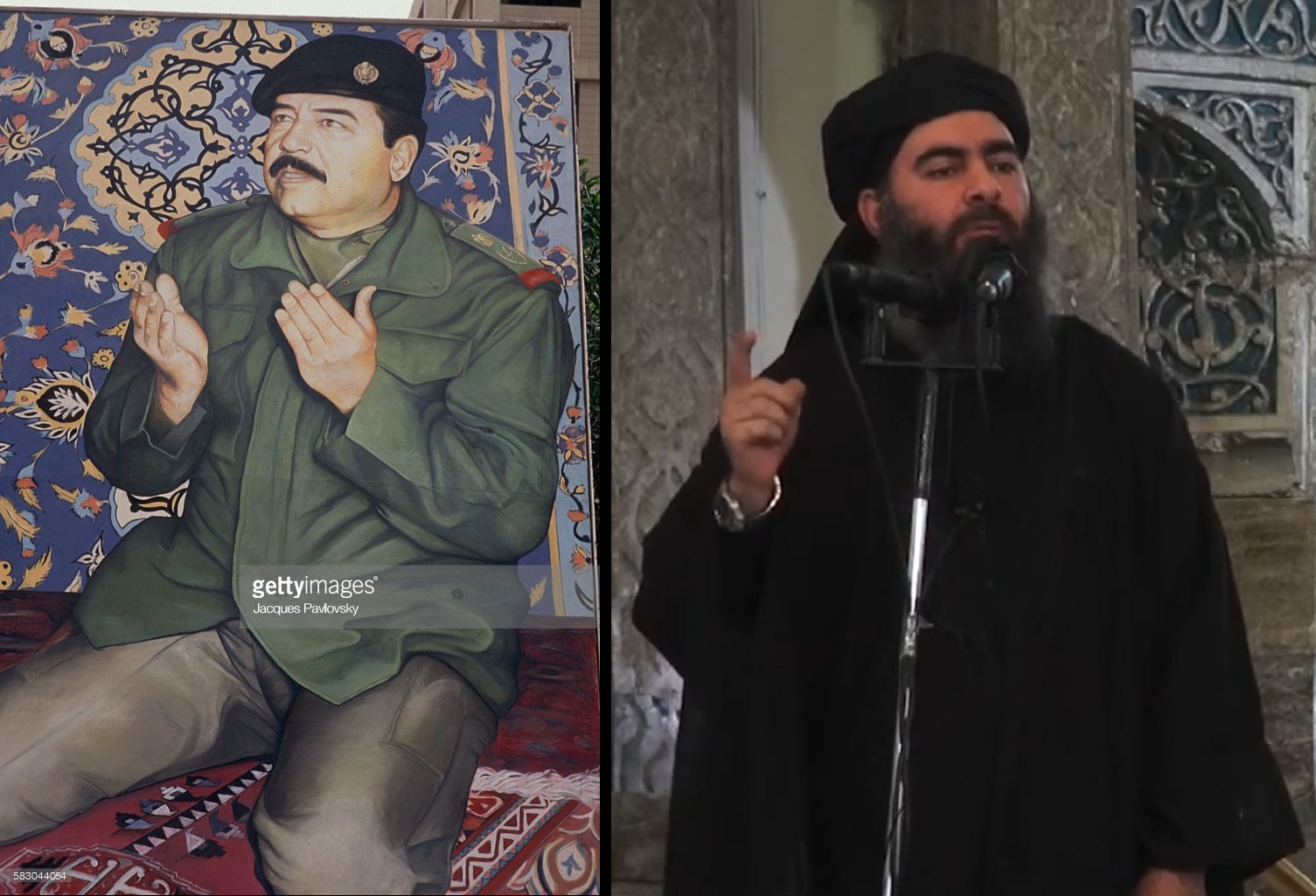
This essay, written to tie together my work on the relationship between the Saddam Hussein regime and the Islamic State, was completed last summer and submitted to an outlet, where it entered a form of development hell. After giving up on that option late last year, the opportunity arose to get a shorter version published in The New York Times in December. But I procrastinated too long over what to do with the full essay and a recent change in my work situation means I no longer have the bandwidth to go through the process of finding it a new home, so here it is.
“Abu-Bakr al Baghdadi is a product of the last decade of Saddam’s reign,” argues Amatzia Baram, a scholar of Iraq. He is correct in at least three ways. First, in its last decade in power, the Iraqi Ba’ath regime transformed into an Islamist government, cultivating a more religious, sectarian population on which the Islamic State (ISIS) could draw. Part of Saddam Hussein’s “Faith Campaign” also involved outreach to Islamist terrorists, including al-Qaeda, which meant that the synthesis of Ba’athism and Salafism that fused into the Iraqi insurgency after the fall of Saddam was already well advanced by the time the Anglo-American forces arrived in Baghdad in 2003. Second, the ISIS leadership and military planning and logistics is substantially reliant on the intellectual capital grown in the military and intelligence services of the Saddam regime. And finally, the smuggling networks on which ISIS relies, among the tribes and across the borders of Iraq’s neighbours, for the movement of men and materiel, are directly inherited from the networks erected by the Saddam regime in its closing decade to evade the sanctions. The advantages of being the successor to the Saddam regime make ISIS a more formidable challenge than previous Salafi-jihadist groups, and one that is likely to be with us for some time.
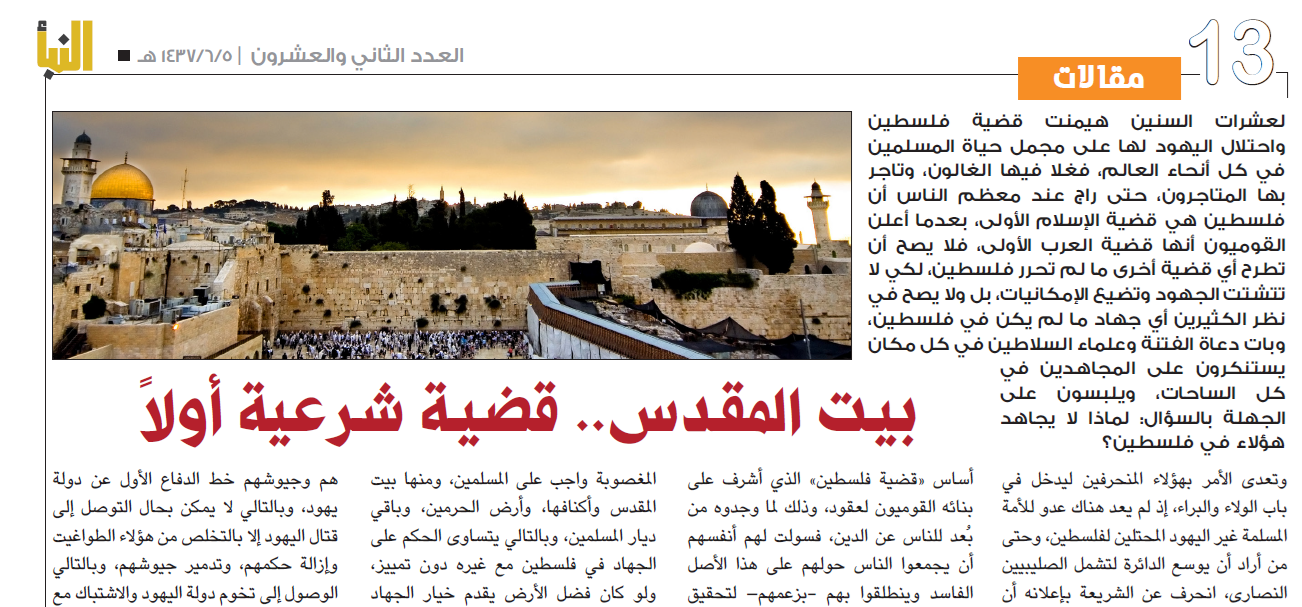
An article in the twenty-second edition of al-Naba, the Islamic State’s (IS) newsletter, released on 15 March 2016, explained why the group has not made fighting Israel a priority.
The ancient city of Palmyra and the inhabited adjoining town of Tadmor was conquered by the armed forces of Bashar al-Assad’s regime and a consortium of foreign Shi’a jihadists, some of them designated terrorist organizations, and all of them led by the Quds Force, the external operations wing of Iran’s Islamic Revolutionary Guard Corps (IRGC), itself a listed terrorist entity.
While the takeover of Palmyra by the Islamic State (IS) in May 2015 was considered by almost everybody a negative development, the pro-Assad coalition’s capture of the city under the cover of 900 indiscriminate Russian airstrikes has been called “a good thing” by no less an authority than the United States Department of Defence. It was little surprise among that Robert Fisk echoed this sentiment; it was more surprising that Boris Johnson did.
The basic case for regarding Palmyra’s fall to the pro-Assad coalition as a positive development is that, to quote Johnson, “no matter how repulsive the Assad regime may be … their opponents in [IS] are far, far worse,” and this defeat for IS moves Syria closer to peace.
There is nothing in this formulation that stands up to scrutiny. Continue reading →
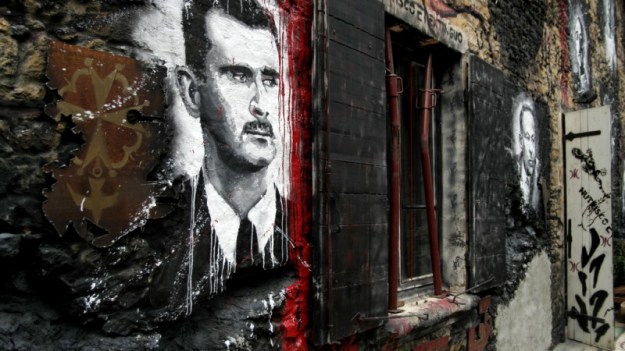
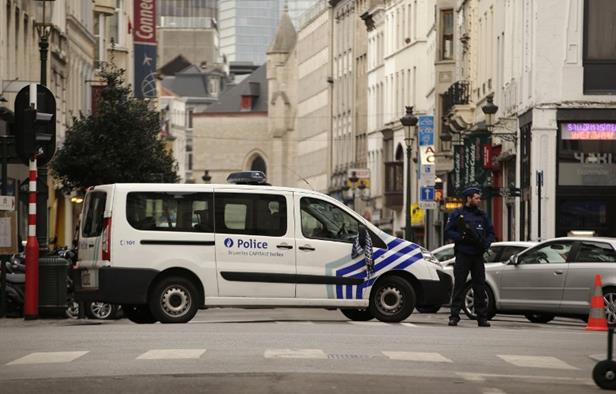
The long arm of the Islamic State (ISIS) has struck again. Tuesday morning, Zaventem airport in Brussels was hit by two suicide bombers and soon after a third man detonated at Maelbeek metro station, not far from the headquarters of the European Union. At least 31 people were slaughtered and around 270 were injured. Belgium has a long history as a hub of global jihadism and some of its citizens were key in forming ISIS’s statelet. In the wake of the attack, as Western governments look for ways to hasten the demise of ISIS, it will likely be said—again—that the quickest way to do that is by striking a devil’s bargain with the regime of Bashar al-Assad in Syria. From Assad’s role in helping ISIS lay its groundwork in Iraq even before the U.S. invasion to Assad’s help, by omission and commission, in nurturing ISIS in the years since the uprising against him began as a means of defeating the opposition to Assad’s deliberate incitement of a sectarian war, there is nothing that could be further from the truth. While Assad remains in power, ISIS will remain alive. Continue reading →
Thursday morning saw two separate but related incidents.
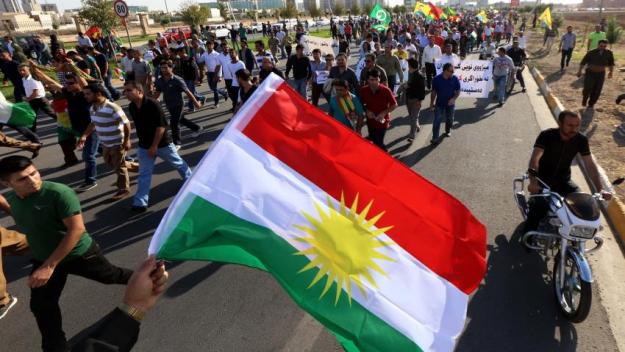
First, in Turkey, the Kurdistan Freedom Hawks (TAK) claimed responsibility for the March 13 suicide bombing in Ankara that massacred 37 people.
The second was a declaration in Syria by the Democratic Union Party (PYD) and its armed wing, the People’s Protection Units (YPG), that they were forming a federal zone in the north of the country.
The link is simple: the Kurdistan Workers’ Party (PKK). Continue reading →
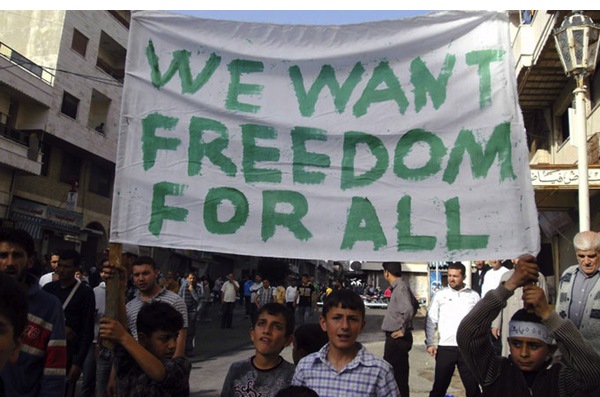
Five years ago today protests broke out in a small town in southern Syria and, carried by social media, spread throughout the country.
For about six months, the Syrian uprising would be mostly peaceful, but inevitably the population fought back as the regime of Bashar al-Assad—aided from the earliest stages by Iran and its Lebanese proxy, Hizballah—widened and intensified its violent crackdown.
In yet another unexpected turn, the last few weeks have seen the revival of this early spirit of the revolution to its strongest point in years. Continue reading →

 Kyle Orton's Blog