Tag Archives: Islamic State

The Islamic State Creates Foreign “Provinces”

By Kyle Orton (@KyleWOrton) on December 6, 2014

Abu Bakr al-Baghdadi gave his eighth speech[1] since becoming the leader of the Islamic State (ISIS), entitled, “Even if the Disbelievers Despise Such”, on November 13, 2014. The speech was notable for two things. First, it taunted the American-led coalition about the lack of success their campaign has had against ISIS since it began in June and was extended into Syria in September, and invited the U.S. and other Western states to deploy ground troops. Secondly, the speech accepted the pledges of allegiance from groups outside Syria and Iraq for the first time, from Saudi Arabia, Yemen, Egypt, Libya, and Algeria. In Saudi Arabia and Yemen, the groups that have joined ISIS are unknown. In Egypt, the group is Ansar Bayt al-Maqdis (The Partisans of Jerusalem). In Libya, the group is al-Majlis Shura Shabab al-Islam (The Islamic Youth Consultation Council). And in Algeria the group is Jund al-Khalifa (Soldiers of the Caliphate). These areas will now become wilaya (provinces) of the caliphate, al-Baghdadi says, and ISIS will send a governor to oversee them. An English transcript of the speech was produced by ISIS and is reproduced below with important sections highlighted in bold. Continue reading
ISIS’s Leader Calls for the Syrian Rebels to Cease Attacking the Jihadists

By Kyle Orton (@KyleWOrton) on December 6, 2014

The leader of the Islamic State in Iraq and Syria (ISIS), Abu Bakr al-Baghdadi, gave an untitled speech on January 19, 2014. It was a response to the Syrian rebellion having launched a full-scale offensive against ISIS on January 3, 2014, which had driven them from large swathes of territory in northern Syria and was ongoing at the time. The rebel offensive continued for six months—until Mosul fell to ISIS in June, and the captured resources were fed into eastern Syria, breaking the rebels. Al-Baghdadi struck a relatively conciliatory note, though did accompany this with threats, should the rebels continue resisting the jihadists. A translation of the speech was made by Pieter Van Ostaeyen, and is reproduced below. Continue reading

Nuclear Negotiations With Iran Go On—And On And On

By Kyle Orton (@KyleWOrton) on December 2, 2014

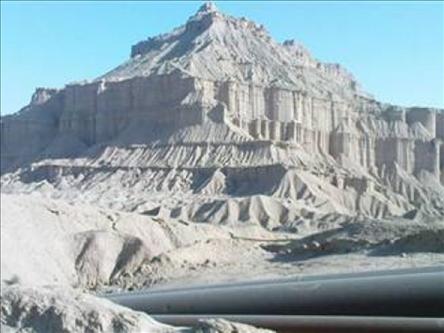
Fordow, an Iranian nuclear enrichment facility near Qom—easily mistaken for the volcano lair of a Bond villain

Fordow, an Iranian nuclear enrichment facility near Qom—easily mistaken for the volcano lair of a Bond villain

It wasn’t exactly a nail-biting finish in the end was it? In Vienna on Nov. 24, the P5+1 and Iranian negotiators decided to extend for another seven months the “interim” deal, the Joint Plan of Action (JPA), made in November 2013 on Iran’s nuclear weapons program, until June 2015. Conditions always favoured an extension but I was not absolutely sure that this is what would happen until Secretary of State John Kerry said on Nov. 21: “We are not discussing an extension.” Continue reading

There Have Been Real Achievements In Afghanistan, But Leaving Puts Them At Risk

By Kyle Orton (@KyleWOrton) on November 22, 2014

1

Since President Obama’s 2009 announcement of a ‘surge’ in Afghanistan that simultaneously announced the date of withdrawal, the western focus in Afghanistan has shifted to the exits.

The steady drizzle of bad news since then has reinforced this sense that it’s over, we’ve had enough and we’re leaving.

American and British troops quit Helmand in late October, basically ceding it to Taliban control. On Tuesday John Sopko, the head of the American auditor mechanism (SIGAR) said that efforts to promote economic growth in Afghanistan have ‘accomplished nothing.’ Continue reading

Islamic State Claims Responsibility for Terror Attacks in Australia, Canada, and America

By Kyle Orton (@KyleWOrton) on November 21, 2014

The Islamic State released the fifth edition of its English-language propaganda magazine, Dabiq, on November 21, 2014. In it, the Islamic State claimed responsibility for the terrorist attacks: in Australia by Numan Haider on September 23, in Canada by Martin Couture-Rouleau on October 20 and Michael Zehaf-Bibeau on October 22, and in America by Zale Thompson on October 23. The Islamic State says these attacks were in response to the call on September 22 by the organization’s spokesman, Abu Muhammad al-Adnani. The article is reproduced below with some minor editions for transliteration and some important sections highlighted in bold. Continue reading

Obama Won’t Help Rescue Syria’s Revolution: He Has Given Syria To Iran

By Kyle Orton (@KyleWOrton) on November 14, 2014

Bashar az-Zoubi

Bashar az-Zoubi

Reuters reports that since al-Qaeda in Syria has gravely weakened the nationalist rebels on the Northern Front, an effort is afoot to shift the focus for bolstering moderate insurrectionists to the south, namely Bashar az-Zoubi, his Liwa al-Yarmouk, and the wider “Southern Front”.
Continue reading

Working On Weapons of Mass Destruction For the Iranian Axis Is A Dangerous Job

By Kyle Orton (@KyleWOrton) on November 11, 2014

1

On Sunday night, five “nuclear energy engineers who worked in the scientific research centre near … Barzeh,” Damascus, were killed when their bus was ambushed, according to the Syrian Observatory for Human Rights. One of the engineers is believed to be Iranian technician. Whether they were killed by gun-fire or by a bomb is unclear.

The research centre referred to is the Scientific Studies and Research Centre (SSRC), and this event has an analogue in Syria: At the end of July 2013, a rebel mortar shell hit a bus carrying staff from the SSRC in Barzeh, killing six and injuring nineteen.

The SSRC is located in Jamraya in Mount Qassioun, five miles above Barzeh. The SSRC is entwined with Syria’s military-intelligence apparatus—which is to say the people running Syria before the war—and is responsible for research and production of “nuclear, biological, chemical, and missile-related technology.” Continue reading

How Dictators Manipulate Jihadists To Defeat The Opposition

By Kyle Orton (@KyleWOrton) on November 9, 2014

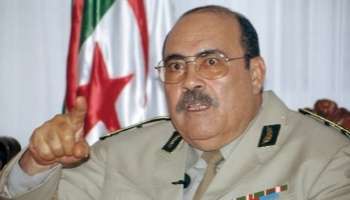
Smain Lamari (1941-2007)

Smain Lamari (1941-2007)

This Arab regime claims to be a one-party system but in reality a small Mafia-like cabal of military and intelligence officers have dispensed power for decades. Finally a democratic challenge erupts; people take to the streets demanding first reforms and, when the regime responds with pseudo-reforms and lethal violence, the fall of the government. Eventually the people fight back and an armed struggle breaks out. The regime builds its strategy around provocation, arresting and killing the liberals and democrats, infiltrating the insurgent groups and having the extremists attack the moderates, directing infiltrated groups to commit atrocities that discredit the whole insurgency, and using Iran’s international terrorist networks to lure Salafi-jihadists into the country who can help discredit the opposition’s cause in the eyes of the world. By presenting a binary picture—the regime or a terrorist takeover—the state tries to secure at least tacit support, if not direct intervention, from the West to defeat the insurgency.

No I’m not talking about Syria. This is Algeria. Continue reading

Islamic State Biography of the Spokesman: Abu Muhammad al-Adnani

By Kyle Orton (@KyleWOrton) on November 8, 2014

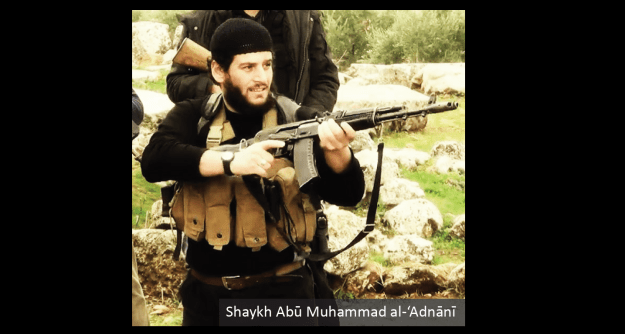
Picture of Abu Muhammad al-Adnani from the second edition of Dabiq magazine (July 27, 2014)

A Bahraini jihadist ideologue, Turki al-Binali, who has become a cleric in the Islamic State, put out a profile of the Islamic State’s official spokesman, Abu Muhammad al-Adnani, on November 1. By this account, al-Adnani took up jihadism in 2000 and was among a small cadre of people who joined the Islamic State’s founder, Ahmad al-Khalayleh, the infamous Abu Musab al-Zarqawi, when he journeyed through Syria on a recruitment-drive in 2002. Learned in Islamic jurisprudence and rigid in doctrinal literalness, al-Adnani was associated with some of the titans of the Islamic State’s legend like Abu Muhammad al-Lubnani and Abu Anas al-Shami. Appointed as emir of a small town in Anbar, Haditha, the first leader after the declaration of “the State” in 2006, Hamid al-Zawi (Abu Umar al-Baghdadi), worked under al-Adnani’s command. Al-Adnani then moved on to be an ideological instructor. Such was al-Adnani’s status, he did not have to consult al-Zarqawi before ordering operations; he only had to brief al-Zarqawi afterwards. Al-Adnani was arrested by the Americans in Iraq in May 2005, thereafter spending six years behind the wire, though never giving up his missionary activity. Indeed, the profile says al-Adnani developed the first full training program, academic and physical, for jihadi inmates. Upon release, al-Adnani took the post of official spokesman and has maintained it ever since. This profile is reproduced below with some minor editions for transliteration, syntax, and spelling. Continue reading

Is There Anyone Who Still Denies Obama’s Iran Strategy Is Détente?

By Kyle Orton (@KyleWOrton) on November 7, 2014

1

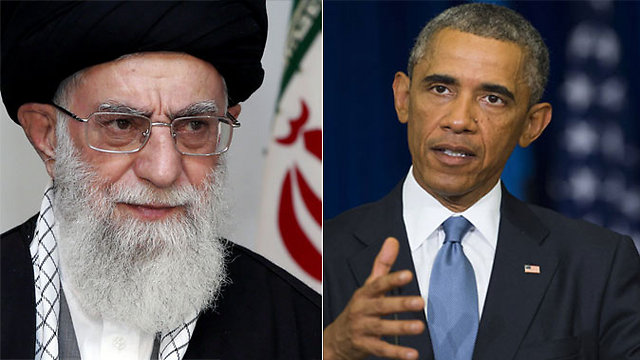
I’ve set out the evidence at length that President Obama’s apparently haphazard and hesitant policy in the Middle East is in fact driven by one, conscious, overriding intention: rapprochement with Clerical Iran. Yesterday, I pointed out that the Syrian rebellion was being left to fight alone in its struggle with al-Qaeda because the administration never had any intention of seriously supporting a moderate opposition that could be a credible alternative to the Assad regime (Iran) and the Salafi-jihadists; in Obama’s New Middle East, Syria would be an Iranian sphere of influence.

Those points rather sharpened a few hours after yesterday’s post went up. Continue reading