Tag Archives: Jabhat al-Nusra

State Department Designates Two Canadian Jihadists in Syria

By Kyle Orton (@KyleWOrton) on 14 April 2017

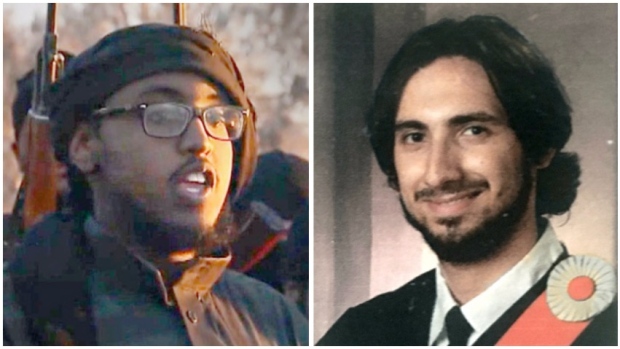
Farah Mohamed Shirdon, Tarek Sakr (image source)

The U.S. State Department added two Canadians to the list of Specially Designated Global Terrorists (SDGT) on 13 April. One of them, Tarek Sakr, of Syrian descent, is associated with Jabhat al-Nusra, al-Qaeda’s Syrian branch, which has since been through two rebrands to Jabhat Fatah al-Sham (JFS) and currently Hay’at Tahrir al-Sham (HTS). The other, Farah Mohamed Shirdon, of Somali background, is a member of the Islamic State (IS). Continue reading

An American Jihadist At the Top of the Islamic State

Originally published at The Henry Jackson Society

By Kyle Orton (@KyleWOrton) on 9 April 2017

The eighth edition of the Islamic State’s magazine, Rumiyah (Rome), was released on 5 April 2017, and contained an obituary for one of the architects of the magazine itself. Named by his kunyas, Abu Sulayman al-Shami, Abu Sulayman al-Halabi, Abu Maysara al-Shami, and Ahmad Abdul-Badi Abu Samrah, the jihadist referred to is Ahmad Abousamra, a U.S.-Syrian dual citizen. Abousamra is quite possibly the most senior American ever to have been in IS’s ranks, and the Rumiyah article gives a very interesting glimpse more generally of IS’s hierarchy. Continue reading

America Sanctions Anjem Choudary and other British Islamic State Jihadists

By Kyle Orton (@KyleWOrton) on 30 March 2017

Anjem Choudary (image source)

The State Department designated five individuals on 30 March 2017 as Specially Designated Global Terrorists (SDGTs), imposing sanctions on them for having “committed, or [for] pos[ing] a significant risk of committing, acts of terrorism that threaten the security of U.S. nationals or the national security, foreign policy, or economy of the United States.” Four of those sanctioned are members of the Islamic State (IS), including two key British operatives in the group’s global network, and the other is a member of al-Qaeda. On the same day, the Treasury Department sanctioned two IS operatives involved in funding and guiding external IS operations in the Far East and Southeast Asia. Continue reading

Australian Jihadi Spokesman Distances Hay’at Tahrir al-Sham From Al-Qaeda, Criticises America

By Kyle Orton (@KyleWOrton) on 20 March 2017

Mostafa Mahamed on Sky News, August 2016

Mostafa Mahamed (Abu Sulayman al-Muhajir) is a U.S.-designated terrorist, an al-Qaeda operative who has formally resigned from al-Qaeda’s branch in Syria, Jabhat Fatah al-Sham (JFS), which was previously Jabhat al-Nusra and has now reorganized itself as Hay’at Tahrir al-Sham (HTS). Earlier this month, on 11 March, Michael Ratney, the U.S. special envoy to Syria, released an open letter (in Arabic) labelling all constituents of HTS as terrorists seeking to exploit the Syrian opposition, and incited divisions within the Islamist sections of the insurgency by including Ahrar al-Sham—heretofore a close HTS ally, though recently involved in clashes with the group—as part of the Syrian revolution. HTS issued a formal response on 12 March and, on 20 March, Mahamed issued his own response, which is reproduced below. The main themes were anti-Americanism and dissuading the Syrian armed opposition that the U.S. was an ally; arguing that HTS was different than JFS and unconnected to al-Qaeda; and the strong impression of a threat should the U.S. move against HTS—while explicitly denying that such a threat was being made.
Continue reading

Jihadi Cleric Calls for Al-Qaeda’s Leader in Syria To Be Put on Trial

By Kyle Orton (@KyleWOrton) on March 3, 2017

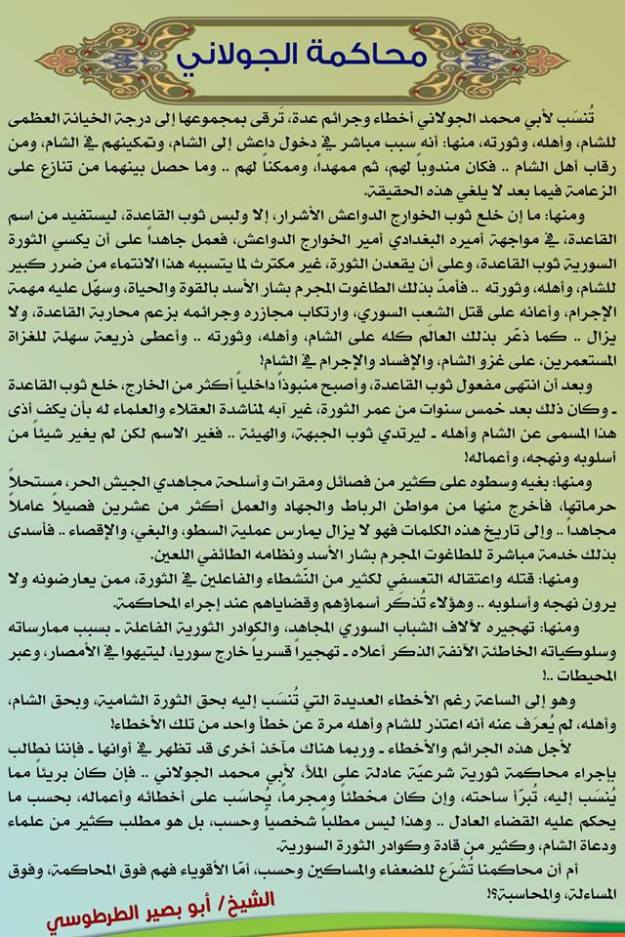
Abdul Munim Halima (Abu Basir al-Tartusi), a Syrian previously based in London, is an important jihadi-salafist scholar, who has diverged from some aspects of jihadism since the 7 July 2005 massacre on the London subway system by al-Qaeda. As the Syrian rebellion has progressed, Halima has departed even further from key jihadi ideologues that continue to take al-Qaeda’s line and support its branch in the country, Jabhat al-Nusra, which formed as a splinter from the Islamic State and has now rebranded itself as Hay’at Tahrir al-Sham. Halima has long expressed the view that al-Nusra and its leader, Ahmad al-Shara (Abu Muhammad al-Jolani), were insufficiently focused on Syrian needs. Halima tended to favour Ahrar al-Sham, an insurgent group with deep links to al-Qaeda, but which has presented its jihadism within a more nationalistic framework. Halima retains sway over Islamist opinion, especially in Syria, so his fatwa today calling for al-Shara to be put on trial for crimes against the Syrian revolution is noteworthy. Halima was especially exercised that the recent attempts by al-Shara to separate his organization from al-Qaeda came so long—and so unconvincingly—after so many had begged him for so long to carry out this policy. Instead, says Halima, al-Shara bullied and dominated the Syrian insurgency in the north under the flag of al-Qaeda, providing the regime of Bashar al-Assad with an alibi for his barbaric conduct in suppressing the insurrection. This is one of several “crimes” Halima says al-Shara should face a court for. The fatwa is reproduced below with some editions to transliteration and syntax.
Continue reading

Al-Qaeda’s Deputy Killed in Syria

By Kyle Orton (@KyleWOrton) on February 27, 2017

abu-al-khayr-car-killed-in

Last night it was reported that al-Qaeda’s overall deputy, Abu Khayr al-Masri, had been killed by the U.S.-led Coalition in Syria with a drone strike. This was soon seemingly confirmed by pro-Qaeda channels, and Abu al-Khayr was said to have been buried this morning. Though the emphasis on targeting jihadist leaders can be overdone, the demise of Abu al-Khayr is an important development, and one with significance beyond itself.

Abu al-Khayr’s career is demonstrative of a few interesting trends within the Jihadi-Salafist movement, primary among them the willingness of the Iranian revolution to work with the Sunni jihadists, al-Qaeda very much included, when it suits its purposes, particularly in undermining Western interests. Abu al-Khayr also elucidates the changed nature of al-Qaeda, where the “centre” (AQC) could now be said to be more in Syria than the Afghanistan-Pakistan, and where al-Qaeda operates both an overt and covert presence to try to secure a durable foothold in the Levant, which might in time be a base for attacks against the West, currently suspended only for tactical reasons. Continue reading

Islamic State Has Been Defeated in Al-Bab, But America Needs a New Direction in Syria

Published at The International Business Times and subsequently discussed on the IBTimes podcast

By Kyle Orton (@KyleWOrton) on February 27, 2017
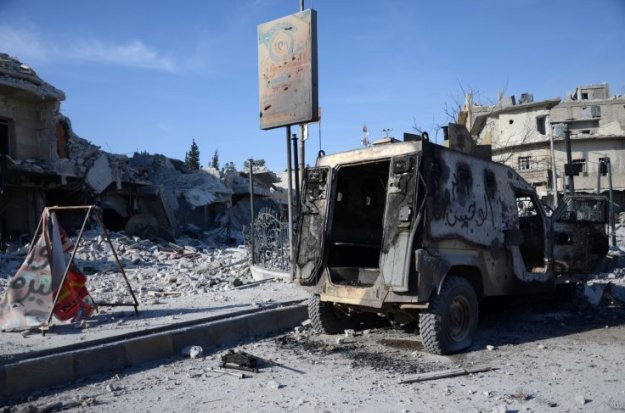
A burnt-out vehicle on a destroyed street in al-Bab on 23 February 2017 (Nazeer al-Khatib/AFP/Getty Images)

Turkey intervened in Syria in August 2016 with Operation Euphrates Shield (OES), which involved special forces, some regular troops, and the mobilisation of Syrian rebels to clear its border of terrorist threats by pushing ISIS (the Islamic State) away from the frontier and preventing the Syrian branch of the Kurdistan Workers’ Party (PKK) creating a state-let on its border that could be used as a harbour and launch-pad for attacks inside Turkey.

To secure this mission, on 13 November 2016 OES began an assault on al-Bab in the eastern countryside of Aleppo Province, just 15 miles from Turkey’s border and ISIS’ last major urban centre in Syria outside its capital, Raqqa. Some 102 days of combat later, on 23 February, al-Bab fell. What happens next could determine the course of the war as Turkey competes with the PKK to be the U.S.-led Coalition’s partner in clearing ISIS from Raqqa. Continue reading

U.S. Treasury Targets Al-Qaeda in Syria

By Kyle Orton (@KyleWOrton) on February 24, 2017

The U.S. Treasury on Thursday imposed sanctions on two senior operatives associated with al-Qaeda in Syria (AQS). This is undoubtedly part of the escalating campaign against AQS. The two men are interesting on their own account, however, and give a glimpse at some of the things that have shaped jihadism across the Fertile Crescent. In the one case, that of Iyad Nazmi Salih Khalil, better-known as Iyad al-Tubaysi or Abu Julaybib, this history begins with the earliest days of the Islamic State (IS), from which AQS splintered, in Iraq before Saddam Husayn was deposed. The other case, that of Bassam al-Hasri (Abu Umar al-Filistini), highlights the events at the outset of the Syrian uprising, when the regime of Bashar al-Assad set in motion its strategic plan to militarize and radicalize the nascent insurgency in order to present the population and the world a binary choice—the dictator or a terrorist takeover. Continue reading

Liberating Raqqa from the Islamic State

By Kyle Orton (@KyleWOrton) on February 17, 2017

As the new administration of Donald Trump works through the United States’ options in dealing with Syria, and the Islamic State (IS) specifically, one option apparently under consideration is the use of greater numbers of combat troops to accelerate the expulsion of IS from its Syrian capital, Raqqa. While more U.S. troops would undoubtedly hasten the collapse of IS’s grip on its urban strongholds in Syria, such a policy risks continuing the failed U.S. policies of the past six years in Syria that have tackled symptoms of the conflict, rather than its causes, have tried to tackle elements in isolation from the wider conflict, and have placed too great an emphasis on military progress over politics. Continue reading

Leader of New Al-Qaeda Group in Syria Speaks

By Kyle Orton (@KyleWOrton) on February 9, 2017

hashem-al-shaykh-2

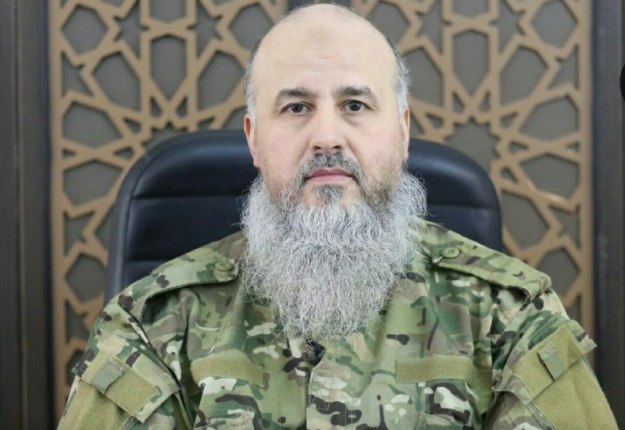
After a series of intra-insurgent clashes beginning on 19 January 2017 in northern Syria, al-Qaeda’s rebranded presence, Jabhat Fatah al-Sham (JFS), annexed several groups and clerics—and a number more since—on 28 January in a merger that took on the name Hay’at Tahrir al-Sham (HTS). JFS followed the pattern of its parent branch, the Islamic State, and did not monopolize the leadership posts in HTS, leaving the emir post to Hashem al-Shaykh (Abu Jabbar). Al-Shaykh is a former senior official of Ahrar al-Sham, an insurgent group that also has links to al-Qaeda and has been the primary bridge between the mainstream rebellion in Syria and al-Qaeda. Al-Shaykh gave his first speech as General Leader of Hay’at Tahrir al-Sham on 9 February, and Bilad al-Sham Media put out a transcript (reproduced below) and picture (above). Continue reading