By Kyle Orton (@KyleWOrton) on 12 May 2025
By Kyle Orton (@KyleWOrton) on 22 November 2021
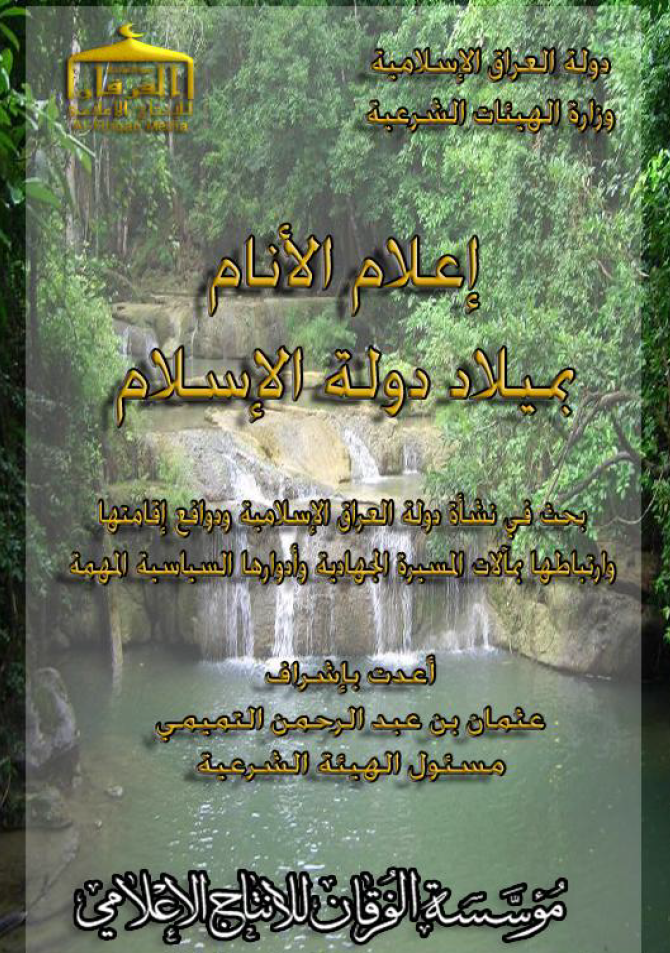
The Islamic State movement published an 87-page book, “Informing Mankind of the Birth of the Islamic State” or “Informing the People of the Birth of the Islamic State” (I’lam al-Anam bi-Milad Dawlat al-Islam), on 7 January 2007. The document was released by Al-Furqan Media Foundation, the central Islamic State propaganda institution, and first appeared on the World News Network website. A rough translation of the book appears below.
By Kyle Orton (@KyleWOrton) on 16 November 2020
This article was originally published at European Eye on Radicalization

Credible reports over the last few days indicate that Al-Qaeda’s leader Ayman al-Zawahiri is dead, and there are even clearer reports that two of his most senior deputies have been killed. The terrorist network itself, however, will survive. Al-Qaeda has, in the last ten years, survived the killing of its charismatic founder Usama bin Laden, the upheaval of the “Arab spring”, and the rise of the Islamic State (IS)—all of them greater challenges than whatever short-term turbulence might attend the succession process.
Continue readingBy Kyle Orton (@KyleWOrton) on 28 February 2018
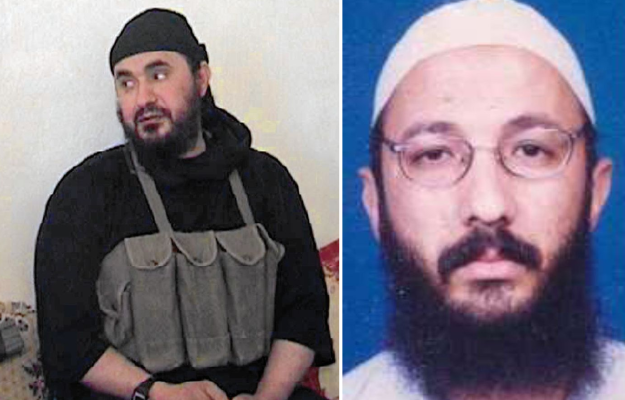
Ahmad al-Khalayleh (Abu Musab al-Zarqawi) [picture via Getty], Muhammad Zaydan (Sayf al-Adel) [picture via Kronos Advisory LLC]
By Kyle Orton (@KyleWOrton) on 5 February 2018
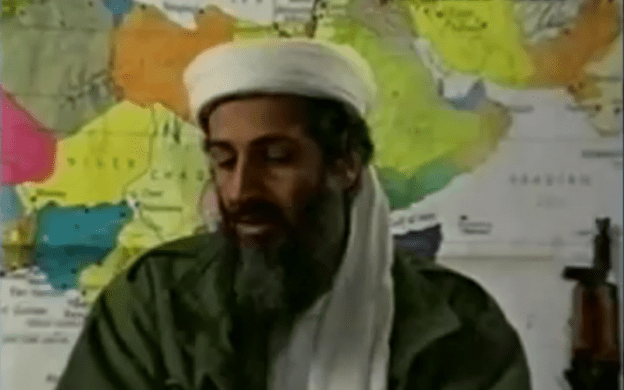
Usama bin Ladin in an al-Qaeda video (image source: CNN)
A letter released by the Office of the Director of National Intelligence (ODNI) on 20 May 2015, the “Letter to Abu Abdallah al-Hajj”, was written by an al-Qaeda leader on 17 December 2007. The letter, reproduced below with some editions in transliteration and some important sections highlighted bold, is interesting for several reasons. Continue reading
By Kyle Orton (@KyleWOrton) on 30 December 2017
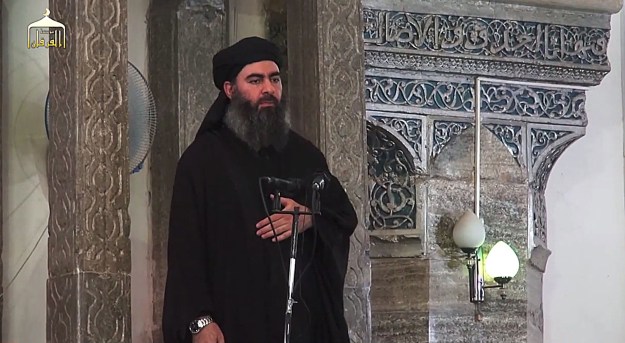
The leader of the Islamic State, Ibrahim al-Badri (Abu Bakr al-Baghdadi), speaking at the Zengi Mosque in Mosul, 4 July 2014 // AP Images
The current leader of the Islamic State (IS), Ibrahim al-Badri (Abu Bakr al-Baghdadi), was appointed as al-amir al-mu’mineen (the commander of the faithful or prince of the believers) on 16 May 2010, after his predecessor, Hamid al-Zawi (Abu Umar al-Baghdadi), was killed on 18 April 2010 in the company of his deputy and “war minister”, Abdul Munim al-Badawi (Abu Hamza al-Muhajir). The official statement appointing al-Badri is reproduced below. Continue reading
By Kyle Orton (@KyleWOrton) on 20 July 2017
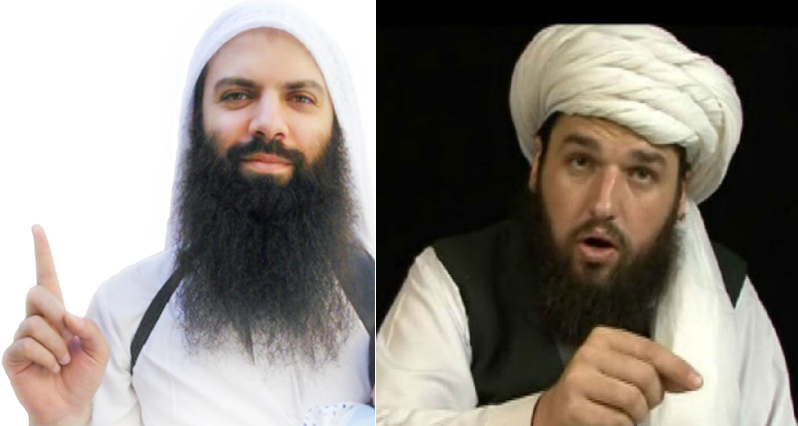
A couple of months ago, the Islamic State revealed that one of its most senior officials in the crucial media department until his death in January 2017 was an American, Ahmad Abousamra, known by various kunyas, including Abu Sulayman al-Shami and Abu Maysara al-Shami. Looking around afterwards, I came across an article by Abousamra condemning Adam Gadahn, another American, who was part of the core leadership of Al-Qaeda—one of the handful of men around Usama bin Laden and then Ayman al-Zawahiri—until he was killed in January 2015.
By Kyle Orton (@KyleWOrton) on 30 April 2017

Abu Mahmud al-Filistini (@battar2812) is a London-based jihadi cleric, one of those to whom al-Qaeda’s loyalists look for guidance. An essay by Abu Mahmud, “An Indispensable Though Imperfect Unity,” has been put out defending Hay’at Tahrir al-Sham (HTS), the restructured al-Qaeda presence in Syria. Abu Mahmud writes mostly against those who are attacking HTS “from the Right,” the jihadists who believe that the rebranding and merging with groups of distinctly imperfect jihadi-salafist credentials like Harakat Nooradeen al-Zengi is a betrayal of the cause. Abu Mahmud writes specifically and harshly against Issam al-Barqawi (Abu Muhammad al-Maqdisi), the Jordan-based cleric who is the leading light of the part of the jihadi world that did not go over to the Islamic State, without ever naming him. The essay is reproduced below with some interesting and/or important parts highlighted in bold, and some notes added. Continue reading


 Kyle Orton's Blog