Tag Archives: Jaysh al-Islam

Moscow Rules in Syria, Again

By Kyle Orton (@KyleWOrton) on September 11, 2016
1

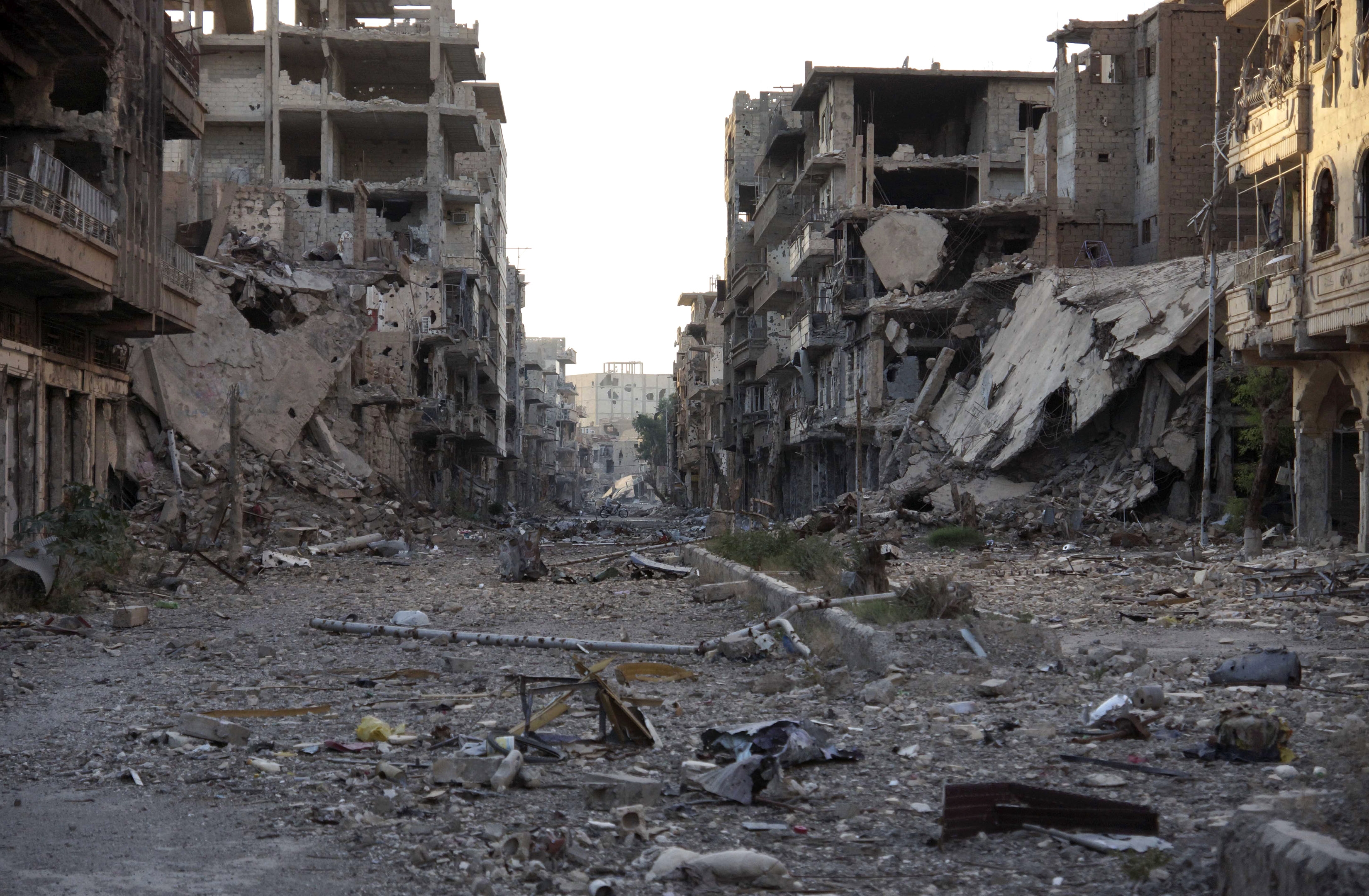
In Geneva on 9 September 2016, the United States and Russia announced an agreement to implement a ceasefire—formally a “cessation of hostilities” (CoH)—in Syria, which is intended to allow humanitarian access and restart the political process to end of the war, and then to begin jointly targeting the Islamic State (IS) and al-Qaeda’s Syrian branch, formerly Jabhat al-Nusra, recently rebranded Jabhat Fatah al-Sham (JFS).

There is reason to wonder if the deal will ever take effect and the lack of an enforcement mechanism against Bashar al-Assad’s regime leaves open the possibility that the pro-regime coalition will, as it did after the February ceasefire, abuse this process to their advantage.

Most dauntingly, if this process worked to the letter it will legitimate the gains of the regime’s aggression, carried out under the cover of the last ceasefire, and has the potential to weaken the insurgency and embolden the regime, strengthening radicalism on all sides, pushing a political settlement further away, and thus protracting the war. Continue reading
The Sieges of Syria

By Kyle Orton (@KyleWOrton) on March 2, 2016

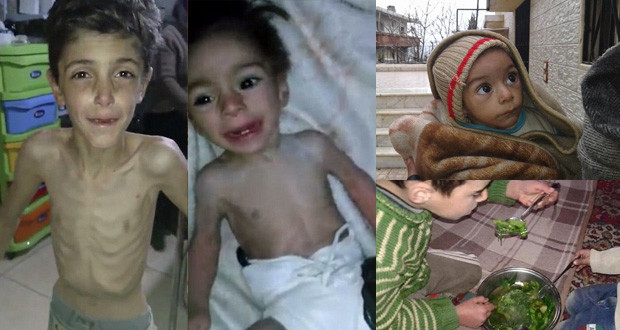
Starving children in Madaya

A website, siegewatch.org, has been set up that tracks the areas under siege in Syria. Siege Watch is a joint project of PAX, an organization that works in conflict zones to foster peace, and The Syria Institute, a non-partisan research centre directed by Valerie Szybala.

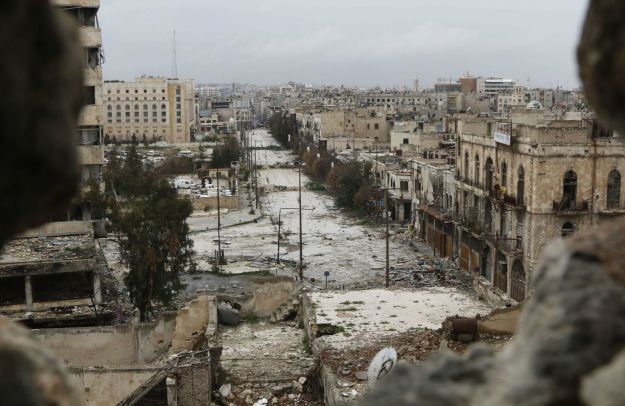
At the present time, according to Siege Watch, there are forty-six sieges operating in Syria, forty-three of them (93.5%) imposed by the Assad regime, two (4.5%) imposed by Jaysh al-Fatah, an insurgent coalition that includes Jabhat an-Nusra (al-Qaeda in Syria), and one (2%) by the Islamic State (IS).

Siege Watch also documents the severity of the sieges in three categories. Category one (C1) is the most severe: very little gets in even by smuggling and international aid deliveries are rare if at all; the risk of malnutrition is high. Category two (C2) sieges are porous enough for the black market and/or locals might have some access to locally-grown produce, but prices for basics are extremely high and residents are at “some risk of malnutrition/dehydration”. Category three (C3) sieges require smuggling to get food, but there is a consistent supply, even if home-grown. While risk of malnutrition is low in C3 zones, medical emergencies are likely because of attacks by besieging forces.

All six C1 sieges are imposed by the regime. Thirty category C2 sieges are operating: twenty-nine by the regime and one by IS. The regime is also operating eight C3 sieges and Jaysh al-Fatah is operating two C3 sieges. Continue reading

Russia is No Partner Against the Islamic State

By Kyle Orton (@KyleWOrton) on February 12, 2016

1

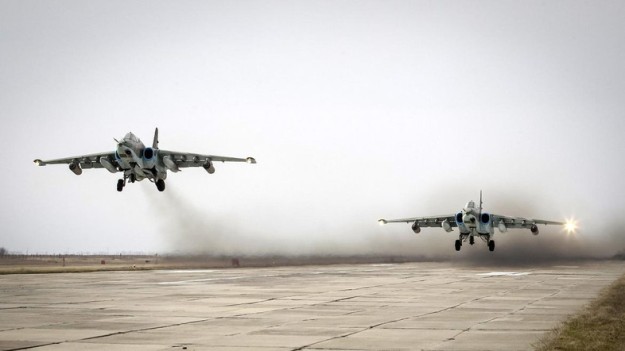
This morning, Russia ostensibly agreed to help the U.S. impose a ceasefire in Syria within a week—on the way to a negotiated settlement. This could not work right now, even if Russia intended it to. But Russia does not. Russia’s role since intervening in Syria in late September 2015 has been to bolster the regime of Bashar al-Assad and a primary tactic in that overarching strategic aim has been the attempt to destroy all opposition to Assad that the international community could possibly deal with, and to create a binary situation where there is only the regime and jihadi-Salafist terrorists, primarily the Islamic State (IS), and secondarily—in areas where they do not threaten key regime interests—Jabhat an-Nusra (al-Qaeda). Moscow will eventually turn on IS, but in the short-term Russia has engaged in indirect coordination with IS to weaken the rebels and push them out of key strategic areas, notably in eastern Aleppo where Russia bombed rebels out of the way who had been holding IS out for years. On Tuesday, Foreign Policy reported on another aspect of this Russia-IS collaboration that aims to empower the takfiris in the short-term as part of the long-term plan, also supported by Iran, to secure the Assad regime in power. Continue reading

In View of Vienna

By Kyle Orton (@KyleWOrton) on December 15, 2015

Published at NOW Lebanon.

1

So the Syrian opposition can unite. Foreign powers have been the major cause of rebel discord. Previous rebel unity initiatives like the Joint Command were pulled apart by the competition between the insurgency’s sponsors—Saudi Arabia and Qatar primarily—and the last rebel umbrella group, the Supreme Military Council, which was identified with Western power, collapsed after President Barack Obama decided not to punish Bashar al-Assad for the massive chemical weapons attack on the population of Ghouta. But under Saudi auspices, an opposition “team” was announced on December 10 after a three-day conference in Riyadh, which includes the political and military opposition and groups with varying ideologies and patrons. This is an achievement. Unfortunately, this team’s task is an impossible one: intended to partake in the Vienna process begun in October, ostensibly to negotiate an end to the war, Syria is not, at present, in a condition where a political agreement can be made and implemented, not least because the Assad regime and its supporters in Iran and Russia have doubled down, and the opposition continues to receive insufficient support to pressure the regime enough to force an agreement. Continue reading

As Syria’s Opposition Tries To Unite, Prospects For Peace Recede

By Kyle Orton (@KyleWOrton) on December 9, 2015

A version of this article was published at Middle East Eye.

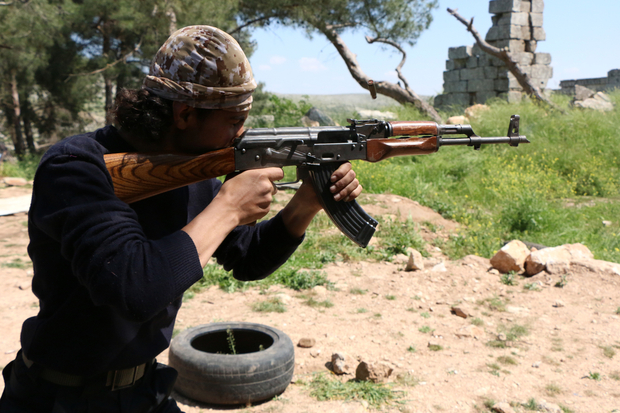
A rebel fighter from the Free Syrian Army's

A rebel fighter from the Free Syrian Army’s “First Battalion” takes part in military training on May 4, 2015, in rebel-held northern Rif Aleppo. (AFP, Baraa al-Halabi)

The Syrian opposition is meeting in Saudi Arabia between December 8 and 10 in an attempt to create a unified structure that can credibly sit across the table from the Bashar al-Assad regime in the internationally-organised peace talks in Vienna, and make a binding commitment on the path forward for Syria. Continue reading

Syria’s Many Moderate Rebels

By Kyle Orton (@KyleWOrton) on November 30, 2015

A version of this article was published at NOW Lebanon.

Rebels from the Southern Front in northwest Deraa, March 2015

Rebels from the Southern Front in northwest Deraa, March 2015

In early November, the Foreign Affairs Select Committee released a report challenging the British government’s proposal to extend airstrikes from Iraq into Syria against the Islamic State (IS). Among other things, the report asked for a proposed political path to ending the Syrian civil war, a necessary prerequisite to defeating IS. On Thursday, Prime Minister David Cameron released a response, part of which said:

Military action against ISIL will also relieve the pressure on the moderate opposition, whose survival is crucial for a successful transition to a more inclusive Syrian government. Syria has not been, and should not be, reduced to a choice between Assad or ISIL. Although the situation on the ground is complex, our assessment is that there are about 70,000 Syrian opposition fighters on the ground who do not belong to extremist groups.

This number has blown up into a major political row, with many Members of Parliament and pundits taking their personal unfamiliarity with Syria’s military landscape as evidence that it cannot be so. The Labour Opposition has made the number of non-extremist rebels a focal point of their challenge to the Prime Minister’s proposal for moving forward in Syria, and one of Cameron’s own Conservative MPs referred to the number as “magical”. The challenge to the number is part of a longer-term trend, where a narrative has become prevalent that there are no moderate opposition forces left in Syria. The corollary of this view is usually the argument that the West should side with the “secular” Assad regime as the “lesser evil” to put down a radical Islamist insurrection.

Sidestepping the ignorance that goes into believing a blatantly sectarian regime propped up by an international brigade of Shi’a jihadists is secular: What of this claim that there are no moderate rebels left? It isn’t true, as I recently made clear in a paper for The Henry Jackson Society. Continue reading

To Defeat The Islamic State, Get Rid Of Assad First

By Kyle Orton (@KyleWOrton) on July 3, 2015

1

The British government is considering beginning airstrikes into Syria against the Islamic State (ISIS). London is currently engaged in airstrikes against ISIS in Iraq and has troops in the Kurdish areas of northern Iraq training and advising the Peshmerga.

Since ISIS’ territory in Syria is its “most valuable and sustainable,” the case for ignoring a border that ISIS has erased would seem to be a good one.

But no less a figure than the Conservative chair of the defence select committee, Julian Lewis, thinks otherwise:

In 2010 the government wanted to remove Assad without helping al-Qaeda or similar groups that subsequently became Daesh. Now we apparently want to remove Daesh but without helping Assad. These two things are incompatible. It is a choice of evils.

The view that Syria is divided between the Assad dictatorship and ISIS has become commonplace. It is mistaken. Continue reading

Turkey and Saudi Arabia Move Against Assad

By Kyle Orton (@KyleWOrton) on May 5, 2015

1

Zahran Alloush, Abu Issa, Hashem al-Sheikh

An effort is underway, led by Saudi Arabia and Turkey, mediated by Qatar, to unify the largest Syrian Islamist rebel brigades. With these regional powers now seemingly reading from the same script after years of internecine competition that has fractured the Syrian rebellion, there is also talk of a direct Saudi-Turkish intervention in Syria to overthrow Bashar al-Assad. While increased support to the Syrian insurgency from the Gulf and Turkey is already arriving, a direct intervention seems unlikely, though not, in the current context after the Saudi-led coalition went it alone in Yemen, impossible.  Continue reading

Defeat Jihadists in Syria by Being a Better Ally to the Opposition

By Kyle Orton (@KyleWOrton) on March 25, 2015

A still  from the video announcing the Ahrar a-Sham-Suqour a-Sham merger

A still from the video announcing the Ahrar a-Sham-Suqour a-Sham merger

Ahrar a-Sham “merged with“—in reality annexed—Suqour a-Sham on March 22. Ahrar’s leader, Hashem al-Sheikh (a.k.a. Abu Jabbar), is the leader of the Ahrar-Suqour formation, and Suqour’s leader, Ahmed Issa al-Sheikh (a.k.a. Abu Issa) is his deputy. Ahrar is the largest and most hardline Syrian insurgent group in Syria, and Suqour has a fairly stern Salafi-nationalist ideology—at least at its leadership level—and was once the largest rebel group in Idlib Province.

The first thing this brought to mind was Sam Heller’s witticism late last year: “the most successful, lasting approach to rebel unification so far has basically been ‘Ahrar al-Sham absorbs you’.” Continue reading

A Debate On America’s Role In Syria’s Future

By Kyle Orton (@KyleWOrton) on January 21, 2015

Devastation in Deir Ezzor, June 2013

Devastation in Deir Ezzor, June 2013

The McCain Institute hosted a debate last Thursday on the question, “Syria: Should the United States Do More?” Arguing in favour of the motion that the United States should do more was Michael Doran and Andrew Tabler. Arguing against were Joshua Landis and Aaron David Miller. Continue reading