Tag Archives: Kurdistan Workers’ Party

America Picked the Wrong Allies Against the Islamic State

By Kyle Orton (@KyleWOrton) on February 17, 2016

Article published at NOW Lebanon
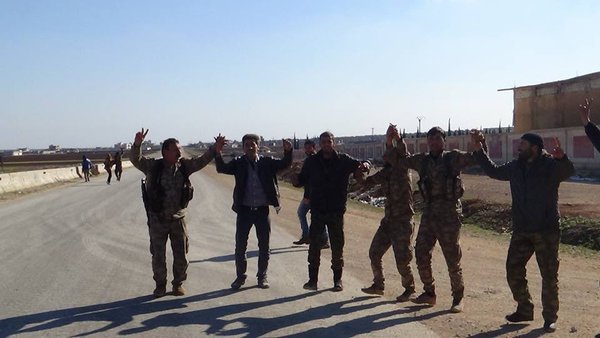
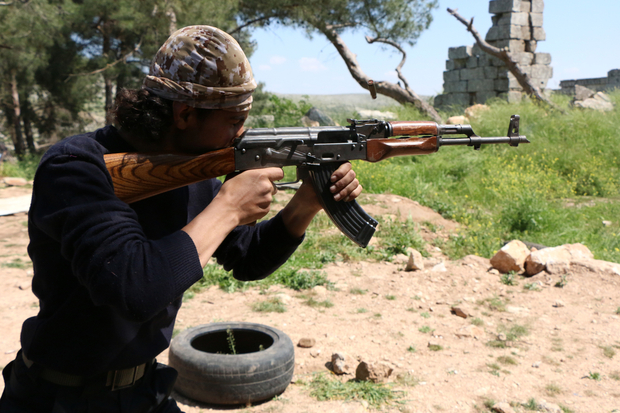
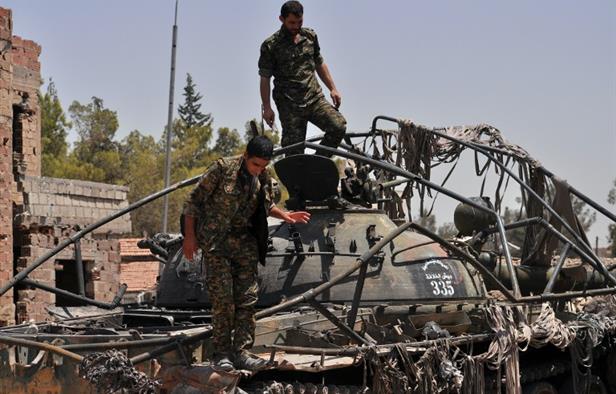
PYD/PKK fighters after they took over the Mannagh airbase on February 10, 2016.

PYD/PKK fighters after they took over the Mannagh airbase on February 10, 2016.

Over the last six weeks the regime of Bashar al-Assad—which by this point means in most areas Iranian-run ground forces and Russian air power—have made territorial gains in northern Syria that threaten the existence of the armed opposition in the area. This threat has been compounded by the Kurdish Democratic Union Party (PYD) and allies, which have also drawn on Russian airstrikes to attack the rebellion in the same areas. The U.S.-led coalition against the Islamic State (ISIS) has made the PYD its main proxy inside Syria—the only force that can call in coalition airstrikes. This policy was obviously flawed given the view of the PYD by necessary anti-ISIS allies like Turkey and the demographic realities of ISIS, which require Sunni Arabs to be able to police their area, and ensure that ISIS begins to look like a protector of Sunnis if Kurds occupy Arab areas; the PYD now attacking the crucial anti-ISIS demographic in alliance with the regime underlines that fact. Continue reading
Russia is No Partner Against the Islamic State

By Kyle Orton (@KyleWOrton) on February 12, 2016

1

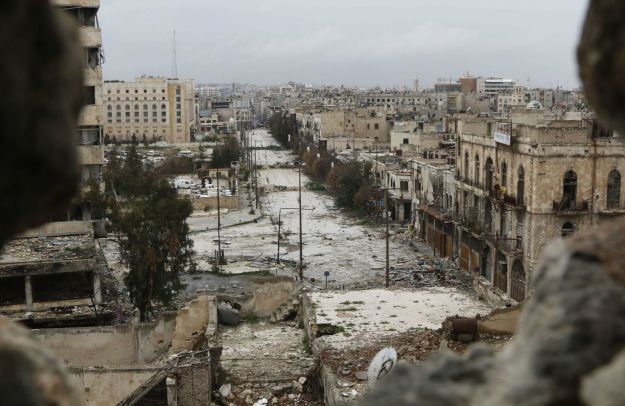
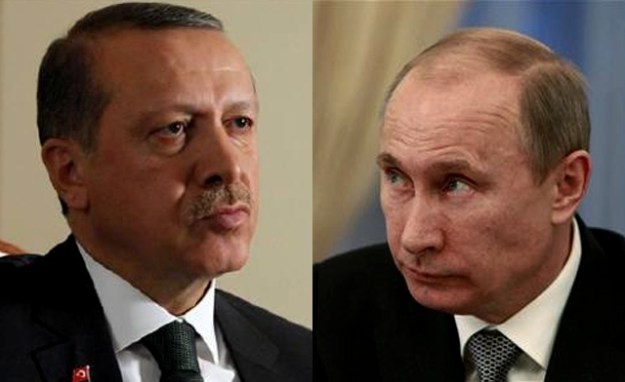
This morning, Russia ostensibly agreed to help the U.S. impose a ceasefire in Syria within a week—on the way to a negotiated settlement. This could not work right now, even if Russia intended it to. But Russia does not. Russia’s role since intervening in Syria in late September 2015 has been to bolster the regime of Bashar al-Assad and a primary tactic in that overarching strategic aim has been the attempt to destroy all opposition to Assad that the international community could possibly deal with, and to create a binary situation where there is only the regime and jihadi-Salafist terrorists, primarily the Islamic State (IS), and secondarily—in areas where they do not threaten key regime interests—Jabhat an-Nusra (al-Qaeda). Moscow will eventually turn on IS, but in the short-term Russia has engaged in indirect coordination with IS to weaken the rebels and push them out of key strategic areas, notably in eastern Aleppo where Russia bombed rebels out of the way who had been holding IS out for years. On Tuesday, Foreign Policy reported on another aspect of this Russia-IS collaboration that aims to empower the takfiris in the short-term as part of the long-term plan, also supported by Iran, to secure the Assad regime in power. Continue reading

Is Turkey Responsible for the Islamic State?

By Kyle Orton (@KyleWOrton) on December 20, 2015

1

Turkey concluded its biggest investigation to date into Islamic State (IS) operatives on its territory on Friday, and blacklisted sixty-seven people. This provides a good moment to review what Turkey’s role has been in the rise of IS, especially amid the escalating accusations from Russia that Turkey is significantly responsible for financing IS. The reality is that while Turkish policy has, by commission and omission, made IS stronger than it would otherwise have been, so has Russia’s policy—and Russia’s policy was far more cynical than Turkey’s, deliberately intended empower extremists to discredit the rebellion against Bashar al-Assad. Turkey’s focus on bringing down Assad and Ankara’s fear of Kurdish autonomy led it into these policies and now—having seemingly found the will to act to uproot IS’s infrastructure on Turkish territory—there is the problem of actually doing so, when IS can (and has) struck inside Turkey. The concerns about these external funding mechanisms for IS, while doubtless important, obscure the larger problem: IS’s revenue is overwhelmingly drawn from the areas it controls and only removing those areas of control can deny IS its funds. Continue reading

As Syria’s Opposition Tries To Unite, Prospects For Peace Recede

By Kyle Orton (@KyleWOrton) on December 9, 2015

A version of this article was published at Middle East Eye.

A rebel fighter from the Free Syrian Army's

A rebel fighter from the Free Syrian Army’s “First Battalion” takes part in military training on May 4, 2015, in rebel-held northern Rif Aleppo. (AFP, Baraa al-Halabi)

The Syrian opposition is meeting in Saudi Arabia between December 8 and 10 in an attempt to create a unified structure that can credibly sit across the table from the Bashar al-Assad regime in the internationally-organised peace talks in Vienna, and make a binding commitment on the path forward for Syria. Continue reading

Why Solely Backing the PYD Against the Islamic State is a Mistake

By Kyle Orton (@KyleWOrton) on October 20, 2015

Published at NOW Lebanon.

1

The Pentagon-run train-and-equip (T&E) program had intended to take Syrian rebels, stop them from being rebels by preventing them from fighting the Assad regime, and repurpose them into an American-directed strike force against the Islamic State (ISIS). Unsurprisingly, there were few takers and the program ended in disaster and humiliation. In the wake of this failure, President Barack Obama has turned away from the Arab rebels and looked to the Syrian Kurds to fight ISIS. This is a strategy that is not only doomed to fail—since Sunni Arabs taking responsibility for their local security is the only way to sustainably defeat ISIS—but would, if implemented, make the ISIS problem worse. A report from Amnesty International this week documenting crimes, including ethnic cleansing, by the armed Kurdish forces against Arabs and Turkmens in northern Syria also provides an occasion to look more closely at a force with a history of regime collaboration, political extremism, and terrorism. Continue reading

Islamist Clerics Reject Abu Muhammad al-Maqdisi’s Stance on Islamic State

By Kyle Orton (@KyleWOrton) on August 30, 2015

1

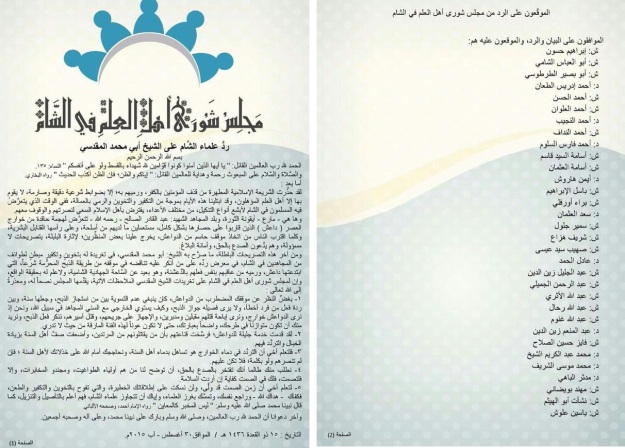
A council of ulema (clerics), some within Syria and some abroad, al-Majlis Shura Ahl al-ilm fil-Sham (Advisory Council of the People of Knowledge in Syria), was formed late last month. Its first statement was to condemn the 25 July assassination of the Faylaq al-Sham commander Mazin al-Qassum by Islamic State (IS) operatives with Jund al-Aqsa, and to demand that all groups clarify their stance on IS and expel IS agents and sympathizers from their ranks. A fatwa early this month said it was permissible to work with Turkey against IS and the Kurdistan Workers’ Party (PKK), which in Syria operates politically under the name of the Democratic Union Party (PYD) and militarily as the People’s Protection Units (YPG).

Among the leading names associated with this new council are three foreign Islamist scholars: Umar al-Hadouchi, a Moroccan jihadi-salafist; Muhammad al-Hassan Ould al-Dedew al-Shinqiti (not to be confused with Abu al-Mundhir al-Shinqiti), a Mauritanian more closely aligned with Sururism than outright jihadism; and Abdallah al-Muhaysini, a Saudi jihadist who is inside Syria and a member of al-Qaeda in everything but name. Prominent Syrians involved include Dr. Ayman al-Harush, associated with Ahrar al-Sham, and another Ahrar member, a shar’i, Mohamed Ayman Aboul-Tout (Abu Abbas al-Shami), who fought against the Assad regime during the revolt in the 1980s as part of the most extreme Islamist splinter from the Muslim Brotherhood, the Fighting Vanguard. There is also the son of Abd al-Karim, an important figure in the Hama branch of the Muslim Brotherhood, Sa’ad al-Uthman; a follower of the ideas of Muhammad Surur that mix Salafism with political agitation, Ahmad al-Salum, and many others.

Majlis Shura Ahl al-ilm fil-Sham put out a statement today, “Response of the Ulema of Sham to Shaykh Abu Muhammad al-Maqdisi”. Al-Maqdisi’s real name is Issam al-Barqawi; he is based in Jordan and is the most influential jihadi-salafist cleric. The Council attacks al-Maqdisi for what they perceive as his softness toward IS. The statement, translated by @nasrshahada, is reproduced below. Continue reading

Islamist Clerics Give Permission to Work with Turkey Against ISIS and PKK

By Kyle Orton (@KyleWOrton) on August 4, 2015

Just over a week ago, a new clerical body was formed, al-Majlis Shura Ahl al-ilm fil-Sham (Advisory Council of the People of Knowledge in Syria), which includes Islamists from within Syria and from outside. Among the notable foreigners are Umar al-Hadouchi, a Moroccan jihadi-salafist, and Muhammad Ould al-Dedew, a Mauritanian who is more in line with the Sururis. There is also Abdallah al-Muhaysini, the Saudi jihadi cleric who is very close to al-Qaeda’s leadership inside Syria. From among Syrians, there are two Ahrar al-Sham notables, Dr. Ayman al-Harush and Mohamed Ayman Aboul-Tout (Abu Abbas al-Shami); Sa’ad al-Uthman, the son of Abd al-Karim, a major figure in the Hama wing of the Syrian Muslim Brotherhood, and Ahmad al-Salum, a Sururi (an activist/political Salafi).

The Council’s first statement condemned the 25 July assassination of the Faylaq al-Sham commander Mazin al-Qassum by Islamic State (IS) operatives with Jund al-Aqsa, and demanded that all groups clarify their stance on IS and cleanse their ranks of IS agents and sympathizers. Today’s fatwa, “Concerning cooperation and coordination with the Turks in repelling Daesh and the PKK,” licensed Muslims to work with the Turkish government against IS and the PKK. The fatwa is reproduced below. Continue reading

Turkey Fears A Kurdish State More Than The Islamic State

By Kyle Orton (@KyleWOrton) on July 28, 2015

A version of this article was published at NOW Lebanon 

1

After years of threatening, Turkey directly intervened in Syria on Friday, launching airstrikes against the Islamic State (ISIS), and finally allowed the U.S. to use Incirlik for jet and drone attacks against ISIS. Concurrently, Turkey launched airstrikes into Iraqi Kurdistan against the Kurdistan Workers’ Party (PKK). Ankara is framing this as an equal-opportunities war on terrorists, but Turkey’s actions over the last four years in Syria give a lot of cause for wonder as to which side Ankara is on when it comes to terrorism. Continue reading

Syrian Kurds Announce Unified Foreign Fighter Unit

By Kyle Orton (@KyleWOrton) on June 13, 2015

Logo of the Internationalist Freedom Battalion or Enternasyonalist Ozgurluk Taburu (EOT)

The Kurdish People’s Protection Forces (YPG), the Syrian branch of the Kurdistan Workers’ Party (PKK), has been in receipt of a flow of non-Kurdish, mostly-Western foreign fighters for approximately a year. These volunteers had gathered in informal groupings such as the “Lions of Rojava,” a primarily English-speaking unit of non-ideological ex-military men. The recruitment pattern of the YPG has begun to shift, however, and the stream of foreign fighters to “Rojava,” as the YPG calls the areas it rules, has become increasingly ideological. In January, a process was begun to create a unified structure—or at least a brand—for the disparate foreign groups and individuals in Rojava. This effort concluded two days ago with the formation of the International Freedom Battalion (EOT).
Continue reading

Calls for U.S. Government to Recover ‘Mentally Unbalanced’ YPG Foreign Fighter

By Kyle Orton (@KyleWOrton) on June 9, 2015

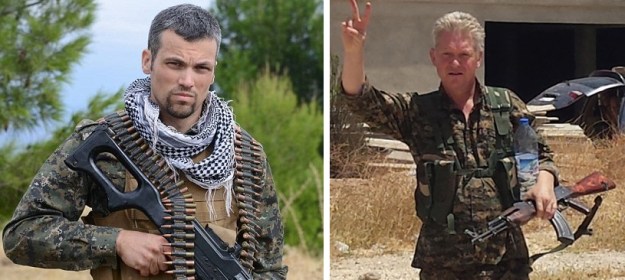
Jordan Matson, Michael Enright

Jordan Matson, an American fighting in the ranks of the People’s Protection Units (YPG), the Syrian wing of the Kurdistan Workers’ Party (PKK), posted a message to Facebook on 4 June 2015 about Michael Enright, a British YPG fighter who had been living in America and working as an actor. Matson says that Enright is “mentally unstable,” had come to Syria to sell his story and write a movie script, and had been disarmed and isolated by the YPG already because of the worry that he would harm himself or be harmed by others. Matson’s message is posted below with typos and “text speak” corrected. Continue reading