Tag Archives: Lebanon

A Year In, Trump’s Syria Policy Looks A Lot Like Obama’s

Originally published at Ahval

By Kyle Orton (@KyleWOrton) on 18 December 2017

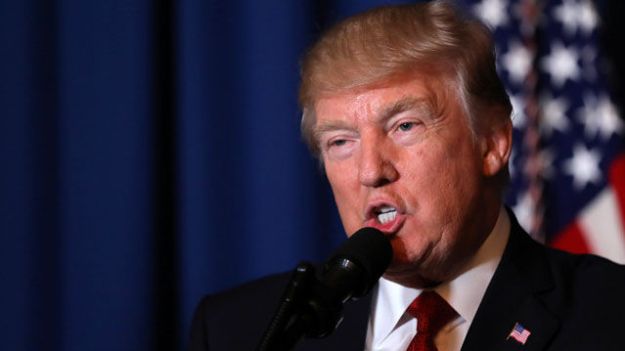
Nearly a year into Donald Trump’s administration, the president has followed the track laid down by his predecessors in Syria, accelerating it in some cases, and reinforcing the negative trends of Barack Obama’s defective policy that will undo even apparent successes, like the destruction of the Islamic State’s (ISIS) “caliphate”. Continue reading

America’s Kurdish Allies in Syria Drift Toward the Regime, Russia, and Iran

By Kyle Orton (@KyleWOrton) on 10 December 2017

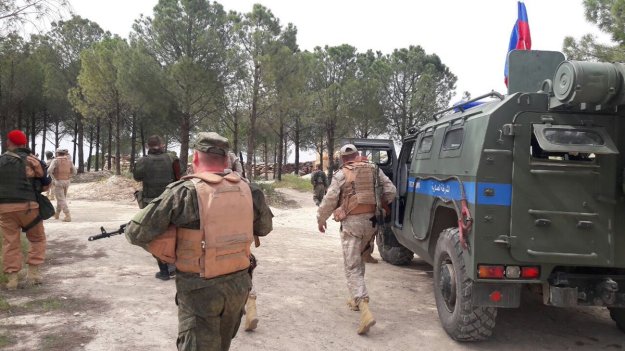
Russian soldiers in Efrin, Syria, 1 May 2017 (source)

The American-led Coalition against the Islamic State (IS) partnered with the “Syrian Democratic Forces” (SDF), a political façade for the proscribed Kurdistan Workers’ Party (PKK), as the ground force in Syria. The most ventilated problems with this partnership so far have been the strain it has put on relations with NATO ally Turkey, against which the PKK has run a terrorist-insurgency for more than thirty years, and the deep local suspicion of the PKK’s governing program that might yet reverse the gains against IS and open political space for other jihadists like al-Qaeda. Another of the problems is now gaining salience: the PKK’s long-term alliance with Bashar al-Asad’s regime and the states—Russia and Iran—that keep it alive. Continue reading

Iran Escalates its Subversive Activities in Bahrain

Post originally appeared at The Henry Jackson Society

By Kyle Orton (@KyleWOrton) on 19 November 2017

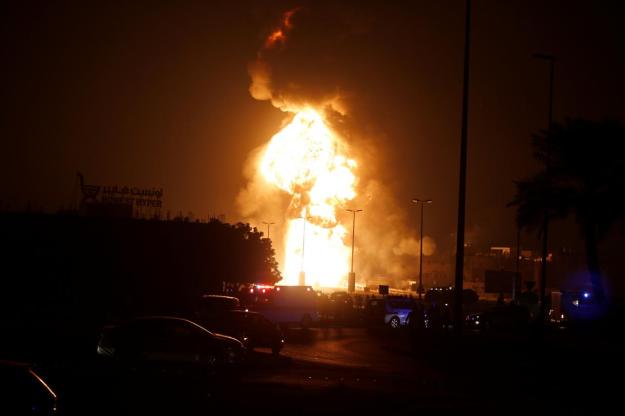
Fire at the oil pipeline in Buri village, south of Manama, Bahrain, 10 Nov. 2017. REUTERS/Hamad I Mohammed

Just over a week ago, the major oil pipeline in Bahrain was bombed by operatives the government says were working for the Islamic Republic of Iran. This is the latest in an escalating series of terrorist attacks inside Bahrain. Throughout the year, Manama has also been rolling up terrorist cells that have links to Iran’s intelligence services and Bahraini citizens now in Iran that form part of Tehran’s regional terrorist network. The breakdown in Gulf unity is especially worrying in the face of this intensified Iranian aggression and subversion in Bahrain. Continue reading

The Role of Turkey in Syria

By Kyle Orton (@KyleWOrton) on 16 August 2017

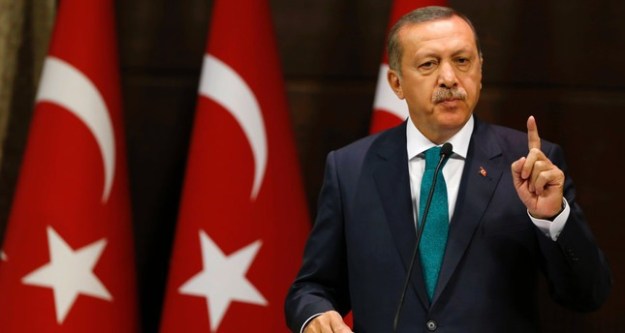
Recep Tayyip Erdogan (image source)

The Turkish government has gotten more and more deeply involved in Syria since the uprising began in 2011. But Turkey now finds its original aim, namely the overthrow of Bashar al-Assad’s regime, unattainable, creating tensions with the Syrian armed opposition, its primary lever inside Syria, and there are considerable problems stabilizing the zone of Syria that came under Turkish occupation after Ankara’s direct intervention in 2016. The defeat of Turkey’s primary objective has been accompanied by the rise of further problems, notably the exacerbation of its longest-standing internal security threat, that posed by the Kurdistan Workers’ Party (Partiya Karkerên Kurdistan – PKK), and the generation of new internal threats, from the Islamic State (IS) and potentially from al-Qaeda-linked groups. The options for solving these problems are constrained and unpalatable. Continue reading

Partners in Terror: The Assad Regime and the Islamic State

By Kyle Orton (@KyleWOrton) on March 9, 2016

Article published at NOW Lebanon

1

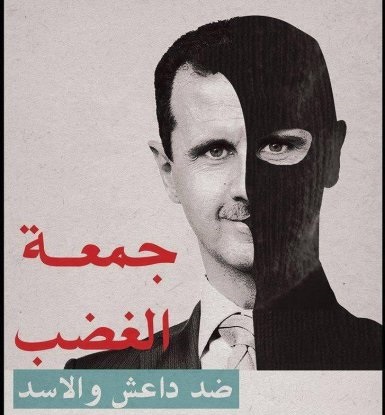
Last week, a judgment in United States District Court in Washington, D.C., awarded nearly $350 million to the families of two Americans killed in Jordan in 2005 by the predecessor organization to the Islamic State (ISIS). The important point of the case was who the court found liable: the regime of Bashar al-Assad, currently presenting itself to the world as the last line of defense to a terrorist takeover of Syria. This case highlights a neglected history, which began in 2002, where the Assad regime underwrote ISIS and fostered its growth, first to destabilize post-Saddam Iraq and later Lebanon, and since 2011 to discredit and destroy the uprising against Assad in Syria. Continue reading

The Islamic State Strikes Lebanon

By Kyle Orton (@KyleWOrton) on November 22, 2015

1-b

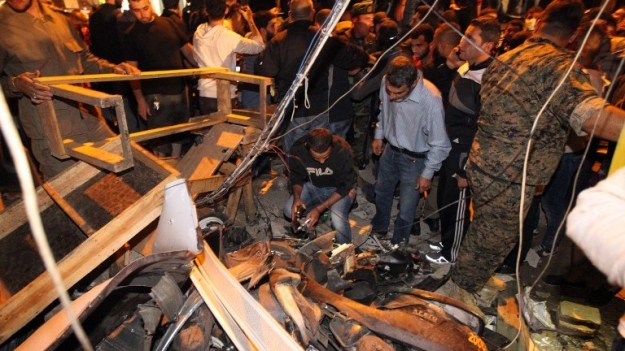
In Burj al-Barajna, a district of southern Beirut adjacent to Hizballah’s headquarters in Dahiya, at about 18:00 on 12 November 2015, a standing motorcycle laden with explosives was blown up outside a Shi’a mosque as a crowd of worshippers left after evening prayers. This was followed quickly by a suicide bomber blowing himself up among the crowd of Shi’a worshippers. A second suicide bomber blew himself up near a bakery, less than 500 yards away. Continue reading

Britain’s Embassy in Iran Reopens, Putting Commerce Above Human Rights

By Kyle Orton (@KyleWOrton) on August 26, 2015

1

On Sunday the British Embassy in Iran was reopened after four years of closure. The British government’s decision is consistent with two emerging trends: the United States using the nuclear accord to facilitate détente with Iran, and European States falling into line with this policy and beginning to compete to enter the emerging Iranian market.

The British Embassy in Tehran was closed in November 2011 after ‘protesters’—a regime-orchestrated mob—stormed the building, ostensibly in protest against sanctions. The regime claimed helplessness in the face of angry demonstrators.

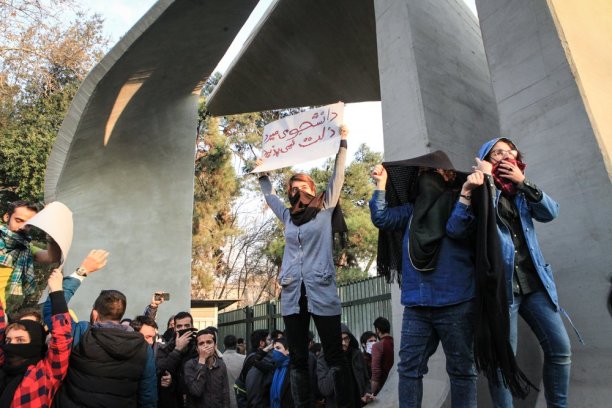
But it is worth remembering that when Iranian citizens take to the streets in a manner the regime actually disapproves of, it mobilises its security forces to murder them, and imprison them en masse in facilities where they are, male and female, raped as a form of punishment and torture. Continue reading

Reassessing the Saudi-led Intervention in Yemen

By Kyle Orton (@KyleWOrton) on July 24, 2015

1

The Saudi-led Operation DECISIVE STORM began in Yemen on March 25 as a campaign of airstrikes against the Iran-backed Houthis, to weaken them and re-install the president, Abd Rabbo Mansour Hadi, who was overthrown by the Houthis last September.

In April, I wrote in support of the Saudi-led operation for: (1) having drawn a line against Iran’s imperialism after Lebanon, Syria, and Iraq; (2) potentially decreasing the growth of the Islamic State (ISIS) by providing Sunnis, in Yemen and beyond, with an alternative form of resistance to Iran’s encroachments; and (3) offering a chance for more stability in Yemen, which was then in free fall with Iran, al-Qaeda, and ISIS capitalizing on the chaos. Continue reading

Book Review: The Consequences of Syria (2014) by Lee Smith

By Kyle Orton (@KyleWOrton) on May 9, 2015

1

Lee Smith’s The Consequences of Syria is part of the Hoover Institution’s “The Great Unravelling” series, which also included The Struggle for Mastery in the Fertile Crescent by the late Fouad Ajami (which I reviewed here.) You can purchase a copy here.

Published in June 2014, Smith narrates Syria’s terrible war to the opening months of 2014, the innumerable excuses made by the Obama administration for letting it run, and the theoretical framework behind the administration’s decision. The book is relatively short and the prose is direct; it takes very complex discussions of ideas and puts them in easily-digestible terms—all while keeping the reader’s eye on the practical implications.

Smith starts with the 2003 invasion of Iraq, the central event in President Obama’s thinking about the Middle East. Continue reading

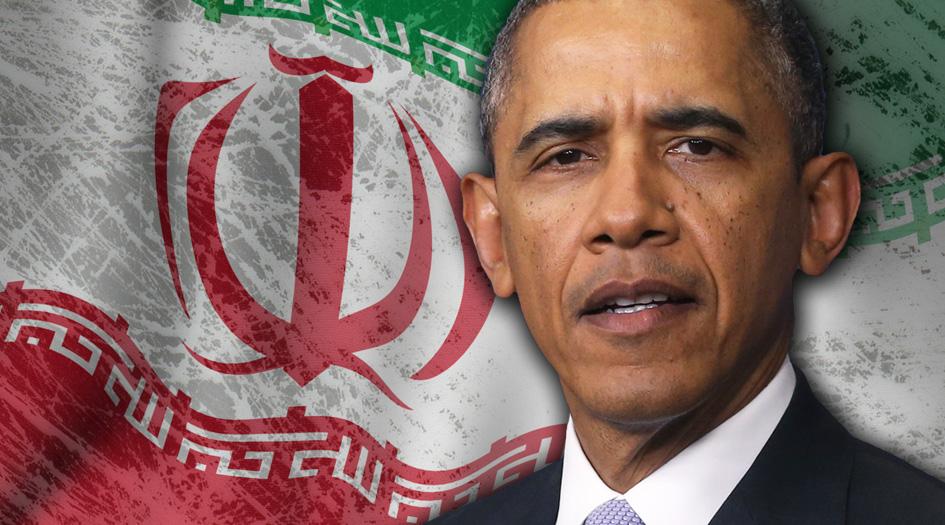
Obama’s Iran Deal Increases Nukes, Terrorism, and Instability

By Kyle Orton (@KyleWOrton) on April 28, 2015

1

The key thing to understand about the Joint Comprehensive Plan of Action (JCPOA), the nuclear accord announced on April 2 between the P5+1 and Iran, is that it does not exist. The British Foreign Secretary Philip Hammond said at one point, “We envisage being able to deliver a narrative,” adding that this might not be written and—these being forgiving times—Iran’s narrative need not match the West’s. In other words, nothing was signed or agreed to. This is the reason for the wild discrepancies between the American and Iranian JCPOA “factsheets”: both are drawing from a rolling text that is ostensibly to lead to a “final” or “comprehensive” deal and spinning it to their own respective advantage. The administration has as much as said so with its mantra that “nothing is agreed until everything is agreed”.

The purpose of the announcement of the JCPOA therefore was, charitably, to “build political momentum toward a final agreement“. Less charitably it was intended to “demonstrate progress in order to fend off congressional action,” as Obama’s former nuclear adviser Gary Samore put it. In that at least it was successful. Continue reading