Tag Archives: Muslim Brotherhood

Syria’s Rebellion on the Ropes

By Kyle Orton (@KyleWOrton) on July 9, 2014

3

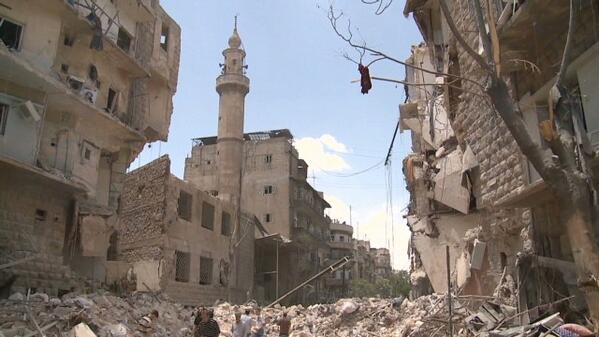
The devastated city of Aleppo

As we approach the forty month mark for the Syrian uprising the situation is grimmer than it has ever been. Not just the casualties: more than 200,000 people dead. Not just the physical devastation and mass-displacement of more than a third of the country. But now in military terms the rebellion is on the defensive in a way it has not been since it erupted at the end of 2011, after more than six months of peaceful protests.

Continue reading

ISIS Announces the Restoration of the Caliphate

By Kyle Orton (@KyleWOrton) on June 29, 2014

The Islamic State of Iraq and Syria (ISIS) announced that it had restored the caliphate on 29 June 2014. ISIS’s name was changed to simply the Islamic State (I.S.), and its leader, Abu Bakr al-Baghdadi, abandoned his kunya and proclaimed himself Caliph Ibrahim, his real name being Ibrahim al-Badri. The statement announcing that the areas I.S. rules in Syria and Iraq are now a caliphate, entitled “This Is The Promise of Allah [God],” was given by the group’s official spokesman, Abu Muhammad al-Adnani, and was distributed by al-Hayat Media in Arabic, English, Russian, French, and German. The English version is reproduced below with some editions for transliteration and some interesting or important sections highlighted in bold. The speech lays out how the state should and will be governed—in other words, what I.S. envisions for its utopia. Continue reading

Is Jordan Next To Fall To ISIS?

By Kyle Orton (@KyleWOrton) on June 29, 2014

Jordan’s King Abdullah: The West’s closest Arab ally—but for how long?

It has been a rough fortnight for Jordan. After the fall of Mosul, the Islamic State of Iraq and Syria (ISIS) announced an “unofficial” branch in Jordan and the Iraqi government surrendered its only legal border-crossing on the 110-mile frontier to tribal insurgents—opposed to ISIS, so far as can be told, but not without the danger they will be overwhelmed as has previously happened in areas like Fallujah, where the dam initially fell to local insurgents (albeit Ba’athists) and ISIS then pushed them out. Jordan has beefed up its border-defences but this has not stopped the speculation on whether Jordan, the “jewel in the ISIS crown,” will be the next domino to fall to the takfiris. Continue reading

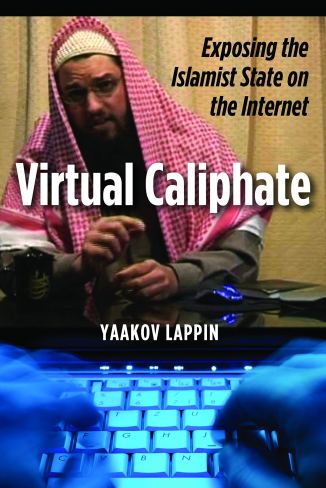
Book Review: Virtual Caliphate (2011) by Yaakov Lappin

By Kyle Orton (@KyleWOrton) on June 13, 2014

I have yet to read a book more prescient than Yaakov Lappin’s about events in Iraq in the last few days. Having sketched out the way Salafi-jihadists have created the ministries of a future Caliphate in cyber-format—the simple fact that “Al-Qaeda would not be in existence were it not for the pervasive presence of online jihadis”—Lappin finished by suggesting three options: (1) we manage to take down this virtual Empire; (2) we manage to weaken it in cyberspace; or (3) the jihadists “upload” this virtual State into the real world. Continue reading

No Way Out: The Military Has Wrecked Egypt

By Kyle Orton (@KyleWOrton) on March 29, 2014

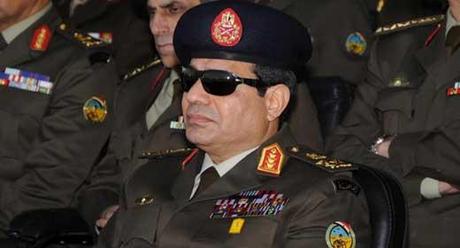
General—excuse me, Field Marshal—Abdul Fattah as-Sisi, dark glasses and all, the vital accessory of an Arab tyrant

General—excuse me, Field Marshal—Abdel Fattah as-Sisi, dark glasses and all, the vital accessory of an Arab tyrant

This week brought the news that 528 members and supporters of the Muslim Brotherhood would be executed by the “interim government” in Egypt, and Abdel Fattah as-Sisi finally said publicly what everyone has long known: he will run for the presidency in July. Continue reading

Obituary: Tony Benn

By Kyle Orton (@KyleWOrton) on March 26, 2014

On March 14, 2014, Anthony Wedgewood Benn (“Tony Benn”) died aged 88. Though, as his assumed name in later years suggests, Benn presented himself as a populist, he was in fact of very elite stock: born in 1925, his grandfather was a Liberal MP, as was his father (until he joined Labour in 1927), and his mother was a leading early feminist campaigner. Benn was entitled to a hereditary peerage as Viscount Stansgate, which he objected to. Ever one for publicity, after the Peerage Act of 1963 was passed on July 31 of that year, allowing renunciation of peerages, he became the first peer to renounce his title, 22 minutes later. Benn mixed with figures like David Lloyd George and Mohandas Gandhi, and attended the exclusive Westminster School, which is “something he tried to hide in future biographies,” before going on to be a fighter pilot in the RAF.

Continue reading

Algeria’s ‘Years of Blood’: Not Quite What They Seem

By Kyle Orton (@KyleWOrton) on March 21, 2014

1

Antar Zouabri, who became leader of the GIA in the summer of 1996

In December 1991, the Algerian government—the military regime in power since the French were expelled—gave in to public pressure, which had already turned sanguinary, and allowed an election. It was quite clear that the Islamic Salvation Front (FIS), a fundamentalist party, would emerge victorious. To forestall the institution of a theocracy, in January 1992, the military launched a coup and shut down the final rounds of the election. A civil war erupted in which the jihadists sought to overpower the secular, if dictatorial, government. By the late 1990s, the jihadists’ savagery had meant their campaign had run aground; the vital centre in Algeria swallowed its misgivings and sought shelter behind the State. By 2002, the civil war was declared over: the jihadist revolt had been beaten.

That is the official story.

Continue reading