By Kyle Orton (@KyleWOrton) on 22 July 2019

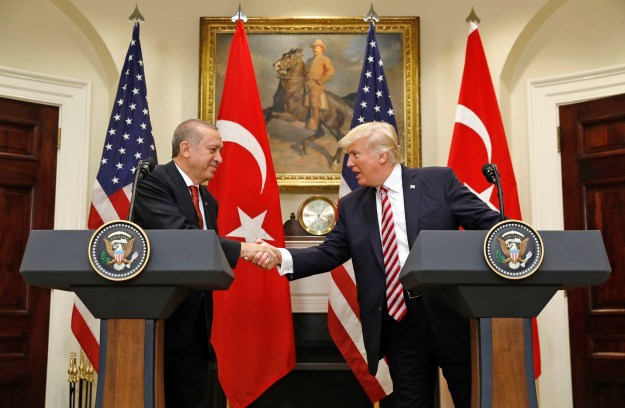
U.S. President Donald Trump and Turkey’s President Recep Tayyip Erdogan meeting during the G20 leaders summit in Osaka, Japan, 29 June 2019 [image source]
By Kyle Orton (@KyleWOrton) on 22 July 2019

U.S. President Donald Trump and Turkey’s President Recep Tayyip Erdogan meeting during the G20 leaders summit in Osaka, Japan, 29 June 2019 [image source]
By Kyle Orton (@KyleWOrton) on 15 April 2019
In February 1979, police in south-eastern Australia arrested six people. The suspects were members of the Croatian nationalist scene that agitated against Communist Jugoslavija and they had planned to commit a series of attacks against symbols of Marshal Tito’s regime that could have killed hundreds of Australians. Except they hadn’t, as Hamish McDonald, a journalist with the Sydney Morning Herald, shows in Framed (2012). Despite the “Croatian Six” being convicted for terrorism and spending a decade in prison, the reality of what had happened was nearly the exact opposite—and at least some powerful people in the Australian government knew or suspected as much from the get-go. Continue reading
By Kyle Orton (@KyleWOrton) on 19 March 2019

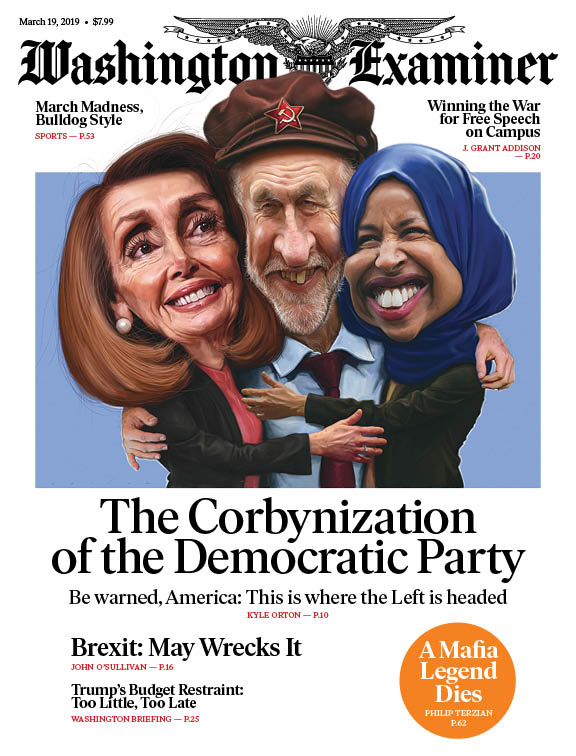
When the Democratic Party faced a revolt from its ranks for daring to propose condemning anti-Semitism, the scene gave those of us in Britain deja vu. The American Left is following the same script that led to the rapid radicalization of the Labour Party, led by Jeremy Corbyn. It’s no longer a mere talking point, a form of shorthand for journalists: The Democratic Party’s Corbynization is here, and it tacks so closely to what happened in Britain that it’s important for Americans to understand where we’ve been — and where they’re headed. Continue reading
This article was published at Ahval
By Kyle Orton (@KyleWOrton) on 12 March 2019
The wheel turns again. After U.S. President Donald Trump announced the withdrawal of U.S. forces from Syria in December, it seemed rapprochement with Turkey was on the cards. Now that looks less likely. Continue readingThis article was published at Ahval under the headline, “Back to the Future for Turkey and Syria?”
By Kyle Orton (@KyleWOrton) on 1 February 2019

American base on the outskirts of Minbij, 26 December 2018. (Photo by Delil souleiman / AFP)
U.S. President Donald Trump’s surprise announcement that U.S. troops would be withdrawn from Syria came with many visible costs. The benefits the anti-Islamic State (ISIS) campaign has delivered to Syrian President Bashar Assad, Iran, and Russia were made permanent. There is also more space for ISIS and greater instability in northeast Syria as Turkey confronts Syrian Kurdish forces. And there is the political cost to the United States of leaving its Kurdish anti-ISIS partner to face Turkey and the pro-Assad coalition alone. Continue reading
A version of this article was published at CapX
By Kyle Orton (@KyleWOrton) on 21 December 2018

President Trump in a Twitter video saying fallen soldiers agree with his plan to withdraw from Syria, 19 December 2018 [image source]
By Kyle Orton (@KyleWOrton) on 18 December 2018

Tel Abyad, Syria [source]
By Kyle Orton (@KyleWOrton) on 12 December 2018

© AP Photo / Jim Hollander, Pool
Essay: “Zionism is Making Us Stupid”: The Russian Relationship with Israel from the Soviets to Putin Continue reading
By Kyle Orton (@KyleWOrton) on 6 December 2018
This article was originally published at Ahval, headlined, “The Best Bad Outcome for Idlib”

The sun setting over Deraa, in southern Syria, 28 May 2018 (image source)
The Turkey-Russia Sochi Agreement in September won Idlib a reprieve from what had seemed to be an imminent and catastrophic offensive by Syrian President Bashar Assad’s forces and his Russian and Iranian patrons against the last insurgent-held province.
The ceasefire was meant to provide space for Turkey to dismantle the radical insurgents. Instead, those radicals consolidated their dominance in Idlib and the ceasefire has been visibly fraying. How to proceed is a matter of domestic security for the West. Continue reading
By Kyle Orton (@KyleWOrton) on 4 December 2018

Al-Qaeda released a document on 23 October, “The Love Story Between Salman al-Saud and the Pirate Trump: A Reading of the Symptoms of Begging and the Significance of Wrong and Extortion”,[1] by Shaykh Awab Bin Hasan al-Hasni. Al-Qaeda’s Al-Sahab Foundation released an English translation of Al-Hasani’s essay on 26 November, which is reprinted below with some interesting sections highlighted in bold. Continue reading