Tag Archives: NATO

Turkey’s Afrin Operation and an American Opening in Syria

By Kyle Orton (@KyleWOrton) and Oved Lobel on 20 March 2018

Turkey and Syrian rebel allies captured Afrin city in north-western Syria from the Kurdish People’s Protection Forces (YPG) this weekend. The YPG has gained notice as the partner force of the US-led international coalition against the Islamic State. But, as Pentagon spokesman Robert Manning acknowledged on March 6, the YPG has been diverting its troops from the fight against IS in eastern Syria to the war with Turkey on the other side of the country. Manning presented this as a temporary setback, but the shifting dynamics might prove to be the undoing of the Coalition’s mission in Syria. Continue reading

The PKK and Terrorism in Europe

By Kyle Orton (@KyleWOrton) on 16 March 2018

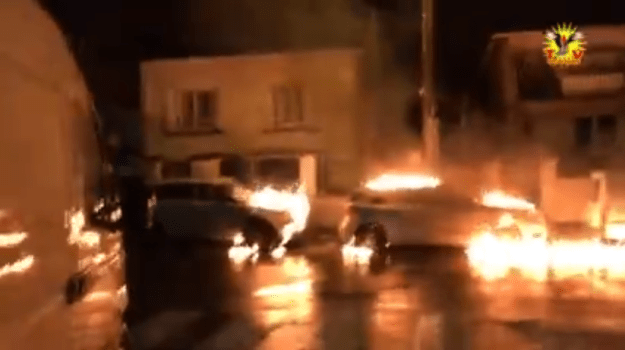
Screenshot from video of a PKK attack on Turkish diplomats in Paris, France (13 March 2018)

A wave of politically motivated violence has swept over Europe in the last few days, carried out by an extremist group and its sympathisers, accompanied by public statements threatening further attacks.

These attacks are intended to change western policy to one more suitable to the attackers.

The conventional term for this is “terrorism”.

These assailants are not Islamist, however; they are from the Kurdish PKK, and this seems to have both reduced the amount of attention this campaign has received, and to have dulled the reaction from some who suggest that perhaps the attackers have a point. Continue reading

Crisis and Opportunity for Turkey and America: The Minbij Dispute

By Kyle Orton (@KyleWOrton) on 4 March 2018

A version of this article was published in The Arab Weekly

The YPG/PKK Minbij Military Council (image source)

The city of Minbij in northern Syria has become a source of severe political tension between the United States and Turkey. It might also be the key to reducing tensions and normalising relations. Continue reading

Human Rights Abuses in Rojava and the Anti-ISIS War

By Kyle Orton (@KyleWOrton) on 3 March 2018

Guerrillas from the Sinjar Resistance Units (YBS), the name the Kurdistan Workers’ Party (PKK) uses in Sinjar, Iraq, together with operatives from the People’s Defence Forces (HPG), the armed units of the PKK inside Turkey, holding a picture of PKK leader Abdullah Ocalan. (image source)

The American-led Coalition’s partner against the Islamic State (IS) in Syria, the so-called Syrian Democratic Forces (SDF), presents itself, ideologically and in terms of the governance structure it controls, in universalistic liberal and democratic terms, emphasizing ecological and feminist themes. The reality is that the SDF is under the politico-military control of the Kurdistan Workers’ Party (PKK), a designated terrorist organization that has run a four-decade-long insurgency against Turkey. The PKK has brought some measure of stability to the areas it controls, but it continues to struggle for legitimacy and without locally-legitimate government IS and other jihadi-Salafists will find political room to operate. The PKK’s continued monopolization of power and abusive governance practices undermine the chances for the “Rojava” system to evolve into a long-term solution to the jihadist terrorists that have used Syrian territory to threaten the region and the wider world. Continue reading

British Parliament Examines Implications of Supporting “the Kurds” in Syria

By Kyle Orton (@KyleWOrton) on 11 February 2018

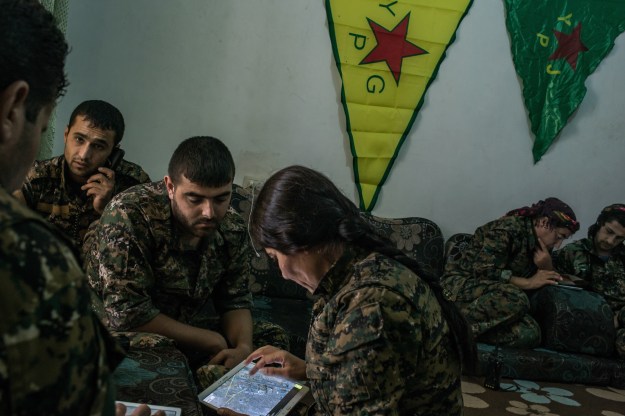
YPG check maps ahead of calling in an American airstrike, Hasaka, Syria (picture by Mauricio Lima for The New York Times)

The British Parliament has released a report today, entitled, “Kurdish aspirations and the interests of the UK”, which examines the implications for the United Kingdom of having supported various Kurdish groups and parties as part of the Coalition against the Islamic State (IS). Continue reading

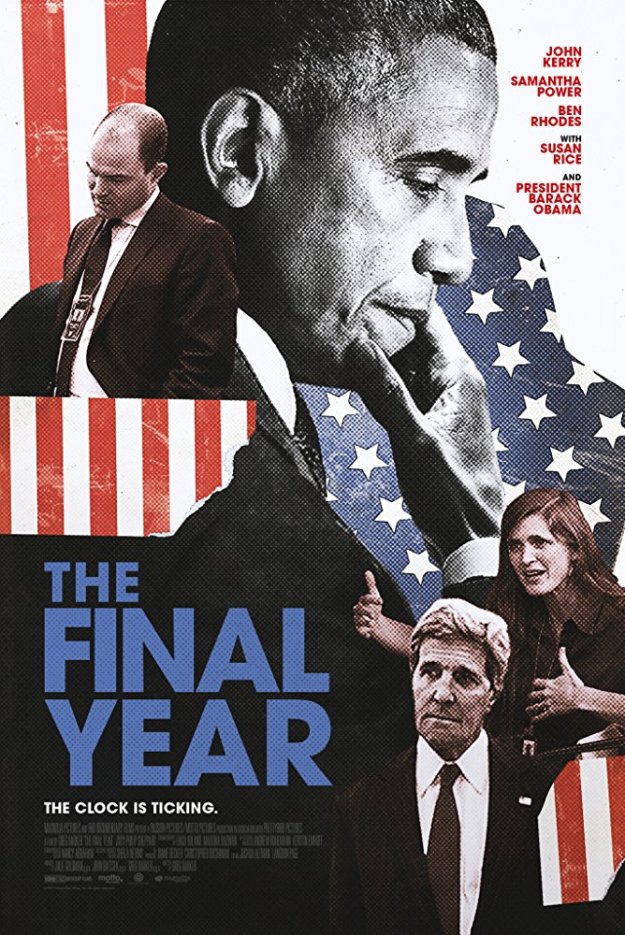
Why The Obama Doctrine Failed

Film review of The Final Year (2018)

By Kyle Orton (@KyleWOrton) on 31 January 2018

The Final Year, a new documentary film directed by Greg Barker, tracks the closing stages of the administration of President Barack Obama in 2016. Senior officials are followed and interviewed, and the White House is watched as it tries to react to daily events. Much of the substance contained in the film was knowable in real time, but it is very useful to have these officials on record—on video, no less—explaining the assumptions and thought processes they were operating with as they made decisions that led to a series of such intense disasters around the world. This is especially interesting since the ripple effects from these catastrophes ultimately set the conditions for the election of Donald Trump and dismantling of much of the Obama legacy. Continue reading

American Intelligence Acknowledges Anti-ISIS Coalition’s Kurdish Partner is a Terrorist Group

By Kyle Orton (@KyleWOrton) on 27 January 2018

YPG/YPJ fighters raise the banner of the PKK leader Abdullah Ocalan in Raqqa city on 19 October 2017 (YPG Press Office)

The Central Intelligence Agency has publicly recognized that the Kurdish partner force the United States-led Coalition against the Islamic State (IS) has been working with in Syria is a subsidiary of the terrorist-designated Kurdistan Workers’ Party (PKK). Continue reading

Turkey’s Afrin Offensive and Russia’s Policy in Syria

Originally published at Ahval

By Kyle Orton (@KyleWOrton) on 21 January 2018

Turkey’s president, Recep Tayyip Erdoğan, threatened on Jan. 13 to begin a military operation “in about a week” to evict Kurdish militants from Afrin in northwestern Syria. Erdoğan has repeatedly threatened to “cleanse” Afrin of the fighters over the last two years. It turned out he really meant it this time: on Jan. 20 Turkey commenced Operation Olive Branch against Afrin.

Kurdish forces, affiliated with the Kurdistan Workers’ Party (PKK), have constituted an important element of the Coalition’s ground force in Syria against the Islamic State (ISIS) since late 2014, expanding their “Rojava” statelet by capturing vast swathes of territory from ISIS in northern and eastern Syria that is connected to Afrin under a deal with the pro-regime coalition—Bashar al-Assad, Iran, and Russia.

Any Turkish government would see this situation as a threat, and be angry at the United States for supporting the Kurds. The PKK regards Rojava and the ruling Democratic Union Party (PYD) as strategic elements in its long war against the Turkish state. Indeed, Kurds in Rojava have already provided at least logistical support for PKK attacks inside Turkey.

Continue reading

America’s Kurdish Allies in Syria Drift Toward the Regime, Russia, and Iran

By Kyle Orton (@KyleWOrton) on 10 December 2017

Russian soldiers in Efrin, Syria, 1 May 2017 (source)

The American-led Coalition against the Islamic State (IS) partnered with the “Syrian Democratic Forces” (SDF), a political façade for the proscribed Kurdistan Workers’ Party (PKK), as the ground force in Syria. The most ventilated problems with this partnership so far have been the strain it has put on relations with NATO ally Turkey, against which the PKK has run a terrorist-insurgency for more than thirty years, and the deep local suspicion of the PKK’s governing program that might yet reverse the gains against IS and open political space for other jihadists like al-Qaeda. Another of the problems is now gaining salience: the PKK’s long-term alliance with Bashar al-Asad’s regime and the states—Russia and Iran—that keep it alive. Continue reading

Defining Freedom Fighters and Terrorists in Syria (and Beyond)

By Kyle Orton (@KyleWOrton) on 21 November 2017

Zozan Temir (Zozan Cudi) in ‘No Free Steps to Heaven’

Yesterday, it was announced that a 15 November Turkish government airstrike in the mountains of the Sirnak area in southeastern Turkey, near the zone where the borders of Turkey, Syria, and Iraq meet, had killed twelve guerrillas from the Kurdistan Workers’ Party (PKK). Given that the PKK has waged war against Turkey since 1984, and the state has obviously fought back, such events are distressingly mundane. But this event was exceptional because among the slain was a female foreign fighter, Zozan Temir. Continue reading