By Kyle Orton (@KyleWOrton) on 29 January 2022

Al-Naba 323, front page
By Kyle Orton (@KyleWOrton) on 22 January 2022
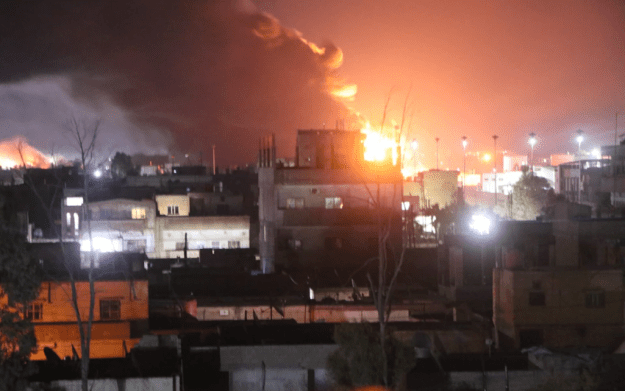
Islamic State car bombing against Al-Sinaa prison in Syria, 20 January 2022 [image source]
By Kyle Orton (@KyleWOrton) on 17 March 2021
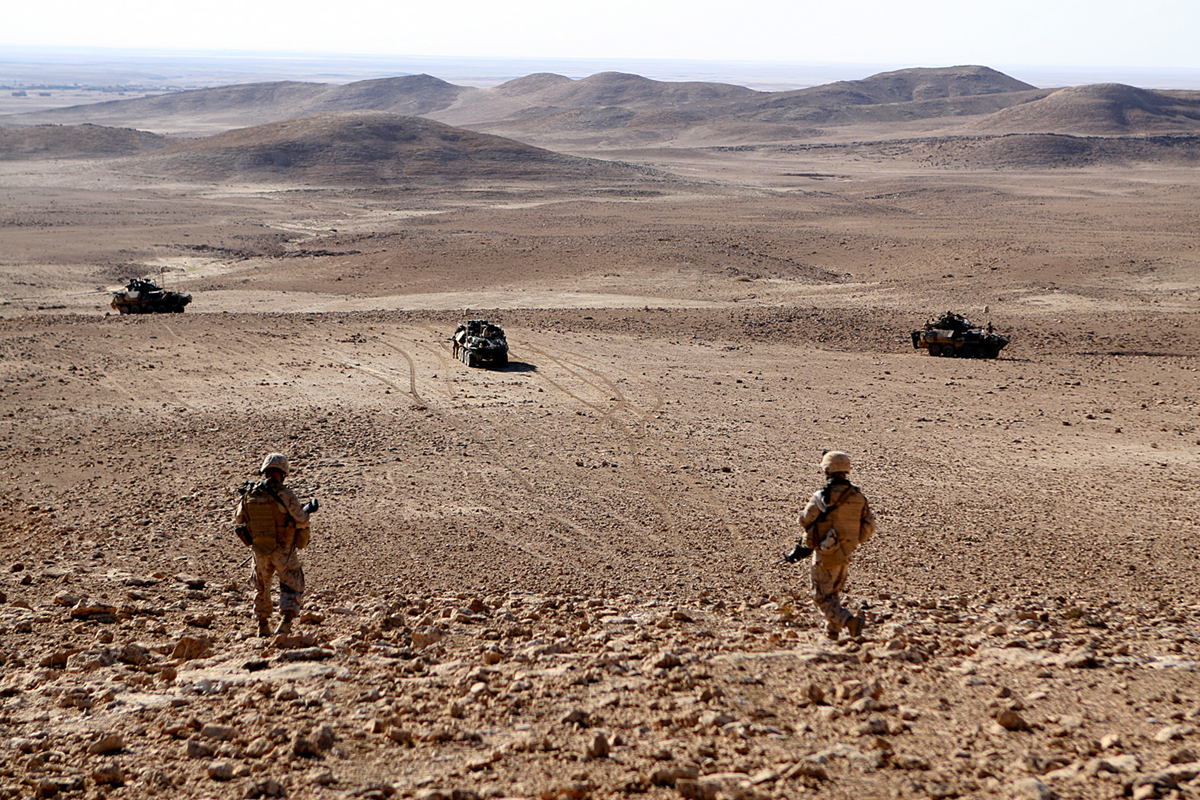
Abu Umar al-Baghdadi, the implied caliph of the Islamic State movement between 2006 and 2010, gave his sixteenth speech on 17 March 2009. The title of the speech was, “Harvest of the Good (The Gathering Will Be Defeated, and They Will Turn Their Backs and Flee)”.[1]
By Kyle Orton (@KyleWOrton) on 21 August 2020
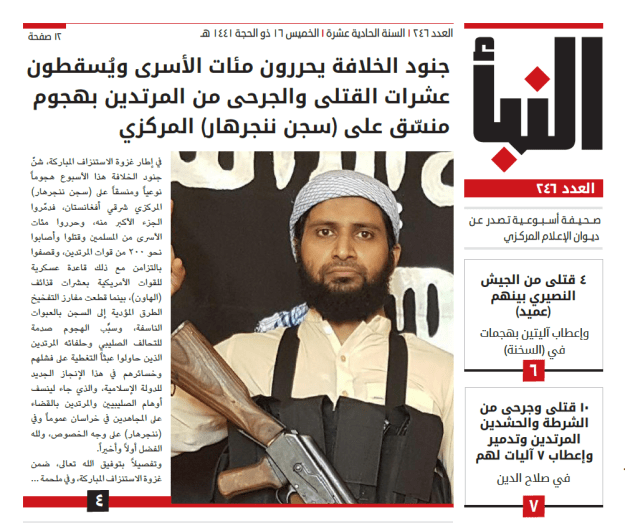
Al-Naba 246, front page, 6 August 2020
The Islamic State (IS) published the 246th edition of its newsletter, Al-Naba, on 6 August, which highlighted the 2-3 August prison break in the Nangarhar province of Afghanistan, a massive IS operation lasting twenty-plus hours, and proclaimed that freeing IS jihadists from prisons will now be a priority for the group. In 2012, shortly after the American withdrawal from Iraq, IS announced Operation BREAKING THE WALLS, which went on for a year, breaking open Iraqi prisons. The narrative of the IS’s “defeat” by the Surge and Awakening of 2007-08 is problematic in some of its fundamentals, but among the reasons it proved to be so fleeting in practice was this prison-break campaign that restored to the battlefield key IS operatives who planned the caliphate project in 2014. It is, therefore, alarming to see the arrival of such a campaign in Afghanistan at the moment the U.S. is headed, heedlessly, for the exit. Continue reading
Originally published at The Henry Jackson Society.
By Kyle Orton (@KyleWOrton) on December 16, 2016
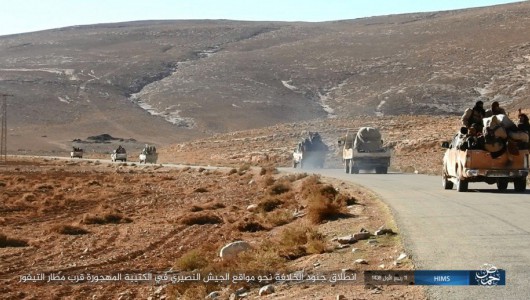
The Islamic State (IS) has named a new official spokesman, Abu Hassan al-Muhajir. Abu Hassan is the fourth man to hold the position of spokesman within the IS movement, and the third since it declared statehood in 2006. Very little is known about Abu Hassan but assessing the history of IS’s media enterprise offers some hints about his profile. In this regard, a new paper by Dr. Craig Whiteside of the International Centre for Counter Terrorism Terrorism is instructive. Looking forward, examining Abu Hassan’s inaugural speech offers some clues about the direction IS’s messaging and behaviour will take now as its statelet shrinks under pressure from the U.S.-led Coalition. Continue reading
By Kyle Orton (@KyleWOrton) on April 26, 2016
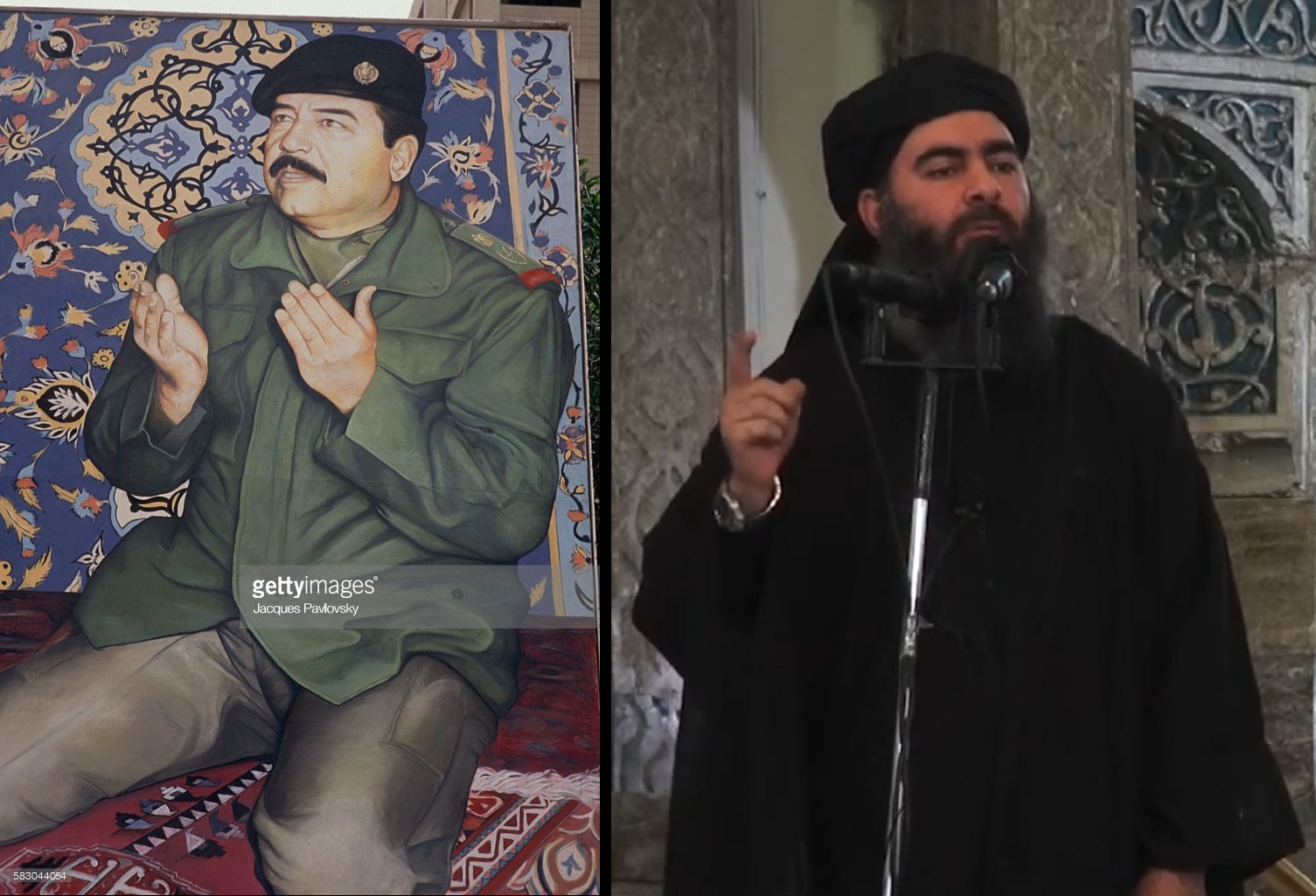
This essay, written to tie together my work on the relationship between the Saddam Hussein regime and the Islamic State, was completed last summer and submitted to an outlet, where it entered a form of development hell. After giving up on that option late last year, the opportunity arose to get a shorter version published in The New York Times in December. But I procrastinated too long over what to do with the full essay and a recent change in my work situation means I no longer have the bandwidth to go through the process of finding it a new home, so here it is.
“Abu-Bakr al Baghdadi is a product of the last decade of Saddam’s reign,” argues Amatzia Baram, a scholar of Iraq. He is correct in at least three ways. First, in its last decade in power, the Iraqi Ba’ath regime transformed into an Islamist government, cultivating a more religious, sectarian population on which the Islamic State (ISIS) could draw. Part of Saddam Hussein’s “Faith Campaign” also involved outreach to Islamist terrorists, including al-Qaeda, which meant that the synthesis of Ba’athism and Salafism that fused into the Iraqi insurgency after the fall of Saddam was already well advanced by the time the Anglo-American forces arrived in Baghdad in 2003. Second, the ISIS leadership and military planning and logistics is substantially reliant on the intellectual capital grown in the military and intelligence services of the Saddam regime. And finally, the smuggling networks on which ISIS relies, among the tribes and across the borders of Iraq’s neighbours, for the movement of men and materiel, are directly inherited from the networks erected by the Saddam regime in its closing decade to evade the sanctions. The advantages of being the successor to the Saddam regime make ISIS a more formidable challenge than previous Salafi-jihadist groups, and one that is likely to be with us for some time.
By Kyle Orton (@KyleWOrton) on December 29, 2014
The current leader of the Islamic State (IS), Ibrahim al-Badri (Abu Bakr al-Baghdadi), released his first “proper” speech on July 21, 2012. But this was, in fact, his second public statement: Al-Badri had mourned Usama bin Laden in an audio message released on 9 May 2011 and vowed “blood for blood and destruction for destruction”. The 2012 speech, entitled, “Allah Will Not Allow Except That His Light Should Be Perfected”, was released by Al-Furqan Media and an English transcript—reproduced below—was issued by Fursan al-Balagh Media. Some key parts are highlighted in bold.
Continue reading
By Kyle Orton (@KyleWOrton) on April 6, 2014
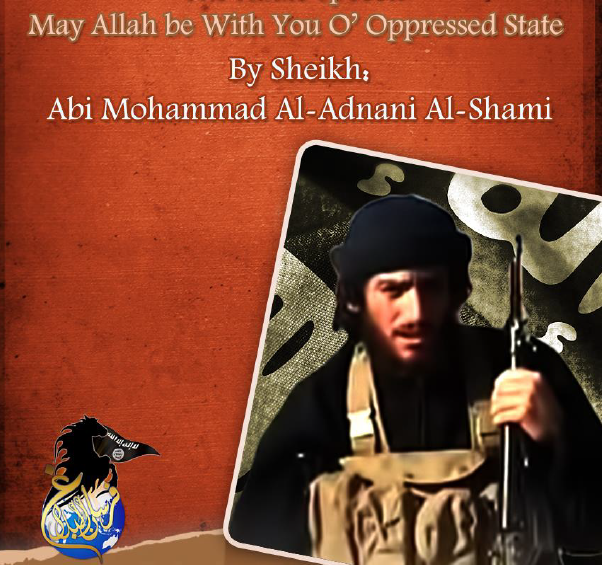
The spokesman for the Islamic State of Iraq and Syria (ISIS), Abu Muhammad al-Adnani, gave a speech on 30 September 2013, entitled, “Lak Allah Ayatuha al-Dawla al-Mazluma” (لك الله أيتها الدولة المظلومة), roughly: “God Is With You, O’ Oppressed State” (The English translation released by Fursan al-Balagh Media gives the title as, “May Allah Be With You, O’ Oppressed State”.) The speech is primarily a ferocious attack on the Syrian rebel groups, accusing them of being part of a Western-led conspiracy, which includes the media stations of Arab governments and their “mouthpieces” throughout the region, to manipulate the coverage of ISIS such that it blackens their name and turns Muslims away from them.
 Kyle Orton's Blog