Tag Archives: Osama bin Laden

The Memoir of a British Spy in Al-Qaeda

By Kyle Orton (@KyleWOrton) on 8 July 2019

This article was originally published at the European Eye on Radicalization

The main issue that Nine Lives has to overcome is the one that has attended Aimen Dean (a pseudonym) since he went public in March 2015 with an interview he gave to the BBC, claiming he had been a British spy within Al-Qaeda between 1998 and 2006. That issue is overcoming the doubts about his story. Nine Lives goes a long way to solving this by bringing in Paul Cruickshank, the editor-in-chief of CTC Sentinel, one of the premier academic resources in the terrorism field, and Tim Lister, a terrorism-focused journalist with CNN, as co-authors. As well as helping structure the book from Dean’s memories, the two co-authors note they had been able to “corroborate key details” that convinced them: “In the years immediately leading up to and following 9/11, Aimen Dean was by far the most important spy the West had inside al-Qaeda”.

Continue reading
The Reappearance of the Caliph

By Kyle Orton (@KyleWOrton) on 10 May 2019

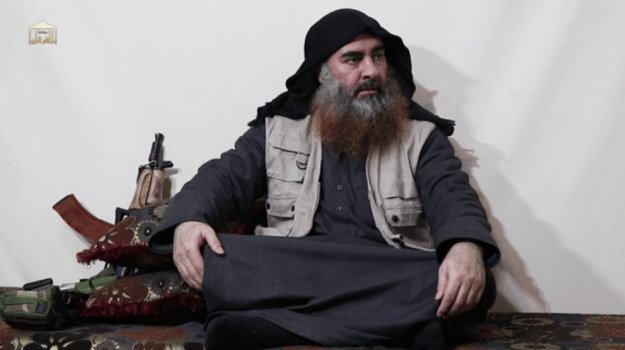
The leader of the Islamic State, Ibrahim al-Badri (Abu Bakr al-Baghdadi) appearing in an Islamic State propaganda video, “In the Hospitality of Amir al-Mu’mineen, 29 April 2019

The leader of the Islamic State (IS), Ibrahim al-Badri (Abu Bakr al-Baghdadi), appeared in an eighteen-minute video on 29 April, the first time Al-Ibrahim has appeared since 4 July 2014 when he gave the Friday prayer at the Nuri Mosque in Mosul, days after IS had announced the restoration of the caliphate. Al-Ibrahim has given semi-regular speeches over the years, but with these two exceptions they have been audio addresses. The video was released by IS’s premier media outlet, Al-Furqan Media Foundation, which is also the group’s oldest media platform. An English translation was released by IS’s Halummu outlet and is republished below with some interesting and/or important sections, plus names of IS operatives, highlighted in bold. Continue reading

Yusuf al-Qaradawi and Terrorism

By Kyle Orton (@KyleWOrton) on 29 April 2019

This article was originally published at European Eye on Radicalization

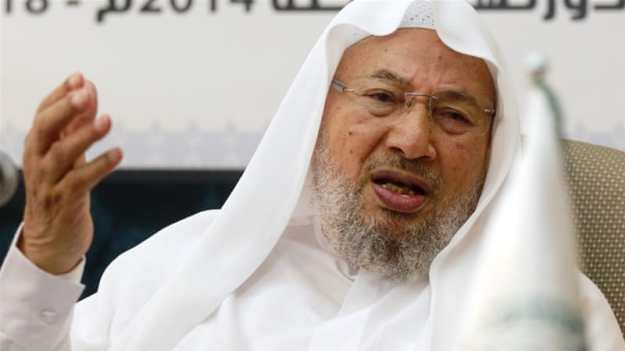
In the wake of the horrific bombings by the Islamic State (ISIS) in Sri Lanka on Eastern Sunday, which killed 250 people, an image has circulated purporting to show a terrorist connected to the attack in the company of the Qatar-based cleric of the Muslim Brotherhood, Yusuf al-Qaradawi. In fact, the image shows no such thing. But Al-Qaradawi’s influence in creating the ideology that motivates Islamist terrorists cannot be doubted. Continue reading

Al-Qaeda and Global Terror

This article was originally published at European Eye on Radicalisation

By Kyle Orton (@KyleWOrton) on 16 April 2019

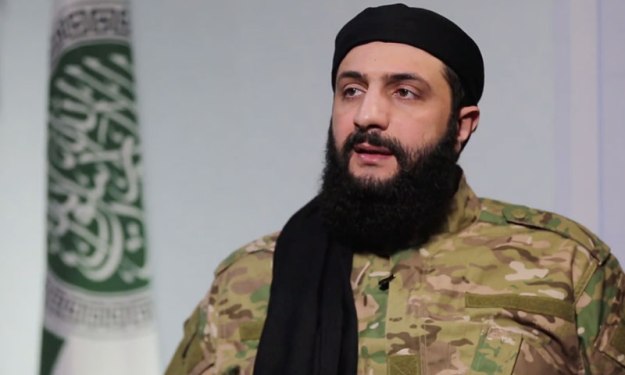
Ahmad al-Shara (Abu Muhammad al-Jolani) [image source]

Several years ago, Al-Qaeda made a strategic decision to refrain from foreign terrorist operations, refocusing away from these global spectaculars towards integrating more closely into local conflicts. The 2014 rampage across Iraq and Syria by Al-Qaeda’s rebellious former Iraqi branch, the Islamic State (ISIS), provided both the opportunity and additional incentive for a long-mediated rebranding effort. However, there have recently been signs of a shift back towards external terror operations, just as ISIS undergoes a setback and Al-Qaeda has a chance to reassert its dominance over the jihadi scene. Continue reading

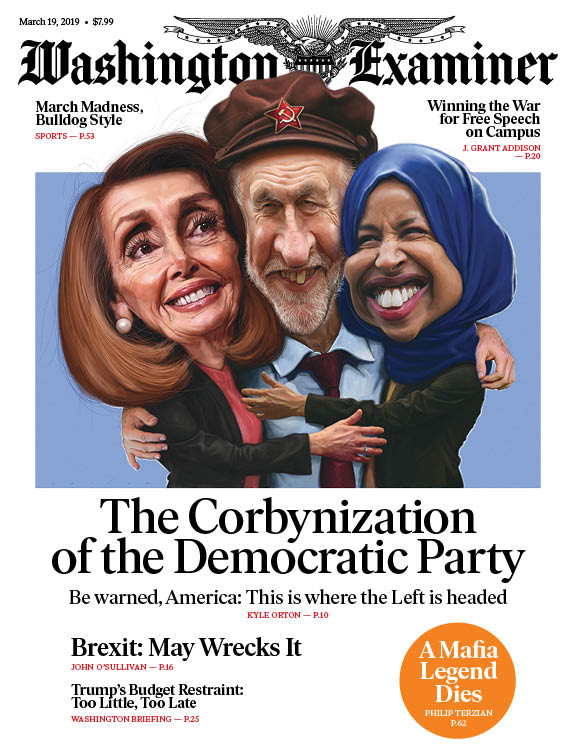
The Democrats and Corbynism

By Kyle Orton (@KyleWOrton) on 19 March 2019

When the Democratic Party faced a revolt from its ranks for daring to propose condemning anti-Semitism, the scene gave those of us in Britain deja vu. The American Left is following the same script that led to the rapid radicalization of the Labour Party, led by Jeremy Corbyn. It’s no longer a mere talking point, a form of shorthand for journalists: The Democratic Party’s Corbynization is here, and it tacks so closely to what happened in Britain that it’s important for Americans to understand where we’ve been — and where they’re headed. Continue reading

IHH, Al-Qaeda, and Turkey

By Kyle Orton (@KyleWOrton) on 26 January 2019

Mavi Marmara arrives at Sarayburnu port as people wave Turkish and Palestinian flags, 26 December 2010 [source]

An article posted on the website of IHH Humanitarian Relief Foundation on 14 July 2006 told of a massive funeral ceremony in Istanbul for Shamil Basayev, an al-Qaeda-linked Chechen jihadist. The original article has been removed, though a cached version is currently available. To avoid this being lost, the article is reproduced below. Before that is a brief outline of the context. Continue reading

Islamic State Response to the Leaking of Abu Sulayman al-Utaybi’s Testimony

By Kyle Orton (@KyleWOrton) on 7 November 2018

On 24 November 2013, the day after Al-Qaeda leaked the full testimony of Abu Sulayman al-Utaybi, the chief judge of the Islamic State (IS) who made various charges against the leadership after he defected in 2007, a pro-IS response was issued, signed by one Mu’awiya al-Qahtani, entitled, “Refutation of the Letter Attributed to the Judge Abu Sulayman al-Utaybi—May God Accept Him—with Evidence and Proofs”. A translation of Al-Qahtani’s document is given below.

Continue reading

Testimony of Islamic State Defector Abu Sulayman al-Utaybi

By Kyle Orton (@KyleWOrton) on 6 November 2018

Abu Sulayman al-Utaybi, a Saudi who abandoned his Islamic studies to journey to Iraq in 2006, was appointed chief judge, of the Islamic State movement in March 2007, six months after the Statehood declaration. Between April and June 2007, Abu Sulayman released some public sermons—the picture above is from the first—for what was then called the Islamic State of Iraq (ISI), which had publicly dissolved its bonds to Al-Qaeda when it became a “State” in October 2006, while in fact retaining its bay’a (oath of allegiance) to Al-Qaeda in private.

Continue reading

Examining Iran’s Long Relationship with Al-Qaeda

This article was originally published at The Brief

By Kyle Orton (@KyleWOrton) on 26 October 2018

At the beginning of September, New America published a paper, based on recovered al-Qaeda documents, which concluded that there was “no evidence of cooperation” between the terrorist group and the Islamic Republic of Iran. New America’s study lauds itself for taking an approach that “avoids much of the challenge of politicization” in the discussion of Iran’s relationship with al-Qaeda. This is, to put it mildly, questionable.

A narrative gained currency in certain parts of the foreign policy community during the days of the Iraq war, and gained traction since the rise of the Islamic State (IS) in 2014, that Iran can be a partner in the region, at least against (Sunni) terrorism, since Tehran shares this goal with the West. Under President Barack Obama, this notion became policy: the US moved to bring Iran’s revolutionary government in from the cold, to integrate it into the international system. Continue reading

What Questions Remain About 9/11?

By Kyle Orton (@KyleWOrton) on 5 September 2018

In less than a week, it will be the seventeenth anniversary of al-Qaeda’s “Plane’s Operation”, the assault on the United States. It is a vertiginous enough reflection that many of us have been alive more years since 11 September 2001 than before it, and positively alarming that many of those who will soon move into the government, media, and other leading societal institutions will have been born after an event that still shapes so much of the international scene. As Anthony Summers and Robbyn Swan put it in The Eleventh Day: The Ultimate Account of 9/11 (2011), we are left with “the brief name ‘9/11’,” the context and meaning stripped away all this time later. The book is a useful overview of an event that should always be to some degree fresh in mind, though it is not without its problems in its analytical sections. Continue reading