Tag Archives: Pakistan

Martyr for the Cause

By Kyle Orton (@KyleWOrton) on October 20, 2016

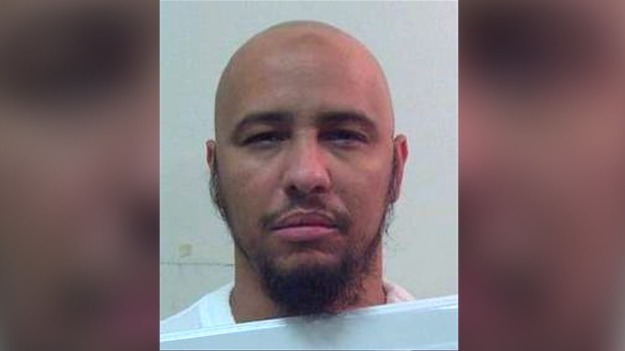
Mohamedou Ould Salahi

Mohamedou Ould Salahi, a Mauritanian, was released from Guantanamo Bay back to his home country on Monday. This comes as part of Barack Obama’s effort to drive the number of inmates at the detention centre down as far as possible before his Presidency ends. Salahi is the first detainee transferred since the mass-exodus in August, leaving sixty men at Guantanamo, nineteen of them already approved for transfer. Salahi is among the many detainees who claims he is innocent and that he has been maltreated in custody, and he has written a book, Guantánamo Diary, to that effect. The known facts about Salahi’s pre-detainment behaviour suggest caution should be exercised in accepting his version of events. Continue reading

The Dangers of Emptying Guantanamo

By Kyle Orton (@KyleWOrton) on August 17, 2016

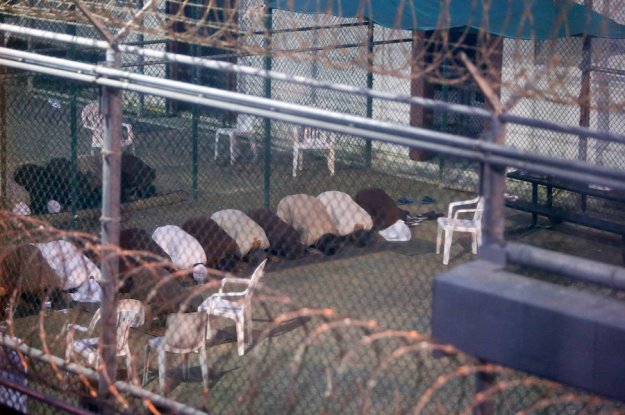
It was announced on 15 August that fifteen more inmates from the Guantanamo Bay detention facility have transferred, twelve Yemenis and three Afghans, to the United Arab Emirates, the largest individual release of the Obama administration. The U.A.E. also took in five “lower-level” Yemeni detainees in November. The Emirates had previously taken in just one—Abdullah al-Hamiri, in 2008—but President Obama leveraged this deal with the Gulf states at the May 2015 meeting when the Khaleejis were deeply concerned about the then-impending Iran nuclear deal, and in exchange for security reassurances, Obama extracted further concessions.

One reason why so many jihadists have been released to the U.A.E., other than having a similar language and culture, is because the U.A.E. has a competent security apparatus to monitor these people. Those released last November were kept in “a custodial rehabilitation program“—a version of house-arrest, basically. The conditions this time around are less clear.

What is clear is just how dangerous the operatives who are being let out of the Guantanamo detention facility are. Every single one of them has been assessed as posing a “high” risk to America, her interests, and her allies. Continue reading

Ahrar al-Sham and Al-Qaeda

By Kyle Orton (@KyleWOrton) on August 12, 2016

The Islamic State’s (IS) weekly newsletter, al-Naba, interviewed a high-ranking al-Qaeda defector, Abu Ubayda al-Lubnani, across two issues in February and March 2016. Abu Ubayda announced his defection from al-Qaeda to IS in April 2014 via al-Battar and Abu Ubayda’s name appeared on a list of prominent clerics supporting IS’s caliphate declaration that was circulated not long after the declaration. Abu Ubayda is described by al-Naba—as best as can be told accurately—as having been a member of al-Qaeda’s Shura or Consultation Council, a training officer in its Military Committee, and a counter-intelligence officer. Abu Ubayda is advertised as speaking about many secret aspects of al-Qaeda.

Among the topics Abu Ubayda covers is the alleged infiltration and manipulation of al-Qaeda by foreign intelligence services, specifically Pakistan’s Inter-Services Intelligence (ISI), which is not only a violation of jihadist doctrine by collaborating with an “infidel” and illegitimate state but led to the deaths of a number of senior al-Qaeda leaders.

Perhaps the most intriguing aspect of what Abu Ubayda has to say relates to al-Qaeda’s attempt to take advantage of the Syrian revolution. This persistent campaign has followed a pattern of disguising al-Qaeda’s presence and attempting to influence and eventually co-opt the rebellion against Bashar al-Assad’s regime. One lever al-Qaeda relied upon, according to Abu Ubayda, was Ahrar al-Sham, an organization that disclaims all connections to al-Qaeda and dissimulates about its ideology. Whatever Ahrar’s dominant ideology, it is simply a fact that it has served as the bridge between the foreign-led jihadists and Syrian Islamists, and its connections to al-Qaeda are evident enough. Abu Ubayda suggests Ahrar’s connections to al-Qaeda are even deeper than they appear. Continue reading

Leaving Afghanistan to Iran Won’t Bring Stability—nor Keep ISIS Out

By Kyle Orton (@KyleWOrton) on August 26, 2015

Published at National Review

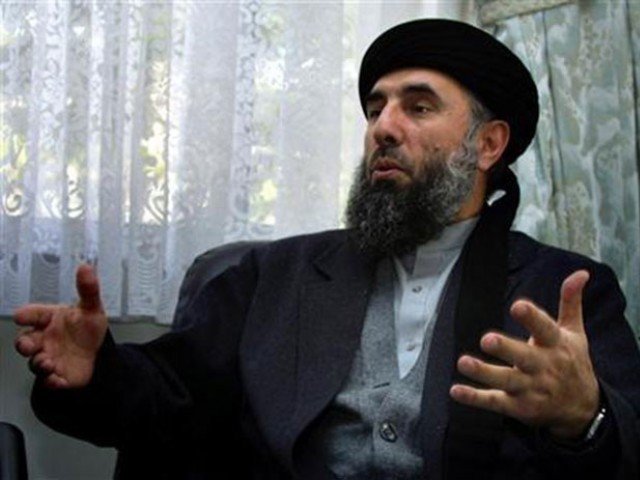
Gulbuddin Hekmatyar, one of the three major insurgent leaders in Afghanistan, a close ally of Iran

Gulbuddin Hekmatyar, one of the three major insurgent leaders in Afghanistan, a close ally of Iran

The admission by the Taliban on July 30 that its leader, Mullah Muhammad Omar, had died was widely seen as good news for the Islamic State (ISIS) against its jihadist competitors. But while ISIS’s growing power in Afghanistan over the last year has garnered significant attention, the rise of Iran’s influence in the country has been less noted. Worse, in the light of the nuclear agreement with the U.S., Iran’s expanded influence is held by some observers to be a stability-promoting development. This is a dangerous fantasy that has already been falsified in the Fertile Crescent, where the synergetic growth of Iran and ISIS promotes chaos and radicalism—to the advantage of both and the disadvantage of the forces of moderation and order. Continue reading

A Myth Revisited: “Saddam Hussein Had No Connection To Al-Qaeda”

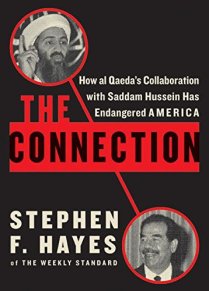
Book Review: The Connection: How al-Qaeda’s Collaboration With Saddam Hussein Has Endangered America (2004) by Stephen Hayes

By Kyle Orton(@KyleWOrton) on June 21, 2015


More than twelve years after the fall of Saddam Hussein, the conventional wisdom is that Saddam’s regime had no connection with al-Qaeda, and such “evidence” as was adduced was tortured out of Ibn al-Shaykh al-Libi in the Bush administration’s desperation to cobble together a casus belli. But if one puts ideology on hold, and considers the evidence of Stephen Hayes’ The Connection, a rather different picture emerges. Continue reading

Does Iran Support The Islamic State?

By Kyle Orton (@KyleWOrton) on May 26, 2015

Qassem Suleimani, Iran's spymaster, believed in some MidEast conspiracy theories to control ISIS

Qassem Suleimani, Iran’s spymaster, believed in some Mid-East conspiracy theories to control ISIS

In 2010, Farzad Farhangian, an Iranian diplomat based in Belgium, defected to Norway. Farhangian has now emerged with the extraordinary accusation that the Islamic Republic of Iran is controlling the Islamic State (ISIS) and using it as part of Tehran’s war against the Gulf States, especially Saudi Arabia. Farhangian’s accusations are lurid and (literally) incredible, but the question of Iran’s role in ISIS’ creation and growth, and Iran’s manipulation of ISIS to further its own ends, is one well worth asking. Continue reading

Al-Qaeda Issues Strategic Guidelines for Jihadist Warfare

By Kyle Orton (@KyleWOrton) on January 7, 2015

Al-Qaeda’s emir, Ayman al-Zawahiri, released a document on 14 September 2013, entitled, Tawjihat ‘Amma lil-Amal al-Jihadi (توجيهات عامة للعمل الجهادي), variously translated as: “General Guidelines for the Work of Jihad” or “General Guidelines for Jihadist Action”. Al-Zawahiri’s document is reproduced below. Continue reading

Snatching Defeat From the Jaws of Victory

By Kyle Orton (@KyleWOrton) on August 9, 2014

Released on December 21, 2007, twenty-eight years to the month after the Soviet Union launched Operation STORM 333, decapitating the Afghan government and plunging the country into a decade-long war, Charlie Wilson’s War tells a story centred on Representative Charles Wilson of Texas (Tom Hanks), a conservative Democrat, Joanne Herring (Julia Roberts), a Right-wing Christian socialite in Houston who has taken the Afghans to her bosom because of her hatred for communism, and Gust Avrakotos (Philip Seymour Hoffman), a blue-collar case officer at the CIA who is the epitome of the adage that one can get anything done in Washington so long as one does not care who gets the credit. Between them they cajole Congress into moving its appropriations from $5 million to $500 million, which will be matched dollar-for-dollar by the Saudis, to help the Afghan resistance combat the Red Army’s occupation of their country. Continue reading

Good Riddance To Sayeeda Warsi

By Kyle Orton (@KyleWOrton) on August 5, 2014

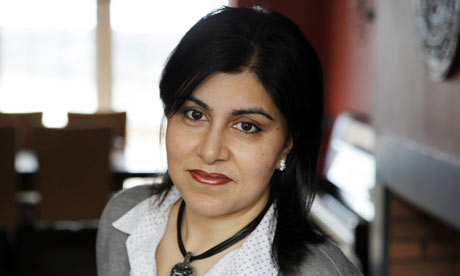
Sayeeda Warsi, gone at last

Sayeeda Warsi, gone at last

Sayeeda Warsi should long ago have been ejected from the British Cabinet. It is to David Cameron’s eternal shame that he has allowed Ms. Warsi to pick the timing of this, announcing her resignation this morning over the government’s stand on the Israel-HAMAS war. Continue reading

What Would Islamic Theocracy Look Like If It Came To The West? Quite A Lot Like Tower Hamlets.

By Kyle Orton (@KyleWOrton) on May 23, 2014

Lutfur Rahman

With attention presently focused on the London borough of Tower Hamlets over allegations of massive voting fraud and other corruptions in yesterday’s Mayoral Election and the scenes of policemen having to guard British Election booths because of the high likelihood that the State authorities in this area will falsify the result, it seems like a good moment to have a look how it got to this. Continue reading