Tag Archives: People’s Protection Units

The Role of Turkey in Syria

By Kyle Orton (@KyleWOrton) on 16 August 2017
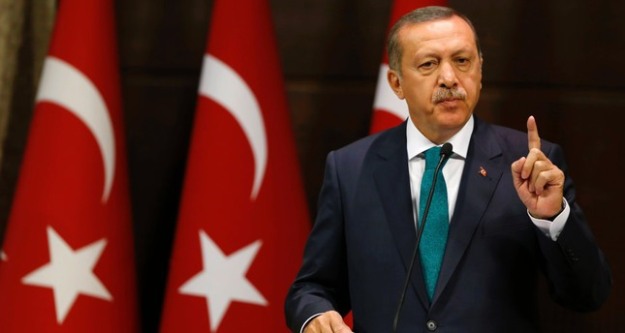
Recep Tayyip Erdogan (image source)

The Turkish government has gotten more and more deeply involved in Syria since the uprising began in 2011. But Turkey now finds its original aim, namely the overthrow of Bashar al-Assad’s regime, unattainable, creating tensions with the Syrian armed opposition, its primary lever inside Syria, and there are considerable problems stabilizing the zone of Syria that came under Turkish occupation after Ankara’s direct intervention in 2016. The defeat of Turkey’s primary objective has been accompanied by the rise of further problems, notably the exacerbation of its longest-standing internal security threat, that posed by the Kurdistan Workers’ Party (Partiya Karkerên Kurdistan – PKK), and the generation of new internal threats, from the Islamic State (IS) and potentially from al-Qaeda-linked groups. The options for solving these problems are constrained and unpalatable. Continue reading
Coalition Policy Risks Replacing Islamic State With Other Islamists

By Kyle Orton (@KyleWOrton) on 7 July 2017

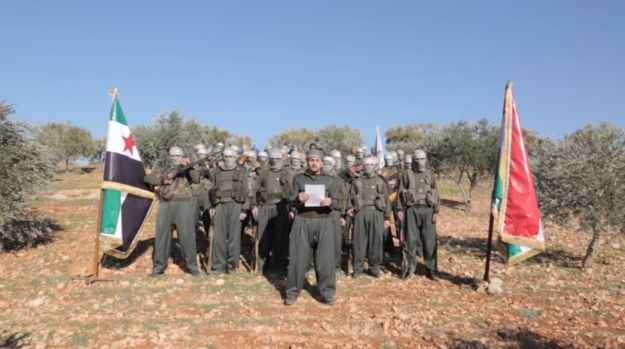
Announcement of the Kurdish Salvation Movement, 12 March 2017

As the operation proceeds to expel the Islamic State (IS) from its last major Syrian urban stronghold, Raqqa city, a statement was published on 5 July by a number of clerics, which points to the danger that the Coalition campaign, by partnering exclusively with Kurdish forces, is preparing conditions that will allow other Islamists to fill the vacuum after IS loses overt control of eastern Syria.
Continue reading

Viewing the Coalition’s Flawed Anti-Islamic State Strategy From Raqqa’s Frontlines

By Kyle Orton (@KyleWOrton) on 19 June 2017

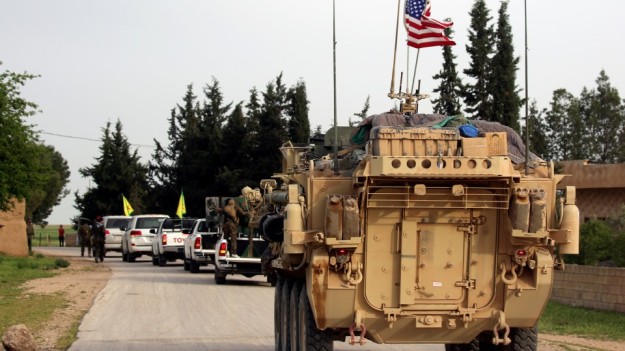
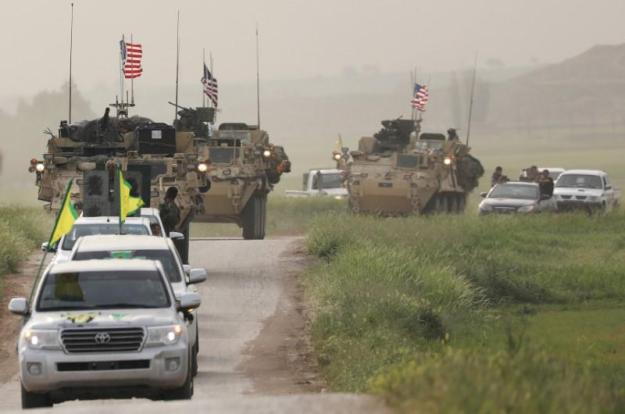
YPG and U.S military vehicles in Darbasiya, northern Syria, 28 April 2017. REUTERS/Rodi Said/File Photo

At the end of May, Christoph Reuter, a journalist with Der Spiegel, embedded with the Syrian Democratic Forces (SDF) as it made its way, supported by the U.S.-led Coalition, toward Raqqa city, the Syrian “capital” of the Islamic State’s (IS) caliphate. Reuter’s report provides snapshots of a number of important—and worrying—dynamics at play that have made the U.S. decision to back the SDF to liberate Raqqa so worrying over the long-term, even on its own terms as a means of sustainably defeating IS. Continue reading

The West’s Partners in Syria and the Risks to Turkey

Originally published at The Henry Jackson Society

By Kyle Orton (@KyleWOrton) on 8 June 2017

Aftermath of a TAK bombing in central Istanbul, Turkey, 7 June 2016

The Kurdistan Freedom Falcons (TAK) issued a threat against Turkey on Tuesday, at the very moment the U.S.-led Coalition was announcing the commencement of the operation to evict the Islamic State (IS) from its Syrian capital, Raqqa, in alliance with the TAK’s mother organization, the Kurdistan Workers’ Party (PKK). This underlines some of the challenges confronting the Coalition as a result of a half-decade of short-sighted counter-terrorism policy in Syria and a regional posture that tilted away from traditional allies. Continue reading

The West’s Plan for Defeating the Islamic State in Syria is Fatally Flawed

By Kyle Orton (@KyleWOrton) on 6 June 2017

A member of the YPG/PKK militia, Delil Souleiman/Agence France-Presse — Getty Images

The United States recently committed itself to arming the Kurdish People’s Protection Units, known as the Y.P.G., to help evict the Islamic State from its Syrian stronghold, Raqqa. This decision is likely to prove deeply troublesome, risking the regional stability necessary for the lasting defeat of the Islamic State.

The Y.P.G. denies that it is, in effect, a wing of the Kurdistan Workers’ Party, or P.K.K., but the evidence is clear. The P.K.K., a Marxist-leaning Kurdish nationalist organization, was founded in Turkey in 1978, and took up arms against the Turkish state in 1984. The group’s leader, Abdullah Ocalan, was expelled from Syria in 1998, when his old patron, the regime of Hafez al-Assad (Bashar’s father), came under military threat from Turkey. Mr. Ocalan was soon arrested by the Turks, and the tide of war turned against the P.K.K. Continue reading

Raqqa Doesn’t Want to Be Liberated By the West’s Partners

By Kyle Orton (@KyleWOrton) on 30 May 2017

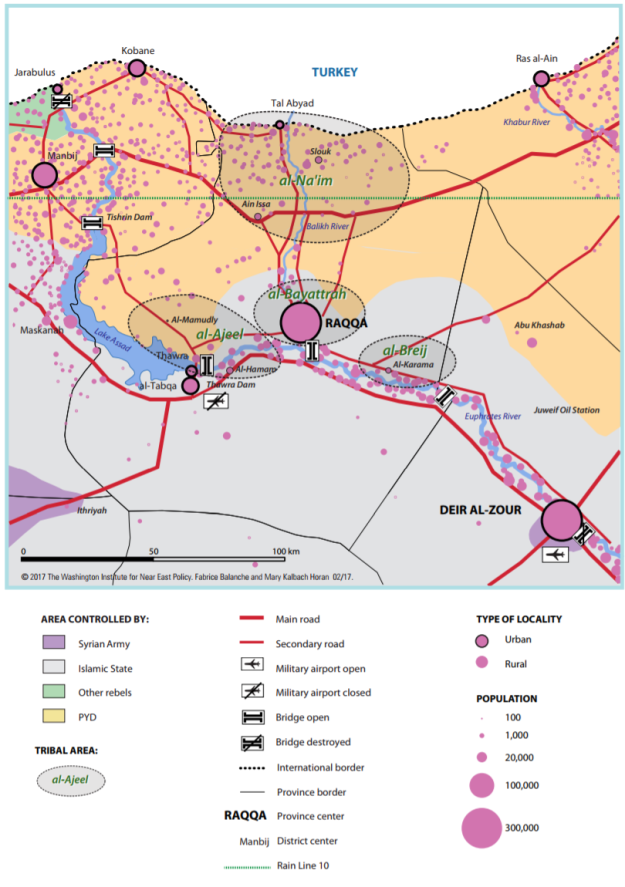
Map of the tribes around Raqqa city (source: WINEP report)

We are now on the eve of the operation to evict the Islamic State (IS) from its Syrian capital, Raqqa, and, as expected, the United States will partner with the Syrian Democratic Forces (SDF), the front-group for the Democratic Union Party (PYD) and its armed wing, the People’s Protection Units (YPG), which President Donald Trump’s administration has committed to directly arming.

Many of the doubts voiced about this course relate to Turkey, since the PYD/YPG is—despite continued efforts to obfuscate the fact—the Syrian department of the Kurdistan Workers’ Party (PKK), the premier internal security threat to Turkey for many decades. The discussion then tends to fall into one of two grooves. Continue reading

American YPG Fighter Complains About Group’s Lack of Medical Care

By Kyle Orton (@KyleWOrton) on 26 May 2017

Patrick Ryan Kasprik

Patrick Ryan Kasprik was arrested in Lee County, Florida, in September 2015 for battery of a police officer and resisting arrest. By the time of Kasprik’s scheduled court appearance in February 2016, he was in Syria, having joined the People’s Protection Units (YPG)—without any training—as a combat medic. The YPG is the military wing of the Democratic Union Party (PYD), the name under which the terrorist-designated Kurdistan Workers’ Party (PKK) operates while on Syrian soil. There has been a flow of Westerners joining the YPG/PKK for several years. Kasprik left Rojava in November 2016. On 24 May 2017, Kasprik wrote a public Facebook status that spoke of YPG/PKK commanders having an alarming racial disdain for Arabs and buttressed prior reports by American YPG volunteers that the YPG was providing insufficient care to its wounded. Indeed, Kasprik suggested that the YPG was content for fatalities because it made for good propaganda. Kasprik’s full post is reproduced below with some explanatory notes added in square brackets.
Continue reading

Coalition on the Verge of Repeating the Mistakes of the Past Against the Islamic State

This article was published at BICOM

By Kyle Orton (@KyleWOrton) on 16 May 2017

Within the next month, the Islamic State (IS) will likely lose its grip on its Iraqi capital, Mosul, and the operation to drive it from its Syrian capital, Raqqa, will begin. The destruction of IS’s caliphate, however, is not even close to the end of the road for the movement, not least because of the manner in which it is being accomplished.

At its core the IS movement is waging a revolutionary war, and as Craig Whiteside, a fellow with The International Centre for Counter-Terrorism has explained, this means that the focus is on legitimacy. Military victories come and go but if IS is, over the long-term, gaining acceptance—whether from support, resignation, or fear—among the population it hopes to govern (the Sunni Arabs), then it is winning. It is for this reason that IS tries to embed political victories within its military defeats. Continue reading

Crackdown Continues in Syrian Kurdish Areas

By Kyle Orton (@KyleWOrton) on 12 May 2017

Fasla Yusef, Syrian Kurdish opposition leader

The Kurdistan Workers’ Party (PKK) controls areas of northern Syria, operating under the name of the Democratic Union Party or PYD (its political wing) and the People’s Protection Units or YPG (its military wing). On Tuesday, President Donald Trump approved plans to arm the YPG directly, abandoning a fiction that the U.S. was only arming the Arab parts of an ostensible coalition, the Syrian Democratic Forces (SDF), which is in fact controlled by the YPG/PKK. This is in preparation for the U.S. backing the “SDF” to liberate Raqqa City, the Syrian capital of the Islamic State’s (IS) caliphate. Leaving aside the geopolitical implications of the U.S. decision for NATO and regional order, and putting aside, too, the likelihood that this decision will defeat its own purposes and give IS a new lease on life, there is a purely humanitarian dimension that deserves more attention. In March the PYD effectively legalized its one-party state in northern Syria and escalated its already-severe persecution of the Kurdish opposition. That crackdown has continued. Continue reading

The Problems With the West’s Partners Against the Islamic State

By Kyle Orton (@KyleWOrton) on 10 May 2017

U.S. troops patrolling with the YPG/PKK in the village of Darbasiyah, northern Syria, on the border with Turkey, 28 April 2017

The United States has tried to engage in Syria almost solely in a counter-terrorism capacity, against Daesh (IS) and—in a recently-escalating campaign—against al Qaeda. The narrowness of the focus on jihadist terrorists led to the US disregarding wider political dynamics in the war in Syria—and to a degree in Iraq, too—and partnering with forces that over the long term will undo even this narrow mission.

The announcement yesterday that President Donald Trump will now arm the Kurdish People’s Protection Units (YPG) to expel Daesh from its Syrian capital, Raqqa, is the end-point of this policy, setting up a very dangerous medium- and long-term situation that will redound to the benefit of terrorists. Continue reading